
Ghost Stories, or Gakkou no Kaidan, is one of those anime that many people know through clips rather than the series itself. That is also why it still gets called controversial today. The original Japanese version is a straightforward school horror series, while the ADV English dub took the same basic plot and turned it into something far more chaotic and provocative.
If you only know the jokes, it is easy to miss the more interesting part of the story. Under the reputation of the dub there is a 20-episode Studio Pierrot anime from 2000 about urban legends, restless spirits, and a group of children trying to survive one haunting after another.
Contents 4
What is Ghost Stories about?
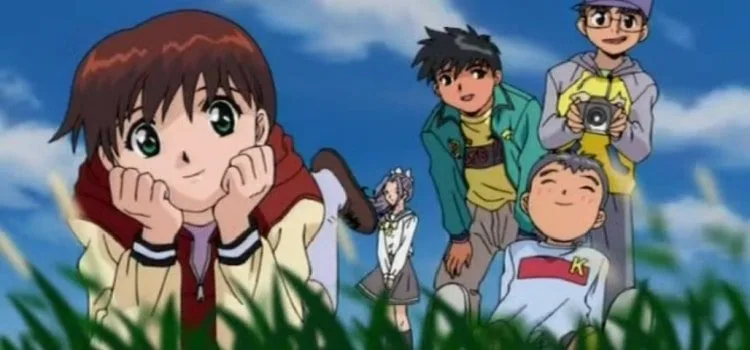
The anime follows Satsuki Miyanoshita and her younger brother Keiichirou after they move back to their late mother's hometown. On their first day at school, they end up inside the abandoned old school building, where spirits have started to awaken again after changes in the town and nearby construction.
Satsuki discovers her mother's journal, which explains how several ghosts can be sealed. With Hajime, Leo, Momoko, and the cat Kaya, she faces a different supernatural threat almost every episode. That structure makes the series easy to follow, but it also gives it a strong link to the kind of Japanese urban legends that have always been popular in school horror stories.
Why is the anime considered controversial?
The controversy is tied much more to the English dub than to the original Japanese show. When ADV released its version in North America, the dub kept the broad outline of each episode but changed the tone with ad-libbed jokes, fourth-wall breaks, and a much harsher comedic style. For some viewers that made the dub unforgettable. For others, it crossed the line so far that it barely felt like the same series anymore.
That split is the reason Ghost Stories still gets discussed years later. One audience sees a family-friendly supernatural anime with folklore flavor. The other remembers a dub that became infamous for edgy humor, aggressive improvisation, and jokes that aged badly even when the release was still new.
Did the original Ghost Stories flop in Japan?
That is one of the most repeated stories about the franchise, but it is not as simple as people make it sound. The anime aired from October 22, 2000 to March 25, 2001, ran for 20 episodes, and later reporting has pushed back against the idea that the Japanese version was a total failure. In other words, the legend around the dub became so big that it started to replace the history of the original series.
That matters because it changes how you look at the anime. Gakkou no Kaidan was not created as a parody. It was built as a school ghost story with a child cast, episodic hauntings, and a tone closer to accessible horror than to pure comedy. If you go in expecting that style, the series makes far more sense.
Is Ghost Stories worth watching today?
Yes, as long as you know which version interests you. The Japanese track works better if you want a lighter supernatural series with early-2000s atmosphere, urban legends, and a simple monster-of-the-week rhythm. The ADV dub is more of a curiosity piece: historically fascinating, occasionally funny, and often remembered more for its delivery than for the anime underneath it.
That double identity is what keeps Ghost Stories relevant. It is not the scariest show in the genre, and it is not the most polished either, but it remains one of the clearest examples of how a dub can completely reshape an anime's reputation.
If you like titles that mix folklore, school settings, and the supernatural, it also pairs well with lists of horror anime and other stories about Japanese ghosts.




Community
Comments
0 comments
There are no published comments in this language yet.
Send comment