
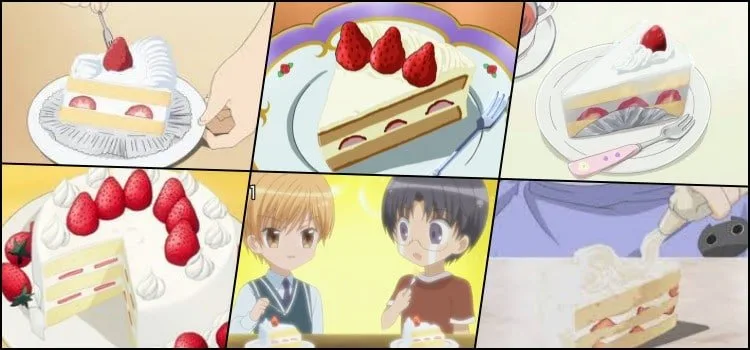
You have probably seen the scene more than once in anime: a character walks into a pretty little pastry shop, takes a careful look at the display case, and points to a white cake covered with fresh red strawberries. That cake, called いちごケーキ (ichigo kēki, literally "strawberry cake"), is one of the most popular cakes in Japan. It tastes light, slightly milky and refreshing, and somehow feels appropriate for almost any occasion, from a quiet afternoon tea to a proper birthday table.
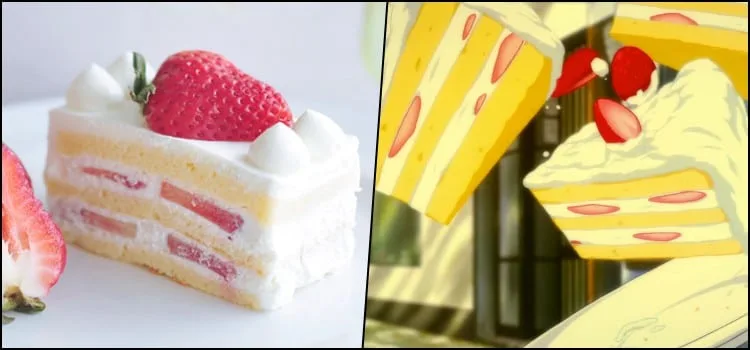
What makes this cake so charming is its simplicity. The whole thing is built from three components: a soft sponge, a lightly flavored syrup to keep the sponge moist, and a generous layer of fresh whipped cream with strawberries. That is really all you need, and yet the final result looks so elegant that it would not look out of place in the window of any fictional patisserie in any slice-of-life anime you have ever watched.
This cake should always be served cold and pairs well with both cold and hot drinks, especially black tea or a mild green tea. Although the strawberry version is the most popular in Japan, you can use other fruits just as easily: apple, melon, mango or persimmon. Many Japanese recipe books recommend persimmon (kaki, 柿) for the winter months, since it is in season then and gives the cake a slightly tannic, almost honeyed note that works beautifully with whipped cream.
Because this is a refrigerator cake, it keeps for about three days. After that, the fruit starts to dry out, or in the worst case, to deteriorate. Plan to eat the cake within two to three days, ideally with a few guests who do not mind a second slice.
The recipe runs in three clear stages: first the sponge, then the syrup, then the assembly. You simply need to wait until both the sponge layers and the syrup have cooled completely before putting the cake together. Otherwise the cream will melt, the sponge will go soggy, and all the careful work will be wasted. With a little patience, the cake comes together even if you have never baked a layered cake before.
The recipe is also easy to adapt. You can refine the sponge with a little milk powder for an even more tender crumb, or add a touch of lemon zest to the whipped cream for a fresher flavor. In fact, this cake is so popular around the world that there are thousands of versions: fruit on the outside, fruit on the inside, chocolate sponge, matcha cream. The one below is the classic, anime-worthy version.
Contents 9
The Strawberry Cake Recipe, Anime Style
Before you start, a quick overview. The recipe below yields a cake of about 20 cm (8 in) in diameter and 10 cm (4 in) tall, enough for eight to ten generous slices. You will need two round sponge layers, a syrup to brush them with, whipped cream and fresh strawberries. Most ingredients are easy to find in any well-stocked supermarket.
A few quick notes before you begin: use really fresh eggs at room temperature, since they whip up into a much more stable meringue. Pick small to medium strawberries if you can; they are easier to halve or slice and look prettier on the cake. And set aside about two hours total, with roughly thirty minutes of active work and the rest for baking, cooling and chilling.
Step 1: The Sponge (batter)
Preheat the oven to 180 °C (350 °F). Grease a 20 cm (8 in) round pan with butter and line the bottom with parchment paper, so the sponge lifts out cleanly later.
Ingredients for the sponge (makes two layers):
- 120 g (about 1 cup) sifted all-purpose wheat flour
- 40 g (about 3 tablespoons) melted butter, or margarine
- 4 large eggs or 5 small, yolks and whites separated
- 120 g (about ⅔ cup) fine granulated sugar
- 2 tablespoons of milk
Method:
Place the egg whites in a large, grease-free bowl and beat them with a mixer until they start to foam. As soon as soft peaks form, gradually add the sugar and keep beating until you have a stiff, glossy meringue. This is the foundation of a really fluffy sponge, so take your time here.
With the mixer still running (or briefly on its lowest speed), add the yolks one at a time. Let each yolk incorporate fully before adding the next. Then add the melted, slightly cooled butter and the milk. Stop the mixer at this point, so you do not knock the air back out of the batter.
Gently fold the sifted flour into the mixture with a large spoon or a spatula, in several additions. Use as few strokes as possible, working in long, slow movements from the bottom up. Pour the finished batter into the prepared pan, smooth the surface with a palette knife or the back of a spoon, and bake for about 15 to 20 minutes. The sponge is ready when it is lightly golden and a toothpick inserted in the middle comes out clean.
Repeat this process so that you end up with two sponge layers. Let both layers cool completely on a wire rack before moving on. Do not try to slice or soak them while they are still warm; they will tear.
Step 2: The Syrup
The syrup is a small detail that makes the difference between a good cake and a genuinely anime-worthy one. It keeps the sponge moist and gives it a subtle aroma, without overpowering the strawberries.
Ingredients for the syrup:
- 1 cup of water (about 240 ml)
- ½ cup of sugar (about 100 g)
- 1 tablespoon of vanilla extract, or a liqueur of your choice, or a small splash of brandy
Method:
Combine the water and sugar in a small saucepan and bring to a gentle boil over medium heat for about five minutes, until the sugar has fully dissolved. Take the pan off the heat and let the syrup cool down a little. Only then stir in the vanilla, liqueur or brandy. Make sure the syrup is completely cold before using it, otherwise it will soak the sponge too much and the cream will slide off later.
If you want an alcohol-free version, just swap the liqueur for a little more vanilla or a small dash of almond extract. Both go very well with strawberries and cream.
Step 3: Filling and Topping
For the filling and the outer topping, you really only need two things: good whipped cream and good strawberries. The quality of these two ingredients makes the biggest difference in the end.
Ingredients for filling and topping:
- 2 cups of heavy cream (about 400 ml), cold, with at least 30 % fat
- 500 g (about 1 lb) fresh strawberries, washed, hulled and sliced or halved
- 2 tablespoons of powdered sugar (optional, depending on how sweet you like the cream)
Whip the cream with a mixer until stiff. If you want it slightly sweet, add the powdered sugar near the end. The cream should be stable but still glossy, so do not overbeat it, or it will turn grainy. Keep it in the fridge until you are ready to use it.
Set aside about one third of the whipped cream for the outer coating. The rest will go inside the cake as filling.
Step 4: Assembling the Cake
Now comes the most satisfying part. Take the first completely cooled sponge layer and slice it horizontally once with a long serrated knife, so you end up with two thin layers. Repeat with the second sponge. In total, you should have four thin layers to build the cake.
Layering in order:
- Place the first layer on a cake plate or a flat serving dish.
- Drizzle a generous amount of syrup over it with a spoon, so the sponge is moistened but not falling apart.
- Spread a layer of whipped cream on top, then arrange a layer of strawberry slices over the cream.
- Place the next sponge layer on top, and repeat: syrup, cream, strawberries.
- Continue until all the layers are used up.
- Coat the entire cake, top and sides, with the whipped cream you set aside, and decorate with whole or halved strawberries to taste.
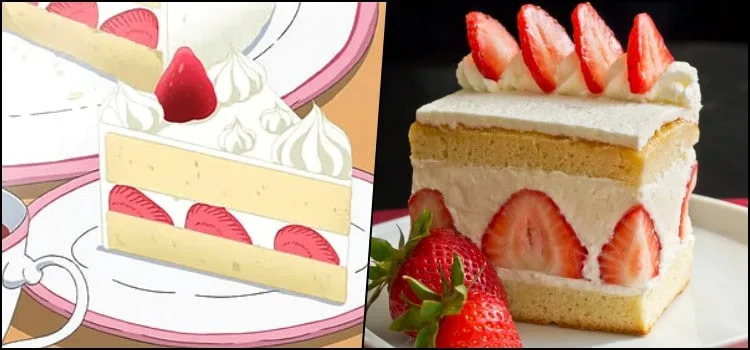
Try to use roughly the same amount of cream and strawberries on each layer, so the cake sits straight and shows clean, even stripes when you slice it. That, by the way, is also the moment when the cake finally looks the part of its anime counterpart.
Tips for a Perfect Result
A few small tricks help the cake really look and taste the way it does in anime. First, beat the egg whites properly stiff: that is what gives you a light sponge. Second, do not overdo the syrup; it should keep the sponge moist without soaking through it. Third, let the assembled cake rest in the fridge for at least an hour, ideally two. The layers will set, the sponge will fully absorb the syrup, and slicing becomes much cleaner.
If you are preparing the cake for a special occasion, it is a good idea to assemble it the night before and chill it overnight. The strawberries release a little juice, which combines with the syrup for an even more intense flavor. Just decorate the top with fresh strawberries right before serving, so they look their best.
For a truly anime-worthy presentation, give the cake a thin, smooth coat of cream all around and arrange halved strawberries in a neat spiral on top. In many anime scenes, the cake is also shown on a small raised cake stand, with a cake server beside it. If you want to recreate that little moment, a simple white porcelain plate and a wooden cake stand are all you need.
Variations with Other Fruits
As mentioned at the start, the いちごケーキ in Japan is best known with strawberries, but it works beautifully with other fruits too. With persimmon (柿) in late autumn and winter, the cake takes on a slightly tannic, very elegant note. With mango in summer, it becomes tropical and sweet, and the orange slices between the white cream look particularly striking. With apple, used in thin caramelized slices, it fits the colder months wonderfully, and with melon it turns extremely refreshing, almost like a dessert from an upscale café.
You can also make two small adjustments to the sponge itself. Replace about ten grams of flour with the same amount of matcha (抹茶), and the layers take on a delicate green color with a slightly bitter aroma that pairs wonderfully with strawberries. Or stir a tablespoon of cocoa into the batter if you prefer a chocolate-and-strawberry version, the kind you often see in Western-influenced patisseries in Tokyo.
Storage and Shelf Life
In the fridge, the cake keeps for about two to three days, after which the texture of the cream changes and the strawberries start to release moisture. If you know you will not finish the cake within that window, it is better to prepare the sponge layers, the syrup and the whipped cream separately and assemble everything only shortly before serving.
The cake can also be frozen, with a few small caveats. Whip the cream as fresh as possible and decorate with fresh strawberries only after thawing, since thawed strawberries quickly turn mushy. The plain sponge on its own freezes very well for several weeks and thaws at room temperature in about an hour.
A Slice of Anime You Can Make Yourself
What makes the strawberry cake from anime so special is not really one single tricky technique, but the combination of simple, good ingredients, a little patience, and a touch of care when assembling the layers. Once you have run through the recipe once, you will understand why you can find it in practically every patisserie and on the counter of every kissaten (喫茶店, the classic Japanese coffee shop) in Japan.
Give the recipe a try, serve the cake well chilled with a cup of black tea, and you will have a small piece of anime atmosphere on your own table in no time. In which anime have you run into this cake, and which variation would you like to try next?



Community
Comments
0 comments
There are no published comments in this language yet.
Send comment