The onsen (温泉) are natural volcanic hot springs that are appreciated and help to relax, also bringing numerous health benefits. In this article, we will talk in detail about these Japanese baths.

For those who do not know, Japan is a volcanic country full of natural and also artificial hot springs; it is not an exaggeration to say that Onsen are Japan’s passion. There are thousands of varieties of hot springs in Japan.

Visiting baths and hot springs is part of Japanese culture; since childhood, families frequent these places and enjoy the numerous benefits that the hot waters offer.

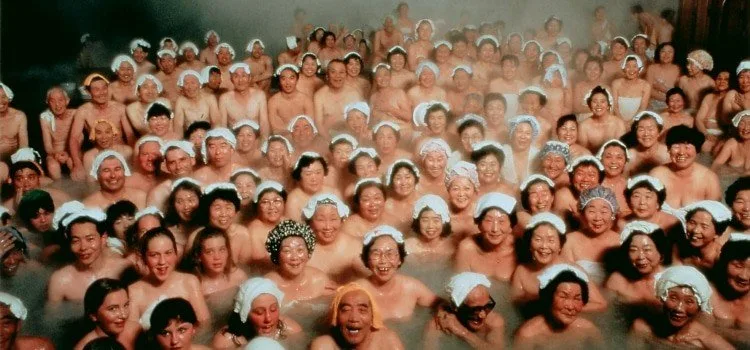
In hot springs, people need to bathe naked, which causes a lot of discomfort for Westerners, but it is something extremely normal among the Japanese. The baths are separated by gender, but in the past, hot springs had mixed bathing.

We also recommend reading:

Onsen - Natural Hot Springs of Japan

Some Curiosities about onsen

Research claims that there are more than 30,000 natural hot springs throughout Japan, with over 3,000 resorts and thousands more scattered across mountains and cities. If we count the non-natural ones, the numbers exceed 100,000.

Visitors usually use a small towel-apron. Some places allow Japanese people to enter the water with the towel. Otherwise, Japanese people usually place the folded towel on their heads or at the edge of the pool.

Visitors must wash their bodies and dry themselves before entering the hot water. Indoor baths provide small benches for visitors to sit and take a shower.

Onsen - Natural Hot Springs of Japan

Many traditional hot springs in rural Japan have rules that prohibit the use of clothing while bathing, arguing that it makes cleaning more difficult. While others allow access to the site wearing a yukata, very rarely will an onsen allow someone to enter the waters with clothes on.

The purity of the water is very important in onsen, which is why people need to bathe naked and take a shower before entering the hot pools. Not even the towel can touch the water.

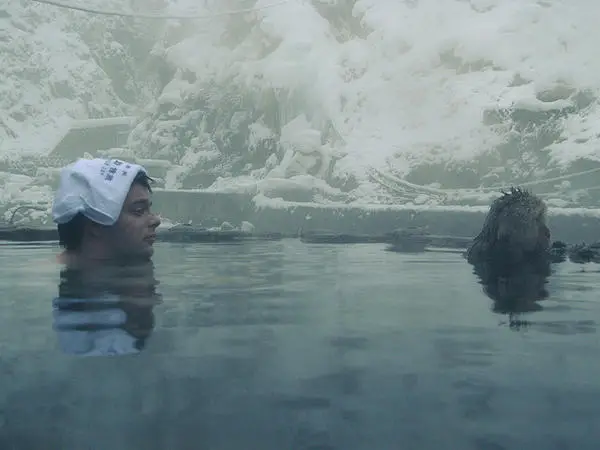
Small children can accompany one of the parents during bathing, regardless of gender. Girls accompanying their fathers in the men’s bath wear clothes and bikinis. In some hot springs in the mountains, you might even encounter mischievous monkeys.

Onsen - Natural Hot Springs of Japan

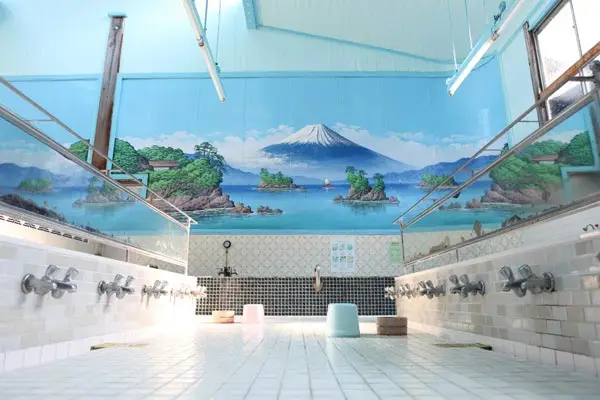
Hot springs are generally considered a refuge from the hectic and stressful life that the Japanese lead; the springs have a calm and relaxing environment. Many hot springs have an image of Mount Fuji on the walls, which, according to tradition, encourages calm and meditation.

The waters are generally rich in minerals. The mineral content of the water and the pH levels vary greatly from one onsen to another. The waters can be rich in iron, sodium chloride, sulfur, carbon, or radium.

One of the goals of Japanese hot springs is to cure some illness. There is a type of spring for each disease. Couples trying to conceive go to an Onsen. The elderly go to the baths to improve circulation or soothe joint pain.

Onsen - Natural Hot Springs of Japan

The waters of the springs are considered thermal in the West starting at 21 degrees, while Japan’s hot springs are only classified from 25 degrees. The water must have at least one of the 19 types of minerals.

Hot springs are one of the ways to connect with nature and people. It is common to talk to strangers. Many Japanese firmly believe that in hot springs, one can make friends, have fun with colleagues, couples, and family.

Remembering that each Onsen has its rules, there are etiquettes and ways to bathe in thermal water.

Read more: How to bathe in the Hot Springs of Japan

Rotenburo – outdoor onsen

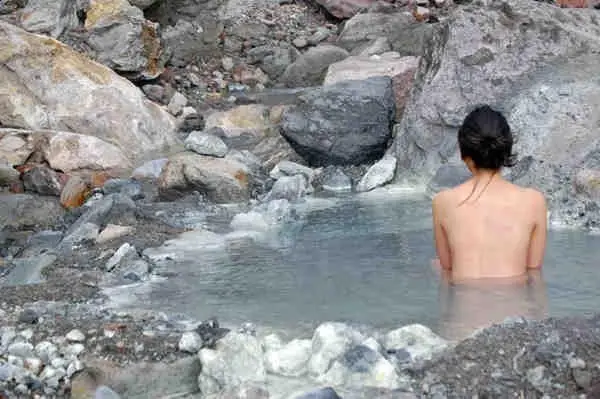
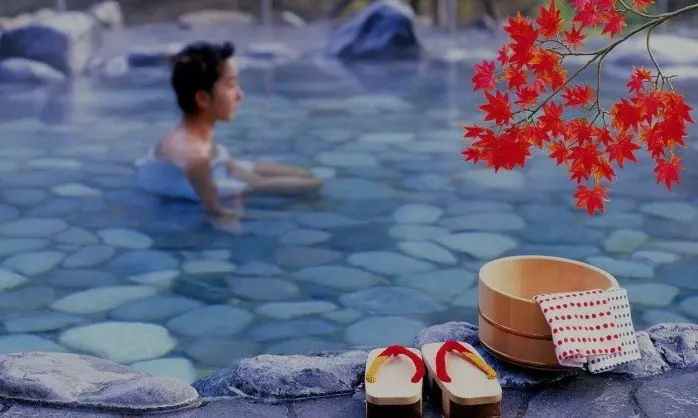
Rotenburo are outdoor Onsen and are considered more desirable than indoor baths. Part of the onsen experience is connecting with nature, something you can only find by visiting these remote baths in the mountains.

Onsen - Natural Hot Springs of Japan
Onsen Hot Spring

Many rotenburo have an excellent view of the mountain, forest, or sea. In northern regions of Japan, the Rotenburo is surrounded by snow. Some rotenburo are pools that formed naturally, without human interference.

Many onsen of the rotenburu style are built by resorts and hotels. The best rotenburo are made of natural materials; they are usually scenic and maintain privacy for visitors.

Some onsen in cities often reserve a more natural location similar to rotenburo. Even in a multi-story building, it is possible to find an onsen where part of it is exposed to the outdoors, without any covering.

Onsen - Natural Hot Springs of Japan
Monkey in the Onsen

Private Onsens – Some Hotels and Resorts offer a private onsen in the rooms; these are small bathtubs with artificial or natural hot spring water. Other onsen also offer private rooms for couples and friends.

Konyoku onsen – Mixed Bath

Konyoku are mixed-gender onsen found in rural areas. In some cities like Tokyo, Konyoku are illegal. I have visited a mixed onsen in the mountains, where the pools were enclosed in small rooms, and yukata were worn to move from one place to another, making it almost impossible to see a naked woman as some desire.

Konyoku were quite popular during the Edo period; with Western influence, this became uncommon. Although some places allow mixed bathing, a large part of the audience for these baths is over 60 years old; probably, the youth have become shy and do not frequent these mixed places.

We have already written an article detailing mixed bathing and how to find them in Japan. Mixed baths are called konyokuburo (混浴風呂) and are more organized than you think.

To learn more, read: Are there still hot springs or onsen with mixed bathing in Japan?

Onsen - Natural Hot Springs of Japan

Sento – Baths in the city

Sento are similar to onsen, except that their water is heated artificially. Sento often use regular water that does not have the mineral properties of onsen. Sento are frequently found in urban areas.

In the past, many families did not have bathtubs at home, so it was common for them to go to a small sento. Even though today most have an ofuro at home, sento are still very popular in Japan.

Onsen - Natural Hot Springs of Japan
Sento

Types of water and bathing in onsen

Each Onsen has its type of natural water, each with its own benefit. We have already written an article about this, but let’s list some of the types of water that we find in Japanese hot springs:

Chloride – Enka butsusen (塩化物泉) – With magnesium, calcium, and sodium, this type of hot spring water heals cuts and burns due to its high salt content. It promotes skin hydration and helps you maintain body heat, perfect in winter.

Read more: Magnesium – The secret of the longevity of the Japanese

SulfateRyusan sen – This type of onsen is good for healing cuts and bruises, combating chronic constipation, and arteriosclerosis. The water also provides moisture to the skin. Sodium sulfate helps against high blood pressure, while calcium sulfate helps against rheumatism.

Alkaline or sodium bicarbonate salineTansan suiso ensen – These hot spring waters feel thick, and you feel a silky smoothness on your skin after bathing. Alkaline water helps dissolve sebum, exfoliates the skin, and removes stains. This onsen is a favorite among women who want perfect skin. We recommend the hinokamiso, ureshino, kitsuregawa, and saksuikan onsens.

All types of saline waters help in healing cuts, burns, and chronic skin disorders. Chloride and sodium bicarbonate springs are not recommended for people with kidney problems, hypertension, thyroiditis, or swelling.

Different types of hot spring waters and their benefits

Sulfur – Iousen – (硫黄泉) – Onsen with sulfur are mainly found near volcanic waters. Their smell is distinctive, and their color is milky; it is believed that this water can help treat skin disorders and arthritis. Sulfur is rich in vitamins B1, B5, H and promotes metabolism and communication between nerve cells. Perfect for relieving rashes, itching, eczema, dandruff, and warts, in addition to protecting the body against toxins.

Iron – Gantetsu sen – In these onsen, the water has a rusty color and can be found in ikaho onsen. It helps the body retain heat, restores the body’s iron levels, perfect for anemias, rheumatism, and menstrual disorders. Additionally, it increases the quality of your blood, prevents stress, fatigue, and improves skin tone. There are 2 types of iron water, carbonated and melanterite. Do not be alarmed by the brown color of the water; this is a concentration of iron and not dirt.

Hydrogen/Carbonated – Tansansen (炭酸泉) – Carbonated waters create numerous fine bubbles that stick to the skin. It is said that this carbonated water improves blood circulation up to 5 times more than normal waters. The bubbles also help remove waste from the body and detoxify. There is a beauty trend in Japan where people cleanse their skin with carbonated water.

Different types of hot spring waters and their benefits

Special baths in Japanese hot springs

AluminumGanaruminiumusen – This onsen has acidic properties that provide sterilization effects. It has a bitter taste and is said to be useful in treating various skin diseases such as athlete’s foot, rashes, and dermatitis.

Acid – Sansei sen – These hot spring waters provide an antibacterial effect, but are not recommended for people with sensitive skin, as the acid can irritate it. Recommended for those with skin laxity, who want to treat rheumatism, or make their skin more beautiful, as the acid eliminates dead skin cells.

RadiationHoshano sen – Yes, they are rare, but there are hot springs with slightly radioactive waters that do not harm health. It is said that this slightly radioactive water is good for arthritis, and some even claim it can kill certain tumors. In addition to improving metabolism, increasing immunity, and healing the body’s energy. The water, when inhaled, improves the antioxidant function of the body, helps with anti-aging, and prevents diseases. It just doesn’t give you superpowers…

Carbon Dioxide – Niisanka-tanso ensen – With about 100 milligrams of carbonic acid per kilogram, the water presents a fine foam on the surface. They are rare but help against cuts, burns, arteriosclerosis, and hypertension by expanding blood vessels.

Cold bath – Some onsen have cold pools that can help stimulate nerve endings, treat depression, release testosterone, stimulate the lymphatic system, combat infections, increase immunity, etc.

Different types of hot spring waters and their benefits

Where to find an Onsen?

There are more than 100,000 hot springs in Japan. They can be found in specific locations or in hotels, Ryokan, and Pensions. There are also public and private Onsen that are not part of a hotel or residence.

Read also: Ryokan – The charming Japanese inns

Onsen varies from a natural location in the middle of the forest to modern onsen resorts with dozens (or hundreds) of baths. Onsen can even be found in large cities like Tokyo or small towns that we can barely find on the map.

However, the vast majority of hot springs are in the mountains and rural areas. Japan has dozens of onsen resorts like Atami and Hakone (near Tokyo). Each city can have dozens of onsen baths.

Onsen - Natural Hot Springs of Japan

To find an Onsen, we recommend using Google Maps and searching for onsen [温泉], sento [銭湯], hot spring, or the other terms mentioned in the article.

And do you have the courage to go to an Onsen? Or are you shy? Leave your comment and share with friends. To finish, I will leave a video; we also recommend reading our article on different types of hot spring waters.

Read also: How to plan your destination in Japan with Google Maps

Kevin Henrique

Kevin Henrique

Asian culture expert with over 10 years of experience, focusing on Japan, Korea, anime, and gaming. A self-taught writer and traveler dedicated to teaching Japanese, sharing travel tips, and exploring deep, fascinating trivia.

Discover more from Suki Desu

Subscribe now to keep reading and get access to the full archive.

Continue reading