
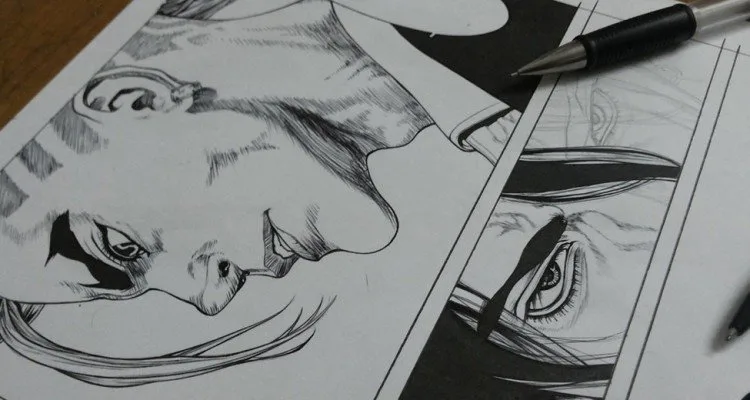
Mangaka (漫画家) can sound like a secret title from otaku slang—but it is simply the Japanese word for the person who makes manga: drawing pages, shaping stories, and living by deadlines that do not wait. Flip through a weekly magazine chapter and you feel it quickly: behind the panels is not only “nice drawing,” but pacing, editorial pressure, and a tempo that eats free time.
In Japanese, the word pairs manga with the suffix -ka (家)—roughly “maker” or specialist. Many mangaka write and draw at once; someone who only supplies the story is more often called a gensakusha (原作者). As manga went global, “mangaka” stuck outside Japan too—alongside labels like cartoonist, comic artist, or illustrator—because the craft is broader than a single English job title.
Contents 3
What is the routine of a mangaka like?
The day-to-day can be brutal: long hours, little sleep, and delivery dates that do not move. On a weekly magazine series, a chapter often lands around 15 to 20 pages—sometimes more. On a monthly title, one chapter can run 40 to 60 pages. That is not casual sketching; it is storyboard, characters, backgrounds, screentones, corrections, and rounds with an editor.
Doing every mark alone is the exception. Assistants handle tones, backgrounds, blacks, or small details; some studios feel closer to a film crew. How much help you need depends on style and schedule pressure. Dreaming of the job is common—living it means trading free time and underestimating how heavy the grind can get.
If you want a clearer map of how Japanese manga sits next to Korean and Chinese comics, start here: manhwa, manhua, and manga compared.

How much does a mangaka earn?
There is no single “salary” number. In Japan, pay usually starts with a per-page manuscript fee, then often adds royalties from collected volumes, licenses, and media mix—depending on the contract and how well the title sells. Reports and industry roundups often place beginners and mid-tier series in the low-to-mid tens of thousands of yen per page; hit titles sit clearly above that range.
As orientation—not a guarantee for every deal—press coverage in late 2024 said Weekly Shōnen Jump raised minimum manuscript fees for new serials and one-shots (about 20,900 yen per black-and-white page and about 31,350 yen for color, plus debut-related payments). At roughly 19–20 pages per chapter, weekly serialization adds up fast—and still hinges on the magazine, the series, and negotiation.
History shows the spread: star authors can earn far above average through volumes and rights; many working professionals earn more modestly. Figures for superstars such as Eiichirō Oda of One Piece swing by source and year—treat them as an extreme upper bound, not the industry norm. Lesser-known mangaka often land closer to an ordinary Japanese annual income—or below it when a series stalls.
Currency conversions change with the exchange rate, and Western contracts work differently. Digital tools can lower the barrier to practice—see a practical list of apps for drawing manga on a phone—but apps do not replace editors, deadlines, or sales.
Mangaka Yuu Kamiya
Yū Kamiya (榎宮祐), born Thiago Furukawa Lucas, is one of the best-known Brazilian-Japanese creators in light novels and illustration. He lived in Brazil until about age seven; after moving to Japan he learned language and culture through games, manga, and anime—and kept sharpening drawing craft and story sense over time.
He gained real traction as an illustrator on work such as Itsuka Tenma no Kuro Usagi. After that came titles under his own name, especially the light novel No Game No Life, which he wrote and illustrated—and which reached a global audience through anime. Projects like Clockwork Planet (with co-authors) widened his profile beyond a pure “only draws pages” role into author and illustrator.
His path underlines something typical about the job: talent alone rarely carries you; pace, publisher work, and stubborn consistency do. If the dream appeals to you, count the hard weeks and quiet months—not only the moment a cover hits a shelf. And if long, playful novel titles are your rabbit hole, try this entry into the long and funny titles of light novels.






Community
Comments
0 comments
There are no published comments in this language yet.
Send comment