

The Japanese language is unique and thanks to its ideograms, it is capable of expressing words with abundant meanings and its own concept. In this article, we will share 10 Japanese words that can guide your life for the better.
The Japanese are familiar with the concept of their words, their origin, meaning, and idea thanks to the ideograms that facilitate this process. Unfortunately, those of us who grew up with English often do not know the origin of the words in our language.
Everything in the Japanese language has an interesting meaning and origin that can be discussed. We may go our whole lives without knowing the essence of all words, but we can know the important words that can guide and change our lives.
Contents 11
1. Ikigai [生き甲斐] - Life Purpose
If we are talking about words that can guide our lives, it is clear that we must start with a purpose, goal, or motivation to live. Ikigai means the worth of living and is a very important word for the Japanese.
It is written with the ideograms [生き] which means to live and [甲斐] which means value, effect, or result. In the dictionary, ikigai is that which is worth living for: the joy and spirit of continuing. Ikigai is such a powerful word that involves an entire art, philosophy, and concept behind the word.
There are people who dedicate their entire lives to the study of Ikigai and help others discover their life purpose.
Also read: Ikigai - Meaning, purpose, and reason for living of the Japanese

2. Yoisho [よいしょ] - Effort
The word Yoisho is somewhat unknown; it is not usually taught in school or in Japanese courses. Despite this, it is a widely known and used word among the Japanese. Yoisho is a shout of encouragement for oneself or for others.
A word rarely written, but often spoken during some action to express effort or relieve tension. For example, a group of people who are about to lift something heavy. Or it can be said alone when we are tense to give a certain strength.

The most amazing thing is how this word is often spoken but rarely written, thus showing its omnipresence. This word accompanies the Japanese throughout their lives, in their daily struggles. It may not seem important, but it is a word capable of moving mountains.
The word yoisho is considered a kakegoe [掛け声], a word that means battle cry or encouragement used in events such as taiko, bon odori, kabuki, undokai, and others. Yoisho goes far beyond that and is part of the daily life of the Japanese.
3. Shouganai [仕様がない] - Accepting the Inevitable
The word Shouganai [仕様がない] means cannot be helped, cannot be done, it is inevitable, there is no solution, or similar things. Many people use this word to ease guilt and move forward.

We live in a world where not everything we want works out. Saying Shouganai is accepting that something is out of your control. Many use this word to encourage people to realize that something was not their fault.
Accepting that something did not work out is a solution for us to move forward without regrets. The shou [仕様] of shouganai means path, method, resource, or something specific. Since our paths do not always work out, "Shouganai" will help guide our lives.
We recommend reading: Shouganai and Shikatanai - The culture of acceptance of the Japanese
4. Wabi Sabi [侘び寂び] - Worldview
The next Japanese word that will guide your life is quite comprehensive and involves a complete view of the world through aesthetics. This aesthetic feeling of Japanese art is centered on acceptance, transition, and imperfection.
Although it is a word involving art, its meaning refers to a way of life that consists of accepting the imperfections of life, the natural cycle of growth, and decay. Through wabi-sabi, it is possible to empty the mind and bring tranquility.

The aesthetics of "wabi-sabi" involve asymmetry, roughness, simplicity, frugality, austerity, modesty, and intimacy. It seems something difficult to explain, but "wabi-sabi" can affect the way we live our lives, decorate our homes, and appreciate nature.
Also read: Wabi-sabi: Know the Japanese concept of valuing the beauty in imperfect things
5. Ganbatte [頑張って] - Do Your Best
This is one of the most popular words in the Japanese language; its purpose is to encourage people to strive for something. "Ganbatte" involves doing your best, moving forward, staying focused, enduring, fighting, not giving up, and working hard.
"Ganbatte" means to persevere, persist, insist, and remain. Some end up translating ganbatte to good luck, as it is often said to people who are about to take a test or go through some difficulty.
We recommend reading: Ganbatte - Understand the True Meaning

I want to take this opportunity to mention another related word which is akiramenaide [諦めないで] which means don't give up, don't lose hope. Both words tell you to never give up on life and face difficulties with strength!
6. Kaizen [改善] - Improvement
Kaizen is a Japanese philosophy and practice that promises to continuously improve your projects, businesses, and even your health. Although it is mostly applied within companies, understanding this word can help guide your life in a productive and improved way.
The concept of kaizen can help you cut costs, organize yourself, and increase productivity and dedication to something. This idea of continuous improvement became tied to Japan's productive reconstruction and to the dedication of the Japanese in many aspects of life.

Kaizen involves being transparent, focusing on the future, changing at any occasion, not being negative, not seeking perfection, prioritizing quality, and not procrastinating. If you let kaizen guide your life, it will surely be one of the best.
We recommend reading: Kaizen - Learn about the method and how to apply it
7. Omotenashi [お持て成し] - Japanese Hospitality
Omotenashi goes far beyond simple hospitality or courtesy; it involves reception, treatment, and service without superficiality. It involves striving for others even when not requested or necessary.
Omotenashi involves treating your guest, client, or neighbor in the best possible way. It is like the golden rule that says "Treat others as you would like to be treated." And all this without obligation, without expecting anything in return, or with ulterior motives.
Some selfish people will find this completely unnecessary for guiding our lives, but the way we treat others will affect our lives in the present or future. The lack of omotenashi shows up whenever the other person becomes a nuisance and service turns into mere obligation.
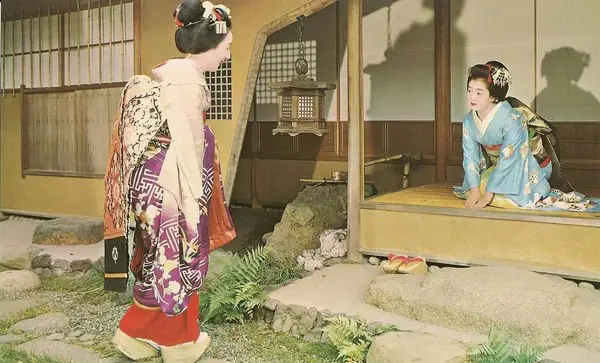
Omotenashi involves other words we also know in English, such as humility, honesty, friendship, and love. These are words we know very well and can guide our lives in the best possible way.
8. Mottainai [もったいない] - Value and Avoid Waste
Mottainai expresses a feeling of regret for waste. It goes beyond the idea of reusing materials, encompassing respect for time, relationships, and opportunities. Mottainai invites us to appreciate the value of each thing, avoiding excessive consumption and unnecessary disposal.
In Japanese culture, "mottainai" manifests in various practices, such as the custom of using a cloth until the end, transforming it into a new item, or the habit of consuming food completely, avoiding food waste. This word reminds us that everything has value and deserves to be appreciated, encouraging us to adopt a more conscious lifestyle.
By incorporating "mottainai" into our lives, we learn to value what we have and to avoid waste. The question stops being only "can I throw this away?" and becomes "can this still be used?"
9. Yugen [幽玄] - The Deep and Mysterious Beauty
Yugen refers to a deep and mysterious beauty that is hard to put into words. In classical Japanese aesthetics, especially in waka and nō, it is the lingering overtone that remains after the image, the charm that words do not fully say.
That is why yūgen is often tied to fleeting images: the cherry blossom that lasts only a short time, or the moon that changes shape each night. The word asks us to feel that beauty without having to translate all of it.
By cultivating sensitivity to yugen, we learn to notice the fine leftovers of a moment: light, silence, a gesture that is not spelled out. Yugen inspires us to live with more attention to the small things.
10. Ukiyo [浮世] - Live in the Present Moment
Ukiyo means "floating world." At first the word came from 憂き世, the hard and passing world of a Buddhist view. Later, in the Edo period, the same sound came to be written 浮世: this unstable world in which people live, work, and, for some, look for pleasure.
That is why ukiyo reminds us that nothing stays still: work, fashion, the neighborhood shown in ukiyo-e, and life itself pass. The word invites us to look at the present with that awareness, without pretending the world is eternal.
When ukiyo enters the conversation, the cut is the world we are in now, with its hurry and its short beauty. Living in the moment, here, is recognizing that it floats.
Conclusion
If we apply the philosophies and lifestyles taught by these words, we will have a compass to face difficulties and choose the next step, each term at a different hour.
From the thousands of Japanese words, which other word do you find interesting to guide our lives?





Community
Comments
0 comments
There are no published comments in this language yet.
Send comment