
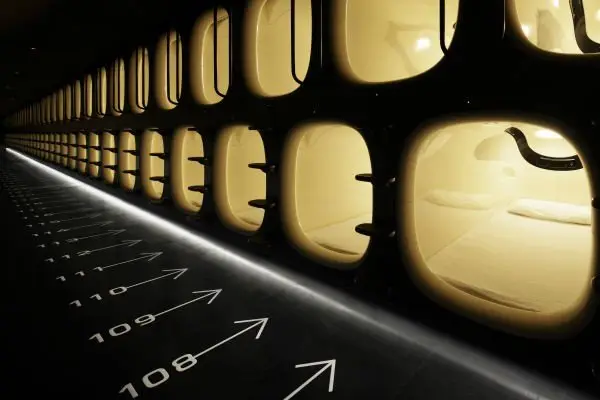
A room the size of a bed can sound like a novelty until you need a clean place to sleep after a late train. Japan's capsule hotels make that constraint part of the experience: you get a sleeping pod of your own, while baths, washrooms and lounges are shared with other guests.
The kapuseru hoteru [カプセルホテル] began in Osaka in 1979, yet the idea has moved far beyond its original audience. Some properties still feel like a practical overnight stop; others lean into design, spa facilities or a quiet base in the city. The important part is knowing what a capsule gives you—and what it does not.
Contents 6
What are capsule hotels in Japan like?
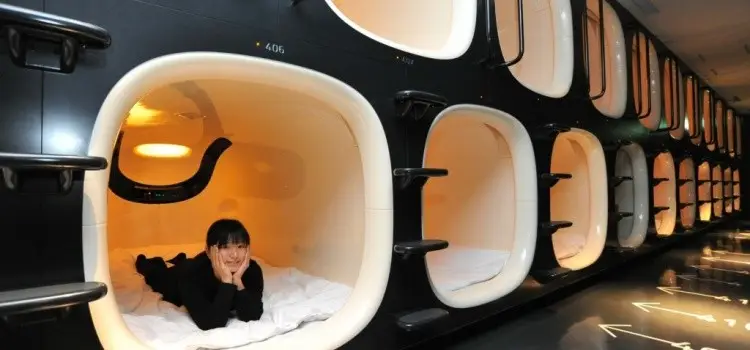
A capsule hotel arranges compact, bed-sized sleeping units in rows or stacked levels. Inside, a pod commonly has bedding, a light and a power outlet; many properties also offer Wi-Fi, a screen or small shelf. The exact size and equipment vary, so it is better to read the room description than assume every capsule follows one standard.
The pod is your sleeping space, not a full private room. Toilets, showers and often a bath area are shared. You will usually receive or be assigned a locker for valuables, while larger luggage may need a luggage room or coin locker. That division is what keeps the stay compact: the capsule is for resting, while the rest of the hotel handles the routines of the day.
How does a stay usually work?
The arrival routine can feel unusual on a first visit, but it is usually straightforward. After check-in, guests are assigned a capsule and a locker. In some hotels you first leave your shoes in a small locker; in others, the details are handled at the front desk. Keep valuables in the locker rather than inside the pod, because many capsules use a curtain or screen for privacy instead of a lockable door.
Quiet is the shared rule that matters most. Calls, packing and conversations belong in the lounge or another common area, not beside sleeping pods. Eating and smoking are also commonly restricted to designated spaces. A shower, bath, laundry room, vending machines or lounge may be available, but amenities differ widely by property.
For a longer trip, check the daytime policy before booking. Some capsule hotels allow consecutive nights but still ask guests to check out or remove belongings during the day; others operate more like a conventional hotel. The same applies to access rules: properties may be men-only, women-only, mixed with separate floors, or arranged differently. Read the booking conditions for the specific hotel.
Capsule hotel vs. hostel
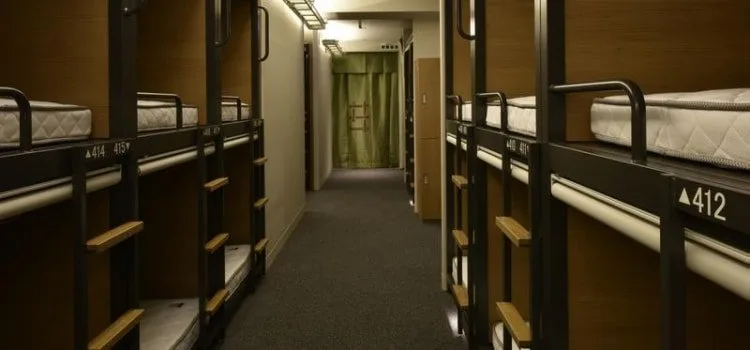
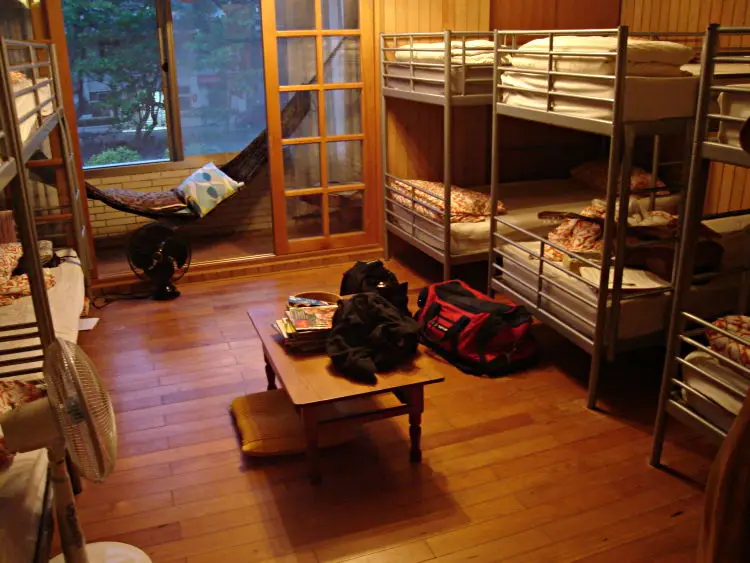
Capsule hotels and hostels can both be affordable ways to sleep in Japanese cities, but they create a different kind of privacy. A capsule hotel gives each guest an enclosed sleeping pod, usually with shared baths and a quieter sleeping area. A hostel typically gives you a bed in a dormitory or private room and may put more emphasis on social spaces.
The material around the bed is not the real dividing line. Traditional capsules have often been made from fiberglass or similar molded materials, while hostel bunks may be built from wood or metal. What changes the experience is the layout: a capsule hotel is designed around individual rest, while a hostel can be a better fit when you want more room, a communal atmosphere or a flexible place to meet other travelers.
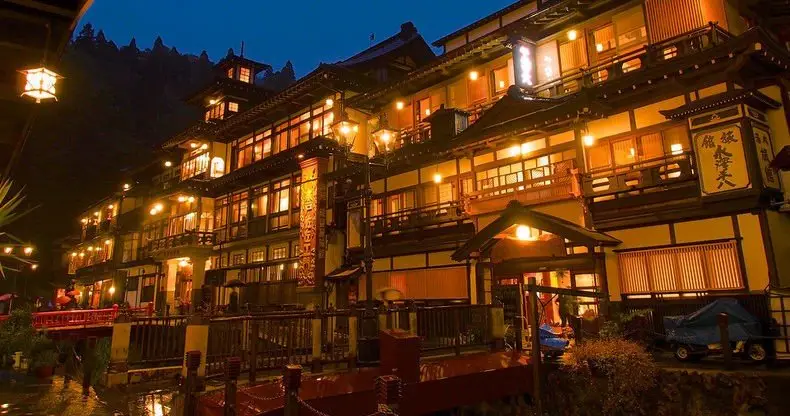
If you are comparing several kinds of stay, this guide to accommodation in Japan can help place capsule hotels alongside other options. A ryokan, for example, offers a very different rhythm and much more private space.
Things to consider before booking
Capsule hotels work best when the sleeping pod is all the room you need. They can be less comfortable for very tall travelers, people who need a lot of luggage close at hand, light sleepers, or anyone who wants to spend the evening in a private room. The limits are not a flaw; they are part of the trade-off for a compact stay in a convenient location.
They are also rarely the easiest choice for a family or a couple hoping to share one room. Age limits, group rules and floor arrangements differ from hotel to hotel, so do not rely on an old general rule. Check the room type, who may use it, luggage storage, bathroom arrangement and check-in hours before paying.
For some itineraries, the location matters more than the novelty. A capsule hotel can be useful near a station after a late arrival, between long travel days, or when you would rather spend your budget on the city than on a large room. If the plan calls for more space, consider a hostel, business hotel or a home stay instead.

Where did capsule hotels begin?
The first capsule hotel, Capsule Inn Osaka, opened in Osaka in 1979. Its operator, New Japan Co., Ltd., credits architect Kisho Kurokawa with the design and describes the concept as a business hotel for the year 2100. The format became associated with people who needed an economical place to spend the night after missing the last train, but it now attracts visitors who are curious about a distinctly Japanese form of accommodation.
That history also explains why the format feels so different from a conventional hotel. It was built around the simple task of giving one person a place to rest, not around creating a private living space. Modern properties have stretched that idea in different directions, from classic sleeping pods to larger capsules and semi-private rooms.
Capsule hotel etiquette that makes the stay easier
- Pack what you need before entering the sleeping area, then keep late-night noise to a minimum.
- Store valuables in the assigned locker and ask about larger bags at check-in.
- Use the lounge, dining area or smoking area for the activities allowed there instead of inside the pod.
- Follow the property's bath and floor rules; they are part of making shared spaces comfortable for everyone.
- Confirm checkout, daytime access and any gender or age policy before you book.
A capsule hotel is not meant to replace every other kind of lodging. It is a compact answer to a very specific travel need, and that is what makes it memorable. When the location, rules and shared facilities suit your plans, sleeping in a pod can be one of the most practical—and most Japanese—nights of a trip.


Community
Comments
0 comments
There are no published comments in this language yet.
Send comment