
Gyaru is one of the most recognizable movements in Japanese street fashion. The look is flashy, expressive and intentionally hard to ignore, but gyaru is not only about clothes. It also carries a rebellious attitude, a strong beauty code and its own slang, all of which helped shape youth culture in places like Shibuya during the late 1990s and 2000s.
Many quick definitions reduce gyaru to bleached hair and dark tans, but that is only part of the story. Some substyles lean heavily into tanning and dramatic contrast, while others are softer, glamorous or even princess-like. What ties them together is self-expression, visible styling effort and a refusal to follow a quiet, modest ideal of beauty.
Contents 5
What does gyaru mean?
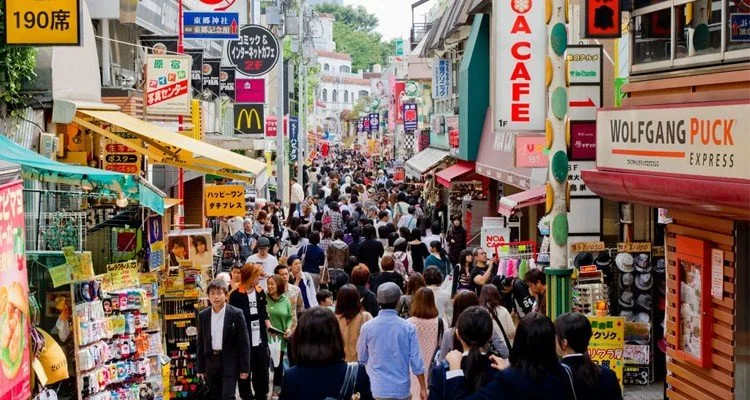
Gyaru (ギャル) is the Japanese pronunciation of the English slang word gal. Over time, the term came to describe a broader fashion culture built around bold makeup, dyed hair, decorated nails, attention-grabbing outfits and a confident social presence. The style became especially visible in Tokyo, with Shibuya serving as one of its best-known hubs.
Magazines such as egg helped popularize the look, while music, nightlife, purikura photo booths and changing teen slang gave the culture its own identity. Even when the mainstream boom cooled down, gyaru remained influential in fashion, makeup tutorials, anime character design and nostalgic Y2K trends.
What defines gyaru style?
There is no single gyaru uniform, but a few visual elements show up again and again. Eye makeup is often the biggest marker: heavy eyeliner, false lashes, enlarged-eye techniques and colored lenses are all common. Hair is usually dyed, curled, teased, straightened or otherwise styled to look deliberate rather than natural.
Clothing depends on the substyle, but gyaru fashion often favors short skirts, fitted tops, platform shoes, animal prints, denim, rhinestones, large bags and statement accessories. Nail art also became part of the identity, especially in styles that leaned more glamorous than casual.
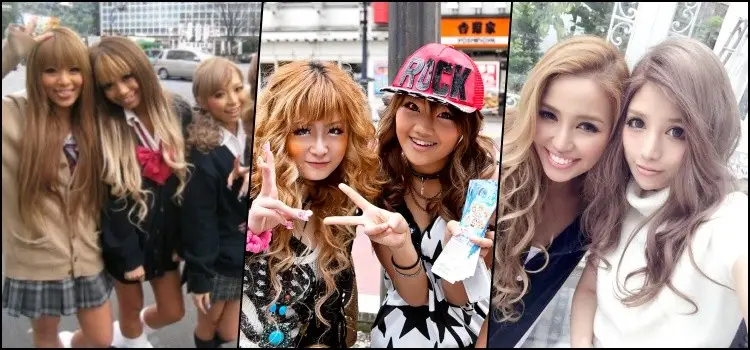
Another point worth correcting: not every gyaru is deeply tanned. That image became famous because substyles such as ganguro and later kuro gyaru were visually striking, but other branches use lighter skin tones and focus more on lashes, hair, nails, luxury-inspired outfits or hostess-style glamour.
Well-known names associated with gyaru media and modeling include Tsubasa Masuwaka, Kumiko Funayama (Kumicky), Rina Sakurai and Sayoko Ozaki. Their magazine appearances, shop collaborations and beauty looks helped turn the style into a recognizable reference far beyond Japan.
Related reading:
- Do Japanese students wear short skirts in winter?
- Bosozoku, Yankii, and Sukeban - Japanese gangs
- Guide to Japanese styles - Visual Kei, Decora, Harajuku
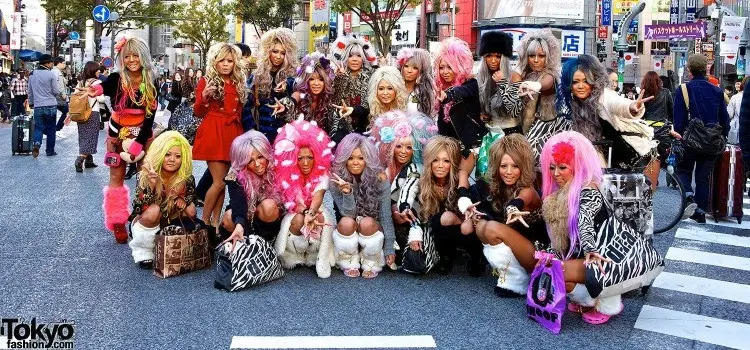
Main gyaru substyles
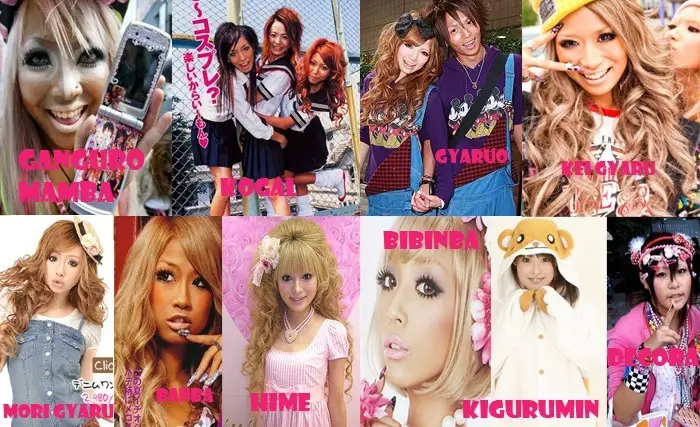
Gyaru works as an umbrella term. Some labels came from magazines, some from street scenes, and many overlap in practice. These are some of the best-known examples:
- Kogyaru: school-uniform-inspired gyaru, usually linked to shorter skirts, loose socks, dyed hair and teen fashion culture.
- Ganguro: a high-contrast look famous for deep tans, bleached hair and dramatic makeup.
- Hime gyaru: a princess-inspired version built around curls, lace, bows, pink palettes and ornate accessories.
- Onee gyaru: a more mature and polished take, often closer to adult glam than teenage rebellion.
- Agejo: a glamorous, nightlife-adjacent style associated with bold hair, fitted dresses and hostess-fashion influence.
- Ane gyaru: a tougher, sexier and more mature branch that overlaps with onee gyaru but keeps a sharper edge.
- Gyaruo: the male counterpart, with dyed hair, tanned skin, styled outfits and club-scene influence.
Gyaru slang and gyarugo
Gyaru culture also became known for gyarugo (ギャル語), a fast-moving slang that changed with each generation. Some words stayed famous longer than others, while many disappeared as trends moved on. Here are a few expressions commonly associated with gyaru speech:
- ぽよ (poyo): a playful ending added to words to make them sound cuter or more exaggerated.
- あげぽよ (agepoyo): excited, hyped or in a great mood.
- さげぽよ (sagepoyo): feeling down, disappointed or low-energy.
- とりま (torima): short for toriaezu ma, used like “for now” or “anyway”.
- ぱちこく (pachikoku): to lie or make something up.
- あとんす (atonsu): a casual, stylized way of saying thanks.
Not every gyaru uses the same slang, and plenty of these words sound dated today. Even so, gyarugo remains part of what made the subculture feel separate from standard school or adult speech.
Why gyaru still matters
Gyaru never stayed frozen in one decade. It changed with magazines, shopping districts, club culture, social media and the return of interest in Heisei-era fashion. That is why the style still appears in anime, cosplay, makeup trends, pop nostalgia and modern reinterpretations that borrow its confidence without copying every old rule.
If you want to understand gyaru, focus less on a single outfit and more on the mindset behind it: visible effort, playful excess and a refusal to disappear into the crowd.

Community
Comments
0 comments
There are no published comments in this language yet.
Send comment