What would writing in red ink represent for the Japanese? For the more skeptical, nothing. However, for the more superstitious, a lot. This is yet another popular myth present in Japanese society.
The fact that you write someone’s name using red ink represents danger within this superstition. Check below why one should avoid writing in red ink.
In Japan, people have the custom of making their own tombstones to have them ready for when their time comes. The citizen then writes their own name on the gravestone in red to indicate that they are still alive. On the day the individual kicks the bucket, their name is then written in black on the gravestone to indicate their death.
Due to this custom, the Japanese began to associate writings in red ink with death and other things. Ironically, the stamps or signature seals of the Japanese are usually in red.
What does it mean to write a name in red ink?
Given the aforementioned custom, writing someone’s name in red can represent premature death or bad luck in general.
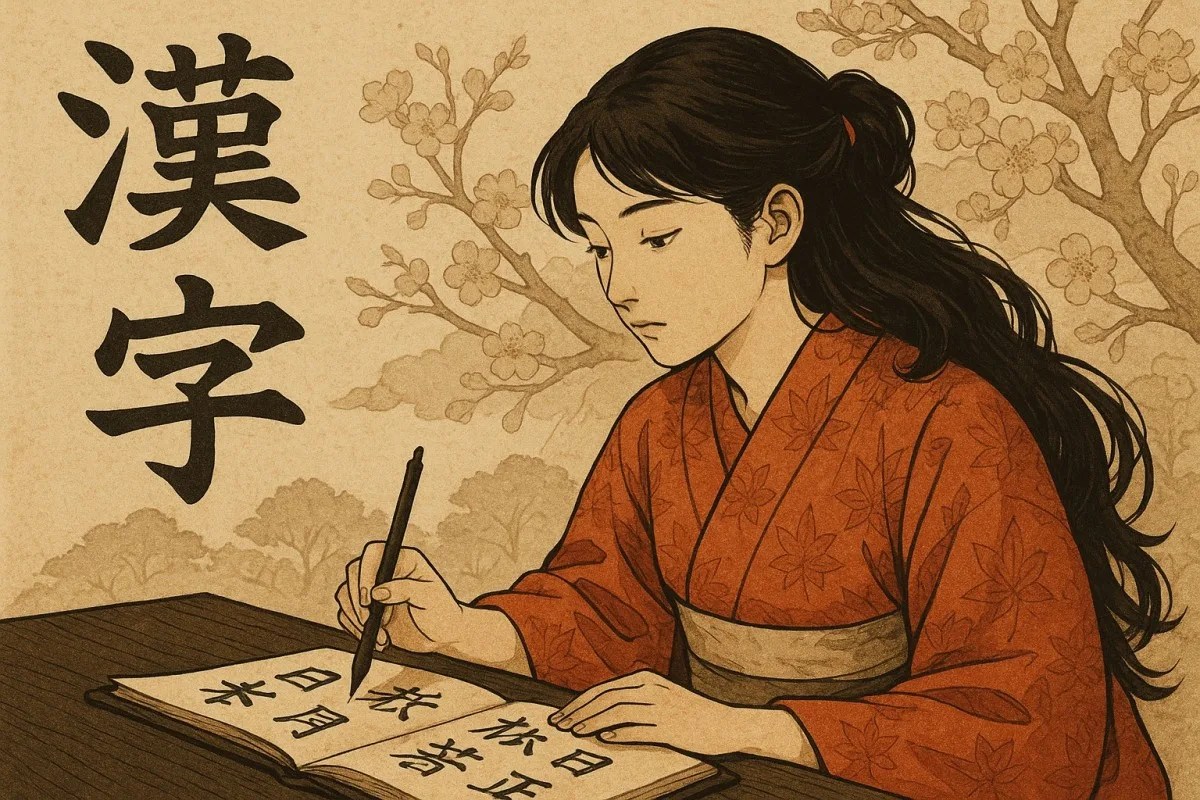
If you write a person’s name (or your name) in this color, it can also represent that the person will go bankrupt. This may have to do with the fact that the word 赤字 (akaji), which means “deficit,” is formed by the characters 赤 (red) and 字 (character).
Depending on the situation (and the person), writing a person’s name in red can also be considered an offense since the names of criminals (especially those on the death row) are written in this color. Writing a person’s name in this color implies that they are a criminal.
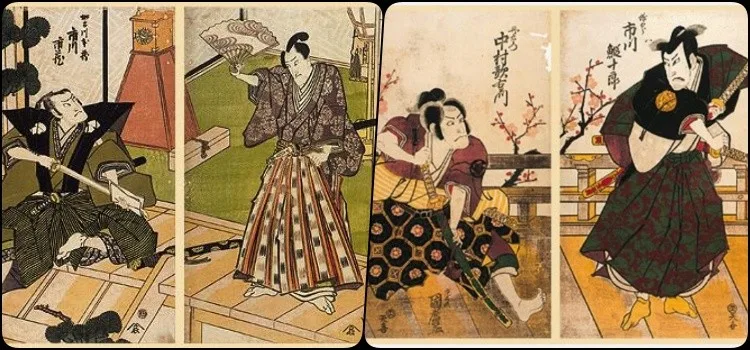
Red ink also represents the person’s desire to cut ties with another person. This is related to the fact that samurai used to write letters to challenge the recipient to a fight to the death. These letters were written in red.
The color also represents something that is unofficial. All official documents are written in black, while red ink is used to correct mistakes in drafts. When names are written in red, it gives the impression that your name is being disrespected and not treated officially.
Does this taboo of red ink still persist today?
This taboo is disappearing. Thus, there are people who are unaware or really do not care. But to be safe, it is advisable to always use a black pen to avoid offending someone. Consider a name written in red like a voodoo doll with your name on it.
Even if you do not believe in or care about these things, it is still important to respect and avoid problems. The red is mainly used on gravestones. Do not use red when signing cards, and even avoid red Christmas cards. Funeral notices in Japan are red.
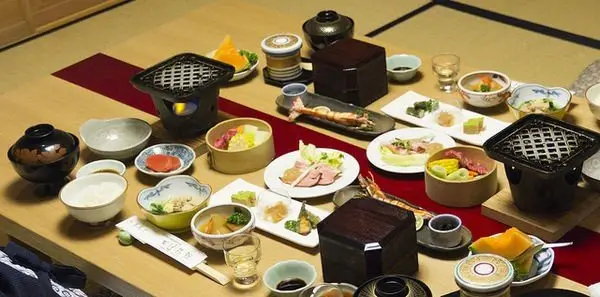
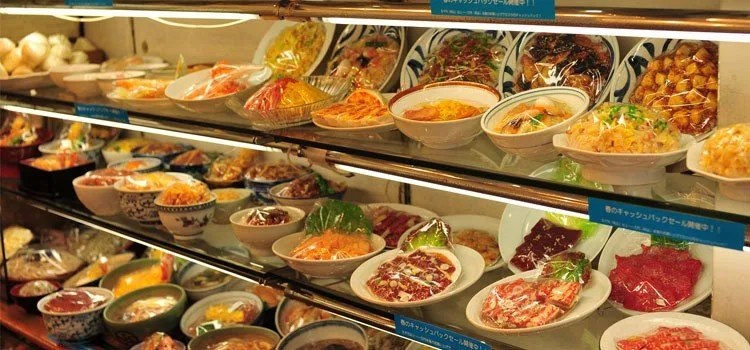
In today’s article, we will have a great compilation of information and curiosities about Food. Below you will find curiosities and information related to food and cuisine from Japan.
Japan has the largest number of vending machines in the world. These machines are known as hanbaiki;
Convenience stores called konbini are found everywhere. There you can find all kinds of food you never dreamed of finding in Brazil. You can also buy the famous obentos, which are Japanese lunch boxes, without the need to make your lunch;
Food in Japan is not as expensive as most people think. Vegetables and meats are priced higher compared to Brazil, but it is quite affordable for the Japanese salary;
It can be said that the Japanese people eat the best in the world. It has been proven in various studies that Japanese cuisine is one of the richest and most diverse in the world;
Food in Japan
The main foods in Japan are rice, noodles, fish accompanied by various leaves and roots, vegetables, and legumes… and it is normal to season all food with ginger;
The traditional Japanese breakfast is called Asa gohan, which means morning rice. It is a complete meal similar to lunch and dinner, including white rice, fish, misoshiro, and tsukemono, and you are satisfied with a bread xD
There are indeed expensive fruits and vegetables, which can cost up to 2,000 reais, but they are artistic fruits, with different shapes and rare for collectors, however, the price of a normal natural food is quite affordable, and if you think about it, they eat much more fruit than we do, which we waste;
There is no bean in Japanese cuisine, there is sweet bean which is only used to make sweets, this means that your mother cannot make excuses that if you don’t eat beans you will get sick, since Japan is the country with the most centenarians;
In Japan, there is indeed barbecue, the meat is not expensive, there are even restaurants where you do your barbecue, grill the meat, and eat with friends..;
It is normal to find sweets, cakes, and various things made from rice and rice flour;
It is normal to find rice fields all over the city;
Although Japanese cuisine is very natural, full of things that many do not like such as vegetables and fish. The Japanese manage to transform these foods and make them have completely unique flavors that awaken the interest of many who hate them. I myself do not like fish, but I love sushi;
Processed Foods
It is normal to find processed foods with toys and packaging from anime and games;
Sweets, Japan is rich in sweets and chocolates with completely different flavors, and it is normal to find chocolates with tea flavors, wasabi, pepper, pumpkin, even bars that are baked in the oven. Not only sweets but also savory snacks have their exotic flavors, not just fish but various things, and it is common to find avocado-flavored Doritos and Cheetos, and even Pepsi flavor;
There are various types of foods for children to eat while playing, like powders that turn into sweets in the shape of sushi or bento;
There are various flavors of processed foods like sweets and snacks, sodas and drinks, that have their flavors for a limited time or region;
Everything made in Japan is designed to be easy and practical, including the ways to open packaging and food boxes like milk;
It is normal to find vending machines (hanbaiki) even in the middle of nowhere, on highways, mountains, even next to a supermarket, and the interesting thing is that no one breaks in or steals like in Brazil;
KitKat is one of the well-known sweets in Japan unlike Brazil which only has one flavor… there must be more than 8,000 flavors, orange peel, chocolate with pepper, raspberry, wasabi, bean, tea, etc;
Customs and Etiquette
Before eating, you say Itadakimasu, an expression used to thank the food, and when you finish you can say Gochisousama [deshita];
It is normal to serve hot and cold drinks in hanbaiki, and the Japanese really like coffee, tea, and bitter things. You have no idea how bitter green tea is there;
Ohashi, chopsticks are usually much more practical than any fork or spoon, and even easier. But don’t worry, it is not unusual to eat using a fork in Japan;
Trash is completely separated and should not be exposed on the street like in Brazil, because of the crows… there is a 100% functional collection system;
Going hungry in Japan is impossible due to thousands of varieties of things to eat. Food from malls that here tends to be expensive for some, there is much cheaper without considering the salary earned;
In Japan, it is customary for students to bring their own bentos to school;
In Japan, there is beer for children. Is this an incentive to drink in the future?
It is easy to find sweet foods with bean flavor. This bean sweet is as sweet as sweet potato sweet;
Food in Japan is taken seriously, it is like an art, the obento is a living proof of this. Sometimes they go overboard in their creations making people drink even in toy toilets;
Regarding recycling, it is not normal to find trash cans on the streets. When buying something from vending machines, you must carry the trash home or until you find a place;
The Art of Cooking
Onigiri – rice balls filled with chicken, meat, or sauce are very famous, especially as a quick snack;
It is easy to find gadgets to help in cooking like apple and banana cutters, package openers, and much more;
In Japan, it is not common to find French bread. But there are various different breads, especially stuffed, even bread stuffed with yakisoba;
It is normal for them to mix sweet and savory flavors, it is possible to find shrimp snacks with chocolate;
It is normal to find small empty stalls in the middle of nowhere where various vegetables and fruits are found. In these places, a person simply takes the product and deposits the money in a box, and no one usually steals;
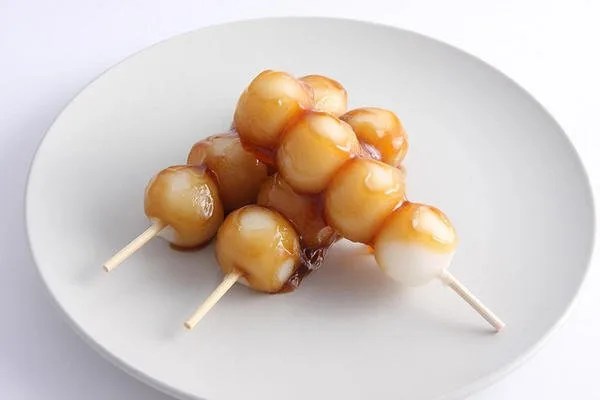
There are various festivals in Japan, where it is possible to buy dango, takoyaki, tempura, and others;
It is very normal to make faces, arts, in food;
Unlike Brazil, they usually separate food into several containers, even the obento usually comes all neatly separated;
There are thousands of curiosities that you can find in other articles on the site! Thank you!
Nowadays, most people let themselves be influenced by the experiences of others. They end up defining Japan or the Japanese based on these experiences. On the other hand, we have people who have gone through certain experiences, often negative, and end up spreading this as if it were reality, as if everyone faced the same problem.
In today’s article, we will talk about the different types of experiences that Brazilians have in Japan. And also why one should not define the country or the Japanese because of this.
I am writing this article because, unfortunately, what I see most on the internet are people arguing, some attacking Japan and others defending it. Not to mention the crazy ideas that some Brazilians have created due to the experiences that some have had in Japan.
People need to discern that anywhere in the world! We can have good and bad experiences, but they do not define the reality of the country. No human being is the same, not to mention that Japan has over 126 million inhabitants. Furthermore, it has 47 prefectures, each with different customs and cultures.
Different types of experiences in Japan
To think a little about this subject, I will talk about 3 paths that provide different experiences in Japan. Of course, the different types of experiences are infinite.
Tourist – The experience a tourist has when visiting Japan is usually good. Especially if the tourist already knows and likes Japanese culture. Tourists feel amazed by everything and have nothing to complain about.
Working in a factory – Unfortunately, the reality for most foreigners working in factories is harsh. It is a repetitive and tiring job that leaves people a bit stressed. Some Japanese who work in factories are also stressed, which results in conflicts and problems between Japanese and Brazilians.
Other jobs – When a qualified Brazilian goes to work in Japan in a company, office, or even independently, their life experience is completely different. The person has more leisure time and does not face as many problems.
The experiences of these 3 types of people are completely different. But it doesn’t stop there; there are people who have a pleasant life and have never encountered anything bad while working in factories, just as there are people who faced difficulties working in renowned companies or studying at Japanese universities or schools.
Another factor that shapes a person’s experience is their personality. Their tastes can determine whether they feel happy or not, and this ends up defining their words, which are sometimes negative or positive criticisms.
Your opinion can cause problems
Just because you had an unpleasant experience in Japan does not mean that other people will have one. Or just because your life in Japan is wonderful does not mean that others’ lives are. Therefore, avoid imposing your idea about Japan on others! It is a very large and diverse country. Of course, you can warn them about problems or help them in difficult moments, but your negative words can end up altering something that could be positive in their lives.
I like to think positively and spread positive things, which is why you will rarely see me saying anything bad about Japan. I understand that a large number of people have faced problems, but that is not a reason to condemn the country, as I see some doing on social media.
Tell me, do you like it when someone says that Brazil is bad and that Brazilians are criminals? Brazil has a high rate of theft, violence, and corruption, but that does not mean that all Brazilians are bad. Nor does it mean that Brazil is a terrible place that is impossible to live in. Now, thinking about this, see if you are not doing the same thing with Japan when people say that Japanese are cold, or when they say that in Japan, they only work and have no time for anything.
The goal of this article is to make it clear that your experience is not everyone else’s experience. And also to make it clear that Japan is not the same and the Japanese are not the same. One should not define Japanese personality just because of the people you know. A great piece of advice I give is Think Positive! Stop looking for faults and complaining; if things are not good, try to change them. Many Brazilians in Japan found what they wanted after a lot of dedication, study, and persistence.
In this article, we will learn some curiosities about popular sports in Japan. Some interesting and curious facts that you probably didn’t know.
But just to be clear! Before jumping to conclusions, the article is not saying that it is always like this. These are just curiosities that can change over time, or that do not happen in all regions of Japan.
Sumo Wrestlers only eat twice a day
Sumo wrestlers only eat twice a day! Once right after finishing their morning training and then again at night, after finishing their afternoon training.
A typical meal includes the presence of chanko-nabe, containing large amounts of meat, fish, and vegetables. Their meals are consumed in such a way that the calories absorbed from their meals always exceed the caloric value lost during training, thus maintaining the same body weight.
Sumo Wrestlers do not wash their loincloths
The mawashi (loincloth) that sumo wrestlers wear is never washed. Instead, they are generally just hung to dry, for two reasons. One is to bring good luck and the other is because washing the mawashi weakens the fabric.
There is more than one type of Sumo
Sumo has always had a powerful grip in Japan since ancient times and there are many games that incorporate it. One of them is the game kamizumo (paper sumo), in which dolls of sumo wrestlers made of paper… are placed inside a circle drawn on the top of a cardboard box, after being in a proper position for the “start of the fight” it is enough to tap around the circle until one of the wrestlers leaves the marked area.
Victory poses are not allowed in Kendo
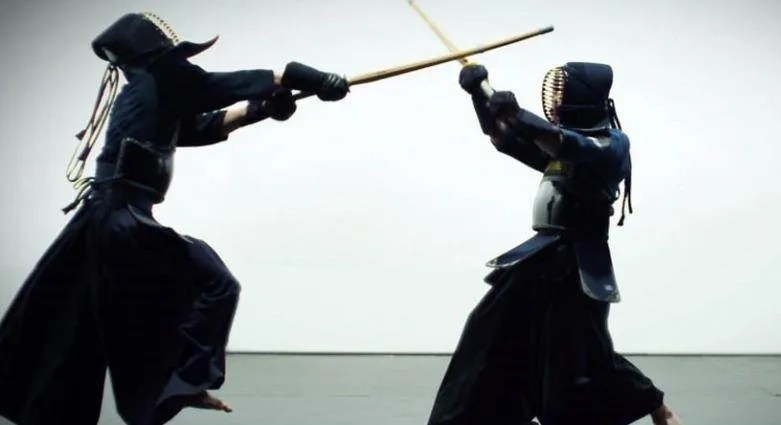
Kendo is a sport born in Japan and is considered of great importance. If a practitioner manages to score a point against their opponent and then immediately strikes a celebratory pose, the point they earned will be taken away for behaving in a disrespectful and insensitive manner towards an opponent. And also so that practitioners do not lose concentration and intensity of spirit, something that is crucial in Kendo.
Olympic Games for athletes over 60 years old
Every year, since 1988, senior athletes over 60 years old in Japan participate in a sports and culture event called “Nenrinpics,” named for the combination of nenrin, or “the rings of age of a tree,” with the word Olympics.
This sports festival lasts four days and involves a variety of events, including tennis, a marathon, Kendo (Japanese fencing), ping-pong, board games like go and shogi (Japanese chess) and haiku (Japanese poetry). Each prefecture in the country finds a way to host this event.
Professional baseball fans stick together during games
The biggest difference in Japanese professional baseball lies in how its spectators behave. Fans of each team unite as one, singing fight songs to the sound of trumpets and taiko (drums). They also release a huge number of balloons into the air, cheering for their teams with endless enthusiasm.
High school baseball players take home the dirt
Summer in Japan is the time for the national high school baseball championship known as “koshien,” which pits around 4,000 high school baseball teams from across the country against each other in a qualifying tournament to reach this sacred competition.
Although koshien features student athletes, all games are broadcast live throughout Japan. Those chosen to represent their cities carry heavy expectations and compete as if their lives depended on the outcome.
Players who lose this competition often cry and throw themselves on the ground regretting the outcome, and many say “We will be back!” This is done in an emotional tone that can make many spectators’ eyes fill with tears.
In today’s article, we will translate the opening of the anime Eromanga Sensei sung by ClariS. The name of the song is Hitorigoto, which means talking to oneself or monologue. The name of the song is written in katakana, but the word can be found written as 独り言.
Hitorigoto da yo hazukashii koto kika nai de yo ne
kimi no koto da yo demo sono saki ha iwa nai kedo ne
kakechigae teru botan mitai na modokashi sa o
toke nai mama mata muzukashiku shiyo u to shiteru
tsutae tai kimochi ha kyou mo kotoba ni naru chokuzen ni henkan misu no renzoku de
tameiki to issho ni nomikon de ha horonigai
futoshita toki ni sagashi te iru yo
kimi no egao o sagashi te iru yo
muishiki no naka sono riyuu ha mada ie nai kedo
hitori de iru to ai taku naru yo
dare to itatte ai taku naru yo
tatta hitokoto ne e doushite ie nai sono kotoba ie nai kono kimochi
hayaku kidui te hoshii noni
sen piisu aru pazuru mi tai na sentakushi to
souzou ryoku ga handan ryoku no jama o shichau
tsukame nai kimochi ha kyou mo kawaiku nai kao mise te
jiko keno kudasu koukai de
tamekon da gomen ne o hakidasu ni ha hodotooi
mimi o sumase ba kikoe te kuru yo
kimi no koe dake kikoe te kuru yo
zattou no naka kiduka nai furi shi te ii kedo
tonari ni iru to ureshiku naru yo
tooku ni iru to sabishiku naru yo
tanjun na koto de mo doushite ie nai sono kotoba ie nai kono kimochi
motto sunao ni nari tai
nakidashi sou na soramoyou hoo ni ichi tsubu ame ka na?
fuantei na kokoro kasane kakushi ta hitorigoto ni zenbu kakushi te
kimi no koto honto ha zutto
futoshita toki ni sagashi te iru yo
kimi no egao o sagashi te iru yo
muishiki no naka sono riyuu ha mada ie nai kedo
hitori de iru to ai taku naru yo
dare to itatte ai taku naru yo
tatta hitokoto ne e doushite ie nai sono kotoba ie nai kono kimochi
hayaku kidui te hoshii noni
Translation of the Song
Click here to expand the text
Me talking to myself, don’t listen it’s embarrassing!
It’s about you! But I won’t say anything more than that!
I’m so frustrated, like my buttons are switched.
It’s impossible to figure this out, I’m just making things harder.
Once again, the feelings I want to express go through a series of mistakes before they become words.
Swallowing along with a sigh is bittersweet.
I’m looking occasionally, I’m looking for your smile
This happens unconsciously, I still can’t say what the reason is.
I’m always alone, suddenly I want to see you! It doesn’t matter who I’m with, I want to see you!
It’s just a single word, why? I can’t say those words!
I can’t express these feelings! I wish you would hurry up and notice me alone.
The choices I have are like 1000 pieces of a puzzle.
Combined with my imagination, they prevent me from deciding!
This feeling that I can’t control
Shows your unattractive side once again!
With all my self-hatred + regrets,
I’m far from saying the apologies I’ve been gathering…
If I listen closely, I can hear!
I hear nothing but your voice!
Even though with all this commotion I’m pretending not to notice.
When I’m by your side, I feel so happy!
When you’re far away, I feel so lonely!
It’s such a simple thing, so why…? Ahh…
I can’t say the words!
I can’t tell you this feeling!
Ahh… I want to follow my heart…
The sky seems about to cry…
I feel a drop on my face… is it raining?
I hid my indecisive heart under my umbrella—
I hid everything behind the words I spoke to myself.
The truth is that I always… Ah…
I’m looking even before I realize—
I’m looking for your smile!
This happens unconsciously so I can’t even tell you why.
When I’m alone, I start wanting to see you!
It doesn’t matter who I’m with, I start wanting to see you!
It’s just a simple phrase, so why…?
Ahh… I can’t say the words!
I can’t tell you this feeling! Ahh…
I just wish you would notice soon!
Breaking Down the Song
Now let’s study Japanese by breaking down the song, remembering that only VIP members can see the complete song.
ヒトリゴトだよ 恥ずかしいこと聞かないでよね
 Hitorigoto da yo hazukashii koto kika nai de yo ne
I’m talking to myself, don’t ask me it’s embarrassing!
ヒトリゴト – monologue
だよ – confirms like です
恥ずかしい – embarrassing, shameful
こと – thing
聞かない – not asking
キミのことだよ でもその先は言わないけどね
 Kimi no kotoda yo demo sono-saki wa iwanaikedo ne
It’s about you! But I won’t say anything more than that!
君 – キミ – You
こと – Thing
でも – but, however
その先 – beyond, after this
言わない – not saying
けど – however, despite
掛け違えてるボタンみたいなもどかしさを
 kakechigae teru botan mitai na modokashi sa o
I’m so frustrated, like my buttons are switched.
掛け違う – cross paths, conflicts, switch
ボタン – button
みたい – like, type, seems
もどかしさ – irritating, frustrating, slow, impatient
解けないまま また難しくしようとしてる
 Hodokenai mama mata muzukashiku shiyou to shi teru
It’s impossible to discover this, I’m just making things harder.
解けない – unsolvable, without solution
まま – remain
また – also, again
難しく – difficult
してる – doing
伝えたい気持ちは今日も 言葉になる直前に 変換ミスの連続で
Tsutaetai kimochi wa kyō mo kotoba ni naru chokuzen ni henkan misu no renzoku de
Once again, the feelings I want to express go through a series of mistakes before they become words.
伝えたい – want to tell, communicate, transmit
気持 – feelings
今日も – today also, recently
言葉 – word
なる – become, be
直前 – just before
変換 – change, transform, convert
ミス – error, failure
連続 – series, consecutive
ため息と一緒に飲み込んでは ほろ苦い
Tameiki to issho ni nomikonde wa horonigai
Swallowing along with a sigh is bittersweet.
息 – breath, sighs
一緒 – together, along with
飲み込んで – swallow, gulp down, digest, comprehend
ほろ苦い – bittersweet, slightly bitter
ふとしたときに探しているよ キミの笑顔を探しているよ
Futoshita toki ni sagashite iru yo kimi no egao o sagashite iru yo
I’m looking occasionally, I’m looking for your smile
ふとしたとき – occasionally
ふとした – impulsive, unexpected, casual
とき – time, moment, hour
探している – searching
キミ – you, your
笑顔 – smile
無意識の中その理由はまだ言えないけど
Muishiki no naka sono riyuu wa mada ienaikedo
無意識 – unconscious
中 – center, middle
理由 – reason, pretext, motive
まだ – still,
言えない – cannot say
けど – but, however, despite
It happens unconsciously, I still can’t say what the reason is.
一人でいると会いたくなるよ 誰といたって会いたくなるよ
Hitori de iru to aitaku naru yo dare to itatte aitaku naru yo
I’m always alone, suddenly I want to see you! It doesn’t matter who I’m with, I want to see you!
一人 – alone
いる – to be, normally
会いたく – want to meet
なるよ – change, become emphasized
Tradução adaptada para fazer sentido
誰といたって – It doesn’t matter who;
たった一言ねえどうして 言えないその言葉
Tatta hitokoto nē dōshite ienai sono kotoba
It’s just a single word, why? I can’t say those words!
In today’s article, I will present some apps that I use to learn Japanese on my phone and tablet with Android, iOS, and even the deceased Windows Phone (which is usually also available on the Windows 10 Store).
All the apps below are free, some may have paid content. They are apps that I chose and use to learn, mandatory apps that should be installed on the phones of Japanese students.
Japanese Club
Before we talk about popular apps on Android and iOS, I want to recommend our Japanese course that can be accessed from any mobile device through the browser.
Our Japanese course is an extension of the website, we offer Japanese video lessons using traditional teaching elements and also cultural elements like anime and manga.
We are doing our best to make this teaching platform accessible and with the largest amount of content possible, so we invite you to take a look by clicking on the image below:
Japanese Memorization Apps
Anki and Similar Apps
Android; iOS; Windows; Web
Anki is a well-known spaced repetition memorization website. You can download the app for computer or mobile devices, or use another app that connects to its API to access word decks that help with memorization and review.
Some use the app to learn new words, but I advise using it only to review content that you have already learned or is at your level. It works in a sophisticated way, displaying cards that you need to review at the right time.
On iOS, its version is paid, as it is the only one developed officially. Fortunately, there are alternative versions that connect to the API and are even superior, such as ankiapp, Quizlet, and other apps with the same purpose of spaced repetition memorization.
Memrise
iOS; Android; Web
A famous app that supports various languages. Now it teaches Japanese in a very practical way, even bringing native voices and using a great memorization system. It has a pro version.
Japanese Kanji Study
Android
An English app focused on studying kanji, super complete and well organized, with systems that will help you memorize kanji. The app has over 6,000 kanji.
Japanese Lesson Apps
Obenkyo
Android; Windows
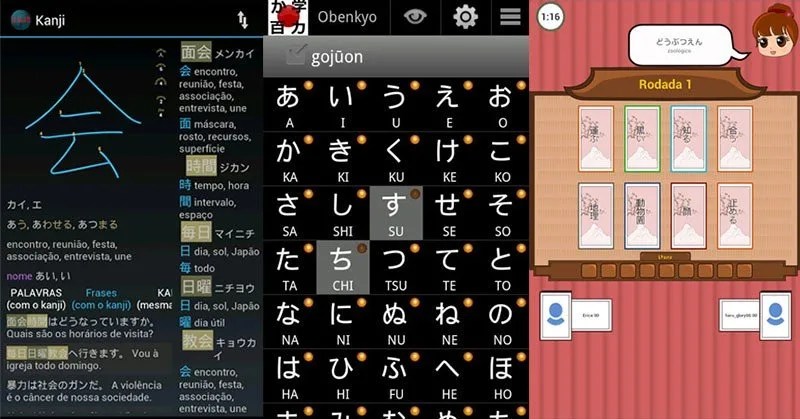
One of the most famous Japanese apps for smartphones, it is quite complete, has exercises, flashcards, quizzes to help with memorizing words, kanji, and even sentences. It has the option to draw, in addition to having basic lessons on Japanese grammar.
It is available in Portuguese, has explanatory articles and lessons. One of the most famous Japanese apps of all time. Unfortunately, it is not available for iOS. You may even find similar ones or apps with the same name, but it’s not the same.
The app is simple, has a memorization system, questions, a small dictionary, kana, kanji, and other Japanese lessons that you can find on any website, including on our Suki Desu site.
JA Sensei – Learn Japanese
Android
A complete package to learn Japanese! JA Sensei offers easy-to-understand Japanese lessons and various interactive exercises to learn Hiragana, Katakana, Kanji, Japanese vocabulary, Japanese phrases for your travels, numbers, verbs, etc.
Answer audio quizzes, multiple-choice, self-assessment, or drawing (draw kanjis to answer questions!) to memorize your learning.
Japanese Course – NHK 1
iOS and Android
This app compiles the entire NHK Japanese course into one app, so you can listen to the audios and study. The Japanese Course also helps you understand Japanese culture and the basic letters. There are over 50 audio lessons.
Let’s Learn Japanese: Beginner FREE
Windows Phone; Windows
Although it seems simple, it is one of the most useful apps, bringing great tests, flashcards, and with a huge vocabulary, one of the most complete apps. I haven’t seen its paid version yet, but this is already a wonderful app.
There are thousands of other apps, but these 4 are the ones I use the most, the most important ones that should not be missing on your phone, these are my recommendations, I hope you make good use of all the apps mentioned above.
Japanese Dictionary Apps
Tenjin and Jisho – Japanese Dictionary
Tenjin is a free offline Japanese dictionary without ads. It focuses on displaying relevant data about words, kanji, examples, and grammar points in a simple, clear, and elegant way. Tenjin makes suggestions, searches while you type, and excels at getting the user the data they want.
In my opinion, it is one of the best dictionaries for Android, as it is in Portuguese. Unfortunately, it is just a dictionary, and does not have all the words you can imagine; if you know English, you should use the workaround Jisho which has everything.
The jisho is the best Japanese dictionary available, there are thousands of APIs and apps that access such a dictionary on the WEB or even an offline version. The word jisho literally means dictionary, so look for apps of this type for your phone.
Tango Master
Android; Windows
The most complete app for studying on Windows Phone, with it you can locate Kanji using radicals, it comes with a shiritori tool. (Write words starting with the last letter of the previous one).
It also brings a Super Complete Dictionary, lessons, articles, tests, pronunciation of words and kanji, writing, and strokes. This is a true online dictionary, its only downside is being in English, but think positively, you learn 2 languages.
Japanese Game Apps
Karuta Kanji
Android; iOS
A game that helps with memorizing words and Kanji. It is similar to the game karuta, which instead of using poems, uses simple words in kanji. The good thing is that the app is in Portuguese and allows you to compete online.
The objective of the game is to look at the word in hiragana and grab the card with the same word, but written only in the dreadful kanji! The kanjis in the game are all the kanjis from the Japanese Language Proficiency Test level 4 (JLPT N4). There are 181 kanjis combined into 245 words!
The iOS version is different, but you can easily find various Karuta and Japanese games in the Apple Store. I don’t have details about such games, but the description I made is specific to Android.
Other game apps are:
Japanese Dungeon: Learn J-Word;
Other Apps for iOS and Android
漢字筆順Q – Japanese Kanji Stroke Order – Totally free app, with ads that allows you to study kanji, its reading, meaning, how to write them, and the stroke order;
Learn Japanese with 50 lessons – An app that has the NHK course in audio for you to study. Learn N5 and various dialogues and vocabulary to fully prepare for your trip to Japan;
Imiwa? – A very popular English and Japanese dictionary;
Nihongo – Japanese Dictionary – One of the several English dictionaries found in the Apple Store. Great for those who want to learn 2 languages at the same time;
Simple Furigana – This app allows you to add furigana to web pages and texts. It also transforms texts for vertical reading;
Learn Japanese – Manabu Academy – Learn Japanese with Manabu Academy in a fun and intuitive way, Hiragana, Katakana to more complex sentences, that in an easy way to understand, Manabu Academy helps you learn Japanese!
JClass: Learn Japanese – Learn Japanese with Yui, using different methods, learning by JLPT levels, with a medal system, quizzes, dictionary, etc.;
Kanji Connect – A little game where you connect kanji to form words. Very good for learning kanji reading and vocabulary;
HelloTalk – A messaging app that allows you to chat with native speakers who speak Japanese and other languages;
Do you know the largest nightlife entertainment center in Japan? Located in Tokyo in the Shinjuku district is one of the most dangerous and hottest neighborhoods in Japan, the famous Kabukicho. Here lies the largest red-light district in Japan, that is, a place full of nightclubs, hostess, bars, strip clubs, motels, prostitution, and full of strange and dangerous people.
Kabukicho is a well-known tourist spot among both Japanese and foreigners, regardless of whether a person is a pervert looking for entertainment or just wants to dance and enjoy the thousands of healthy attractions the neighborhood offers.
The variety of establishments in Kabukicho is not limited to brothels; in fact, it is the perfect place for anyone looking for fun. In this article, we will highlight several interesting points and reasons for you to visit this curious and colorful neighborhood.
It is worth remembering that this neighborhood and several other neighborhoods that are active at night have establishments run by the Yakuza. This is not a major concern; the dangers of nightlife neighborhoods are not caused by Yakuza members, just stay alert. In reality, the Yakuza values the order of their establishments and works together with the police to maintain peace.
Highlights of Kabukicho
In Shinjuku, we can find various karaoke bars, arcades, pachinko, restaurants, and especially dance clubs. One of the most popular highlights is Golden Gai, a small alley with over 300 bars and izakaya restaurants. Another similar but darker street is Piss Alley, also known as Memory Lane.
Piss Alley and Golden Gai
Robot Restaurant – One of the most eye-catching spots in Kabukicho, a place filled with lights, neon, and flashing signs, where they offer shows full of luminous robots, girls dressed in character with lots of dancing and vibrant music. A perfect place for those looking for healthy fun from another world, but you need to shell out around 8,000 yen. Despite the name, it doesn’t seem like a restaurant.
If you are looking for another themed restaurant, try one nearby called Lockup. There you will find corridors with sirens and alarms. Monsters and zombies serve your food and drinks, which are also themed with eyeballs and chemical containers. In Kabukicho, you will also find the famous Gracery Hotel, where you can see a giant Godzilla head on top.
Robot Restaurant
In Kabukicho, you will also find the Samurai Museum, a place with several rooms showcasing various eras of the samurai and many details and artifacts related to them. Here you also have the opportunity to dress in period attire. Another themed place is the Ninja Trick House, a 30-minute tour through a ninja environment, where you can learn more about ninja culture and take various photos with ninjas.
The nightlife in the Kabukicho neighborhood
There are many hostess or clubs where you can talk to girls or boys. Another quite popular and light option are karaoke bars, where you can sing and interact with random people without being in a closed room like in traditional karaoke.
It is worth noting that strip clubs often hire Filipino, Thai, and Vietnamese workers, so it may be difficult to find authentic Japanese women. Another option for the perverts out there are the Oppai Clubs, the name already suggests everything, you pay to talk to a girl while having freedom with her breasts… T.T
These are some of the attractions of Kabukicho and the surrounding areas of Shinjuku. Do you know another place that was not mentioned? We appreciate comments and shares. Before visiting these places, we recommend our tips for nightlife in Japan.
There are different types of puns and word games. In the Japanese language, this is even greater thanks to the numerous expressions and various ways of reading a kanji. Bad puns in Japanese are called dajare (駄洒落) which can also mean weak joke. Learning these bad Japanese puns, besides making you laugh, can help you improve the breadth of your language skills.
A pun can be a play on words or the act of combining words. There is even another expression called goroawase (語呂合わせ) which means to rhyme, play with words, and also pun. This word is a combination of the kanji for word (語), spine (呂), and the verb to combine (合わせ). There is still another term to refer to puns and word games which is kotobaasobi (言葉遊び) that literally means play with words.
In Portuguese, bad puns often explore sounds or similar words, and sometimes identical words that have different meanings. In Japanese, there are thousands of puns involving identical words, as the Japanese language has few syllables compared to other languages.
The amount of linguistic and written ambiguities available to Japanese speakers allows for the creation of different types of puns and word games that we never imagined before. In this article, we will prioritize bad puns (dajare). We will also leave some images with other comics that you should try to understand on your own. xD
Bad puns in Japanese – So bad it’s good
Sometimes we don’t find much humor in Japanese puns due to the language difference. Our rhymes and jokes are quite different; in the Japanese language, it seems more like a play on words. Let’s see if you will be able to understand the puns below:
パンダの好きな食べ物は何ですか?
Panda no sukina tabemono wa nandesu ka?
What is the panda’s favorite food?
Answer – パンだ!- pan-da! (Bread)
The first pun is quite similar to Brazilian puns. We ask a question where the answer rhymes or is the same as the question! PAN in Japanese is bread, and we use DA as an affirmation similar to the verb desu (です)。
先生:「Eu vou para Tokyo」を過去形にしなさい。/ 学生:「Eu vou para Edo」
Sensei: (…) O kako katachi ni shi nasai. Gakusei: (…);
Professor: Put the sentence “I am going to Tokyo” in the past / Student: I am going to Edo;
In Portuguese class, the teacher asks a student to put the sentence I am going to Tokyo in the past. He responds I am going to Edo, which is the old name of Tokyo in past centuries. It is not a pun involving the Japanese language, but it involves Japan and another language!
禁煙なんて簡単だよ。私はもう100回はやったね
Kin’en nante kantanda yo. Watashi wa mou hyakukai hayatta ne
Quitting smoking is easy, I’ve done it about 100 times;
This pun doesn’t even need an explanation! It works perfectly in Portuguese!
アルミ缶の上にあるみかん
arumi kan no ue ni aru mikan
A tangerina em uma lata de alumínio;
Arumi kan means aluminum can, while mikan means tangerine.
Nee, chanto ofuro haitteru? / Do you take a bath regularly?
It can be confused with
Nee-chan a ofuro haitteru? / Do you take a bath with your sister?
Puns involving similar words
There are thousands of bad puns in Japanese involving identical words; let’s see some below:
イルカがいるか
iruka ga iruka?
Are there dolphins?
Both the word dolphin and the question are there? are iruka. The only difference is in the writing of the word dolphin, which is in katakana.
スキーが好き
suki ga suki
I like skiing
The same thing happens with the words to ski and to like, which are the same.
布団がお山の方まで吹っ飛んだ。おや、まあ!
Futon ga oyama no kata made futtonda. Oya, maa!
It flew to the side of the mountain. Oh my!
Another example of similar words in a sentence. This time it went further and used 2 puns in just one.
パン 作ったくことある?
Pan tsukutta koto aru
Have you ever made bread?
If you write without the kanji, or in this case mention this question in a conversation, the person might understand: パンツ食ったことある? which means have you ever eaten panties?
虫は無視する
Mushi wa mushi suru
Ignore the insect
Other puns involving Japanese
If you study Japanese, you have probably invented or found a bad pun in Facebook groups or social networks involving the Japanese and Portuguese languages. Japanese phonemes are quite similar to those in Portuguese, so various Japanese words end up reminding some funny word in Portuguese, thus creating various bad puns.
A famous group for doing this is Nihongo o benkyō suru hōhō!If you want to take a look, you will die laughing! I hope you enjoyed this article. Do you know any other bad puns involving the Japanese language? Leave it in the comments and share with friends! Read other articles below:
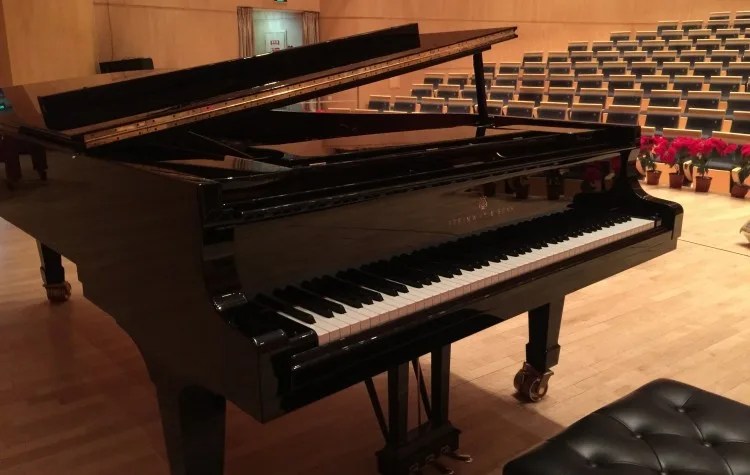
In Japan, classical music is a strong cultural element and is present, in some way, throughout the territory. Among the main instruments used in this genre is the traditional and famous piano [ピアノ].
The piano, although traditionally a classical element, is used in various styles – such as jazz – and can be used as an accompaniment or for solo performances. Do you know the main Japanese pianists?
Famous Pianists
Before we talk about some famous Japanese pianists, you might be surprised by the number of celebrities who can play the instrument very well, by the way.
Names like Sandra Bullock, an Oscar-winning actress, Paris Hilton, a famous American socialite, Robert Downey Jr., the Iron Man himself, Konsei Ichinose, one of the best Japanese poker players in history.
Hugh Laurie, best known for his role as Dr. House, Jamie Foxx, who studied classical music and composition in college, and Richard Gere, who not only played the instrument in one of the scenes of the classic film Pretty Woman but also composed the piece.
These are just a few personalities who are unexpectedly close to this beautiful instrument. Generally, famous Japanese singers also know at least the basics of the piano, whether in the J-Rock or J-Pop genre.
Successful Japanese Pianists
If we have to choose a world-famous Japanese pianist, she will be known as Mitsuko Uchida. The performer studied in Vienna, a city considered by many to be the capital of classical music, and is naturalized in England, where she lives.
The artist has interpreted compositions by masters such as Mozart, Schubert, Beethoven, Debussy, and Schumann and is known for her rigor and unwavering dedication, in addition to having numerous awards, including the title of Dame Commander of the Order of the British Empire, and being an extraordinary conductor.
Lovers of the Final Fantasy game series have certainly heard of pianist Hiroyuki Nakayama. Takayama has a more classical background and graduated in composition from the Tokyo Institute of Music but always enjoyed listening to the soundtracks of the games that were released and trying to reproduce them, gaining popularity among friends and girls for his ingenuity.
The pianist turned his passion for games and his talent for music into a profession and became responsible for several soundtracks of electronic games. Among the most famous is the album, produced in partnership with composer Nobue Uematsu, Piano Opera Final Fantasy I to VI, released in celebration of the 25th anniversary of the game series.
Masabumi Kikuchi is another reference among Japanese musicians. Kikuchi was a jazz pianist and composer and, at the beginning of his career in Japan, recorded a series of bossa nova tracks with saxophonist Sadao Watanabe.
During the years he practiced the profession, the artist worked with great names in the music universe, including Lionel Hampton, with whom he toured. His musical style was known for being eclectic and ranged from classical avant-garde to fusion with digital music. His way of interpreting certain melodies included long moments of silence, and his way of playing the instrument’s keyboard varied between delicate and aggressive.
As in Japan, musical education starts very early, it is not surprising that the country has many talented pianists. Moreover, it is interesting to see how the Japanese have incorporated much of classical music into their traditional anime and in the development of games, with the piano thus present in universes that stray from its habitat.
List of Famous Japanese Pianists
Unfortunately, it is not possible to mention in detail all the thousands of famous pianists from Japan. I want to conclude the article with one more ranked list of famous pianists; do you know or can you research some of them?
This is a delicate subject to write about, but many people try to understand. Why do Japanese women not have the habit of shaving their lower parts? Is there a specific reason for letting pubic hair turn into a forest? In this article, we will understand the whole subject.
Japanese women are not the only ones with the habit of not shaving their pubic hair. Chinese women and other nationalities from Asia, Europe, and Africa also have the same habit. For some reason, Westerners created the idea that shaving hair is a sign of hygiene, but they forget that hair grows to protect the parts.
Just as a completely shaved man in Brazil is something shameful and strange, Japanese women feel the same way if they are completely unprotected. Although pubic hair is not trimmed, underarm hair and beards are seen as a lack of hygiene in Japan and should be trimmed.
The real question should be: Why do Westerners shave their pubic hair!
How did the habit of not shaving pubic hair arise?
Like most Japanese customs, China had some influence on this subject. However, we must look at the reality of our ancestors, where I highly doubt they trimmed their hair.
Currently, in all countries, women have the decision to shave or not their lower parts. Often it is shaved thinking of pleasing the man or following local customs. In the West, it is even more common to shave due to the heat, where sweat can cause itching and even fungi if there is no hygiene.
It may not be very related, but in China, there was a proverb from Confucius that says hair is sacred:
身体发肤,受之父母,不敢毁伤,孝之始也。
Our Bodies – All our hair and skin are received from our parents, and we should not presume or harm them. This is the beginning of filial piety (Chapter 1 of the Book of Filial Piety 孝經);
This proverb doesn’t mean much, but it can give an idea that the Japanese and other Asians consider their pubic hair as an important part. Let’s understand more about this later.
Why do Japanese women not shave their pubic hair?
The real reason is simple, Japanese people do not care whether it is shaved or not. However, there are various comments on this subject that can give a good idea of why Japanese women do not shave their pubic hair:
Puberty – For Japanese women, pubic hair is a sign of puberty; removing it completely is like a sign of immaturity or a refusal of adult life.
Onsens – Imagine a completely shaved Japanese woman in an onsen, while others are fully covering their parts? The forest serves as protection! If someone does this, it can generate gossip and draw undue attention.
Prostitution – There are reports that Japanese prostitutes in the past shaved their pubic hair during the Edo Period. Women do not shave their hair to avoid being associated with prostitutes.
Lack of necessity – In Japan, there is not that hellish heat all year round like in Brazil; Japanese women do not feel bothered by hair, so they do not have the need to remove it.
Hair signifies adulthood and maturity; it is something to be proud of and not to get rid of.
Shaved hair is like a White Tile in Mahjong
There is a Japanese term to refer to shaved or sparsely haired pubic parts (prepubescent) called paipan (パイパン). The term is also often used to refer to problems where hair is not growing (Glabrous).
This term originated from the Chinese [白板], which is also a white dragon tile in the game of Mahjong. This tile is an all-white tile that eventually became the representation of the absence of female hair.
The term paipan became popular after the fetish for shaved genitals entered Japanese culture due to Western pornography. The impact was quite low on Japanese culture, and the market for hairless girls did not become profitable in Japan, thus showing that Japanese people prefer women with pubic hair.
Interestingly, pubic hair does not usually prevail in adult animes and mangas, probably due to the enormous difficulty of drawing them.
For informative purposes, I will leave a list of vocabulary below:
陰毛
inmou
pubic hair
恥毛
chimou
pubic hair
お毛々
okeke
pubic hair (slang)
マン毛
mange
female pubic hair
ちん毛
chinge
male pubic hair
Are Japanese women’s lower parts trimmed?
By nature, not many hairs tend to grow on Japanese people, to the point that there are men who never needed to shave. For this same reason, more than 50% of Japanese women have never needed to trim or cut their lower parts.
The website News Post Seven and an online research agency state that approximately 26% of Japanese women usually remove the hair that remains on the bikini line. Another 23% of Japanese women usually trim to make it shorter, while 7% completely remove their pubic hair.
I hope this article has clarified once and for all your doubts regarding the culture of pubic hair in Japan. It is very delicate to write such an article, but the curiosities involving these customs are quite interesting.
What did you think of the subject? What is your opinion regarding Japanese women not trimming their hair? If you liked the article, leave your comments and share it with friends. Also read:
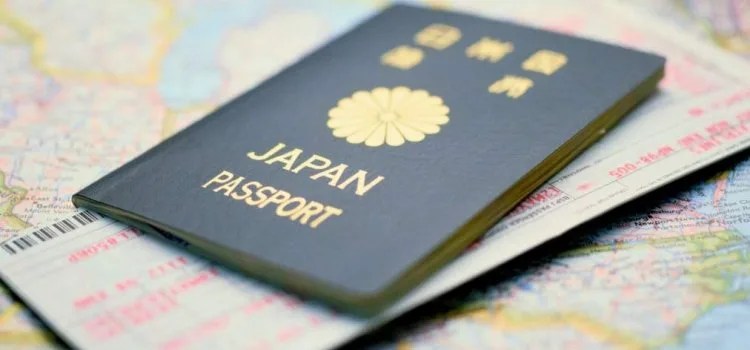
Do you intend to bring a gift as usual for friends when traveling to Japan? Do you need to bring medicines, electronics, and other products in your luggage? In this article, we will see what is prohibited and allowed to bring to Japan in your luggage.
It is worth remembering that each country has its own rules regarding what is allowed or not to bring in luggage. If you have a layover in another country, make sure you comply with all the rules.
You may have to fill out a form about your belongings before leaving Brazil or upon entering Japan. At the airport in Brazil, you will be alerted about what is or is not allowed in luggage.
You also need to be careful not to bring too many belongings of high value on your trip, simply because they may be taxed when returning to Brazil. Clothes and electronic equipment such as cameras, tablets, and cell phones are exempt from taxes, but don’t try to return to Brazil with 3 cell phones in your luggage as it could be risky.
What is prohibited to bring in luggage when traveling to Japan?
Let’s start by mentioning the obvious; everyone should know that it is absolutely prohibited to bring firearms, knives, drugs, and dangerous chemicals, as well as counterfeit money, cards, and documents. Don’t even think about items like lighters, scissors, and pocket knives…
Although Japan is famous for the consumption of erotic games and manga, bringing books, drawings, and pornographic photos exposed to the public is completely prohibited. Plants and animals without authorization are also prohibited to prevent the transmission of diseases.
It is important to pay attention to the luggage standards allowed by ANAC for international flights. If you are traveling to Japan, for example, don’t forget to organize your luggage so that you don’t forget anything important.
Food and processed meats such as salami, calabrese sausage, cheese, fresh fruits, raw seeds, and any perishable food are prohibited. Chocolates, canned goods, and dried fruits like plums are allowed. Always bring them in their original packaging!
Aerosols (shaving cream and deodorant) can be brought, but you must observe the maximum size allowed by the airline. It is recommended to bring medicines with a prescription in English to avoid problems.
Although Japan is open to airsoft, you are not allowed to bring them to Japan, nor swords or hunting weapons. Avoid products that could be confused with drugs, poisons, explosives, or harmful items to prevent confusion and problems upon entering Japan.
How not to be stopped at customs or taxed in Japan
Every country has a limit on the value of products you can bring in without being taxed. Unfortunately, we can only bring $500 USD worth of products without being taxed, while Japan allows the entry of up to 200,000 yen ($2000 USD) without tax.
Most people should know that personal use products, clothes, and some accessories do not count towards this taxable amount. In Japan, any product valued under 10,000 yen does not count towards this total, but there is a limit where they may consider a large quantity as intent to trade.
You can bring without being taxed:
3 bottles of alcoholic beverages of 750ml each;
100 cigars and 400 cigarettes with a maximum of 500g (half for Japanese);
2 bottles of perfume;
Each additional bottle of beverage may be taxed at approximately 200 to 500 yen. We recommend not bringing anything in large quantities to avoid problems. The tax rate on declared products is 15%.
Undeclared cash can lead to problems; you can carry a maximum of $10,000 (1,000,000 yen) without needing to declare it.
You should be more afraid when returning to Brazil than when bringing to Japan, because the tax exemption limits in Brazil are quite poor.
Other important information for your trip to Japan
Japan does not require an international vaccination card like some countries, but pay attention to the countries where you have layovers. Some other restrictions may be established by airlines or involved countries.
If you plan to bring an animal or medicine, you need to ensure all authorizations and documents are in order to avoid any issues. I hope you have a good trip, and be careful not to take too much advantage of the Tax Free and be stopped at Brazilian customs exceeding the $500 limit.
The moe culture in Japan is well spread in media, advertising, anime, games, and even educational pamphlets and books. For those who do not know what moe (萌え) is, this word is often used to indicate that a female character is cute, innocent, and adorable. In this article, we will see strange things that have been transformed into characters with the aim of being moe.
I think I don’t even need to start the article by mentioning the cover photo of monster musume, a somewhat popular manga/anime that tells an ecchi story with girls who are half monsters and mythological creatures.
My Girlfriend is a T-Rex – In the manga T-Rex no kanojo, it tells the story of a normal human who starts dating an anthropomorphic Tyrannosaurus rex named Churio.
Refrigerator – There is a one-shot manga called The Female Fridge where it tells the story of a girl who turns into a refrigerator and wakes up in the house of the boy she likes.
Roach – Gokicha is not just a manga, but an ONA (internet animation) that tells the story of a cute cockroach that wants to become friends with humans.
Shinka no Mi – A class full of Idols and beautiful people are sent to another world. The main character is an ugly, fat, and smelly guy, and the heroine is a gorilla. (They must have called the protagonist from Nisekoi).
Akikan – In this anime, your soda turns into a woman.
Dragons – Kobayashi-san chi no Maid Dragon – A recent work that is quite successful where dragons are girls.
Things are going to get weirder…
Upotte – In this anime/manga, weapons turn into cute girls and study at a training school to become a good weapon.
Consoles – In the game/manga/anime Neptunia, consoles are cute girls. There are several other animes where objects and electronics turn into girls or boys.
Ships – In Kantai Collection, girls have the spirit of War Ships.
Parasite – Kisei Kanojo Sana – A worm that was in the character’s body turns into a girl.
Stones – In Houseki no Kuni, stones and jewels turn into girls.
Blood – In hataraku Saibou, blood transforms into cute girls.
Binchou-tan – In this work, we have a coal girl, bamboo, and slime.
There are many other moe characters from anime that were based on strange things, even Windows 10 became a moe character. It is also worth mentioning other strange works like Midori Days where the heroine is the protagonist’s right hand.
Currently, various monsters and characters from Japanese culture have turned into cute girls like Kaiju. In Kemono Friends, animals transform into cute girls, not to mention the famous cat girls. If you remember any, just mention it in the comments. The inspiration to write this article came from goboiano.
Have you ever thought about complimenting someone in Japanese but didn’t know which word to use? Or were you curious about how to correctly and respectfully describe someone’s beauty in the Japanese language? In this article, we will explain the main terms and cultural nuances so that you can compliment in Japanese without making anyone uncomfortable.
In Japan, complimenting someone requires care and tact. This is because the Japanese are known for their shyness and modesty, and direct compliments can cause surprise or even embarrassment. Still, there are many ways to express appreciation politely and appropriately. Let’s explore these terms and the best way to use them!
How to Say “Beautiful” in Japanese?
The most direct and elegant word for “beautiful” in Japanese is utsukushii (美しい), used to describe sophisticated beauty. Utsukushii is an adult and poetic term, more common in formal descriptions or when talking about the beauty of nature.
Another term commonly used in everyday life is kirei (綺麗), which can mean both “pretty” and “clean” or “pure.” Kirei is a lighter and more neutral compliment, applied to both a person’s appearance and to objects or landscapes.
On the other hand, kawaii (可愛い), which means “cute” or “adorable,” is widely popular in Japanese culture and refers to something beautiful in a childlike and innocent way. Kawaii is not only used for people but also for animals, clothes, and even objects.
An example of how these terms can be used appears in the sentence below:
ヒトリゴトに全部隠して
hitorigoto ni zenbu kakushi te
Translation: I hid everything behind the words I spoke to myself.
In this sentence, although it is not directly related to compliments, there is an implicit poetry in the way feelings and words are conveyed.
How to Say “Sexy” in Japanese?
If the goal is to express something more sensual, the word sekushii (セクシー), derived from the English “sexy,” is the most commonly used. It is appropriate in casual contexts and often appears in conversations among friends.
For an even bolder connotation, you can use eroi (エロい), which means “sensual” or “erotic.” Be careful with the use of this term, as it is quite explicit and can be considered vulgar depending on the situation.
A more subtle and elegant alternative is suteki (素敵), which means “wonderful” or “charming.” Suteki can be used to describe a person affectionately, without the connotation of sensuality.
How to Say “Handsome” in Japanese?
To compliment a man’s appearance, the most common term is ikemen (イケメン), which refers to a good-looking and charming man. It is a modern word, widely used by young people to describe attractive men.
If you want something more formal or literary, use binanshi (美男子), which literally means “handsome man.” This word has a more refined aura and is often found in literature or artistic descriptions.
Hansamu (ハンサム), another adaptation of the English “handsome,” is a direct compliment, especially used to positively describe male appearance.
Other Compliments and Expressions of Delight
There are also compliments that go beyond physical beauty, describing qualities or skills of a person. Sugoi (凄い) is a common expression for “amazing” or “fantastic,” used in situations of admiration. Subarashii (素晴らしい) means “wonderful” or “splendid,” and kanpeki (完璧) is used to say that something is “perfect.”
These compliments are widely applicable and can express appreciation for talents, achievements, or someone’s personality. Here is an example of how these feelings can be described poetically:
ヒトリゴトに全部隠して
hitorigoto ni zenbu kakushi te
Translation: I hid everything behind the words I spoke to myself.
With this information, you can start using compliments in Japanese appropriately and consciously, respecting cultural nuances. So, did you like the tips? Share this article with your friends and practice your compliments!
If you are just starting — or even if you have been studying the Japanese language (日本語) for a few years — you have probably tried a bunch of different methods, right? Flashcards, YouTube videos, mobile apps, online courses… and the feeling is that something is always missing. The truth is that learning Japanese requires more than just a single magic formula.
With that in mind, we organized a list of 50 practical tips. Some are quite straightforward, others more specific. We included tools, phrases, books, and useful suggestions. Read everything carefully. Mark what you already practice and add the new things to your routine.
If you still have difficulty studying on your own, don’t underestimate the help of a good course. There are many options, but one of the most prominent is our Course — which offers comprehensive content at an affordable price.
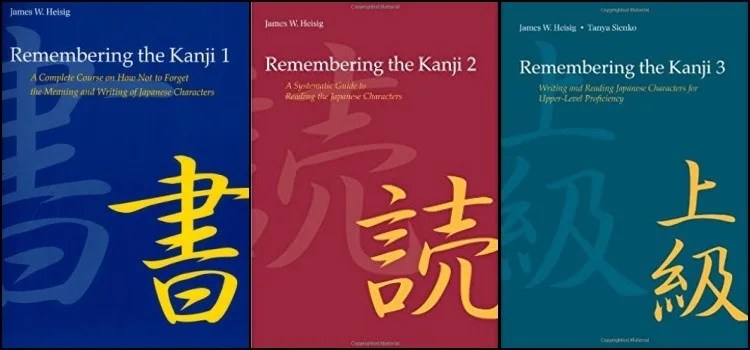
The famous Remembering the Kanji (RTK) is an effective technique for memorizing ideograms. It focuses on the meaning and visual components of kanji, associating images and stories with each symbol. It is not the only method, but it can be a great ally at the beginning.
Initial Tips
Start with Hiragana (or both)
Hiragana should be your first foundation. Even though Katakana may seem easier due to loanwords, Hiragana is much more frequent in real Japanese. If possible, study both. Understanding the difference between the two makes reading and writing much easier.
Make Time
Organize your routine. Set fixed times. If studying is sporadic, your progress will be slow. Take it seriously and try to build the habit every day, even if for just a few minutes.
Go Back to Being a Child
You are relearning the language. This requires humility. Don’t skip steps. Read children’s books, watch cartoons, play with words. Your brain needs this kind of basic contact to evolve steadily.
Avoid Rōmaji
Use Rōmaji only as a temporary support. As soon as you master Hiragana and Katakana, set the Roman alphabet aside. Japanese is learned with the Japanese alphabet. Use furigana to read kanji and gain more independence.
Tips for Learning by Writing
Write Without Stopping
Simple and straightforward: write. Even if your handwriting is not beautiful, practice the stroke order. Write Hiragana, Katakana, simple sentences, kanji. This strengthens your visual and muscle memory, two key factors in learning.
Translate Texts
Take simple sentences in Portuguese and try to translate them into Japanese. Then, compare with reliable sources. This forces your brain to seek vocabulary, construct sentences, and think in the language.
Teach to Learn
Don’t underestimate the power of teaching. Share what you learn with friends, social networks, study groups. By trying to explain, you solidify the content and discover what you really understood.
Tips for Learning by Reading
Read Every Day
Even without understanding everything, read. Books, websites, menus, signs. The important thing is to expose yourself to the language as much as possible. Reading helps in building vocabulary and familiarity with sentence structures.
Read Manga
Manga are light, quick, and visual. They help associate images with context and language. The informal dialogue teaches everyday expressions. Additionally, reading flows naturally with visual support.
Learn Slang and Abbreviations
Modern Japanese is full of cuts, slang, and shortened words. Study common expressions among young people, onomatopoeias, and abbreviations. This makes your vocabulary more natural.
Tips for Learning by Listening
Listen to Everything in Japanese
Music, podcasts, radio, videos — always have the language in your ears. Even if you don’t understand, over time your brain gets used to the sounds and rhythms of Japanese.
Listen with Purpose
Use audio with vocabulary accompanied by translation. This strengthens auditory recognition. A great practice is to listen and repeat along, like shadowing.
Japanese Songs
Sing, read the lyrics, translate. Songs stick in the mind and greatly help with pronunciation and vocabulary. It’s a light way to train the language every day.
Tips for Learning by Watching
Watch Anime and Dramas
You learn real, informal language, tones, and expressions. Additionally, you absorb culture and context. Pay attention to the dialogues, facial expressions, and intonation.
Explore Nico Nico Douga
It’s like Japan’s YouTube. Real-time comments, videos on various topics, and interaction with natives. A complete and authentic immersion.
Video Lessons and YouTube
Look for channels with clear explanations and practical focus. Video lessons have their own pace; you can pause and review as many times as you want. Make the most of this visual resource.
Tips for Learning by Speaking
Repeat Object Names
When you see an object, say its name in Japanese. If you don’t know, look it up. Make this practice a habit. This increases everyday vocabulary.
Don’t Be Afraid to Make Mistakes
Speak. Even if it’s little. Even if you make mistakes. Mistakes are part of learning. Ignore others’ judgment and seize every opportunity to speak.
Sing Karaoke
With furigana helping with reading and musical rhythm, you train reading, speaking, and memorization in a fun and effective way.
Practice Numbers
Counting is essential. In Japanese, there are various ways to count, depending on the object. Practice every day. Over time, numerical fluency comes naturally.
Find Someone to Talk To
If you don’t know someone in person, use apps, social networks, Facebook groups. Human contact is what accelerates learning the most.
Tips for Absorbing Content
Use Images
Associate words with images. Create visual flashcards. Use illustrated dictionaries. This facilitates memorization and activates more areas of the brain.
Study in Public
Go to parks, cafes, malls. This stimulates study and attracts potential learning partners. Studying alone is good, but exchanging ideas accelerates progress.
Tools and Resources
Have Apps on Your Phone
Install dictionaries, writing trainers, apps with quizzes and games. Use your free time wisely.
Use SRS like ANKI
Spaced repetition systems are extremely effective. Add sentences, words, kanji, and review at the right time to memorize in a lasting way.
Play in Japanese
Use Visual Novels or Japanese MMOs. Even with difficulty at first, you learn real words in context. A great immersion exercise.
Try the Wanderbar SNAS
This emulator displays games in Japanese and English side by side. Great for comparing expressions and learning while playing.
Computer Study
Organize Your Content
Create folders with PDFs, videos, audios, and various materials. Having everything gathered makes access easier and encourages study.
Change the Language of Programs
Change the system language to Japanese. This helps with recognizing commands and technical vocabulary.
Install Japanese Keyboard
Use it on your phone and PC. When typing in rōmaji, the system automatically converts to hiragana. This speeds up writing practice.
Join Japanese Social Networks
Try platforms like MIXI or change Facebook’s language to Japanese. Daily use develops vocabulary and reading at a natural pace.
Reading Sites and Sources
Explore Various Sites
Blogs, forums, news sites — each has its own style. The more variety, the better. Keep a list of your favorites.
Facebook as a Source
Groups and pages share useful tips. Use your online time to learn something new. Just follow profiles that address the Japanese language.
NHK News Easy
Reading simplified news, with an interactive glossary and feedback system. Ideal for beginners and intermediates. Practice daily.
Wa Tanoshii
An online magazine full of curiosities about Japanese daily life. Written in simple language, perfect for practicing reading and expanding vocabulary.
Learning with Friends
Form Study Groups
Studying with others improves motivation and increases learning. Share doubts, set goals, and review together.
Virtual Immersion
Join Japanese forums, groups, and sites. Interact. You will make many mistakes, but you will learn even more.
Chat via Messaging
Use apps like LINE, WhatsApp, or Skype to maintain constant contact with other learners or natives.
Play Shiritori
Play with words. This Japanese game trains vocabulary and quick thinking. A fun way to study.
Do an Exchange
If you have the opportunity, go to Japan. Nothing replaces the real experience of living the language and culture.
Important Care
Be Careful with Translators
Automatic translators do not always capture the real meaning of words. Use them as support, but always confirm with reliable dictionaries.
Forget Your Native Language
Dive headfirst into Japanese. Change your mindset. Think, speak, and read in the target language as much as possible.
Study Dialects
Japan has many dialects. Get to know the main ones. Learning at least the basics of Kansai-ben, for example, greatly enhances your understanding.
Learn English
Many words in Japanese come from English. Additionally, a lot of study content is in English. Learning both is a strategic advantage.
Study Kanji by Radicals
When you encounter a difficult ideogram, look it up by radicals. This helps understand the logic of construction and facilitates memorization.
Understand Formality
Levels of formality change everything in Japanese. Know how to use keigo (polite language), informal, and honorific according to the situation.
Other Tips and Considerations
Have Physical Materials
Books, workbooks, and dictionaries are still important. Don’t rely solely on digital.
Never Give Up
You will stumble, get frustrated, and make many mistakes. But keep going. Remember: even a child takes years to master their native language.
Control Distractions
Organize your routine and cut distractions. Your time is precious. Use it well.
Track Your Progress
Take level tests, review content, celebrate small achievements. This motivates and helps correct flaws.
Create a Japanese Environment
Adapt your home. Use frames, decorations, objects with kanji. Transform the space into a constant reminder of your goal.
Stay Strong
Learning Japanese is not a race. It is a journey. A child takes years to master their own language. With patience, focus, and strategy, you too can achieve fluency.
Stay strong and keep following our content. We are here to support you on this journey. 頑張ってください!
When people think of Japanese restaurants, they think of sushi restaurants. The fact is that there are thousands of types of Japanese restaurants – all specialized in a different type of Japanese cuisine. Today we will see 15 of them.
Each of these specialties mentioned below has its own extensive history, culture, and variety that deserves its own article detailing all the aspects. Who knows, maybe in the future.
We are making it clear that there are restaurants specialized in each type, just as there are restaurants with various types of dishes on their menu. The focus of this article is to show that Japan is full of choices, with a rich cuisine, and numerous types of restaurants and options on their menus.
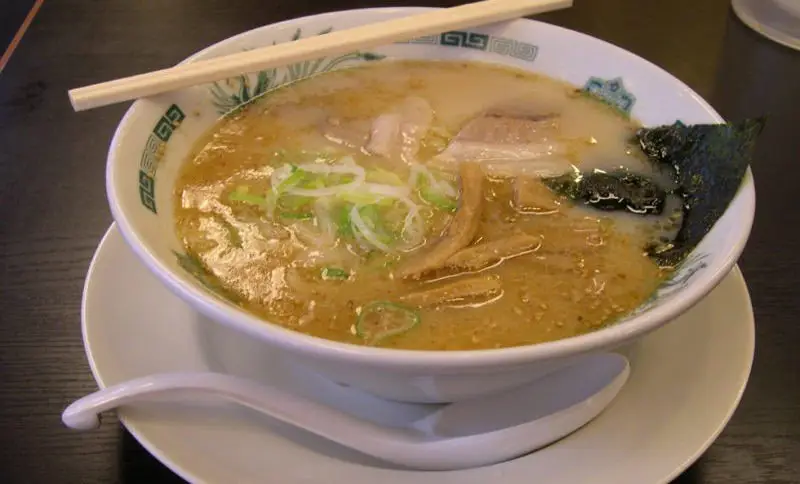
There are thousands of restaurants, types, and flavors of ramen, the most common being Chinese-style wheat noodles served in a meat or fish broth. It usually has soy sauce or miso flavorings in the soup. Ramen is often topped with chashu (shredded pork), Negi, and nori. Practically every region of Japan has its own unique variety of ramen.
These are restaurants specializing in grilled chicken skewers – a very popular food, especially when accompanied by drinks. This is a very common food, also found at festivals, and there are many variations and recipes based on Yakitori.
A simple recipe that anyone can make. But don’t be fooled, there are professionals. Watch the recipe in the video below, and understand that it can be easy and difficult at the same time.
This is a type of Japanese noodle made from buckwheat flour, served hot or cold with a variety of toppings.
Hot soba dishes are served with the noodles in a hot soup, usually made from fish stock, soy sauce, sugar, and mirin. There are thousands of dishes derived from soba, just as there are thousands of specialized restaurants.
Izakaya are Japanese bars. They are popular and casual places for gatherings after work. They serve a variety of popular foods, such as fried chicken, Edamame, yakitori, and sashimi. Watch a video showing in detail how an Izakaya works.
Breaded fried pork served with shredded cabbage, rice, miso soup, and Japanese pickles. It is served with tonkatsu sauce (a sweet sauce with a thickness similar to Worcestershire sauce).
For those who think that in Japan there is only sushi, know that sushi is more popular in Western countries, such as the USA and Canada than in Japan. Japanese sushi is very different from Western varieties, has its fame, and its various flavors and varieties.
Tempura is a classic dish of Japanese cuisine. It consists of fried pieces of vegetables or seafood coated in a light batter. Like a breading, but better.
In Japan, there is a wide variety of restaurants that sell tempura. From street vendors to 5-star restaurants. Tempura is also often a side dish for other dishes.
These are restaurants that serve a hot pot where the customer cooks a variety of fresh ingredients and meats to be eaten together with friends, accompanied by sauce and other varieties.
Shabu-shabu is a dish made up of a stew of meats (beef, pork, chicken, shrimp), vegetables (watercress, shinkiku, bok choy, leeks, green onions, moyashi, etc.), mushrooms (shiitake and shimeji), and others (udon, konnyaku, kamaboku, etc.).
Takoyaki [たこ焼き or 蛸焼] (literally fried or grilled octopus) is a popular round Japanese dumpling that resembles a seasoned pancake made with a very soft, almost liquid batter, and fried on a special Takoyaki grill.
It is usually filled with chopped pieces or a small whole octopus, tempura scraps (tenkasu), chopped ginger, and green onions. Present at festivals, street vendors, and even specialized restaurants.
Kare or Curry is one of the most popular foreign ingredients in Japanese cuisine. This spice brings life to karē raisu dishes (curry with rice), karē udon (with noodles), and karē-pan (bread).
This type of sauce in Japan is usually thicker, sweeter, and milder than its Indian counterpart. Curry is a spice originating from India, but Japanese curry has its huge differences.
A thick noodle made from Japanese wheat flour. Udon is usually served as a soup, in a hot broth based on dashi, soy sauce, and mirin.
On basic udon, one or more ingredients are added, and these ingredients give rise to various types of udon. Most of them include chopped negi (green onions).
Okonomiyaki evolved from the practice of cooking leftovers in a Japanese pancake batter. In many okonomiyaki restaurants, you can choose the ingredients to put in your pancake.
Common ingredients include cheese, mochi, vegetables, noodles, pork, and seafood. Often customers make their own okonomiyaki. Watch a video from our friend Santana.
Gyudon consists of thinly sliced fried beef with onions and a special sauce over a bowl of rice, sometimes accompanied by miso soup and other special and delicious ingredients.
Although it may seem like a simple dish, it is very popular and tasty with different variations. In these restaurants, you can also find similar dishes with pork or unagi. Gyudon restaurants are generally quick and cheap, like fast food restaurants.
This is a Japanese dish of seasoned and grilled meat on a skewer. In Japanese, kushi [串] refers to the skewer used, while katsu means the meat cutlet.
Kushikatsu can be made with chicken, pork, seafood, and seasonal vegetables. They are skewered on a bamboo kushi, dipped in eggs, flour, and panko, and fried in vegetable oil. They can be served plain or with tonkatsu sauce.
Do you know the etiquette rules of Japan, responsible for developing an educated population? In this article, we will talk exactly about the etiquette rules of Japan also known as Nihon no kihon reigi sahō [日本の基本礼儀作法].
Business Card in Japan
It is essential in formal introductions for teachers, businesspeople, and even journalists. The meishi [名詞], as it is known in Japanese, must not be missing when meeting and establishing contact with a new person who is relevant to your work.
It is interesting to have your card in Portuguese or English and the back in Japanese, to avoid any type of communication problem. The visitor should always present their card first, and always to the most important person. Always hand it over with the text facing the person receiving it and do this with both hands.
Cell Phones in Japan
On public transport, it is ideal to turn off the phone or leave it on silent. However, it is possible to send messages if it is something more urgent. Inside cinemas, theaters, and hospitals, it is strictly prohibited to leave cell phones on. In the hospital, extra care must be taken to avoid any type of interference with medical equipment.
We have already written an article detailing curiosities about cell phones in Japan. When reading, you will see that many Japanese still prefer flip phones, those that open and close.
The hierarchy within an office is highly respected. This is perceived in the arrangement of desks within an office and even inside the elevator. Superiors always stay away from any type of door, and younger or less significant positions stay closer to the entrance and exit of places. The same rule applies to parking vehicles.
The Japanese have certain superstitions regarding numbers. Floors like 4 and 9 are considered fatal because they remind of death and darkness. In some places, elevators do not have the number 4 and 9.
Any type of collective transport in Japan has well-defined and respected rules for boarding and disembarking passengers. The signs are followed strictly, even during peak hours.
As soon as the vehicle opens its doors, wait for all passengers to disembark in the area reserved for entry. Only then board with the other passengers. One curiosity: in Tokyo, when going up a staircase, leave the right side free for those in a hurry. In Osaka, it is usual to leave the left side free.
Making Noise While Eating
If in the West it is important to eat without making any noise, in Asia, to show your satisfaction in savoring a meal, it is ideal to make a lot of noise. Especially when the dish comes with broths, like ramen and soba.
This does not mean you should chew like a fool. You should not chew with your mouth open or anything like that; just when slurping the noodles, you do not need to worry about doing it silently.
The hashi, those 2 sticks that are the Japanese utensils, have their specific rules. It is not good to cross them when holding food. The general custom is to hold the rice bowl with your left hand and use your right hand to pick up food with the hashi.
Never stick the hashi into white rice in a chawan (bowl). This gesture has a bad omen meaning for the Japanese, in addition to being impolite. The ideal is to keep the hashi on the small base reserved for it (hashioki) when not in use.
In many Japanese homes, green tea, coffee, or black tea is offered, according to the guest’s preference. The Japanese do not drink green tea with sugar or milk. Often, green tea is accompanied by a Japanese sweet.
Some restaurants display wax replicas of the dishes they serve in their windows. You can choose from these imitations or from photos on the menu. Tipping is not necessary in Japan.
Taking Off Shoes in Japan
Shoes inside the house are out of the question. Even in the early years of the school period, children leave their shoes in personal lockers and put on slippers or sandals, depending on the establishment.
Therefore, it is good to always have clean shoes inside, and if you are wearing socks, check if they are in good condition. After all, being barefoot is almost inevitable in Japan.
Drinking Sake
Basic premise when drinking with Japanese: your glass will not be empty. Usually, people serve each other, and it is not customary to serve your own glass. The members of the group observe each other’s glasses and serve more as they empty.
Therefore, if you do not want to drink too much, it is ideal to drink very slowly. The Japanese do not only drink sake, but also enjoy beer, wine, and whiskey.
Sitting at the Table
Before the meal, each person says itadakimasu, and afterwards, gochisousama deshita. Both phrases express appreciation for the food. In private homes, several dishes are usually served for each person.
Individual portions are placed for guests on their own plates in a defined position: cooked vegetables in the upper left corner, vegetables with Japanese seasoning in the upper right corner, grilled fish in the center, steamed rice in the lower left corner, Japanese pickles in the center below the fish, soybean soup, and the hashi below everything, closest to the person eating.
Visiting Temples in Japan
Japanese temples and shrines are places to admire nature and also to pray. And, to pray, it is good to follow some rules when visiting Shinto shrines, for example: two bows, two claps, and two bows. This is the correct way to start your thanks and requests to the heavens.
Visiting a Friend
If visiting a friend in the morning, greet them with Ohayou gozaimasu. If it is in the afternoon, with konnichiwa, and in the evening with konbanwa.
The host may respond with ohairi kudasai (please come in), to invite you to enter. Upon entering through the front door, say “ojama shimasu,” which means “Excuse me, I will enter your house.” Before entering, always remember to take off your shoes.
When Visiting an Onsen in Japan
Basic: go to the cabins or rooms to change your clothes and wrap yourself in the appropriate towel. Many people also wear bikinis and swim trunks to feel even more comfortable bathing before entering the onsen.
Unlike sentou (public bath), which are separated for men and women, some onsen, being outdoors and natural pools, accept people of both sexes. You must enter the onsen completely naked. Entry with towels or swimwear is not allowed.
Wagashi is a type of traditional Japanese confectionery that is often served with tea. Wagashi is made from a variety of ingredients, such as rice flour, bean paste, and sugar.
The shapes and designs of wagashi are often based on nature, such as flowers, birds, and animals. In this article, we will see 18 of these desserts.
The History of Wagashi
Wagashi has a long history in Japan, with the first recorded mention of wagashi dating back to the Heian period (794-1185). During the Edo period (1603-1868), the production of wagashi became more widespread, with various regions of Japan developing their own unique styles of wagashi.
Today, wagashi is enjoyed by people of all ages and is often considered a gift. There are many types of wagashi, ranging from simple shapes to more elaborate designs.
If you are interested in trying wagashi, there are many excellent shops and cafes that sell wagashi in Tokyo, such as Kagetsu Arashi, Ichigo Ichie, and Kaiyodo.
[trp_language language=”pt_BR”]
Want to Learn How to Make Wagashi?
Before reading the article, I recommend you the Traditional Japanese Wagashi Cooking Course. You can watch an interview on Jornal da Tarde about Cesar, the creator of this course and his Wagashi recipes:
Namagashi is the general term for sweets used in the tea ceremony. They must be aesthetically pleasing. Many of them are filled with azuki bean paste.
Namagashi can contain jellies, gelatins, and others; they are made from natural ingredients and often have a nature-like appearance, such as flowers and plants.
2. Sakuramochi (桜餅)
Sakura mochi are rice cakes filled with bean paste and wrapped in a sakura leaf. Sakura mochi are eaten to celebrate Girl’s Day (Hinamatsuri) in Japan on March 3rd.
3. Amanatto (甘納豆)
Amanatto are most often azuki beans coated in sugar. Basically, a jelly bean made from beans and other grains. The grains are cooked in water with sugar, and after being dried, coated with more sugar.
Not only azuki, but soybeans and other beans can be used to make amanatto, thus creating their own flavor. Amanatto is more popular with the elderly over 60 years old, and is often served with tea in nursing homes in Japan.
Kompeito candies are small colorful sweets made of pure sugar. They are round and have small collisions that occur naturally as part of the cooking process, resembling a star or an asteroid.
Kompeito was first introduced to Japan by Portuguese traders in the 16th century. Kompeito are gifts of gratitude to visitors of the Imperial House of Japan.
Hanabiramochi means “flower petal mochi.” It is traditionally served at the first tea ceremony of the new year. This tradition began with the Imperial Family. Hanabiramochi has a different shape and color.
It is filled with mung bean paste. The shape and colors of hanabiramochi have symbolic meaning (related to the new year).
6. Suama (寿甘)
Suama is a dessert made from rice flour and sugar. It uses red dye on the outside and remains white on the inside.
7. Wasanbon (和三盆)
Wasanbon are colorful sugar sweets. The sugar is made from fine locally grown cane in Shikoku, called taketo (竹糖) or chikusha (竹蔗).
8. Botamochi (ぼたもち)
A seasonal delight made with sweet rice and red bean paste.
9. Karukan (軽羹)
A dessert from Kyushu made from rice flour, sugar, and Japanese yam.
10. Uiro (外郎)
They are chewy and slightly sweet cakes. They come in various flavors, such as green tea, sakura, strawberry, and chestnut.
11. Dango (団子)
Dango are Japanese dumplings that are similar to mochi. They are served on skewers with three or four. Flavors vary according to the season. Its name literally means group of children.
The Japanese have been eating dango since the Jomon period, many prepared from forest nuts, which they crushed to bloom and mixed with porridge to survive the winter.
Generally, dango can refer to practically anything round on a skewer, a ball-shaped object; something round or kernels grouped together forming a family.
A sweet of red bean paste inside a crisp mochi wafer.
13. Yokan (羊羹)
Yokan is a jelly dessert made from red bean paste, agar, and sugar. They usually have green tea powder, chopped chestnuts, whole sweetened beans, or other ingredients suspended in the jelly.
Manju is a traditional Japanese sweet made from glutinous rice flour and usually filled with anko (red bean paste). It is said to have originated in the city of Kyoto during the Heian period (794-1185). Manju can be boiled or steamed, and the dough is often hand-shaped into various forms, including balls, pyramids, and crescent moons.
Manju can be found in most Japanese confectioneries and is often offered as a gift during special occasions, such as weddings and births.
Kuzumochi is a type of mochi (rice cake) made from kuzu starch. It is traditionally made in Japan during the summer months. The sweet is white in color with a smooth and chewy texture. It is often served with a sweet syrup or kinako (roasted soybean flour).
Kuzumochi is made by mixing kuzu root starch with water and then boiling it. The mixture is then cooled and shaped into small balls. The balls are then rolled in a powder made from roasted soybeans.
16. Kusa Mochi (草餅)
Kusa Mochi means “grass mochi.” It is mochi made with powder from the leaves of the Japanese wormwood plant. It is traditionally consumed in spring. Kusa Mochi is usually served with sweet soybean flour as a topping.
17. Taiyaki (たい焼き)
Taiyaki is a fish-shaped cake. It is commonly filled with red bean paste, cheese, or cream. Its name literally means grilled sea bream. It can be found with sweet and savory flavors.
Taiyaki is basically a regular pancake or waffle in the shape of a fish. It is placed on a grill with molds on both sides. It is quite similar to those Swiss crepes. And it is usually grilled until golden brown.
The most common taiyaki is filled with sweet bean paste, but you can find them filled with chocolate, cream, cheese, green tea, or stuffed with meat and chicken. It is a recipe with infinite possibilities, as long as you have the fish-shaped mold.
The specialty of Kyoto, with the texture of mochi and contains cinnamon. They are sometimes cooked and crunchy. Other times, they are served with bean filling.
The Japanese culture is ancient and composed of various extremely interesting factors. Appreciating it goes far beyond just watching some animes, eating sushi, or liking ninjas and samurais. Understanding some aspects of it helps to have a better and completely different view of the popular culture we are used to.
So, how can one appreciate Japanese culture? First, it is important to learn about the country’s history. A good place to start is with the samurai. These noble warriors were the dominant class in Japan for centuries, and their history is a story of honor, courage, and strength. Next, take some time to learn about the traditional culture of the country. From the tea ceremony to the art of origami, there is much to explore. Finally, try some of the delicious cuisine of the country. From sushi to ramen, there is something for everyone to enjoy.
One of the best ways to learn and appreciate Japanese culture is to travel to Japan. This will allow you to see firsthand how the culture works and how it differs from your own. You will also be able to experience new things, meet new people, and learn about the history and traditions of the country.
Another great way to appreciate Japanese culture is by reading about it. There are many excellent books and articles that will give you a deeper understanding of the culture. Additionally, watching Japanese movies and television shows can also be very enlightening.
Finally, one of the best ways to appreciate Japanese culture is simply to take some time to learn a bit of the language. Although it may be difficult to master, even a basic understanding of the Japanese language will greatly help in appreciating the culture.
If you are interested in learning more about Japanese culture, or simply want to appreciate it more, here are some tips:
1. Learn about the history and origins of Japanese culture.
2. Explore the different aspects of Japanese culture, such as the arts, cuisine, language, and religion.
3. Participate in a Japanese cultural event, such as a tea ceremony, a kabuki play, or a taiko drum performance.
4. Visit a Japanese temple or shrine, and participate in a traditional festival.
5. Shop at a Japanese market and try traditional Japanese foods.
6. Read Japanese literature and watch Japanese movies and television shows.
7. Listen to Japanese music and learn about the different instruments used.
8. Study the Japanese language, and practice writing in Japanese.
9. Get to know the Japanese people and learn about their daily life and culture.
10. Travel to Japan and experience the culture of the country firsthand.
No matter how you choose to appreciate Japanese culture, the important thing is to have an open mind and be respectful.
By taking the time to learn about the history, culture, and food of Japan, you will surely appreciate the country and its people even more. So, what are you waiting for? Start exploring Japanese culture today!
Enjoying since 1993 the status of Cultural and Historical Heritage of Humanity by UNESCO, Himeji Castle is a jewel of Japanese architecture, full of particularities and a very interesting history.
Located where the city of Himeji currently is, in Hyogo Prefecture, 50 km west of Osaka and 650 km away from Tokyo, Himeji Castle began to be built as a fort in 1333 by Norimura Akamatsu, the former governor of the region, then called Harima.
In 1346, a small castle-like structure was erected by Sadanori Akamatsu. This “embryo” of the castle, entirely made of wood, was quite different from the current castle, but lasted 230 years.
In 1580, Japan was undergoing a civil war, and two great “daimyō” (feudal lords) were disputing supremacy and control of Japan, dividing the country between those who supported Nobunaga Oda or Ieyasu Tokugawa.
Himeji Castle – Civil War
Hideyoshi Toyotomi, one of the military leaders of the Nobunaga Oda clan, seized the castle and promoted the first of a series of major reforms, aiming to build a “modern” 3-story castle.
The death of Oda in 1582 and the passing of Toyotomi in 1598 opened the way for Tokugawa’s ambitions, who after winning the Battle of Sekigahara in 1600, took power in Japan. Thus, in 1601, Tokugawa awarded Erumasa Ikeda, one of his generals and son-in-law, the provinces of Harima, Bizen, and Awaji, thus becoming the new lord of Himeji Castle.
As Himeji Castle had been damaged during the civil war, and its location was important for the defense of the Tokugawa shogunate, Ikeda dedicated himself to rebuilding the castle, which thus gained the shape it maintains to this day.
In the reconstruction, Ikeda implemented details in Himeji Castle that modernized and improved the architectural and defensive characteristics, which made the castle complex an exemplary model of Japanese construction of the period.
In the most central and high part of a hill, a huge trapezoidal base composed of stone walls with slopes varying from 30 to 40 degrees was built to serve as the foundation for a 7-story castle, called “daitenshukaku”.
This base, besides making it difficult for invaders to climb, allowed for proper rainwater drainage, preventing soil erosion and protecting the higher structure from the effects of a possible earthquake, since the wooden foundations placed at the base are flexible.
The White Heron of Himeji Castle
The nickname “White Heron” comes not only from the decorative elements of the castle, with graceful and curved eaves, but mainly from its walls covered with white masonry.
Like other castles of its time, Himeji was made of wood, but the masonry finish, besides giving it a white appearance, increased the thickness of the walls and modernized the castle by making it resistant to attacks with firearms.
As the use of firearms in battles began in 1549, earlier constructions needed to be readapted. It is estimated that there were 5,000 small castles in Japan in the 14th century, but all of them relied only on fences and moats as a means of defense, which became vulnerable with the emergence of firearms.
Surrounding the castle itself, a network of paths full of steps, walled and winding, with several gates and towers, forms a long labyrinth where visitors still get lost today. Finally, the entire area is surrounded by a wall and an outer moat, with only one passage to enter or exit the complex.
The Himeji Castle Complex
The huge distance to be covered from the entrance of the complex, the thick walls and small windows in the castle, at the gates and in the towers reveal the concern with the “modern” firearms of the time. Until the mid-16th century, the Japanese used a type of primitive musket, whose barrel diameter resembles that of current bazookas and whose firing depended on the lighting of a fuse, just like in ancient cannons.
In short, it was a heavy, cumbersome, slow, and short-range weapon. This would change over time, with the introduction of the flintlock (the “grandmother” of the current rifle firing system, with trigger and hammer), which made Japanese firearms more efficient and with greater range.
Somewhat larger, square openings at the top of the sloped stone walls and at the base of the main building were used to shoot stones at anyone trying to climb up the outside. In addition, several secret passages were built throughout the complex, which in case of an attack allowed the feudal lord, his family, servants, and soldiers to live with food and weapons stored for a long period.
Counting on Luck
But it was luck that gave Himeji its most valued characteristic, being its state of preservation. Although the castle was rebuilt by Ikeda with the purest defensive intent, the fact is that it has never been damaged by acts of war since then, not even during the Second World War.
The reconstruction of the castle took nine years, from 1601 to 1609, and it is estimated that it mobilized 50,000 workers, with a cost estimated today at more than 2 billion dollars.
Being a unique construction of its kind in the world and with a degree of preservation that allows us today to know a lifestyle from 400 years ago, Himeji Castle lives up to the title of World Heritage Site.
Japan is a safe country, its crime rates are generally low. However, Japan has some dangerous neighborhoods and some slums. In this article, we will talk about the 7 most dangerous neighborhoods in Japan.
Many of the neighborhoods below are dangerous because there are many tourist attractions, homeless people, alcoholics, Pachinko players, foreigners, Yakuza, and houses of prostitution.
In Japan, there are no slums like those in Brazil, but there are many places where people live on low incomes. There are also neighborhoods where the Yakuza is in charge, but nothing like the slums in Brazil. In fact, Yakuza members are respectful and live in the shadows.
I just want to make it clear that there are no reasons to avoid the places below, the crime rate in Japan is extremely low. The theft rate is 1 person for every 100,000 inhabitants, while in Brazil it is approximately 700 for every 100,000 inhabitants. There is no need to fear these neighborhoods; the article simply presents the neighborhoods where police occurrences happen the most.
We also made a video based on the article talking about the 7 most dangerous neighborhoods in Japan:
1. Kabukicho – Largest Red-Light District
Kabukicho is the largest red-light district in the world (places where there are sex shops, motels, nightclubs, and prostitution). The neighborhood is very popular among tourists and is also home to thousands of restaurants, karaoke, clubs, and bars.
Unfortunately, there are some underworld establishments that attract weirdos and criminals in droves. It is the type of neighborhood where it is common to see riot police casually walking down the street.
Most visitors do not see any problem in going to the restaurants and bars in this neighborhood, but they avoid living there. Not to mention that it is located in front of Shinjuku Station, one of the largest train stations in the world.
2. Kamagasaki – Largest Slum in Japan
Kamagasaki (or Airinchiku) is the largest slum in Japan, located in the south of Osaka. It is home to a large number of homeless and unemployed people, who are mostly alcoholics or Pachinko players.
In recent years, Kamagasaki has become popular among young foreign tourists who are attracted by cheap accommodations in the area. However, residents of Osaka avoid the place, saying it is dangerous.
Kamagasaki has a history of major riots (protests against police mistreatment). Several organized crime groups (Yakuza) maintain their offices in this area. Kamagasaki is the type of neighborhood where the police do not spend their time issuing traffic tickets.
3. Roppongi, Tokyo
Roppongi is a residential neighborhood filled with high-end offices located in Tokyo. The neighborhood is also a nightlife spot like Kabukicho and many other neighborhoods in Tokyo.
The US has issued alerts to tourists to avoid this place, but the danger is only at night in bars, clubs, and nightclubs, where many are intoxicated. It is possible for those attacks by perverts and even kidnappings to happen.
4. Shinsekai, Osaka
In 1912, Shinsekai was the most modern and cosmopolitan neighborhood in Japan. It was modeled after the streets of Paris and includes a large ultra-modern amusement park (Luna Park).
Luna Park suffered a series of fires shortly after it was built and closed around 1923. The area still has a carnival atmosphere and is one of the most popular attractions in Osaka.
The neighborhood is filled with cheap restaurants, souvenir shops, and Pachinko parlors. Despite its popularity with tourists, some residents of Osaka say it is a dangerous area.
5. Susukino, Sapporo
Susukino is one of the most famous neighborhoods in Sapporo for its restaurants and night bars. Being a neighborhood full of bars and nightclubs in the middle of Sapporo attracts criminals and strange people.
It is amazing how Sapporo manages to be less conservative than Tokyo and other tourist cities. Walking through the streets, you find posters in visible places inviting you to nightclubs, or women in provocative clothing as bar attendants.
Susukino is also where many of Sapporo’s festivals take place, including the Sapporo Snow Festival. There is no reason to avoid the area (in fact, it is considered one of the main tourist attractions in Sapporo). Just be aware that it is not the safest place in Japan.
6. Nakasu, Fukuoka
Nakasu is one of the largest entertainment areas in Japan. Like Susukino, it is a major tourist attraction, but it is not entirely safe due to the concentration of tourists and bars in the region.
7. Ueno, Tokyo
Ueno is home to many of Tokyo’s best attractions, including dozens of museums, a large park, and a zoo. The park is popular among the homeless in Tokyo, which can be a bit dangerous. There are Yakuza groups in this neighborhood; Japanese people usually do not visit it at night.
It is generally advisable to stay alert in any neighborhood with a large concentration of tourists or that is a district of nightclubs, sunako, bars, and hostess clubs. This caution is necessary in all countries.
Not that you need to stop visiting tourist spots for this, just be more careful not to be deceived by a Japanese scammer. I myself have wasted money in simple neighborhoods like Akihabara and Namba because of the talk of Japanese women.
As we all know, Japan is full of many strange and wonderful things. A simple trip to the supermarket can turn into hours of wondering what this and that does, and the same goes for a pharmacy. The site soranews found 10 strange and interesting products and we will show them here too:
1. ear cleaning products
If you are used to using cotton swabs, in Japan they have the mimisukitto [ミミスキット] perfect for removing all impurities from the ear. With two ends, one solid and the other soft rubber.
2. Eye masks
Unlike common eye masks, this one heats up and comes scented. Just using it to describe the sensation.
3. Hot anti-constipation pills
Not discreet pills, which look more like those chocolates. (Smarties, MeM, Confeti)
4. Anti-hangover drinks
This is something I am sure would be a hit here in Brazil. Drink this beverage, party, and you will wake up with a clear head the next day (If it really works). The bottle has an orange and tasty liquid.
5. Hand warmers
The Japanese buy dozens of disposable hand warmers in winter. They contain chemicals that produce heat thanks to exothermic oxidation, these products can stay warm for up to 9 hours. Many people like to put them in their gloves or on their waists and even in their feet to avoid a chill.
6. Anti-allergy spray
As it is common for some to have pollen or weather allergies, instead of using masks there is this solution. This new defensive treatment promises to protect you from allergies just by spraying your face.
7. Moist masks
Most should know that it is quite common to use masks to avoid passing germs to others, or to avoid allergies and pollen. This brand comes with moist pads to prevent your throat from drying out during the day. They are also quite useful on long flights.
8. Ghostly masks
Facial masks are a popular beauty treatment worldwide, where the common ones are green masks placed on the face to treat the skin. However, what is usually found in Japan is a paper-like mask soaked in essence.
In Japan, there is a strong desire to have double eyelids. For those who do not want to undergo surgery, there is eyelid tape, a little less painful and found in various pharmacies in Japan.
10. Themed bath salts
Themed products are quite popular, how about making your bath smell better with bath salts from One Piece or Shingeki no Kyojin. These are just a few of the thousands of themed products. These are found in kiwi, lemon, grape, and apple scents.
In today’s article, we will get to know the Okinawa archipelago (沖縄県) and its cultures that are quite different from the rest of Japan. This archipelago is located and extends in the south of Japan to Taiwan with a total of 169 islands.
History of Okinawa
Until the 19th century, Okinawa was known as the Ryukyu Islands, an independent kingdom from Japan. Thus, it developed not only a language but a culture of its own.
After the end of World War II, Okinawa continued to be administered by the United States for another 27 years, and in 1972 it was returned to Japanese administration.
The archipelago is subdivided into three smaller groups of islands: Miyako, Yaeyama, and Okinawa-shi, where the capital Naha is located. Each of them has distinct architecture and variations in the language itself.
Naha is the capital city of Okinawa-shi, with an estimated population of approximately 320,000 inhabitants; it is the largest municipality in Okinawa-ken. There are two Yakuza groups in it, the largest being the “Okinawa Kyokuryu-kai”.
Culture of Okinawa
Tanabata, also known as the neutral day, for the Okinawans is the appropriate day for cleaning graves and butsudans (family altars) to avoid the contagion of negative energy. According to tradition, the family cleans the graves as a sign to their ancestors that Obon is approaching.
The Obon is a kind of Day of the Dead where families gather to pay homage to their ancestors. It is believed that on this day, the spirits return to Earth to visit their loved ones.
Eisa (エイサー) is a dance originating from Buddhist chants and prayers accompanied by melodies. They are played through Taiko (drums) in honor of ancestral spirits.
Sanshin (三振) is a musical instrument composed of three strings with a sound box covered by snake skin. It is believed that the instrument is over 4000 years old, and its creation is told through the Legend of Akainku.
Highlights of Okinawa
Shuri Castle is considered a World Heritage Site by UNESCO.
Okinawa-shi has the second largest aquarium in the world and features several shops and restaurants so you can optimize your time without needing to leave to buy food or anything necessary; on the Okinawa Churaumi Aquarium website, you can access various types of guides, maps, and information.
Another tourist spot is Okinawa World, where you can find plants, crafts, animals, food, and various typical performances.
Okinawa-ken has about 1800 hotels, and they are highly sought after due to their white sand beaches and the water shades that range from crystal blue to turquoise, and also to see the fireworks celebrating the New Year, as it is not a place that has much pollution.
The village of Zanami, for the reception of travelers, near Naha.
Shisa are images of Chinese origin, used as amulets scattered throughout the city; it is believed that placing a Shisa on rooftops protects houses from natural accidents.
Okinawa is located in a temperate climate area, thus a lot of sugarcane, pineapple, banana, guava, jabuticaba, and fruits like dragon fruit and mangosteen are cultivated. Therefore, for those who are, or will travel to Japan and would like to satisfy the longing for some foods they eat here in Brazil, Okinawa is a great choice.
There is much more to be explored in this paradise. A land of singers like Gackt and Amuro Namie, also of the group Da Pump and the band Begin. I will end here today, thank you very much, Gabriel.
Japan is known for its numerous earthquakes and tsunamis, most of the time nothing happens. However, there have been some earthquakes over the years that brought many victims, and it is often difficult to know the exact number. So in this article, we will see the 10 worst earthquakes in Japan’s history.
The Great Kanto Earthquake
1923 ~142,800 deaths / magnitude 7.9
On September 1, 1923, at 11:58, an earthquake of magnitude 7.9 struck Oshima Island in Sagami (near Yokohama and Tokyo). Incredibly, the earthquake lasted more than 4 minutes. The earthquake caused massive fires, as most people were cooking.
In addition to the large number of deaths, more than 2 million people were left homeless. The fire caused many more deaths than the earthquake itself. As a result, September 1 was designated as Disaster Prevention Day in Japan. (Bousai no Hi)
The Meio Nankai Earthquake
1498 ~31,000 deaths / magnitude 8.6
An earthquake of magnitude 8.6 struck the southern coast of Honshu (near Shikoku) on September 20, 1498. It triggered a large tsunami that may have killed up to 31,000 people. In Japanese mythology, it is said to be the fault of a giant catfish that causes earthquakes (Namazu).
The Kamakura Earthquake
1293 ~23,024 deaths / magnitude 7.1
At around 6:00 on May 27, 1293, an earthquake of magnitude 7.1 struck the city of Kamakura. A tsunami also hit the region, killing more than 20,000 people.
The Tohoku Earthquake
2011 ~16,000 to 29,000 deaths / magnitude 9.0
The super severe earthquake that occurred on March 11, 2011. It triggered a tsunami of up to 40 meters high and 10 km, causing the death of more than 16,000 people. In addition to causing a level 7 alert at the Fukushima plants, spreading radiation worldwide. The ongoing health impact of the disaster is still not well understood.
The Meiji-Sanriku Earthquake
1896 ~ 22,066 deaths / magnitude 7.2
At 07:32 PM on June 15, 1896, an earthquake of magnitude 7.2 struck the coast of Tohoku. Residents nearby barely felt the earthquake and were unconcerned. About 35 minutes later, the coasts of Iwate and Miyagi were hit by a massive tsunami measuring up to 38.2 meters high. More than 9,000 houses were destroyed, and 22,066 people lost their lives. The location and zone of the earthquake and tsunami had a similar impact to the Tohoku earthquake in 2011.
The Unzen Earthquake
1792 ~ 15,448 deaths / magnitude 6.4
In 1792, an earthquake of magnitude 6.4 was triggered by the eruption of Mount Unzen in Nagasaki. The southern half of the mountain collapsed into the sea, generating a massive tsunami that caused the death of 13,486 people. The path of the eruption is still visible today.
The Yaeyama Earthquake
1771~ 13,486 deaths / magnitude 7.4
At around 08:00 on April 24, 1771, an earthquake of magnitude 7.4 triggered a tsunami that engulfed the islands of Ishigaki and Miyakojima. The tsunami reached 80 meters high. Even rocks came out of the sea.
The Mino-Owari Earthquake
1891~ 7,273 deaths / magnitude 8.0
A major earthquake of magnitude 8.0 that destroyed more than 140,000 houses.
The Ansei Edo Earthquake
1855~ 6,641 deaths / magnitude 7.0
At around 10:00 PM on November 11, 1855, an earthquake of magnitude 7.0 struck Edo (Tokyo). The resulting fires burned 2.3 km2. The fires destroyed about 50,000 houses and killed more than 6,641 people.
The Great Hanshin Earthquake
1995~ 6,434 deaths / magnitude 7.2
At 5:46 AM on January 17, 1995, an earthquake of magnitude 7.2 struck Kobe (Awaji Island). The earthquake lasted only 20 seconds. About 200,000 buildings and 1 km of the Hanshin expressway collapsed. Fires ravaged the entire city. The disaster led to new Japanese building standards. Thus, starting from that year, buildings were made to be earthquake-resistant.
This photo was taken seconds before the building completely fell.
These were some of the worst earthquakes in Japan’s history; there are others not mentioned, but in this article, we selected only 10 that caused the most deaths.
Despite these deaths, we can note how safe Japan is, where fewer people die in these disasters in the last 20 years than die from homicides or accidents due to recklessness in traffic in Brazil.
So do not be afraid to be in Japan, because between dying in an earthquake or getting shot in Brazil, getting shot is more likely. I say this just to avoid generalizing and being afraid; the unexpected happens to everyone.
We all know that Japan is a unique country, full of oddities. So in this article, we will see the gems that the Japanese created for the enjoyment of gamers. The most bizarre games created in Japan!!!
1. Hatoful Boyfriend
Japan is famous for its Visual Novel games, where you interact and date characters. Games full of texts and conversations can already be a bit strange for Westerners.
And what to say about a game of this genre where the goal is to interact with Pigeons? Live a school life and have dates with various pigeons in this great Japanese game.
2. Oh My!- Muscle March (Wii)
A game full of Muscles, Muscles, and more muscles. The story of the game is about a thief who stole the Whey Protein from bodybuilders, and the goal is to chase him while the player needs to imitate the movements that the bodybuilders are making to fit through the hole in the wall that they create each session of the game.
Players can choose from various archetypes of bodybuilders, including an American boxer, a weightlifter with an afro and a rubber duck on top, a Norwegian polar bear, and several other characters that we observe in our daily lives at a gym. Too normal!!! I’m even going to download it for my WII now.
3. Japan World Cup 3(PC)
We have an Abominable Snowman, a horse running upright on its hooves, a Trojan horse, and another horse being ridden by two women who keep fighting each other while this same horse starts to stretch more and more. These components are competing in this race to find out who is the best.
4.The Houchi Play
A very simple game. You take on the role of a middle-aged pervert and try to get close to young maids. The only real strategy is to avoid being seen by the victims and gain beer power-ups to make you walk faster.
5. School Days
(If you are going to play or watch the Anime, do not read the text below, it contains spoilers.)
A common and simple visual novel about relationships. However, with it, you will see reality. In this game, you interact with 2 girls, and according to your choices, this can lead to several different deaths.
It is worth mentioning that an anime was also released, which shocked everyone who watched it without knowing the tragic ending that awaited them.
6. Boong-Ga-Ga Boong
This game simulates Kancho, a popular prank in Japan, where the victim gets two fingers in the anus of a distracted person.
It’s Haruko’s grandmother’s birthday, and four members of her family forgot the date. Each of them runs to get a gift while having a bizarre adventure in Incredible Crisis.
The game focuses on one family member at a time. The player must guide them through their day, which starts relatively normal but soon becomes an incredible crisis. Incredible Crisis brought daily disasters to PC and the Playstation console in 1999.
The game starts with the father dodging a giant rock that crashes into the office building, the mother witnessing a bank robbery, the son escaping from radioactive creatures in the park, and the daughter fighting against a UFO.
These were some of the most bizarre games that the Japanese invented.