

Concepts and wrong ideas tend to spread like water. Sometimes people have an experience and spread it, causing others to believe and have wrong ideas about a certain subject.
Because of these rumors, Brazilians have an idea that Japanese people are cold and independent. I had a completely different vision and experience on my trip to Japan in 2016. With my personal experience, from Brazilians and even Japanese people, and after much research, I wrote this article to discuss the subject.
Why do people have this idea?
There are many reasons for people to come to the conclusion that Japanese people are cold. Cultural differences, Japanese immigrants living in Brazil, the influence of ancient Japan, and various other factors.
One of the points that Brazilians use to say that Japanese people are cold is the lack of contact, that handshake and hugs that happen among Brazilians. But all of this is a matter of respect and hygiene; Japanese people who have a great friendship and intimacy feel comfortable leaning against each other.
Another thing that can lead to the belief that Japanese people are cold is the lack of communication with strangers. If you get on a train, it is unlikely that someone will strike up a conversation with you. But this happens because no one wants to make noise, or due to the great shyness that exists among Japanese people, especially if you are a foreigner, this ends up becoming a greater difficulty for them to communicate.
Of course, there are some scenes in Japan and even with immigrants and descendants living in Brazil. This ends up making people have this idea that Japanese people are cold. But all of this is taken in a generalized way and ends up tarnishing the name of the Japanese. What makes me saddest is the fact that Brazilians say that Japanese people are cold, amidst so many horrible cases of coldness that happen within our country.

Of course, there are cold Japanese people, just as there are cold Brazilians. One big fact is that Japanese people are reserved, avoid contact with strangers, avoid getting involved in others’ lives, and especially bothering others. Japanese people have a serious communication problem and difficulty socializing, but this is mostly due to their shyness. This also results in the difficulty of expressing emotions and affection.
What are Japanese people like?
The Japanese are the opposite of cold and independent. Do you know what a cold person is? A cold person has no feelings, does not cry, does not show pain, fear, anger, or sadness. Now watch a Dorama or Anime to see how much crying and drama there is. Japanese people do their best to avoid letting their problems affect others, for this reason, they avoid crying, complaining, and showing their feelings and weaknesses, but they have all of this, and when it bursts, you can see that Japanese people are quite the opposite of cold people.
I don’t even need to comment much on the individuality of Japanese people because the opposite is quite visible. Japanese people are independent and try to solve their problems on their own, but they always work in teams and do everything to help others. The Japanese people were raised to always think of others and not themselves.
Japanese people apply the “golden rule” or “ethics of reciprocity” well, where everyone should treat others as they would like to be treated.
We cannot say that Japanese people are independent just because they keep their feelings and problems to themselves. In reality, they always work as a team; teamwork is taken very seriously in Japan. People who want to be independent in Japan are viewed unfavorably.
My experience with Japanese people
I also thought that Japan would have a somewhat cold climate, and I saw some signs of individuality and coldness. But I also saw quite the opposite, smiling people, talking and laughing all the time. The education is top-notch; I got tired of hearing sumimasen (sorry). All the time, sometimes the person didn’t even touch me and apologized. Not to mention the service; people were incredibly patient and served me with a smile on their faces.
I could feel the regional difference between Tokyo and Kansai. In Tokyo, no stranger spoke to me, but when I climbed a mountain in Kyoto, all the Japanese people passing by greeted me, one even gave me a chocolate. Meanwhile, all the foreigners who passed by me said absolutely nothing.
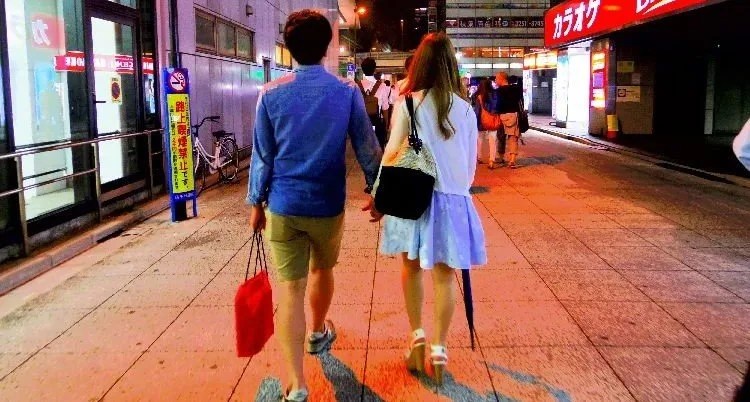
I also noticed a lot of public displays of affection. I saw Japanese people hugging, kissing, and always holding hands, the opposite of what people said. I had the opportunity to stay at several Japanese families’ homes and witnessed a wonderful environment, full of love and affection. I really didn’t notice anything cold in Japan; everything was beautiful and warm. Of course, each person has different experiences, but don’t draw conclusions because of a few people.
And remember, I’m not saying that the lives of Japanese people are perfect and that everyone is happy and smiling. But I noticed that many Japanese people prefer to smile and forget their problems rather than have a cold and distant appearance.
And now? Are Japanese people cold?
The simple fact that Japanese people do not have much physical contact, like handshakes or hugs, does not indicate coldness. The fact that Japanese people keep their problems and feelings to themselves, or remain alone most of the time, does not demonstrate independence. Many Japanese people do end up isolating themselves and do not share their feelings and problems with others. This is a significant problem that can end up resulting in suicides or depression.
But it is worth remembering that there will always be cold and independent people anywhere in the world, and they are not few. For this reason, never conclude that in one country people are colder than in others. Take into account your culture and education! And try to look at the beam in your own eye instead of looking at the speck in your brother’s.
Before concluding that Japanese people are cold, try to reconsider the concept of what it really means to be a cold person. I don’t like to make comparisons! But saying that Japan is a cold country because of the culture of being reserved and some reported cases, while our country has many more people without a shred of love, compassion, and respect for others, is a great hypocrisy!
Thus, Japanese people who do not like to talk or have physical contact, prefer to keep their feelings and problems to themselves, or have difficulties socializing, are not cold people but rather reserved. Cold people are those who do not care about others, who have no feelings, compassion, or pity, who do not respect others. In other words, cold people are thieves, murderers, and ill-mannered individuals, which is the sad reality that dominates our beloved Brazil.

Community
Comments
0 comments
There are no published comments in this language yet.
Send comment