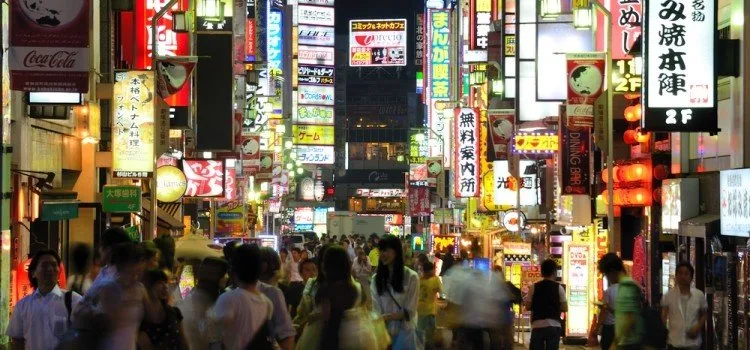
Have you ever imagined your nightlife in Japan? Many tourists imagine that they will arrive in Tokyo, walk into Kabukicho, and start picking up girls. Others want to go further and hire special services. If you intend to do these perverted things, or simply want a night in the clubs of Japan's red-light districts, stay alert. The streets are usually crowded and well lit. The trap is the person who walks up, speaks English, and offers a cheap drink.
Depending on your plan for the night, go with friends. In most cases there is no need to panic. Japan is a safe country, and you can enjoy nightclubs, live houses, hostess clubs, and love hotels without turning the evening into a disaster. The big problem in these nightlife neighborhoods is that they are full of people with ulterior motives, trying to take your money.
Contents4
Be smart about the price they quote on the street
These nightlife neighborhoods change the price according to the service, the size of the club, and who sits with you. There are bars that can cost up to 7,000 yen without all drinks included. Special shows often exceed 10,000 yen without much effort. If you really want a paid companion service, prepare more than 20,000 yen and still ask what that number covers.
Suspicious people approach tourists offering a cheap option — or they make it sound cheap. Even if the number sounds good, they use strategies to raise the bill later. Extra fees appear without a clear warning. Someone said 15,000 yen. The register says 20,000 yen, plus a first-time charge, a table charge, or a drink you never ordered.
In Japanese this pattern has a name: bottakuri (ぼったくり), a rip-off bill. The person who pulls you off the sidewalk is a kyakuhiki (客引き), a customer-puller. Tokyo's Metropolitan Police tell visitors, in plain English, not to follow street touts under any circumstance. Some of them work with partner bars, wait until you are drunk, then present an absurd tab or run the card. Others start the same pitch on a dating app and “happen” to know a great place nearby.
A few thousand yen on the sidewalk has turned into hundreds of thousands inside — and, in reported cases, bills in the millions — with pressure if you refuse to pay. It is not only Japanese staff doing this. Foreign touts work the same streets. Even in Akihabara these money-sucking pitches have shown up, and Osaka's entertainment blocks run the same hunt.
If a place will not show a printed menu before you sit, you have not agreed to a price you can hold them to. A posted seat charge or otoshi (お通し) is normal in Japan when it is written. A laminated “all-you-can-drink for 2,000 yen” waved at tourists, then gone at the table, is not. So-called free information booths in these districts often take a kickback from the shop they send you to. Walk past them.
Be smart about nightlife, posters, and the law
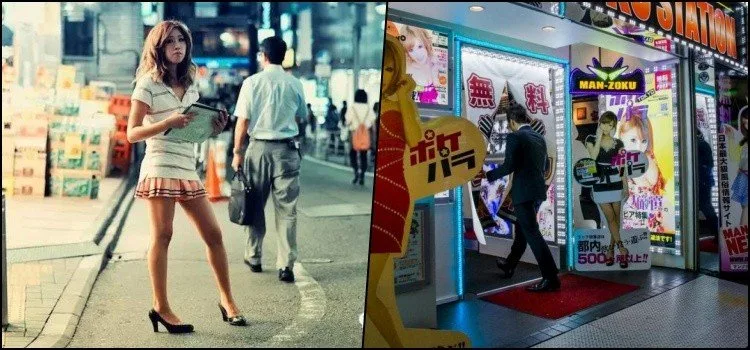
These same people also deceive another way: they flash posters of young women and take you to someone who does not match the flyer.
Women need to be careful. Men too. Foreigners stand out in Japan, and stereotypes get attached fast. There have been cases of people being steered toward a love hotel while the language barrier did half the work. Stay with people you trust, and do not let a stranger pick the venue.
In Japan, the law prohibits prostitution. How, then, do you still hear so many stories? Every law here has a gray edge. The 1956 Anti-Prostitution Law targets selling vaginal sex with someone you do not already know, for money. Brokers, solicitors, and shops that provide the room get hit harder than a private “date.” The industry answers with a fiction: the woman is your companion, you go out, and from the moment you are a couple — even a temporary one — the shop pretends the rest is private. This entertainment industry is clever, isn't it? Street pickup, a tout promising sex, and “badger game” blackmail are still traps the police warn tourists about. Maybe that gray zone is one reason there are so many innocent-looking dating services that sell conversation and stop there.
Be careful with the yakuza too. Designated crime groups have historically had businesses in nightlife neighborhoods like Kabukicho. There's no need to fear the yakuza as if they were a movie; just be careful not to be taken advantage of. They are not partners of the police. Don't be a troublemaker, don't film people who clearly do not want it, and don't go hunting for a gangster souvenir.
Final tips for your nightlife
Be careful not to walk into places that are closed to foreigners. They are usually marked, but the sign is easy to miss in a wall of neon. Some spots in these districts expect Japanese, and they will turn you away at the door.
If you are looking for a famous red-light district, the names people actually use are Kabukicho in Tokyo, Nakasu in Fukuoka, Susukino in Sapporo, and Tobita Shinchi in Osaka. It is not a war zone. Stay alert. If you want a simpler night without that hunt, Japan is full of cheaper, calmer streets with izakaya and small bars.
If the bill suddenly explodes
Do not follow anyone to an ATM. Do not hand over a card before you have seen an itemized bill. If staff block the door, surround you, or refuse to let you leave, that is no longer a misunderstanding about the menu.
Dial 110. You do not need fluent Japanese. Say you are in a billing dispute and cannot leave — Ryokin toraburu desu. Mise kara kaeremasen is enough, or just “police, Kabukicho, bottakuri.” For non-emergencies in Tokyo, #9110 has English. There is a koban (交番, police box) in the heart of Kabukicho; walking toward uniformed officers is often enough for a tout to peel off.
You do not need to be afraid of the neighborhood. Walking the main streets of a Japanese red-light district is closer to a packed Saturday night than to a dark alley. The place is full of people and tourists. If you just want to walk and enter well-known bars with a posted menu, you can go. Have you visited a red-light district in Japan? What was the night actually like?
Kevin Henrique has written about the Japanese language, culture, anime, games, and travel since founding Suki Desu in 2014. He first visited Japan in 2016.
Community
Comments
0 comments
There are no published comments in this language yet.

 In Japan, the law prohibits prostitution. How, then, do you still hear so many stories? Every law here has a gray edge. The 1956 Anti-Prostitution Law targets selling vaginal sex with someone you do not already know, for money. Brokers, solicitors, and shops that provide the room get hit harder than a private “date.” The industry answers with a fiction: the woman is your companion, you go out, and from the moment you are a couple — even a temporary one — the shop pretends the rest is private. This entertainment industry is clever, isn't it? Street pickup, a tout promising sex, and “badger game” blackmail are still traps the police warn tourists about. Maybe that gray zone is one reason there are so many innocent-looking dating services that sell conversation and stop there.
Be careful with the yakuza too. Designated crime groups have historically had businesses in nightlife neighborhoods like Kabukicho. There's no need to fear the yakuza as if they were a movie; just be careful not to be taken advantage of. They are not partners of the police. Don't be a troublemaker, don't film people who clearly do not want it, and don't go hunting for a gangster souvenir.
In Japan, the law prohibits prostitution. How, then, do you still hear so many stories? Every law here has a gray edge. The 1956 Anti-Prostitution Law targets selling vaginal sex with someone you do not already know, for money. Brokers, solicitors, and shops that provide the room get hit harder than a private “date.” The industry answers with a fiction: the woman is your companion, you go out, and from the moment you are a couple — even a temporary one — the shop pretends the rest is private. This entertainment industry is clever, isn't it? Street pickup, a tout promising sex, and “badger game” blackmail are still traps the police warn tourists about. Maybe that gray zone is one reason there are so many innocent-looking dating services that sell conversation and stop there.
Be careful with the yakuza too. Designated crime groups have historically had businesses in nightlife neighborhoods like Kabukicho. There's no need to fear the yakuza as if they were a movie; just be careful not to be taken advantage of. They are not partners of the police. Don't be a troublemaker, don't film people who clearly do not want it, and don't go hunting for a gangster souvenir.



Community
Comments
0 comments
There are no published comments in this language yet.
Send comment