
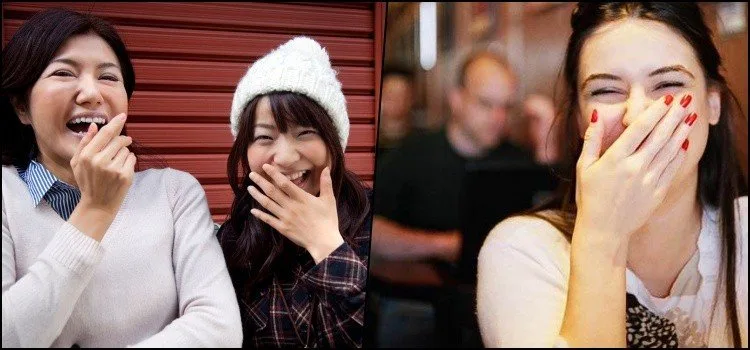
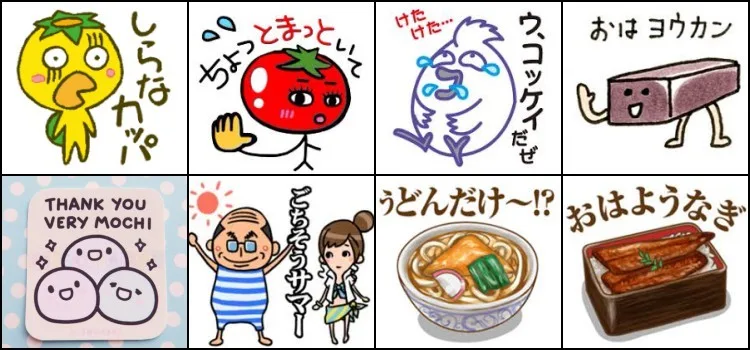
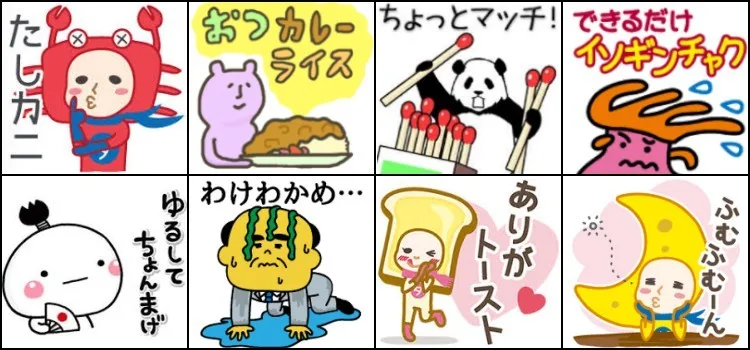
Dajare (駄洒落) are Japanese puns: jokes built from words or phrases that sound alike, split differently, or lead the listener toward an unexpected meaning. They are often deliberately corny, closer to a classic dad joke than a clever one-liner. That is part of their charm.
Japanese wordplay can be difficult to translate because the joke may depend on a sound that disappears in English. Seeing the Japanese writing, a romanized reading, and a short explanation together makes the mechanism much easier to follow. The examples below are a good place to start.
Contents 11
What does dajare mean?
The word dajare is written 駄洒落. Dictionaries commonly gloss it as a feeble joke, poor joke, corny joke, or bad pun. In practice, it describes a joke whose payoff comes from sound. A familiar word can be heard as two smaller words, two expressions can share the same pronunciation, or a small pause can change the meaning of a whole sentence.
Japanese writing often makes the contrast clearer. The same sound may be written in kana, kanji, or katakana depending on the intended word. In conversation, however, the listener has only context, timing, and a speaker with a suspiciously pleased expression to work with.
Why Japanese puns are hard to translate
A direct English translation usually gives away the answer or loses the repeated sound. Rather than looking for one perfect equivalent, it helps to separate three things: what the sentence says, what it sounds like, and where the word boundary changes. Romanization is useful here, but the Japanese writing remains the best clue to the intended meanings.
For learners, dajare are also a compact way to notice vocabulary that shares a pronunciation. The joke is not a grammar rule, and it should not replace careful study, but a strange pun can make a word easier to remember.
Classic dajare examples
パンだ! — Pan da!
Question: パンダの好きな食べ物は?
What food does a panda like?
Answer: パンだ!
Pan da! — It is bread!
The answer pan da means bread plus the casual copula da. Said quickly, it sounds like panda. The written forms keep the two readings apart: パン is bread, while パンダ is a panda.
アルミ缶の上にあるみかん — Arumi-kan no ue ni aru mikan
This sentence means: “There is a mandarin orange on an aluminum can.” The humor comes from the near-repeat between arumi-kan, aluminum can, and aru mikan, there is a mandarin orange. It is a sound pattern first and a very ordinary scene second.
イルカがいるか? — Iruka ga iru ka?
“Is there a dolphin?” The word iruka means dolphin. The ending iru ka asks whether something exists or is present. The sounds sit beside each other in one short question, making the phrase feel like it repeats itself.
スキーが好き。 — Sukī ga suki.
“I like skiing.” Sukī is skiing, written in katakana, while suki means liked or favorite. The two words are close enough in sound to make the sentence memorable, even though their roles are different.
布団が吹っ飛んだ。 — Futon ga futtonda.
“The futon flew away.” Here futon is a quilted mattress, while futtonda means flew away or was blown away. The exaggerated image is secondary; the repeated futo sound is the point.
Dajare, goroawase, and kotoba-asobi
These terms overlap, but they are not interchangeable in every context. Dajare usually points to a pun told as a joke. Goroawase (語呂合わせ) uses matching sounds to make a phrase, number, or word easier to recall and is often used as a mnemonic. Kotoba-asobi (言葉遊び) is the broader idea of playing with words.
This distinction matters when you encounter a phrase online. A number mnemonic may use the same sound-based trick as a dajare without being intended as a punchline. A word game can also rely on writing, visual resemblance, or a cultural reference that does not travel well outside Japanese.
When you learn one, write down the two readings separately. That small habit turns a confusing punchline into a vocabulary note you can return to later.
How to enjoy Japanese wordplay without missing the joke
- Read the Japanese text before relying on romanization. Kanji, kana, and katakana often reveal which meanings are colliding.
- Say the phrase aloud at a natural pace. A pause or a different word boundary may be the entire joke.
- Look up both readings when a word seems to repeat. A pun often links an everyday word with a less obvious one.
- Keep the context. A dajare can be funny because it appears in an ad, a classroom, or an awkwardly quiet moment, not only because of its dictionary meaning.
Not every dajare will land, even for fluent speakers. That is normal. The useful part is noticing how Japanese sound, spelling, and context can pull a sentence in two directions at once.



Community
Comments
0 comments
There are no published comments in this language yet.
Send comment