
Tempura (てんぷら, 天麩羅) is one of the best-known dishes of Japanese cuisine: seafood and vegetables coated in a thin batter and deep-fried until crisp. Many people assume it is a typically Japanese food. In fact, the technique of frying food in a wheat-flour batter reached Japan in the 16th century through Portuguese missionaries.
This article explains the origin of tempura, its development in Nagasaki and Edo, the ingredients, the batter, the oil, the different types and a simple recipe to make at home.

Contents 12
What is tempura?
Tempura consists of seafood, vegetables or meat dipped in a batter of wheat flour and egg and deep-fried in hot oil. The batter is thin and pale, the coating light and crisp rather than heavy as in many Western fried dishes.
It is served with rice or noodles, often as an accompaniment to udon or soba, on a bowl of rice as tendon, or as a dish on its own with a dipping sauce called tentsuyu.
Origin: Portuguese roots
The Japanese already knew fried food, but without batter or with rice flour. In the late 16th century, Portuguese Jesuits and sailors brought a different method through trade in Nagasaki: coating food in a batter of wheat flour and eggs and frying it in oil.
Their model was a Portuguese dish called peixinhos da horta, “little garden fishes”, made by frying beans in a thin batter. From this technique tempura was born in Japan.
From Nagasaki to Edo
The first form was Nagasaki tempura. The batter contained sugar, salt and sake, and the frying was done in pork fat. The coating was so strong that the dish was eaten without any sauce.
In the 17th century this form reached Kansai, where it developed into tsumiage: vegetables fried in vegetable oil such as sesame oil. With the founding of the Edo shogunate, tempura reached Edo, where it was sold at the fish stalls of Nihonbashi as gomaage.
In Edo, tempura was fried in sesame oil. The oil masked the smell of fish and helped the seafood keep a little longer. Together with sushi and soba, tempura became one of the three most popular foods of the city.
Edo no sanmi: tempura as city food
In Edo, tempura was sold mainly at street stalls called yatai. The stalls stood in busy places and offered fried pieces of fish and vegetables that people ate standing up. Together with sushi and soba, tempura shaped the everyday life of the city.
Sesame oil was expensive at the time, so tempura remained a special dish for many people at first. Only when cheaper rapeseed oil became available did it spread to all classes. Today it is found both as a cheap side dish in supermarkets and as an elaborate dish in specialist restaurants.
Ingredients
Typical ingredients are shrimp, squid, fish, aubergine, sweet potato, pumpkin, shiitake mushrooms, beans and peppers. In Japan there is also tempura made with chicken, cheese or ice cream, which is considered a curiosity.
It is important that the ingredients are dry before they go into the batter, because moisture makes the coating soft. Large pieces are scored beforehand so that they cook evenly.
The batter
The batter is made of flour, egg and iced water; sometimes baking powder or baking soda is added. What matters is that the ingredients are cold and the batter is mixed only roughly. Lumps are welcome, because they give a light, uneven coating.
If the batter is stirred for too long, gluten develops and the coating becomes firm and heavy. That is why the batter is prepared just before frying and not kept.
The oil
Traditionally tempura was fried in sesame oil. Many specialist shops now use blends of sesame oil and vegetable oil. With roasted sesame oil the coating turns darker and stronger in flavour; with unroasted oil it stays lighter and finer.
The oil should be hot, around 170 to 180 degrees Celsius. Oil that is too cold makes the coating greasy, while oil that is too hot burns it before the inside is cooked.
How tempura is eaten
In Japan tempura is usually eaten with tentsuyu, a sauce of dashi, mirin, soy sauce and sugar, with grated daikon radish. The sauce is stronger or lighter depending on the region. In eastern Japan it is sometimes served with soy sauce; in Kansai it is milder.
Some pieces are eaten with only salt or lemon juice. The small pieces of batter left in the oil are called tenkasu and are used as a topping for noodles or rice.
Types of tempura
Among the best-known variations are tendon, a bowl of rice with tempura and a sweet-salty sauce; tenzaru, tempura with soba; and tempura udon, in which the fried pieces sit on the noodle soup.
Kakiage is a flat mixed fritter of several vegetables or shrimp. In Japan there is also tempura in bento boxes, as a side dish in supermarkets and at food stalls.
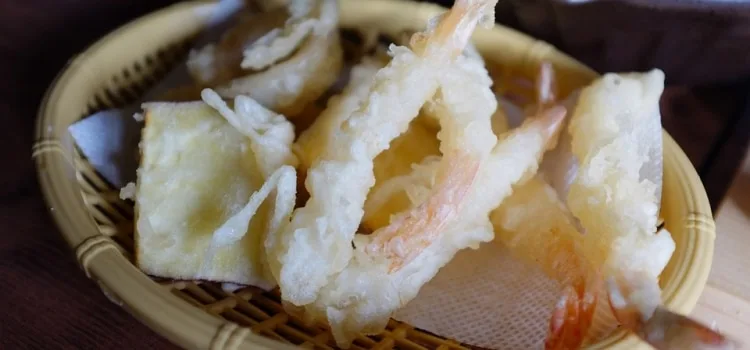
Making tempura at home
For the batter you need one cup of wheat flour, one egg, one cup of iced water, two tablespoons of starch and one teaspoon of baking powder. For the filling, shrimp, aubergine, sweet potato, onion and pepper work well.
First whisk the egg with the iced water. Then fold in the flour, starch and baking powder briefly, until just no dry flour remains. Cut the vegetables into pieces, pat them dry and dip them in the batter.
Then fry them in hot oil until golden, place them on kitchen paper and serve immediately. Tempura is best fresh, because the coating softens when it waits.

Tempura outside Japan
Outside Japan, tempura is known mainly as a side dish in Japanese restaurants, often as a starter or with sushi. In Asian takeaways it is sometimes sold as “fried shrimp” without any mention of its Japanese history.
Anyone who wants to cook it will find the ingredients in most supermarkets. What matters is light flour and very cold water; both give the typically airy coating.
Conclusion
Tempura combines Japanese cooking with a Portuguese technique. From a simple batter of flour, egg and water comes a dish that has been refined in Japan since the 16th century and is now impossible to imagine without.
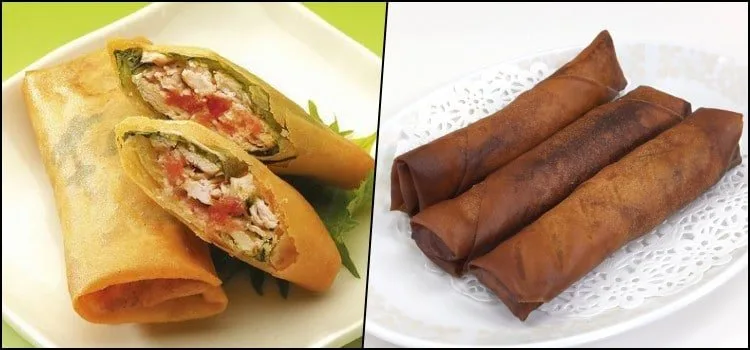
To read more: Tamagoyaki, Harumaki spring rolls, Okonomiyaki, the types of sushi and udon noodles.

Community
Comments
0 comments
There are no published comments in this language yet.
Send comment