
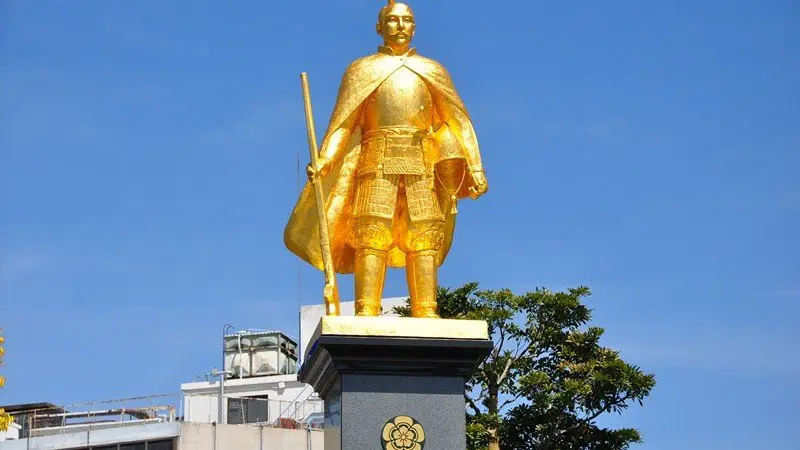
Oda Nobunaga keeps showing up where you least expect him: in school-time-travel manga, musou games, gender-swapped harem stories, and films that rewrite the Sengoku period. Together with Toyotomi Hideyoshi and Tokugawa Ieyasu, he is one of Japan’s “great unifiers” — and that half-finished, half-legendary career is pure fuel for fiction.
What follows is a guided tour of works inspired by Nobunaga, from the approachable entry of Nobunaga Concerto to wilder takes like Sengoku Basara. Some stay close to history; others turn him into a demon king, a modern student, or a girl with the same ambition.
Contents 9
Nobunaga Concerto
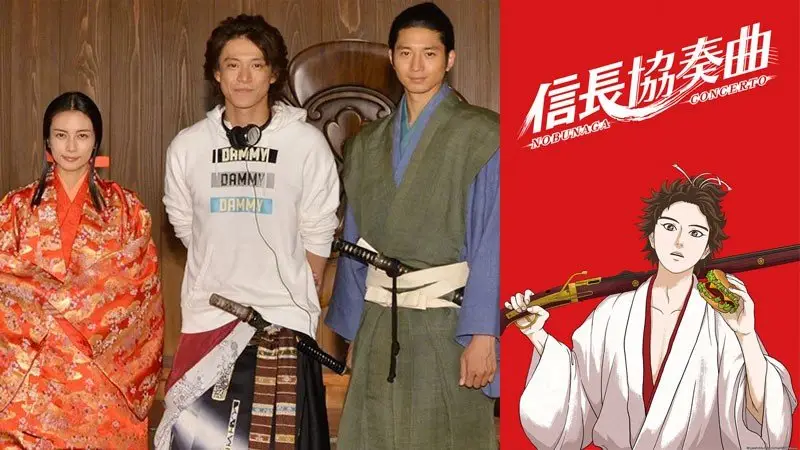
If you want time travel with a soft landing, start here. Nobunaga Concerto is a manga by Ayumi Ishii about Saburō, a high-school student who lands in the Sengoku period and ends up standing in for the real Oda Nobunaga. The series was adapted into an anime and a well-known live-action dorama — a rare case where the “history textbook plus confusion” comedy still respects the weight of the era.
I wrote a longer look at this title here: recommendation and analysis of Nobunaga Concerto.
Sengoku Basara and Samurai Warriors
Sengoku Basara (also known in some markets as Devil Kings) is Capcom’s flashy take on the Warring States, closer to a Dynasty Warriors-style brawler than a history lesson. Date Masamune often takes the spotlight, while Nobunaga appears as a chilling villain who styles himself the “Demon King of the Sixth Heaven.” The games spun off an anime with two seasons — loud, colorful, and deliberately unhistorical.
On the Koei Tecmo side, Sengoku Musou (Samurai Warriors) and the long-running Nobunaga’s Ambition series keep the same historical cast in a more strategic or mass-battle frame. If Basara is rock-opera Sengoku, these titles are the broader “play the era” branch of the same pop-culture tree.
Oda Nobuna no Yabou
Time travel again — but with a twist. In Oda Nobuna no Yabou (The Ambition of Oda Nobuna), Sagara Yoshiharu falls into the Sengoku period and finds many famous figures reimagined as girls, including Oda Nobunaga as Nobuna. It is the familiar package of harem beats and fan service built on a moe lens, yet the campaign story still tracks the rough map of Nobunaga’s rise.
Reviews were kinder than the premise suggests, and fans of the gender-swapped Sengoku niche often pair it with Sengoku Otome: Momoiro Paradox (Battle Girls), another series that throws a modern character into a world of warrior women drawn from history.
Onna Nobunaga
Live action also likes the gender flip. Onna Nobunaga is a two-episode dorama in which Oda Nobuhide never has a second son, only a daughter raised as heir. The setup is simple, but it shows how often Japanese TV reuses Nobunaga’s name to ask “what if the clan’s destiny wore a different face?”
GO: Hime-tachi no Sengoku
GO: Hime-tachi no Sengoku is a manga that became a long dorama run (dozens of episodes) focused not only on Nobunaga himself but on the women around the Oda network — including the story of Oichi’s daughter, tied to Nobunaga’s sister. If Basara sells spectacle, this kind of title sells household politics, marriage alliances, and the quieter board on which Sengoku wars were also fought.
Sengoku (Paradox Interactive)
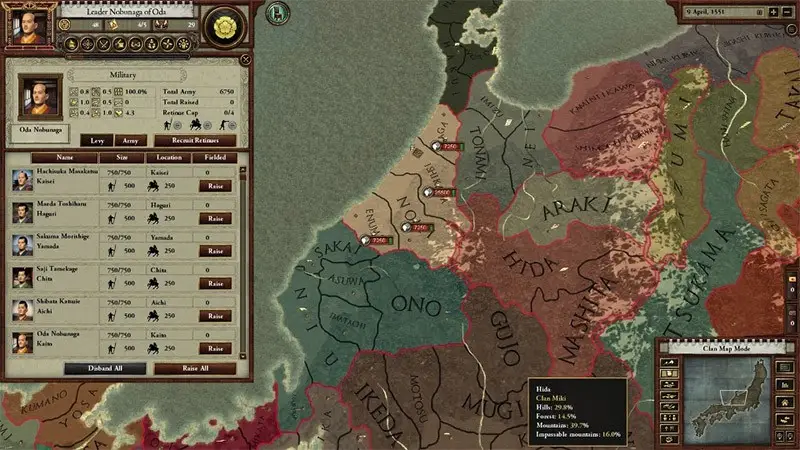
For strategy fans, Sengoku by Paradox Interactive is a real-time grand strategy set around 1467, when the Ōnin War tore open the old order and the age of competing clans began. You do not “play Nobunaga’s biopic” so much as inhabit the same board he later dominated — useful if you want the historical sandbox without anime aesthetics.
Games that made Nobunaga a demon lord
Capcom’s Onimusha series is one of the clearest “supernatural villain” takes: Nobunaga stands with demons and dark power while the player’s warriors push back. Combined with Basara’s Sixth Heaven framing, it helps explain why so many English-speaking fans first meet him as an antagonist rather than as a reformer who introduced new tactics and firearms into Sengoku warfare.
That contrast — unifier versus demon king — is half the reason the character never gets boring. The same man can be a textbook chapter and a final boss in the same afternoon.
Films and other screen takes
Cinema has returned to Nobunaga more than once. One well-known Japanese film titled Oda Nobunaga (1998) draws on material associated with Ango Sakaguchi and follows the warlord’s younger years. Another strand of screen fiction uses time travel as a weapon: Sengoku Jieitai 1549 (2005), based on a manga of the same broader franchise idea, sends modern soldiers into the past and places Nobunaga in the crossfire of that clash.
Outside pure biography, titles like Toki no Tabibito: Time Stranger helped popularize the “modern person meets Sengoku” plot that later shows recycle, while older anime such as Yōtōden already framed Nobunaga as a demonic obstacle for the heroes. The pattern is older than the 2010s boom — the recent wave just made it louder.
How to pick where to start
- Want a story first, history second: Nobunaga Concerto (manga, anime, or dorama).
- Want style and boss fights: Sengoku Basara or Onimusha.
- Want clan strategy: Nobunaga’s Ambition, Samurai Warriors, or Paradox’s Sengoku.
- Want the gender-swapped boom: Oda Nobuna no Yabou or Sengoku Otome.
- Want women’s Sengoku politics on TV: GO: Hime-tachi no Sengoku.
None of these replace a history book — and that is fine. The point of this list is the opposite: to show how one daimyō’s unfinished ambition became a playground for anime, manga, dorama, and games. Once you spot the real names under the costumes, the Sengoku period stops feeling like a closed museum and starts feeling like the shared sandbox it has always been for Japanese pop culture.


Community
Comments
0 comments
There are no published comments in this language yet.
Send comment