Japan went centuries without putting anyone to death. Then the wars of the late 12th century brought the penalty back into the courts — burning, crucifixion, later hanging — and the country never fully let it go.
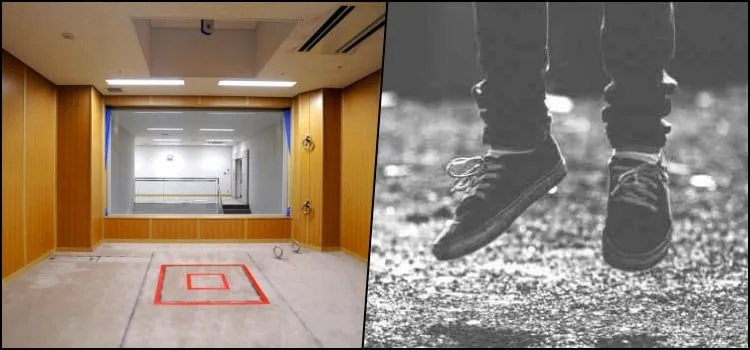
Today executions are carried out by hanging, and in practice they are reserved for the gravest murders. What still startles outsiders is not the rope. It is the calendar: the condemned typically learns the date on the morning it happens.
Contents4
When did the death penalty arise in Japan?
From around the 4th century, Japan became increasingly influenced by the Chinese judicial system and gradually adopted a system of different punishments for different crimes, including the death penalty.
However, starting in the Nara period, cruel punishments and the death penalty became less common, likely as a result of Buddhist influence, and the death penalty was abolished in the Heian period. The death penalty was not used for the next 300 years, until the Genpei War.
During the Kamakura period, capital punishment was widely used, and execution methods became increasingly cruel, including burning, boiling, and crucifixion, among many others.
During the Muromachi period, even more severe execution methods came into use, such as upside-down crucifixion, impalement by spear, sawing, and dismemberment with oxen or carts.
These harsh methods and the liberal use of the death penalty continued throughout the Edo period and into the early Meiji period, but due to the influence of Confucianism, offenses against masters and elders were increasingly punished more harshly than offenses against those of lower class.
In 1871, as a result of a major reform of the penal code, the number of crimes punishable by death was reduced, and excessively cruel torture and flogging were abolished. Hanging stayed.
Criteria for the death penalty in Japan
Although technically not a precedent, this guideline — the Nagayama criteria, from the Supreme Court’s 1983 ruling in the case of Norio Nagayama — has been followed by all subsequent capital cases in Japan. Nagayama was 19 when he committed four robbery-murders in 1968. The Tokyo High Court first gave him life; the Supreme Court said that was too light and sent the case back. He was hanged in 1997.
The nine criteria are as follows:
Degree of wickedness;
Motive;
How the crime was committed; especially the manner in which the victim was killed;
Outcome of the crime; especially the number of victims;
Feelings of the victim's family members;
Impact of the crime on Japanese society;
The age of the defendant;
Previous criminal history of the defendant;
Degree of remorse shown by the defendant;
The number of victims carries the most weight. Death sentences are usually imposed in cases of multiple murders. A hanging for a single killing is treated as exceptional — reserved for extreme brutality, kidnapping for ransom, or a killer who has already served time for homicide.
Age still counts. Japan does not sentence to death anyone who was under 18 at the time of the crime. People aged 18 or 19 can still receive the penalty in rare cases; Nagayama himself was one of them. Civil adulthood dropped from 20 to 18 in 2022, but youth remains one of the nine factors, not a free pass.
Execution process in Japan
The execution order is signed by the Minister of Justice after internal consultations within the Ministry of Justice. Once the final approval is signed, the execution will take place within five days. By statute, the execution cannot occur on a national holiday, Saturday, Sunday, or between December 31 and January 2.
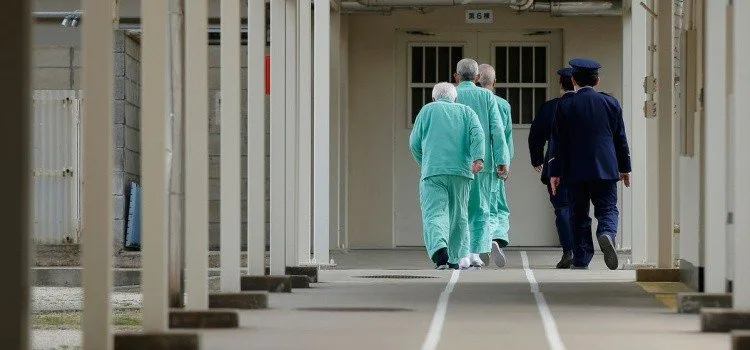
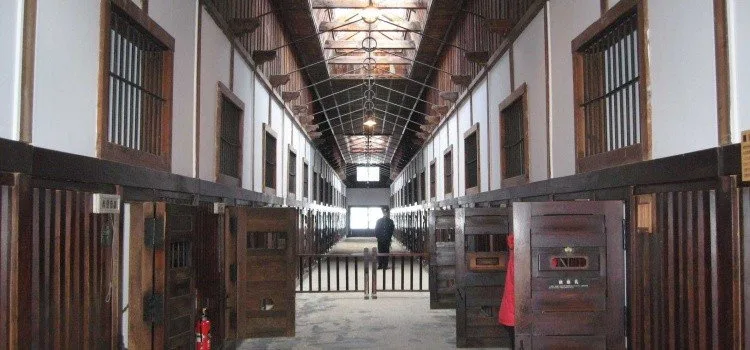
Hangings take place in an execution chamber inside a detention house, not a regular prison. There are seven facilities with a gallows: Tokyo, Osaka, Nagoya, Sendai, Fukuoka, Hiroshima, and Sapporo. Inmates wait there in solitary confinement, a regime closer to the isolation described in our piece on keimusho than to an ordinary cell block.
When an execution order has been issued, the condemned prisoner is informed on the morning of their execution. The condemned are given the choice of a last meal. The family and legal representatives of the prisoner, as well as the general public, are only informed afterward. Since December 7, 2007, authorities have released the names, the nature of the crime, and the ages of executed prisoners.
Why the hanging date stays secret
That morning notice is the system’s signature. Inmates live without a calendar. Relatives find out after the fact. The Ministry of Justice has argued that more warning would destabilize the people still waiting.
Public support remains high. A Cabinet Office survey in late 2024 found about 83 percent of respondents saying the death penalty is necessary in some cases. Japan and the United States are the only G7 countries that still carry it out.
The pressure on the other side has a name. Iwao Hakamada, a former boxer, spent decades on death row for a 1966 quadruple murder. In September 2024 a Shizuoka court acquitted him, finding that investigators had fabricated evidence. He is the fifth death-row prisoner found not guilty in a postwar retrial.
Executions still happen. On August 21, 2026, Sunao Takami was hanged at the Osaka Detention House for a 2009 arson at a pachinko parlor that killed five people and injured ten. It was the first hanging under Prime Minister Sanae Takaichi, and the first since Takahiro Shiraishi in June 2025. After Takami, the ministry counted 100 people still waiting.
The Aum Shinrikyo hangings of 2018 — including Shoko Asahara, convicted over the Tokyo subway sarin attack — remain the cluster that showed how fast the system can move once a minister signs. What it does not show, and never has, is the date in advance.
Kevin Henrique has written about the Japanese language, culture, anime, games, and travel since founding Suki Desu in 2014. He first visited Japan in 2016.
Community
Comments
0 comments
There are no published comments in this language yet.

 During the Kamakura period, capital punishment was widely used, and execution methods became increasingly cruel, including burning, boiling, and crucifixion, among many others.
During the Muromachi period, even more severe execution methods came into use, such as upside-down crucifixion, impalement by spear, sawing, and dismemberment with oxen or carts.
These harsh methods and the liberal use of the death penalty continued throughout the Edo period and into the early Meiji period, but due to the influence of Confucianism, offenses against masters and elders were increasingly punished more harshly than offenses against those of lower class.
In 1871, as a result of a major reform of the penal code, the number of crimes punishable by death was reduced, and excessively cruel torture and flogging were abolished. Hanging stayed.
During the Kamakura period, capital punishment was widely used, and execution methods became increasingly cruel, including burning, boiling, and crucifixion, among many others.
During the Muromachi period, even more severe execution methods came into use, such as upside-down crucifixion, impalement by spear, sawing, and dismemberment with oxen or carts.
These harsh methods and the liberal use of the death penalty continued throughout the Edo period and into the early Meiji period, but due to the influence of Confucianism, offenses against masters and elders were increasingly punished more harshly than offenses against those of lower class.
In 1871, as a result of a major reform of the penal code, the number of crimes punishable by death was reduced, and excessively cruel torture and flogging were abolished. Hanging stayed.





Community
Comments
0 comments
There are no published comments in this language yet.
Send comment