
Dango is one of the easiest Japanese sweets to recognize: small chewy dumplings threaded on a bamboo skewer. Depending on the flour blend and the topping, it can taste lightly sweet, smoky, nutty, or glazed with a sweet-salty sauce. Below, you will find what dango is, how it differs from mochi, where mitarashi dango comes from, the main varieties sold in Japan, and a simple recipe to make it at home.
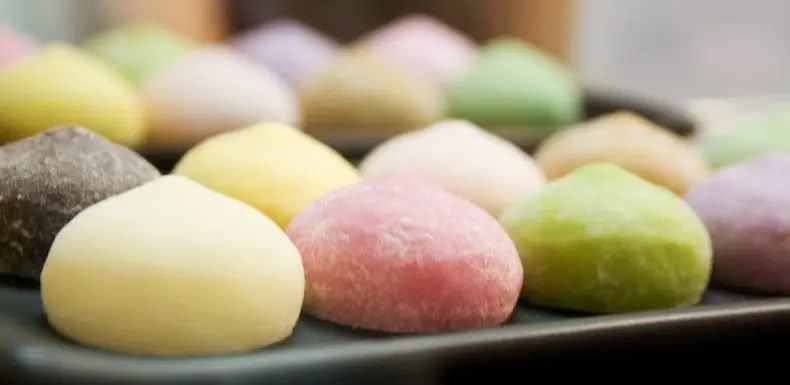
If you already know mochi, the easiest distinction is the base. Dango is usually made from rice flour, while mochi is made from pounded glutinous rice. That difference gives dango a firmer bite and helps it hold its round shape on the skewer.
Contents 6
What is dango?
Dango [団子] is a traditional Japanese sweet made from rice flour, often with a mix of regular rice flour and glutinous rice flour. The dumplings are boiled, cooled, and usually served in groups of three to five on a bamboo skewer. Some versions are plain, while others are finished with anko, kinako, sesame, or the glossy soy-based glaze used on mitarashi dango.
Because dango is made from flour rather than pounded rice, its texture is springier and a little firmer than mochi. That is why the two sweets look similar but do not feel the same when you bite into them.
History and origin of dango
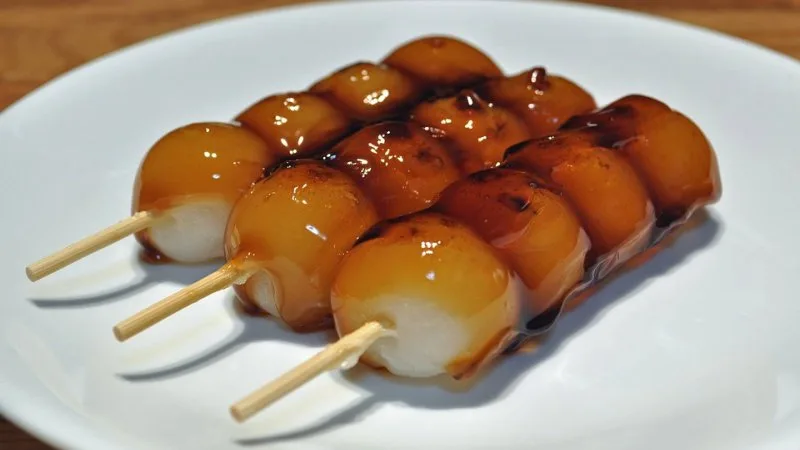
Dango has been part of Japanese confectionery culture for centuries, but the version most foreign visitors recognize today is often mitarashi dango. According to the tradition linked to Shimogamo Shrine in Kyoto, the shape of mitarashi dango comes from bubbles rising from the sacred Mitarai Pond. A local legend says five dumplings were arranged to resemble those bubbles, with one at the top and four below.
That connection is the reason mitarashi dango is closely associated with the shrine and with the Mitarashi Festival held there in summer. During the ritual, visitors walk through the cool pond water as an act of purification before offering prayers at the shrine.
Popular types of dango
There are many regional and seasonal varieties of dango. The name often changes according to the topping, the flour, or the occasion when it is eaten. These are some of the best known:
- Mitarashi dango — grilled or lightly toasted dumplings coated with a sweet soy glaze;
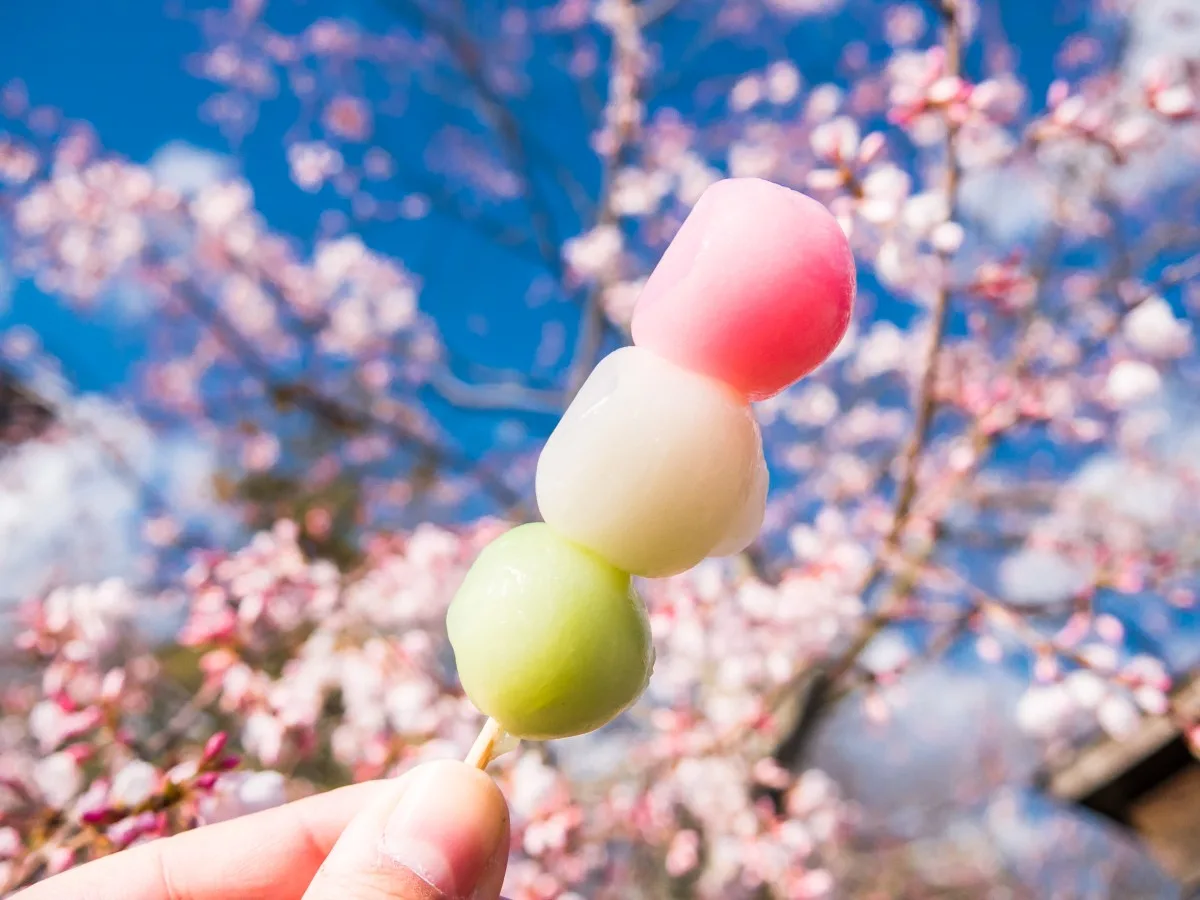
- Hanami dango — the pink, white, and green skewer traditionally eaten during cherry blossom viewing;
- Tsukimi dango — plain dumplings prepared for moon-viewing season, often served stacked rather than skewered;
- Anko dango — topped with sweet red bean paste;
- Kinako dango — coated with roasted soybean flour;
- Cha dango — flavored with green tea;
- Kibi dango — a famous sweet linked to Okayama and traditionally associated with millet.
Some names are broader than others. For example, kushi dango simply means dango on a skewer, while nikudango uses the same word for round meatballs in savory cooking. In other words, dango can describe the shape as much as the dessert itself.
What does hana yori dango mean?
The proverb hana yori dango [花より団子] literally means “dango over flowers.” It describes a preference for what is useful or satisfying over what is merely decorative. In practice, it is the kind of phrase you use for someone who goes to a cherry blossom outing more interested in the snacks than in the blossoms themselves.
This saying also inspired the famous title Hana Yori Dango, the manga and drama known in English as Boys Over Flowers. The title plays with the sound of the proverb while replacing the last word with a different idea, which is why the cultural reference works so well in Japanese.

Dango Daikazoku and Clannad
Dango also became unforgettable to many anime fans because of Clannad. The series uses Dango Daikazoku, or “The Great Dango Family,” as a recurring symbol tied to warmth, nostalgia, and family affection. That is why so many people first hear about dango through Nagisa, the ending theme, or the plush versions of the sweet that appear in the story.
Even if you arrive here from anime, the real dessert is worth trying on its own. Fresh dango has a gentle rice flavor and a soft chew that works especially well with tea. If you enjoy Japanese sweets served with matcha or at seasonal festivals, this is one of the first classics to taste.

Easy dango recipe
If you want to make dango at home, start with a simple dough and finish it with mitarashi sauce. The best texture usually comes from combining joshinko and shiratamako, but pre-mixed dango flour also works.
Ingredients for the dumplings
- 100 g joshinko;
- 100 g shiratamako;
- 150 ml warm water, added gradually.
How to make the dumplings
- Mix the two flours in a bowl.
- Add the warm water little by little until you get a smooth dough that holds together without becoming sticky.
- Shape the dough into small balls.
- Boil them until they float, then leave them for another minute or two.
- Transfer the dumplings to cold water to stop the cooking.
- Thread three to five dumplings onto each skewer.
Ingredients for mitarashi sauce
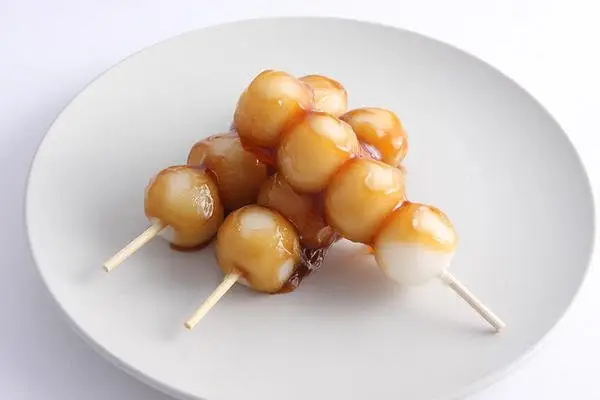
- 2 tablespoons soy sauce;
- 2 tablespoons sugar;
- 2 tablespoons mirin;
- 4 tablespoons water;
- 1/2 tablespoon cornstarch.
How to make the sauce
- Mix all the ingredients in a small pan.
- Cook over low heat until the glaze thickens.
- Brush or pour the sauce over the skewered dango while it is still warm.
If you prefer, finish the dumplings with anko, kinako, black sesame, or a light dusting of sugar. Fresh dango is best on the day it is made, when the texture is still soft and pleasantly chewy.


Community
Comments
0 comments
There are no published comments in this language yet.
Send comment