
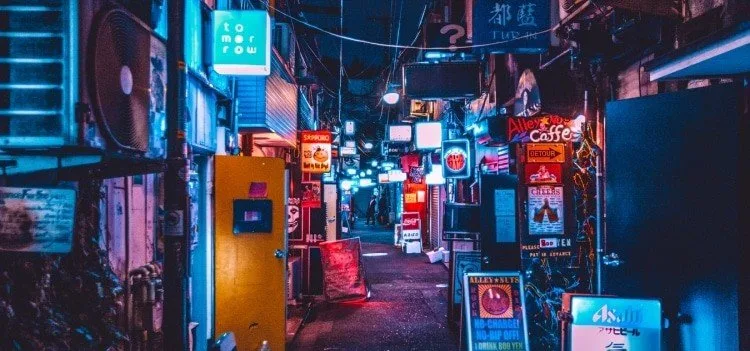
The first time I sat down in an izakaya, the sake did not stop at the cup. In Ito, on the Izu Peninsula, they poured until the wooden masu overflowed — a small mess that, there, is the point.
People remember bars for noise and a crowd that has already gone too far. Izakayas work on another tempo. After a long day at work, to gather family, or to drink with friends, an izakaya [居酒屋] is the homey room Japan still uses as a meeting point.
Contents 5
What is an izakaya?
An izakaya is a casual Japanese bar that serves drinks with small dishes meant to be shared. Dictionaries often say “pub” or “tavern,” which is close enough to get you in the door and still misses the rhythm: you stay, you drink, and plates arrive in waves rather than as a single meal.
You find them in small towns and on busy streets, especially around train and subway stations. Some are tiny and family-run. Others have grown into chains big enough for a whole office party. The focus is still the same: simple drinks, cheap plates, and a room that lets people unwind.
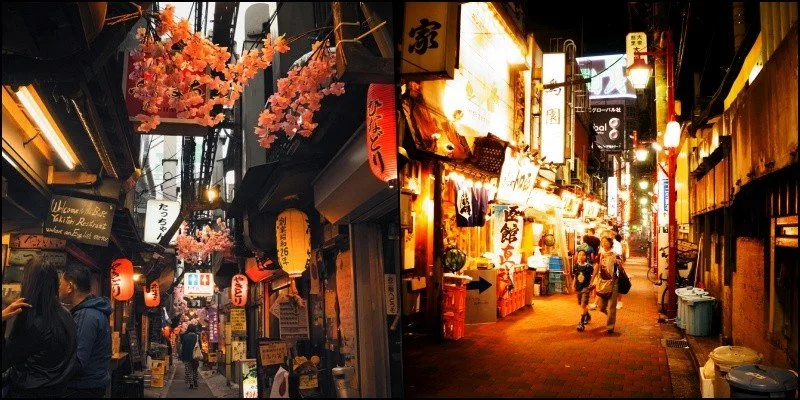
They did not grow out of Edo-period teahouses. The usual story is more practical: sakaya — sake shops — started letting customers drink on the premises instead of taking a bottle home. Sit-down sake shops, then a few simmered snacks on the side, became the izakaya. The name is iru (to stay) plus sakaya (sake shop): a shop where you stay to drink.
Meaning of izakaya
The kanji 居酒屋 still match that night. [居] means to stay or dwell, [酒] is sake and, by extension, alcohol, and [屋] is a shop. In daily talk, a small independent one is sometimes called an akachōchin, after the red paper lantern hanging outside.
What unites them is the mood. They stay casual. They stay close to Japanese ingredients. And they are no longer a men-only after-work hideout: women, students, and travelers fill the same counters now.
What you find in an izakaya
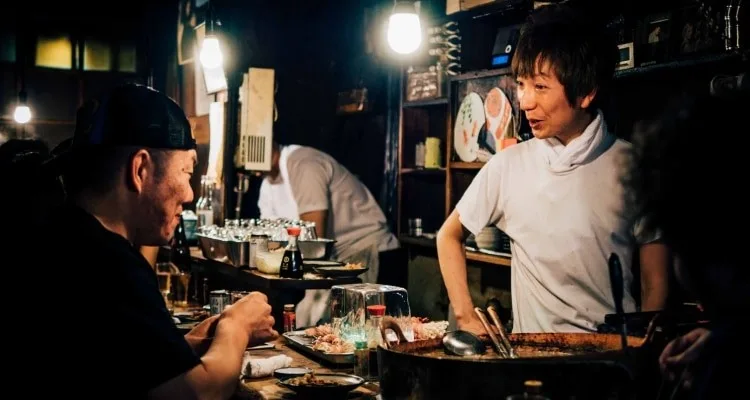
The food list is long on purpose. Common plates include sashimi, fried chicken, grilled rice balls, edamame, gyoza, yakitori — chicken grilled on bamboo skewers — and oden, the simmered pot of daikon, eggs, octopus, and other pieces in broth. Some houses lean on seafood. Others are basically a yakitori shop with extra chairs.
Those dishes exist to sit next to a drink. Draft Japanese beer is often the first glass on the table. Sake still belongs here, hot or cold. And then there is shōchū, a distilled spirit — not a beer — often made from sweet potato, barley, rice, or brown sugar, drunk neat, with water, with fruit juice, or with tea. Soft drinks and tea are there for anyone who is not drinking.
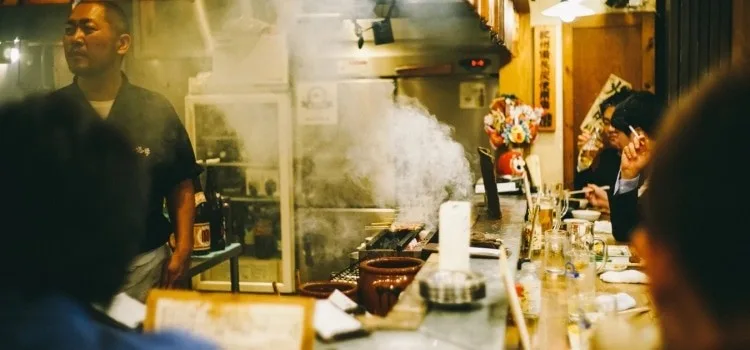
Menus live on the table, on the wall, sometimes on the ceiling. Picture menus help in the bigger chains. Dishes are shared. You order as the night goes, not all at once, and the kitchen sends food when it is ready.
How a night at an izakaya actually goes
You sit — at a counter, at a table, or on tatami in the older rooms — and someone hands you an oshibori, a wet towel, cold in summer and hot in winter. Soon after comes the otōshi (called tsukidashi around Osaka and Kobe): a small starter you did not order. It is custom, and it usually appears on the bill as a seat charge. It is not a free gift.
Staff often ask for a drink first. That first glass is how the table starts; food follows. If you are with colleagues, wait for everyone before the first sip and say kanpai. Pouring for the person next to you is still good manners in a work group. For a longer stretch, some places sell nomi-hōdai (all you can drink) or tabe-hōdai (all you can eat) with a time limit, usually a couple of hours.
None of this is a test. An izakaya is loud in a friendly way, and the staff would rather you call them over than sit in silence with an empty glass. If you want the broader picture of how Japan treats alcohol, there is a separate guide to tips and rules for drinking in Japan.
My experience at an izakaya
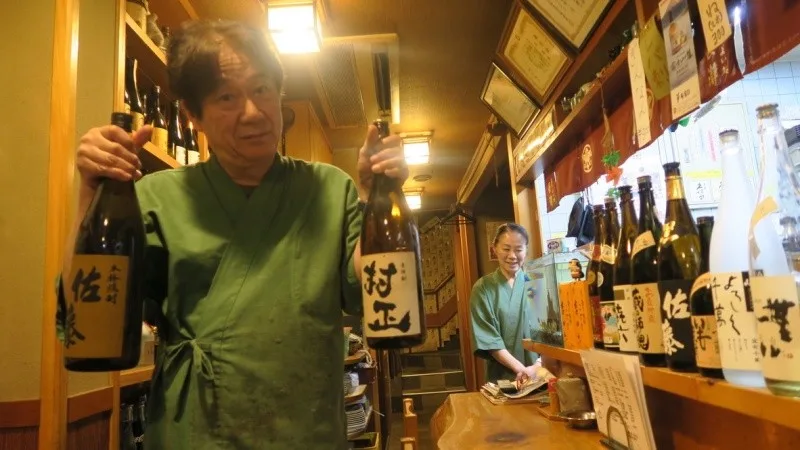
I went to an izakaya for the first time in the Izu region, in the city of Ito. At the first one, we had sake poured into a cup sitting inside a wooden masu, filling both containers until it spilled over the rim.
Afterward we went to a snack bar, sang a couple of songs in karaoke, and then landed in another izakaya, much more family-oriented, where we talked a lot with the owner and even took pictures with them. That day was an incredible stretch of the trip, while we were staying at K's.
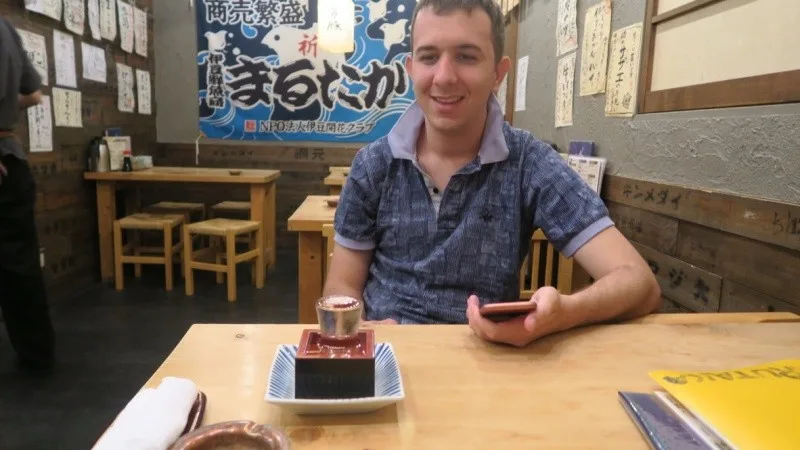
Of course, during the trip we went to several other places that served drinks, including spots with German beer and the Sapporo brewery itself in Hokkaido. I also sat down at an izakaya in Tokyo and ate yakitori.


Community
Comments
0 comments
There are no published comments in this language yet.
Send comment