
In today's article, we will get to know the Okinawa archipelago (沖縄県) and its cultures, which are quite different from the rest of Japan. This archipelago stretches from southern Japan toward Taiwan and comprises a total of 169 islands.
Contents 3
History of Okinawa
Until the 19th century, Okinawa was known as the Ryukyu Islands — an independent kingdom from Japan. Thus, it developed not only a language but a culture of its own.
After the end of World War II, Okinawa continued to be administered by the United States for another 27 years, and in 1972 it was returned to Japanese administration.
The archipelago is subdivided into three smaller groups of islands: Miyako, Yaeyama, and the Okinawa Islands, where the capital Naha is located. Each of them has distinct architecture and variations in the local language.
Naha is the capital of Okinawa Prefecture, with an estimated population of approximately 320,000 inhabitants; it is the largest municipality in the prefecture. There are two Yakuza groups in it, the largest being the "Okinawa Kyokuryu-kai".
Culture of Okinawa
Tanabata, also known as the appropriate day, is the occasion for Okinawans to clean the family graves and butsudans (family altars) to avoid the contagion of negative energy. According to tradition, the family cleans the graves as a sign to their ancestors that Obon is approaching.
The Obon is a kind of Day of the Dead where families gather to pay homage to their ancestors. It is believed that on this day, the spirits return to Earth to visit their loved ones.
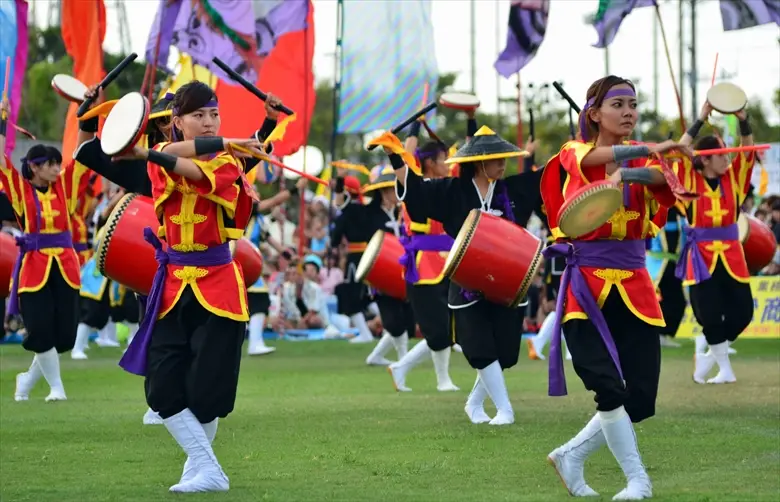
Eisa (エイサー) is a dance originating from Buddhist chants and prayers accompanied by melodies. They are performed through Taiko (drums) in honor of the ancestral spirits.
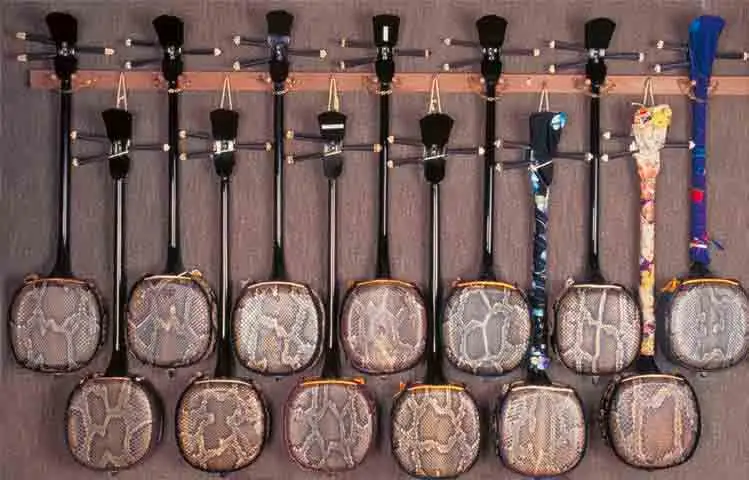
The Sanshin (三線) is a traditional musical instrument composed of three strings with a sound box covered by snake skin. It is believed that the instrument is over 4,000 years old, and its creation is told through the Legend of Akainku.
Highlights of Okinawa
Shuri Castle is considered a World Heritage Site by UNESCO.
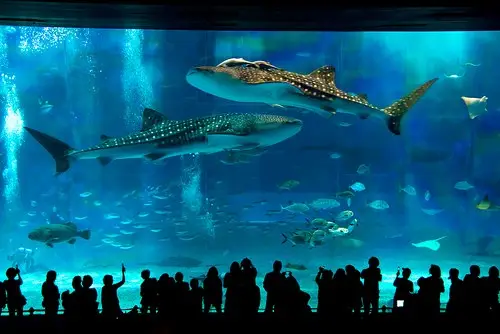
The main island of Okinawa is home to the second-largest aquarium in the world — the Churaumi Aquarium — which features several shops and restaurants, so you can make the most of your visit without having to leave for food or other necessities. The Okinawa Churaumi Aquarium website offers various guides, maps and information for visitors.
Another tourist spot is Okinawa World, where you can find plants, crafts, animals, food and various typical performances.
Okinawa Prefecture has about 1,800 hotels, and they are highly sought after for their white-sand beaches and the shades of water that range from crystal blue to turquoise. The prefecture is also a great place to see the fireworks celebrating the New Year, as it is a region with very little light pollution.
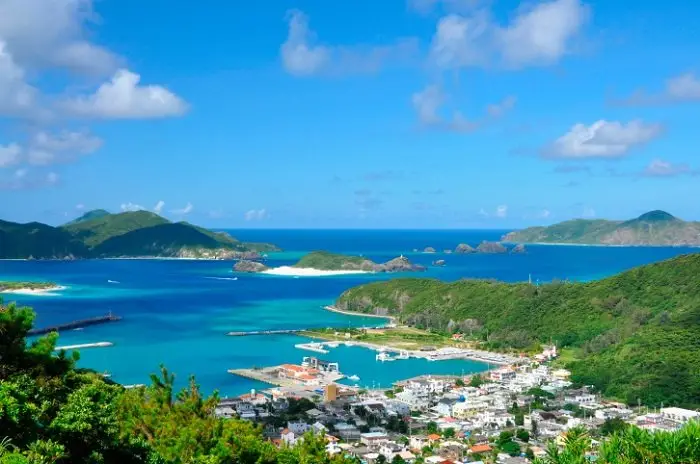
The village of Zamami, which welcomes travelers, lies near Naha.
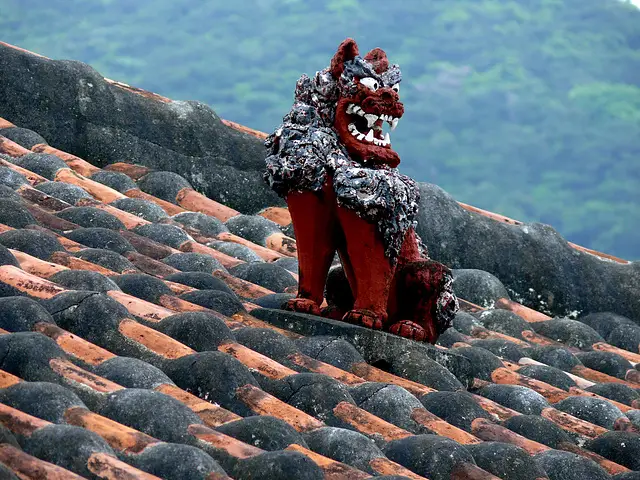
Shisa are figures of Chinese origin, used as protective amulets throughout the islands. It is believed that placing a Shisa on rooftops protects houses from natural accidents.
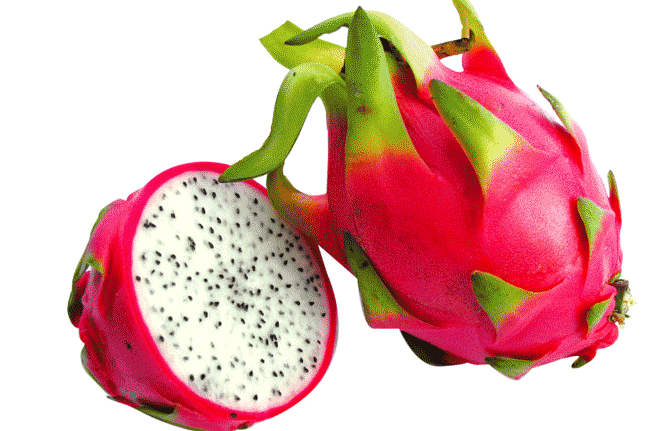
Okinawa has a subtropical climate; as a result, a lot of sugarcane, pineapple, banana, guava, jabuticaba, and fruits like dragon fruit and mangosteen are cultivated there. For anyone in Japan — or planning a trip there — who longs for tropical fruit, Okinawa is a great choice.
There is much more to explore in this paradise. Okinawa has produced a rich music scene, including singers like Gackt and Namie Amuro, as well as groups like Da Pump and the band Begin.




Community
Comments
0 comments
There are no published comments in this language yet.
Send comment