
Japanese curry — karē (カレー) — is comfort food first and “exotic spice” second. Introduced in the Meiji era (1868–1912), it settled into home kitchens, school cafeterias, and navy galleys until it became one of the dishes people in Japan eat more often than sushi or tempura. The plate looks simple: short-grain rice, a thick brown sauce, onion, carrot, potato — and yet the flavor is its own thing.
Today that sauce shows up as karē raisu, karē udon, and the snack-shop classic karē pan. What follows is the path from British curry powder to Japanese roux blocks, the dishes you will actually see on menus, and a home-style recipe you can cook without special equipment.
Contents 6
The origin of Japanese curry
Karē reached Japan through British influence during the Meiji era, when the country was absorbing Western techniques and ingredients. The spice blend itself came from Indian cooking as filtered through British naval and colonial kitchens — not as a direct import of North Indian restaurant curry. Japanese cooks then reworked the dish for local taste: milder heat, a touch of sweetness, and a sauce thick enough to cling to sticky rice.
Early recipes appear in cookbooks as early as 1872. The Imperial Japanese Navy adopted a flour-thickened curry that was easy to serve at sea and useful as a vitamin-rich meal on long voyages; a Friday curry tradition still appears in modern Maritime Self-Defense Force ship life and in Yokosuka’s “navy curry” tourism. At home, the dish was classified as yōshoku (Western-style food), then slowly became ordinary family cooking rather than a luxury restaurant item.
The spice base is a complex mix — turmeric, coriander, cumin, cardamom, ginger, pepper, cinnamon, cloves, and more. Blends can stack dozens of ingredients, from mild to sharp. In Japan the decisive step was thickening with wheat flour (a roux) and simmering meat or vegetables in broth until the sauce turns glossy and stew-like rather than thin and fiery.
Popular dishes made with karē
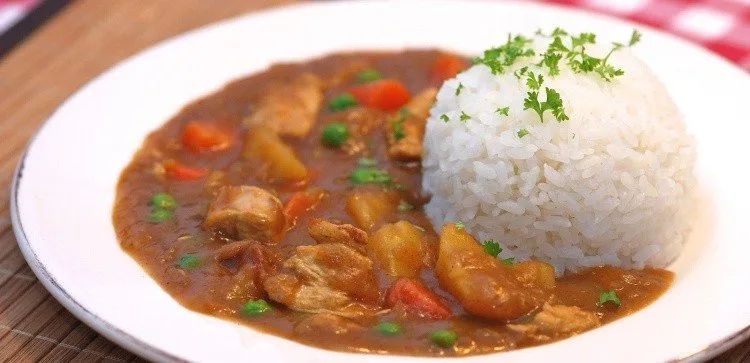
The emblematic plate is karē raisu (カレーライス): steamed white rice with curry sauce, meat (often pork, chicken, or beef), and vegetables such as onion, carrot, and potato. Most home cooks thicken the sauce with store-bought curry roux blocks; restaurants may build stock from scratch. It is weekday lunch, school-meal memory, and late-night order all at once.
Karē udon (カレーうどん) folds the same flavor into thick, chewy udon noodles. The broth is looser than karē raisu sauce, but still savory and warming — a winter favorite. Slurping udon through curry can get messy; that is half the charm.
Karē pan (カレーパン) is bread stuffed with curry, coated, and fried until the outside is crisp and the filling is hot. You find it in convenience stores and in bakeries across Japan, as breakfast on the go or a mid-afternoon snack.
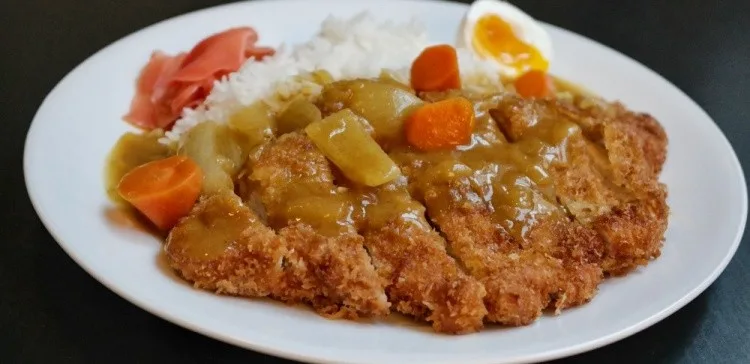
Then there is katsu karē (カツカレー): rice and curry under a breaded cutlet, usually pork tonkatsu or chicken. Outside Japan the word “katsu” is sometimes used loosely for any Japanese-style curry; in Japan the cutlet is the point of the name.
Different types of karē
Beyond the classics, regions and restaurants keep inventing plates. In Tokyo, pork is a common protein for home-style curry; in Osaka, beef shows up more often. A short map of names you may see:
- Katsu karē (カツカレー) — curry rice with tonkatsu or chicken katsu.
- Dorai karē (ドライカレー) — “dry” curry, closer to seasoned fried rice with minced meat and little sauce.
- Maze karē (混ぜカレー) — rice mixed thoroughly with curry, popular in Osaka.
- Aigake (合がけ) — rice split between curry and hayashi sauce (sautéed meat and onion with red wine).
- Yaki karē (焼きカレー) — curry rice topped with egg and baked until the surface sets.
- Sūpu karē (スープカレー) — soup-style curry from Hokkaido: brothier, with large-cut vegetables and spices floating freely.
Boxed roux and specialty shops also play with fruit and protein twists — apple, honey, pork, mackerel, even experimental flavors like nattō or melon — so “Japanese curry” is a family of plates, not one fixed recipe.
Roux blocks, powder, and heat levels
Part of the fun is control. Chains such as CoCo Ichibanya let you pick spiciness from mild to extreme and stack toppings. At home, Japanese curry usually arrives in two kitchen formats:
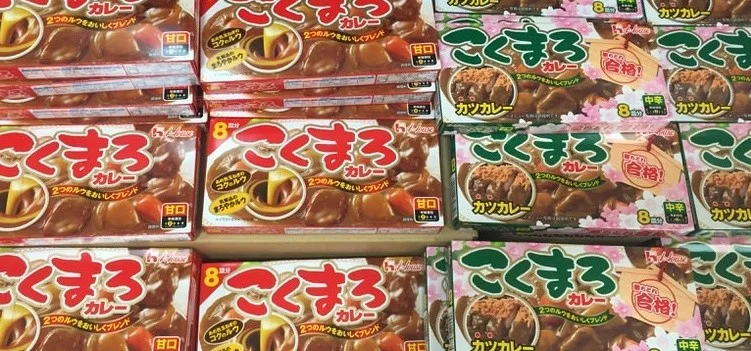
- Roux blocks — the chocolate-bar style packs of House, S&B, Glico, and others. Convenient, consistent, and designed to dissolve into a thick sauce after vegetables and meat are cooked.
- Curry powder — more flexible for from-scratch roux (butter + flour + powder) or for seasoning other dishes. Powder alone will not automatically give the same gloss as a finished block unless you cook a proper roux.
Many family recipes add a quiet “secret” for depth: grated apple, a spoon of honey or ketchup, soy sauce, garlic, or ginger. The goal is a sweet-savory brown sauce that kids can eat, not a chili challenge — though hot brands exist if you want heat.
How it is served
Karē raisu is usually eaten with a spoon, not chopsticks, because the sauce is liquid enough to need one. Short-grain Japanese rice holds the gravy better than long-grain pilaf rice. On the side you often get pickles: fukujinzuke (sweet soy-pickled vegetables) or rakkyō (pickled shallots). That sharp-sweet crunch is the contrast the brown sauce is waiting for.
If you are building a wider picture of everyday Japanese cooking, pair this dish with other staples covered on the site — from pantry building blocks in essential Japanese ingredients to the broader food culture overview in Japan’s food and food culture.
Japanese curry recipe (home-style karē raisu)
This is a practical weeknight version for about four servings. Use store-bought roux for reliability, or dissolve Japanese curry powder into a small flour-and-butter roux if that is what you have.
- 500 g meat (chicken thigh, pork, or beef), cut into bite-size cubes
- 2 onions, cut into wedges
- 2 carrots, cut into chunky pieces
- 2 medium potatoes, cut into large cubes (Yukon gold holds shape better than russet)
- 1 package Japanese curry roux (about 100–120 g for 4 servings; follow the box if it differs), or 2–3 tablespoons Japanese curry powder plus 2 tablespoons butter and 2 tablespoons flour
- About 800 ml water or light meat stock (just enough to barely cover the ingredients)
- Optional depth: ½ grated apple, 1 teaspoon honey, 1 teaspoon soy sauce, 1 teaspoon ketchup, grated garlic or ginger
- Salt only at the end if needed (roux is already seasoned)
- Cooked Japanese short-grain rice and fukujinzuke or rakkyō, to serve
Method: Sauté the onions in a little oil or butter until translucent and lightly golden. Add the meat and cook until the surface is no longer raw. Add carrots and potatoes, pour in the water or stock so the ingredients are just covered, and simmer gently for about 15 minutes until the vegetables are tender. Skim any foam if you want a cleaner taste.
Turn off the heat. Break the roux into pieces and dissolve them in a ladle of hot liquid before stirring back into the pot (this avoids lumps). If using powder, melt butter, stir in flour and curry powder to a paste, then whisk that paste into the pot. Return to a low simmer for 5–10 minutes, stirring so nothing sticks, until the sauce thickens and turns glossy. Adjust with water if it gets too stiff, or simmer uncovered if it is thin. Taste before adding salt.
Serve the sauce over hot rice. Curry often tastes even better the next day; if you freeze leftovers, remove potatoes first so the texture does not turn mealy.




Community
Comments
0 comments
There are no published comments in this language yet.
Send comment