
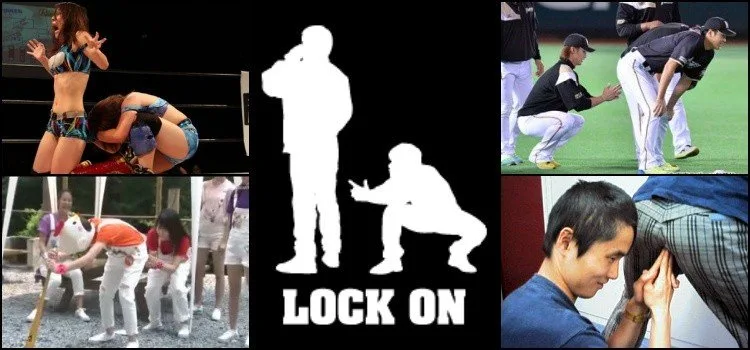
Kanchō (カンチョー) is a prank in which a person clasps their hands into a finger gun and pokes another person's anus from behind, often while shouting "Kan-CHO!". It is a well known prank among children in Japan, and similar versions exist in Korea and China.
This article explains the term, its origin, the regional variants, its place in schools and pop culture, and the point where the joke becomes a boundary violation.
Contents 14
What is Kanchō?
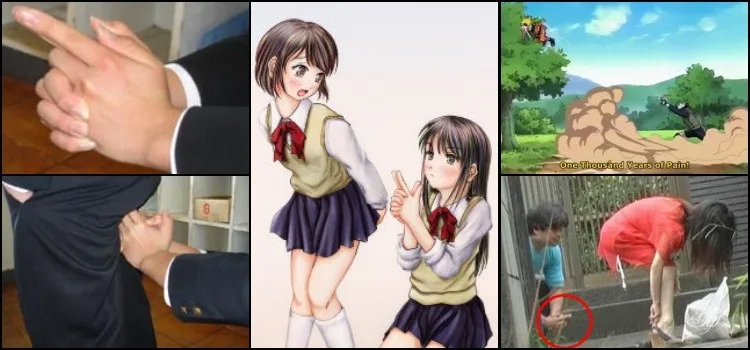
Kanchō is a physical prank rather than a game with rules. The person forms a pistol with both hands and pokes the anus of an unsuspecting target from behind. The shout "Kan-CHO!" is part of the performance.
The appeal lies in the surprise and the reaction. For the target, the touch is unpleasant and sometimes painful, which keeps the prank on the line between humour and assault.
Where the name comes from
The word is a slang borrowing of the Japanese term for enema (浣腸, kanchō). In its medical sense it is written in kanji, while the prank is usually written in katakana (カンチョー).
That medical origin explains why the word sounds explicit in Japanese. For children the allusion is part of the joke, without any medical meaning behind it.
Variants across East Asia
In Korea the prank is called ttongchim (똥침). In China it is known as qiānnián shā (千年殺), literally "thousand-year kill". The Chinese name comes from the Naruto manga and anime series, where Kakashi Hatake uses a technique called Sennen Goroshi, translated as "One Thousand Years of Death".
The Naruto connection made the name famous far beyond Japan. Fans often recognise the move from the series before they ever see the prank in real life.
The difference from goosing
English has the word goosing for a comparatively mild poke or pinch on or between the buttocks. Kanchō targets the anus directly, which makes it considerably more invasive.
The distinction matters for how the act should be judged. A pinch on the buttocks is already unwanted contact, and kanchō touches a private area.
In schools and daily life
Most reports of kanchō come from schools. Children try it in the playground or the classroom, and in Japan teachers, including foreign teachers, are frequent targets because they stand in front of the class.
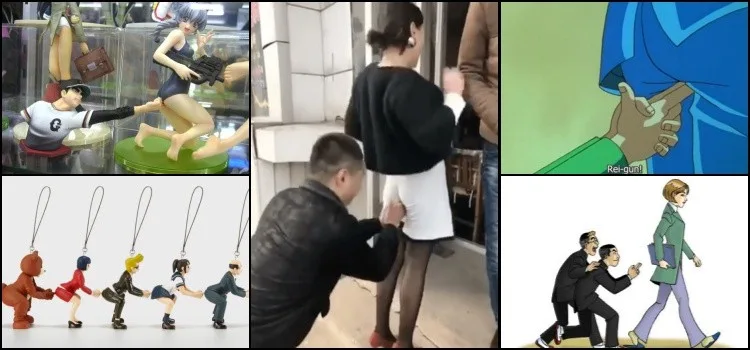
It also appears on television shows, in manga and in video games. That does not mean the act is accepted in daily life. Media portrayals are part of pop culture, not instructions for how to behave.
Why children do it
For children the prank tests boundaries. They want to see how others react, and they look for attention and closeness within the group. Humour and physical teasing are part of many classrooms.
The surprise effect adds to it. The child who performs the prank gets a moment of attention, and the group often laughs. The mechanism is not unique to Japan, although the form of the prank is.
Why it is not harmless
For the target, the touch is unpleasant and often painful. The person is caught off guard, cannot prepare, and is touched in an intimate area without having agreed to it.
What looks like a joke to the group is a violation for the person on the receiving end. Those who perform kanchō often remember laughter around them, while the target feels pressure to play along. That expectation is part of the problem.
Consent and boundaries
Physical contact requires consent. A prank that touches a person's private area without asking has no consent, and the rule applies between children, between adults, and especially between adults and children.
Schools in Japan increasingly treat unwanted touching as a disciplinary matter. Anyone affected should report it to a teacher, to parents at home, and in serious cases to the school administration.
Legal and school consequences
Unwanted physical contact can have legal consequences in Japan as well. Depending on the circumstances, assault, coercion or harassment may apply. In the United States and other countries, the act can be treated as assault or sexual assault.
For students, the main consequence is usually school discipline: conversations, warnings and, depending on the school, formal punishment. For adults the threshold is higher because they are expected to understand the situation.
Kanchō in pop culture
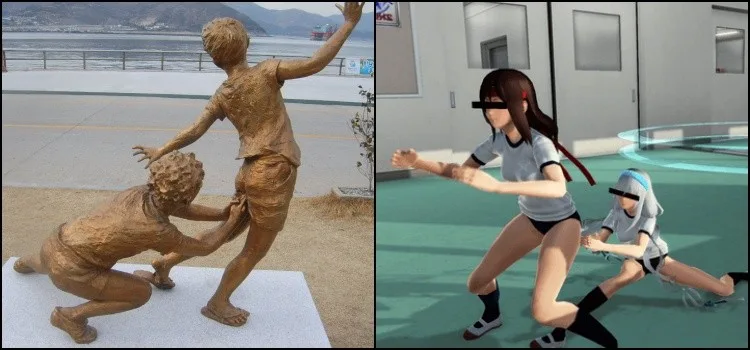
The best known pop culture appearance is the Sennen Goroshi technique from Naruto, used by Kakashi during Naruto's training. The video game Boong-Ga Boong-Ga is built around a simulated version of the prank.
These portrayals made the term famous worldwide, but they do not explain why the touch is a problem in real life. A joke in a manga is not permission for physical contact.
The unclear origin
Where the prank originally comes from is not documented. Fan circles repeat the theory that the name goes back to a child technique called san nen goroshi, a "three-year kill" performed with extended fingers.
There is no reliable evidence for that story. The medical origin of the word, by contrast, is well documented. Anyone writing about the history should say so instead of inventing an origin.
What parents and travellers should know
People who deal with children in Japan should know the prank and should not treat it as a charming local habit. Children are allowed to test boundaries, and adults are responsible for protecting other people's boundaries.
Travellers are unlikely to encounter kanchō. Anyone visiting or teaching in a school may hear about it. The right response is a clear, calm statement and a report to the teacher in charge.
Frequently asked questions
Is kanchō a children's game? It is a prank, not a regulated game. In Japan it is mostly associated with children, but not everyone finds it funny.
Is kanchō illegal? There is no law with that name. Unwanted physical contact can still be illegal under general assault and harassment rules.
Why do children do it? They test boundaries, seek attention and laugh at the reaction. That explains the prank without excusing the contact.
Is it only Japanese? No. Similar versions exist in Korea and China, and Naruto made the term known around the world.
Conclusion
Kanchō is a prank with a clear cultural home: it comes from Japan, has its own names in Korea and China, and became famous worldwide through manga and anime. The word itself comes from the medical term for enema.
At the same time, the prank is a physical boundary violation. Anyone describing it should say both things: that children try it, and that unwanted touching of a private area is not acceptable. That distinction is the real point of the topic.
To read more: the articles on the most bizarre games created in Japan, on the breast-groping campaigns in Japan, on the most bizarre Japanese game shows, on how Japanese schools work and on ijime, bullying in Japan.



Community
Comments
0 comments
There are no published comments in this language yet.
Send comment