
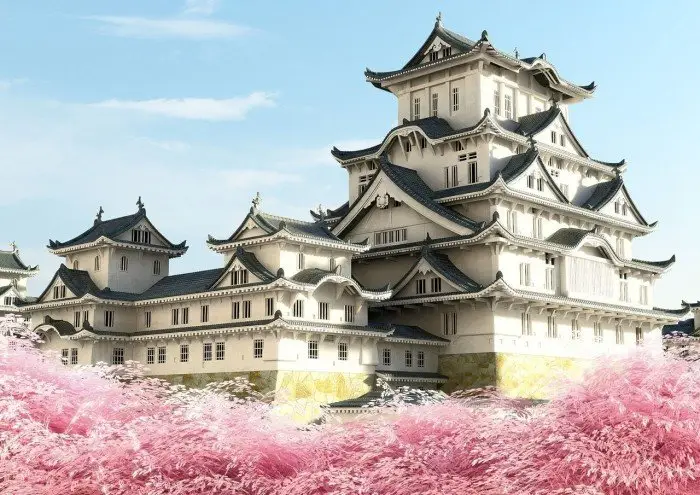
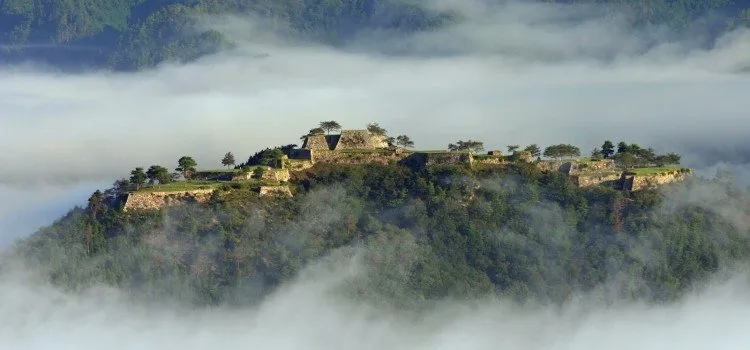
Enjoying the status of UNESCO Cultural and Historical Heritage since 1993, Himeji Castle is a jewel of Japanese architecture, full of particularities and a very interesting history.
Located where the city of Himeji currently is, in Hyogo Prefecture, 50 km west of Osaka and 650 km away from Tokyo, Himeji Castle began as a fort in 1333, built by Norimura Akamatsu, the former governor of the region, then called Harima.
In 1346, a small castle-like structure was erected by Sadanori Akamatsu. This "embryo" of the castle, entirely made of wood, was quite different from the current castle, but lasted 230 years.
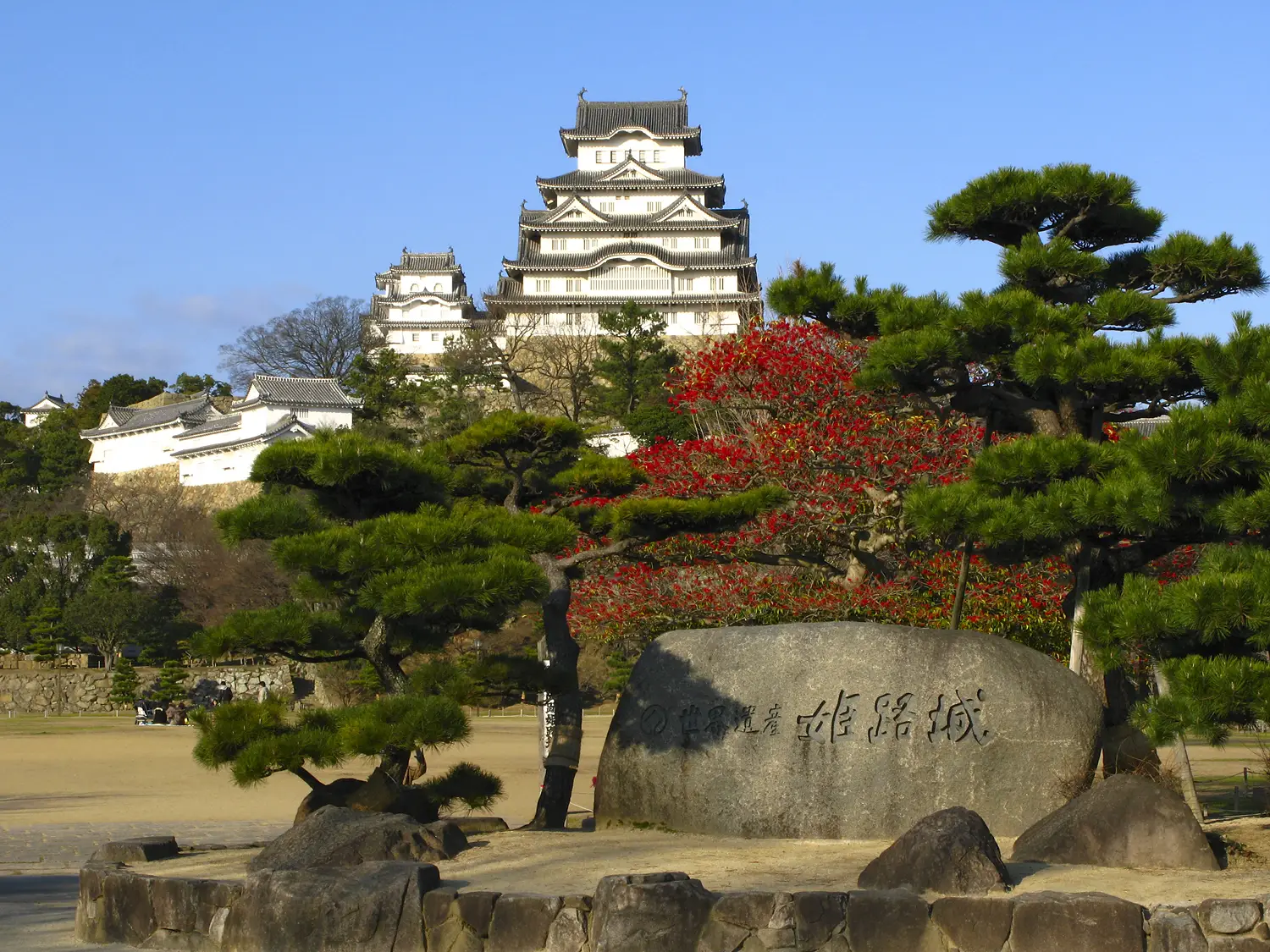
In 1580, Japan was undergoing a civil war, and two great "daimyō" (feudal lords) were disputing supremacy and control of Japan, dividing the country between those who supported Nobunaga Oda or Ieyasu Tokugawa.
Contents 4
Himeji Castle – Civil War
Hideyoshi Toyotomi, one of the military leaders of the Nobunaga Oda clan, seized the castle and promoted the first of a series of major reforms, aiming to build a "modern" 3-story castle.
The death of Oda in 1582 and the passing of Toyotomi in 1598 opened the way for Tokugawa's ambitions, who after winning the Battle of Sekigahara in 1600, took power in Japan. Thus, in 1601, Tokugawa awarded Ikeda Terumasa, one of his generals and son-in-law, the provinces of Harima, Bizen, and Awaji, thus becoming the new lord of Himeji Castle.
As Himeji Castle had been damaged during the civil war, and its location was important for the defense of the Tokugawa shogunate, Ikeda dedicated himself to rebuilding the castle, which thus gained the shape it maintains to this day.
In the reconstruction, Ikeda implemented details in Himeji Castle that modernized and improved the architectural and defensive characteristics, which made the castle complex an exemplary model of Japanese construction of the period.
In the most central and high part of a hill, a huge trapezoidal base composed of stone walls with slopes varying from 30 to 40 degrees was built to serve as the foundation for a 7-story castle, called "daitenshukaku".
This base, besides making it difficult for invaders to climb, allowed for proper rainwater drainage, preventing soil erosion and protecting the higher structure from the effects of a possible earthquake, since the wooden foundations placed at the base are flexible.
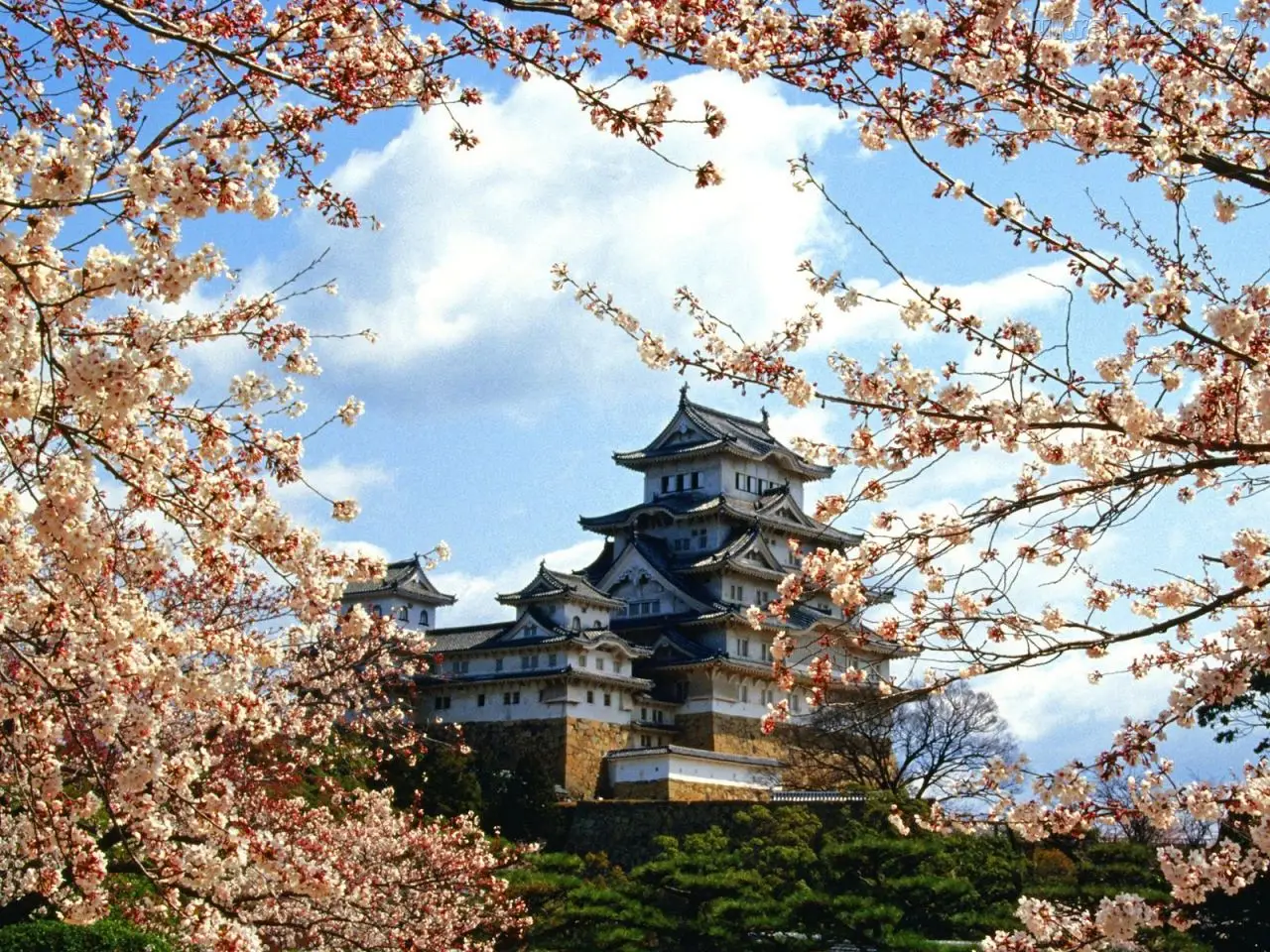
The White Heron of Himeji Castle
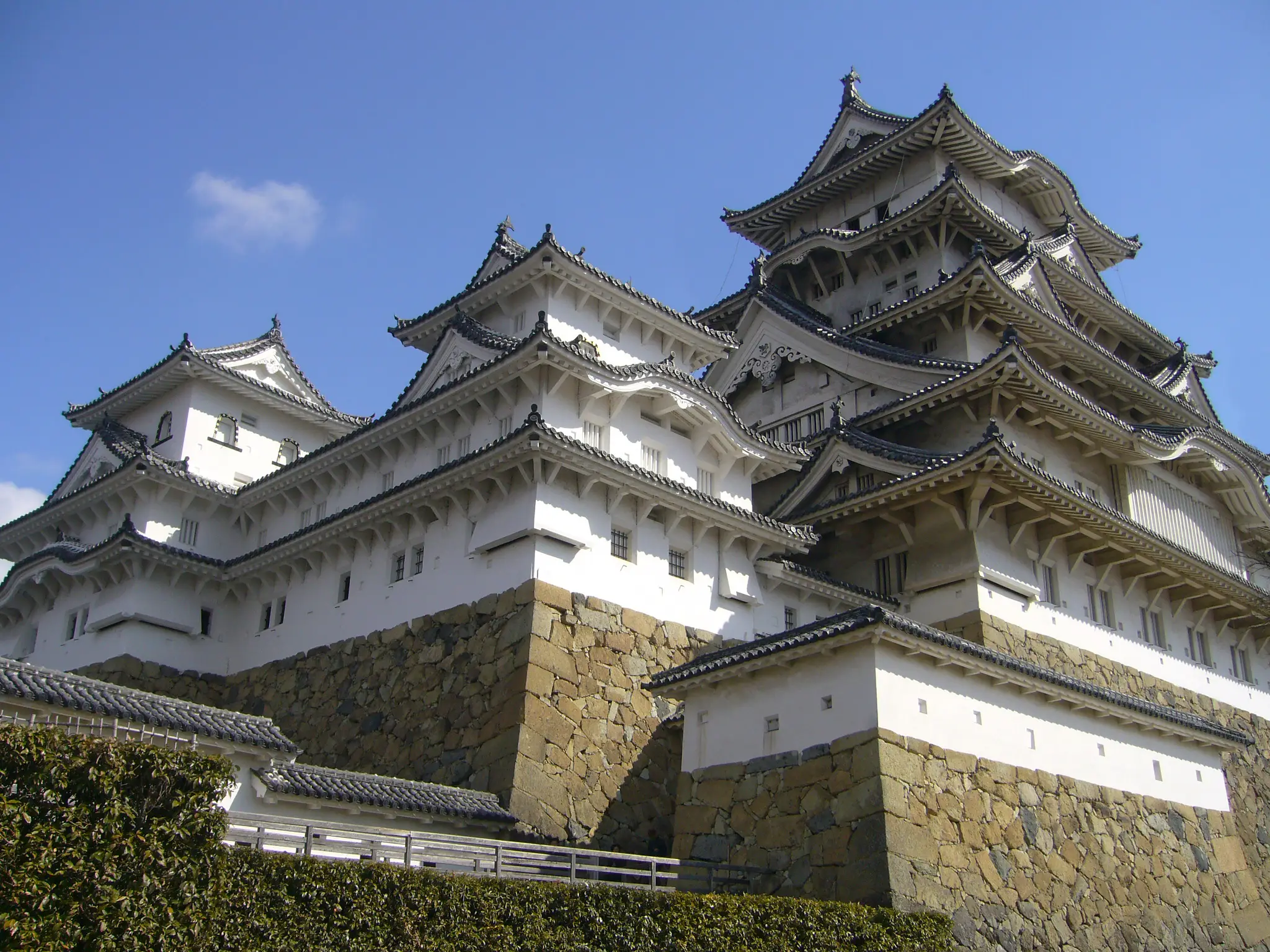
The nickname "White Heron" comes not only from the decorative elements of the castle, with graceful and curved eaves, but mainly from its walls covered with white masonry.
Like other castles of its time, Himeji was made of wood, but the masonry finish, besides giving it a white appearance, increased the thickness of the walls and modernized the castle by making it more resistant to attacks with firearms.
As the use of firearms in battles began in 1549, earlier constructions needed to be readapted. It is estimated that there were 5,000 small castles in Japan in the 14th century, but all of them relied only on fences and moats as a means of defense, which became vulnerable with the emergence of firearms.
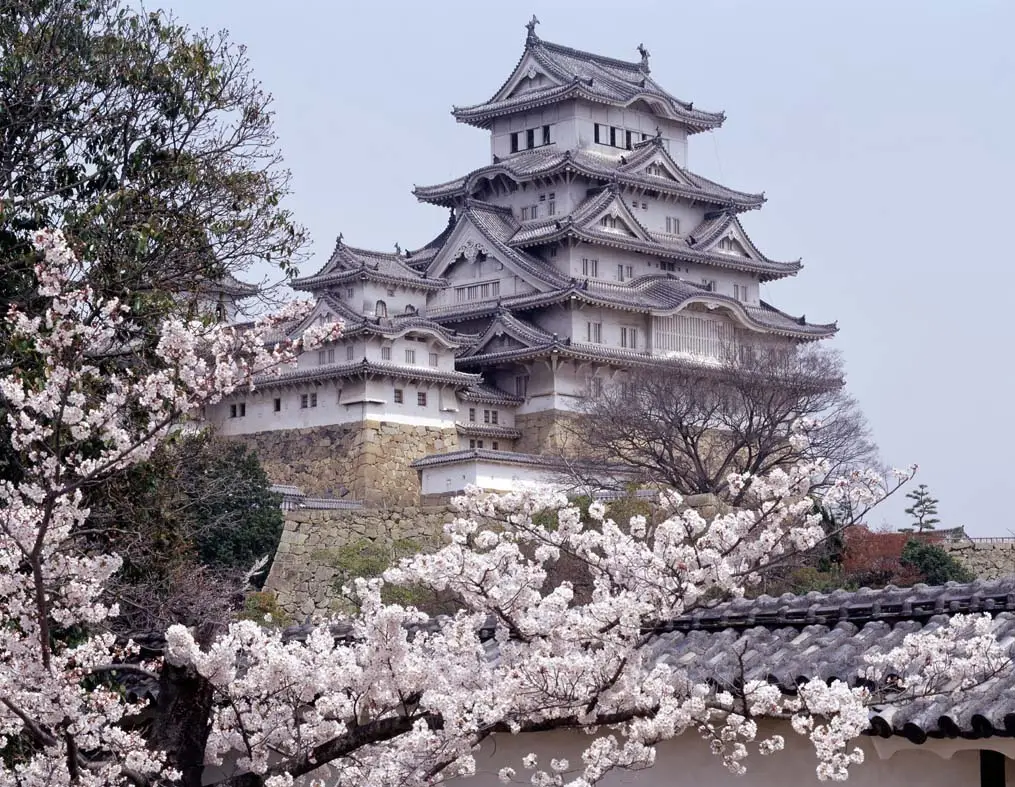
The Himeji Castle Complex
The enormous distance between Japan and other countries from the entrance of the complex, the thick walls and small windows in the castle, at the gates and in the towers reveal the concern with the "modern" firearms of the time. Until the mid-16th century, the Japanese used a type of primitive musket, whose barrel diameter resembles that of current bazookas and whose firing depended on the lighting of a fuse, just like in ancient cannons.
In short, it was a heavy, cumbersome, slow, and short-range weapon. This would change over time with the introduction of the matchlock (the predecessor of today's trigger-and-hammer firing system), which made Japanese firearms more efficient and gave them much greater range.
Somewhat larger, square openings at the top of the sloped stone walls and at the base of the main building were used to shoot stones at anyone trying to climb up the outside. In addition, several secret passages were built throughout the complex, which in case of an attack allowed the feudal lord, his family, servants, and soldiers to live with food and weapons stored for a long period.
Counting on Luck
But it was luck that gave Himeji its most valued characteristic, being its state of preservation. Although the castle was rebuilt by Ikeda with the purest defensive intent, the fact is that it has never been damaged by acts of war since then, not even during the Second World War.
The reconstruction of the castle took nine years, from 1601 to 1609, and it is estimated that it mobilized 50,000 workers, with a cost estimated today at more than 2 billion dollars.
Being a unique construction of its kind in the world and with a degree of preservation that allows us today to know a lifestyle from 400 years ago, Himeji Castle lives up to the title of World Heritage Site.


Community
Comments
0 comments
There are no published comments in this language yet.
Send comment