
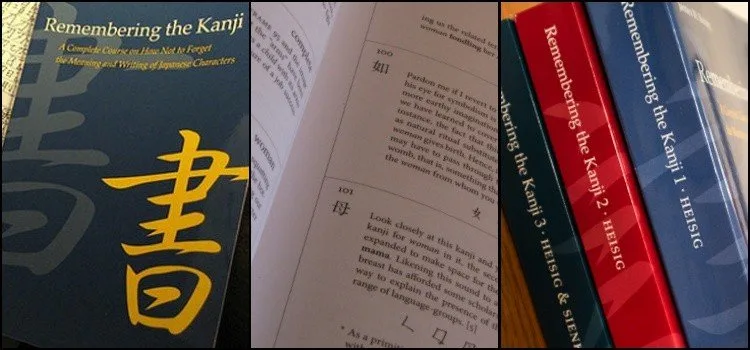
Kanji, the ideograms in Japanese that were imported from China, are one of the most daunting things to learn. Daily reading sits on the 2,136 jōyō kanji, the list the government marks for general use. Many people feel completely lost and have no idea how to learn the kanji of the Japanese language; in this article, we will discuss the famous RTK - Remembering the Kanji method.
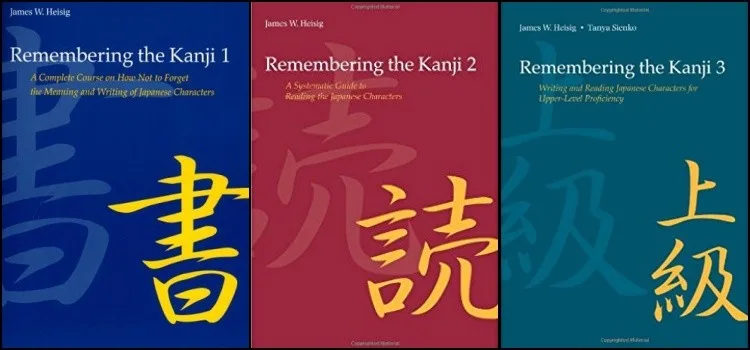
RTK (Remembering the Kanji) is a three-volume series written by James W. Heisig. Volume 1, the book most learners mean when they say RTK, teaches the meaning and writing of 2,200 kanji. Volume 2 covers the readings of those same characters. Volume 3, co-authored with Tanya Sienko, adds about 800 more and brings the set near 3,000. The series is available in several languages besides English, including Portuguese. In Brazil it is sold under the name Kanji: Imaginar para Aprender.
James Heisig created his own method after arriving in Japan with no Japanese. In the introduction he writes that, studying full time, he learned the meaning and writing of about 1,900 characters in roughly a month: a keyword plus the written form, with readings left for later. He shares that method in the books we will cover in this article.
Contents 4
What is the goal of the Book - RTK
The goal of this book is to teach Kanji in a completely different way from the JLPT. Test lists group characters by how often they appear. Heisig groups them by the pieces they are built from, so each new character reuses parts you already have a story for. You still learn to write every character; on'yomi and kun'yomi wait until Volume 2. The aim of the book is to ensure that you do not forget the meaning and strokes of the Kanji using imaginative memory.
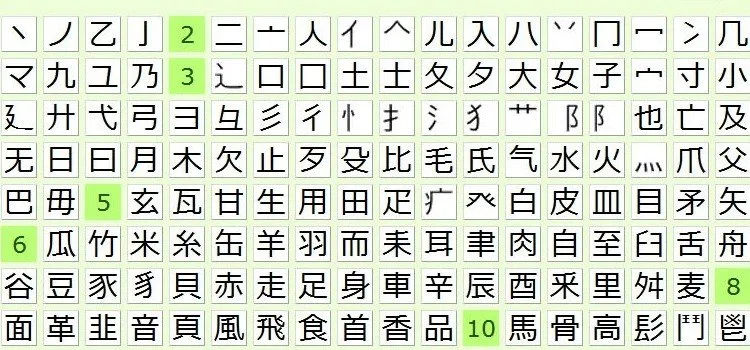
The goal of the book is to provide the Japanese language student with a simple method to correlate the writing and meaning of Japanese characters, so that both aspects become easy to remember. This method offers a new perspective for learning kanji, showing how to break the writing system into basic elements and reconstruct meanings from those elements. Even advanced Japanese students often use and know the method.
The method requires the student to invent their own stories to associate the meaning of the keyword with the written form. The book presents detailed stories, and over time, less detailed stories. This is to encourage the student to use the stories as practice to create their own. The method may seem quite random, but it requires you to really know the components and meanings of the ideograms before trying to create your own stories and reconstruct the elements. Therefore, the book dedicates itself to explaining each radical and kanji that serves as a component.
Does using RTK mean abandoning JLPT?
JLPT separates kanji by frequency of use, while RTK values the strokes, radicals, and kanji that are used as components. In my opinion, the order in which you learn Kanji makes no difference, because I always advise people to learn Japanese according to their own needs.
Using radicals and components along with your imagination is a strong way to lock a character in place. It doesn't matter if you follow the learning order of JLPT or your own order. Thus, we conclude that the RTK method can be applied alongside any study method.
Japanese students who are at a very advanced level seek to use this method. Even if you have learned kanji using the order of strokes and their ON and KUN readings, it is important to learn kanji using the RTK method because each kanji has a story that will help you associate other related kanji. We recommend using all methods together for a more comfortable experience.
Examples of the RTK Method
Let's see a list of the method being applied simply below:
好 - This is the ideogram of affection, liking, and love. It is composed of the kanji woman (女) + child (子); we can associate the love of a mother for her child or the child's love for the mother to remember the meaning and essence of the kanji. A friend of mine remembered it differently; he thinks a man likes a young woman since 女の子 means girl.
大 - This is the ideogram for big. It is composed of the ideogram for person (人) with a stroke that represents the arms. It occupies a large space with its legs and arms extended, which is why it means big.
太 - This ideogram means fat. It is the simple ideogram for big with a stroke underneath. We can imagine a fat person tired with their tongue out or sweating a lot.
厂 - This kanji means cliff; I think it is unnecessary to reason why, just look and imagine.
石 - This kanji means stone; it is the combination of cliff (厂) + mouth (口). To remember and imagine this kanji, we can picture a cave under the cliff that is closed off by a large rock. It is worth noting that this ideogram is used for any size of stone.
見 - This is the kanji for see and look. It is the combination of the ideograms for eye (目) and the radical for leg (儿). This clearly shows large eyes attached to a leg, representing the ability to see.
Where to get the RTK Book?
If you want to go through the meanings of Japanese ideograms this way, the English volumes are the originals, published by University of Hawai'i Press. Volume 1 is the book that carries the method; Volumes 2 and 3 only make sense after those 2,200 keywords already stick. We will leave the links below for you to buy if you wish.
- Remembering the Kanji 1, sixth edition, from University of Hawai'i Press
- Remembering the Kanji 2, readings of the Volume 1 characters
- Remembering the Kanji 3, about 800 extra characters
- Kanji: Imaginar para Aprender, the Portuguese translation of Volume 1
Volume 2 and 3 seem to be unavailable in Portuguese, but Volume 1 of the English sixth edition already covers 2,200 kanji, most of the jōyō list plus extras. That is enough to start seeing meanings and components in characters you have never met.
It is worth clarifying that the book alone will not make you master knowledge of all the ideograms of the Japanese language. Volume 1 skips readings and vocabulary, so fluency still depends on words, on'yomi, kun'yomi, and actual Japanese. Have you had the chance to read this book? Leave your opinion in the comments.





Community
Comments
0 comments
There are no published comments in this language yet.
Send comment