
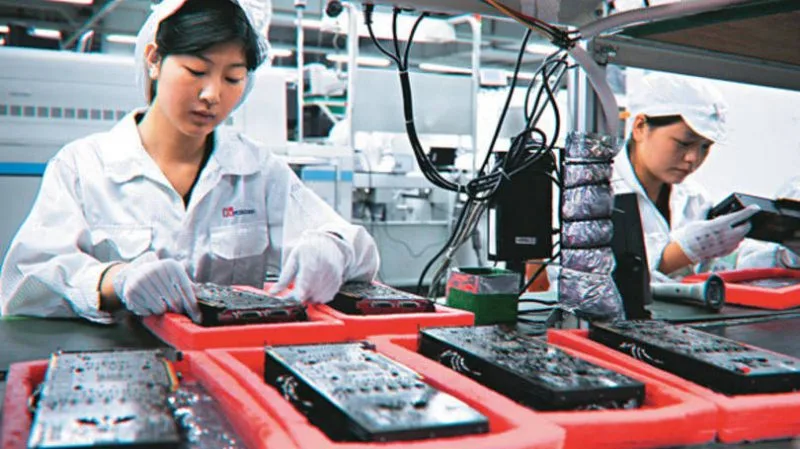
There is a pattern you see all over the internet: someone spent two weeks in Japan, had a rough day at a ryokan (旅館) or an awkward conversation in an izakaya (居酒屋) – and then tells you, in confident terms, how Japan "really" is. On the other side sit people who attended a gokon (合コン), worked three months in a factory in Aichi, or did a year of language school – and walk away with a finished theory of Japanese society. Both sides mistake a single experience for an explanation. That is the heart of the problem.
This article is for anyone who wants to understand Japan a little more honestly, without turning one trip into a verdict. If you have spent real time there, you have seen more than a tourist – but you have not seen everything either. Japan has over 124 million people, 47 prefectures, distinct regional customs, layered histories, and a language that even native speakers do not fully master. Treating any of that as transparent after a short stay is a category error, not a personal insight.
Contents 9
The trap of "authentic" experience
The idea of an "authentic" experience sounds reasonable at first. If you have been there, you know. If you only know Japan from books, documentaries, or anime, you are talking about something you have not touched. In practice, this logic quickly turns into a strange competition: who spent more days in Japan, who worked harder, who was rejected more often – and who, therefore, gets to claim authority over what the country is like.
What gets lost in that race is that every experience is filtered through its context. A two-week holiday, a working holiday year, a language school semester in Tokyo, a factory job in Nagoya, a freelance life in Kyoto – each of those lives sits inside a different age, a different budget, a different social circle, and a different slice of the country. None of them is the country. They are windows, all of them partial.
Online, this trap often shows up as a quick leap from "this happened to me" to "this is how Japan is." The deeper move – asking why it happened, who it happened to, where in Japan it happened, and how common it actually is – rarely makes it into the comment section. The anecdote wins, the context disappears, and a complicated society gets flattened into a single sentence.
What personal experience actually teaches
Personal experience is not worthless. It is just narrower than people assume. Living in Japan, even for a short time, can teach you a few things that no documentary quite captures: the rhythm of a commuter train at 8:42 a.m., the quiet choreography of a konbini at midnight, the way an arubaito (アルバイト) shifts your sense of what is normal at work, the way a small kindness from a stranger can sit in your memory for years.
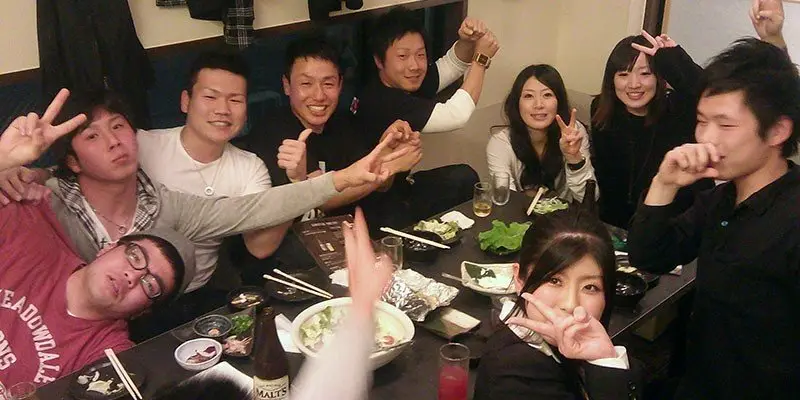
It can also teach you things that are easy to miss from the outside. That gokon (合コン) you got invited to is not a window into "how Japanese people date." It is one version of one social ritual, with one group of people, in one city, on one night. The same is true of your factory job, your language school class, your host family, your company's drinking party, or that one neighbour who barely said hello for two years. Each one is real – and each one is a single data point, not a conclusion.
What experience genuinely teaches, when you are honest about it, is mostly about you. It teaches you which parts of Japan resonated with you, which ones wore you down, which ones you understood and which ones you clearly did not. It is useful, often moving, sometimes humbling. It is not, on its own, a sociology paper.
What it does not teach
Personal experience, however intense, does not teach you what Japan is like as a whole. It does not teach you how the country changed between the postwar years and today. It does not teach you how politics, gender, class, region, or age shape life in Tokyo, Osaka, Okinawa, or a fishing town in Tōhoku. It does not teach you the long shadow of concepts like honne to tatemae (本音と建前), the weight of kuuki wo yomu (空気を読む) in office life, or the slow history behind karoshi (過労死), the word for death by overwork. Those are learned, when they are learned at all, through reading, conversation over years, and the kind of patient curiosity that no two-week trip can provide.
It also does not teach you what Japan is for people who are not you. The factory worker's Japan, the junior high school student's Japan, the single mother's Japan, the Brazilian Nikkei's Japan, the elderly man in a depopulated town's Japan – these are different countries in many ways, and the same country in others. If your only exposure is your own routine, you are seeing a sliver, even if the sliver felt like a whole life.
This is the core of the experience fallacy: a true story being used as a universal one. The story is true. The leap is not. And once that leap is repeated often enough, online, it starts to look like fact.
How to understand Japan more deeply
Curiosity about Japan is a good thing, and travel is a legitimate way to feed that curiosity. The mistake is not in going. The mistake is in stopping there – in letting one stay, no matter how long, close the question of what the country is.
Language as a key, not a trophy
You do not need to be fluent in Japanese to think seriously about the country, but learning even a little reshapes what you notice. Reading manga (漫画) in Japanese, watching anime (アニメ) with the original audio, or following a few Japanese-language creators online gives you small, repeated windows into how the language is actually used. Words like senpai (先輩), kouhai (後輩), and sensei (先生) start to make sense as relationships, not as exotic labels. The more language you carry, the less you are translating Japan into your own categories.
Long-term media and serious press
Short videos are great for sparking interest. They are not great for understanding. For a deeper, more grounded picture, lean on reporting that has been covering Japan for years: the long-form journalism of outlets like The Japan Times, the cultural essays on Nippon.com, and the public-service perspective of the Japan Foundation. Compare their coverage with what you see in your social feed, and notice how often the second overstates the first.
History books and patient research
Modern Japan did not appear in 2010. To understand the work culture, the family structures, the role of women, the political tensions, the regional differences, and the visible customs – from ryokan (旅館) and onsen (温泉) etiquette to izakaya (居酒屋) rhythm and wagashi (和菓子) tradition – you need history. A single book on postwar Japan, a serious history of Tokyo, or a long essay on rural depopulation will quietly do more for your understanding than a hundred viral clips. Read widely, including authors who disagree with you, and you will start to see the country as a place with arguments inside it, not a postcard with one mood.
Patience over posing
Real understanding of a country as layered as Japan takes time, often more time than a single chapter of life allows. If you keep going back, keep reading, keep asking questions, and resist the urge to summarise the country in a sentence, your view will get sharper. If you keep performing the same summary online, it will get flatter. The difference is patience.
Closing
Japan is not the experience you had in it. It is not the best week of your trip, the worst day at work, the friend who was kind, the colleague who was cold, the izakaya that felt magical, the train that felt unbearable, the gokon that was awkward, the company that was generous. All of those things are real. None of them is the whole.
The country is large, contradictory, multilingual inside its own borders, full of people who disagree with each other about what it means to be Japanese, and full of people who do not really care about that question at all. Holding all of that at once – without collapsing it into a slogan – is a more honest starting point than any single stay can give you. The best travel stories come from people who have learned to hold more than one Japan in their head at the same time. If this text helps you do that a little, it has done its job.
If you want to keep going, these pieces on whether Japanese people are really cold and independent, on the truth that Japanese people work a lot, and on some of the genuinely hard parts of living in Japan continue this same conversation from different angles – each one a single window, not a final word.



Community
Comments
0 comments
There are no published comments in this language yet.
Send comment