
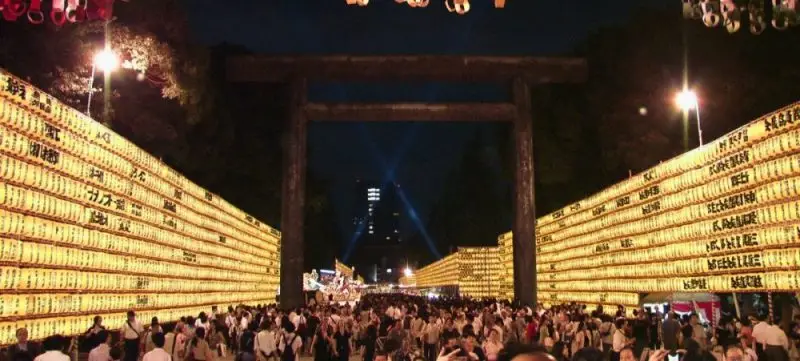
Summer evenings during Obon can feel solemn and festive at once: lanterns are lit, families gather, and people dance in circles around a yagura. That dance is called Bon Odori, but the season around it is also a time for remembering ancestors.
Obon (お盆), often shortened to Bon, is a Buddhist-influenced Japanese observance in which ancestors are traditionally welcomed home for a brief visit. The customs differ from place to place, yet visiting family graves, preparing offerings, and joining a local dance remain familiar parts of the season.
Contents 5
What Obon represents
Obon brings together family remembrance, Buddhist practice, and local summer traditions. Many people return to their hometowns, clean family graves, and place food, flowers, or incense at a household altar. These gestures are made to honor relatives who have died, not to turn the occasion into a day of mourning alone.
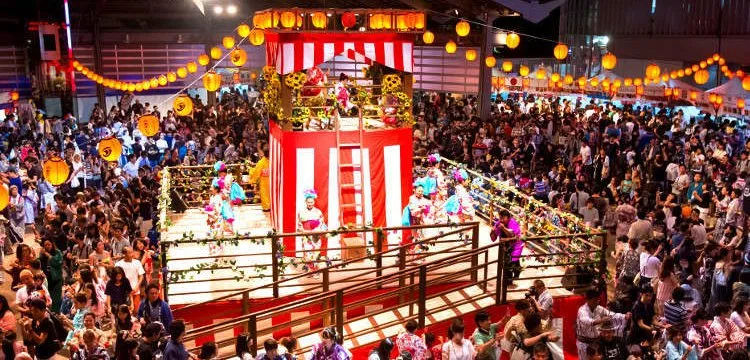
That balance explains the atmosphere of the season. A cemetery visit or a quiet offering may happen alongside a neighborhood gathering with drums, food stalls, and dancing. Bon Odori is one part of the wider Obon observance, and its public, communal character gives the season much of its familiar summer atmosphere.
When is Obon celebrated?
Obon is connected to the fifteenth day of the seventh month in the older calendar, which is why its timing is not identical across Japan. In much of the country, the main Obon period falls around August 13 to 16. Some areas, including parts of Tokyo, observe it in mid-July, while other communities keep a date based on the lunar calendar.
For visitors, that difference matters. Mid-August is one of Japan's busiest travel seasons because many people travel home or take time off then. A local festival calendar is more useful than assuming every Bon Odori will happen on the same weekend.
Welcoming and sending off ancestors
Families follow different local practices, but the basic rhythm of Obon is easy to recognize. At the beginning of the observance, lanterns or small fires may be used to welcome ancestral spirits. Graves are visited and household altars receive offerings. At the end, another light or fire may mark the farewell.
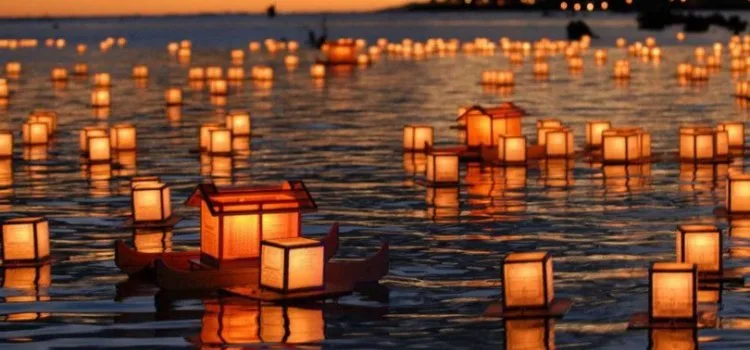
One well-known custom is tōrō nagashi, or floating lanterns. In communities where it is practiced, candlelit lanterns are set on water as a symbolic send-off. It is not a universal Obon ritual, so the details depend on the region and the event.
The Bon Odori dance
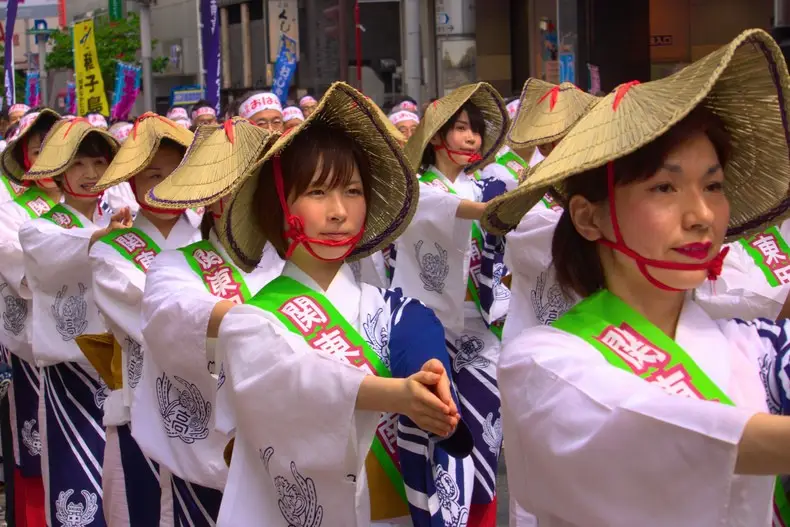
Bon Odori (盆踊り) takes place in the evenings at shrines, temples, parks, and neighborhood squares. Participants often gather around a yagura, a raised platform used by musicians and singers, while drums and local festival songs set the pace.
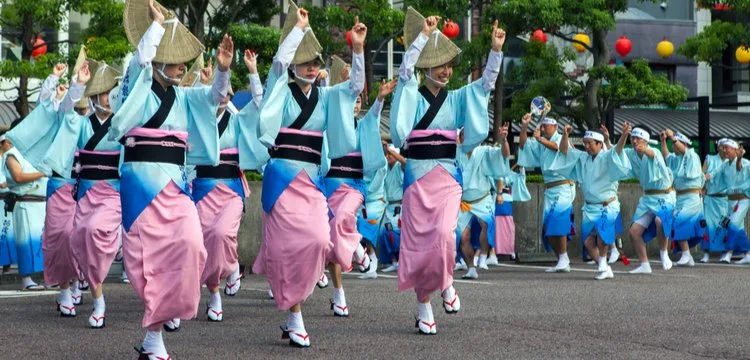
There is no single Bon Odori style. Some dances move clockwise around the yagura, others reverse direction, approach and move away from it, or continue through the streets in a line. Music, costumes, and choreography change with the region, which is why watching a dance in one prefecture does not tell the whole story.
Local life can shape the movements as well. In former mining areas, a dance may echo digging, carrying, or pushing ore carts. Participants may use fans, towels, wooden clappers, or hats decorated with flowers. Because Obon arrives in summer, many dancers wear yukata, the light cotton kimono commonly seen at warm-weather festivals.
Where the tradition comes from
Obon developed through the meeting of older Japanese ancestor remembrance and Buddhist observance. The name is connected with Urabon'e, and Buddhist tradition tells of Mokuren, a disciple who sought help for his deceased mother. After making offerings to monks who had completed their summer retreat, he learned that she had been released from suffering and danced with joy.
That story is often linked to the origin of Bon Odori. Over centuries, religious observance and local folk entertainment influenced one another, so the dance became both a memorial practice and a summer gathering. This is why Obon can hold a quiet family meaning and still end with a lively circle of dancers.
Whether you encounter Obon at a family altar, a riverside lantern ceremony, or a public Bon Odori, the point is not to treat every town as if it followed one fixed script. The shared thread is remembrance: a time to honor those who came before, then return to the living community gathered under the summer lights.





Community
Comments
0 comments
There are no published comments in this language yet.
Send comment