
In Shinsekai, the golden skewer hits the counter before the batter has fully cooled. Kushikatsu (串カツ), also called kushiage (串揚げ), is Osaka’s answer to hungry workers and curious travelers: meat, seafood, or vegetables on a bamboo stick, coated in panko, and fried until the crust shatters. Kushi is the skewer; katsu points to the breaded cutlet tradition. It can look like tempura from a distance, but the panko crust and the shared sauce pot set a different rhythm at the table.
The dish grew up in downtown Osaka, especially around Shinsekai, as cheap, filling food for people who needed dinner without ceremony. Order by the stick, dip once, and watch the counter fill with small, loud flavors. What follows is the story, the batter, the sauce etiquette everyone notices on the wall, and a few classic stops when you want the real thing.
Contents 14
History and Tradition of Kushikatsu
There is no single founding date carved in stone, but most accounts place early kushikatsu in the 1920s in Osaka’s Shinsekai district. The neighborhood was full of industrial workers who wanted something hot, cheap, and quick. A small food bar that opened around 1929 is often cited as a pioneer of the deep-fried skewer menu that later spread across the city.
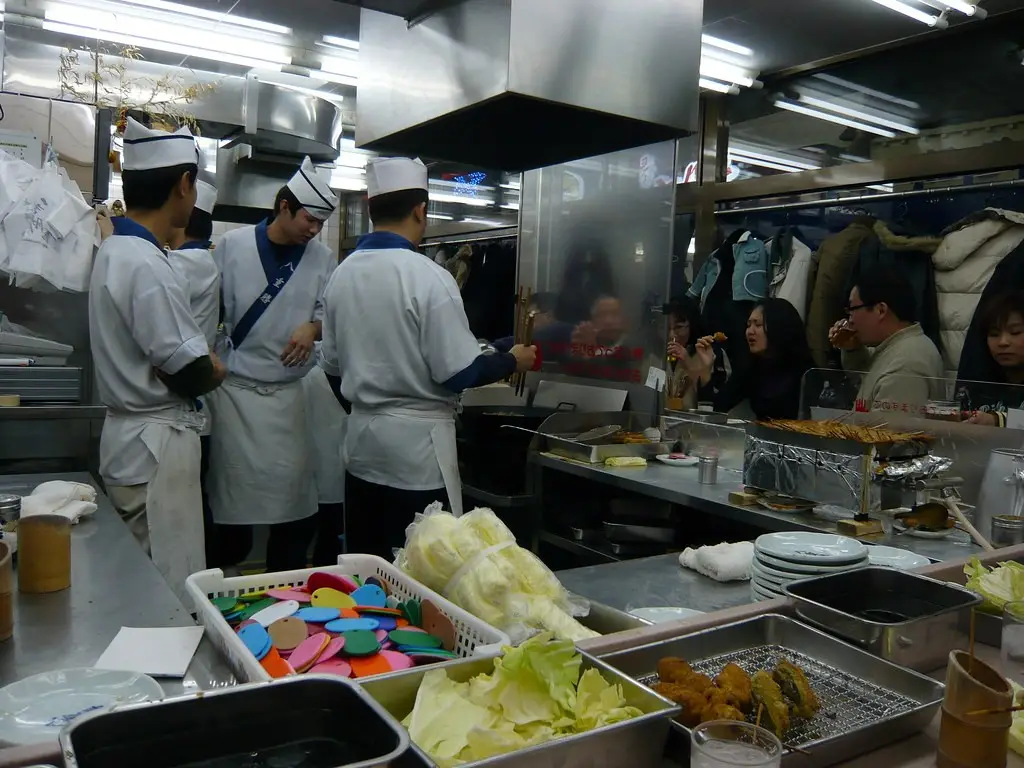
From those counters, Shinsekai became a landmark for specialty shops. Some kitchens still chase the old thick batter and thin brown sauce; others chase lighter crusts, new fillings, or tabletop frying. The core idea stayed practical: one stick, one ingredient (in classic Osaka style), ready to eat standing or seated at a narrow counter.
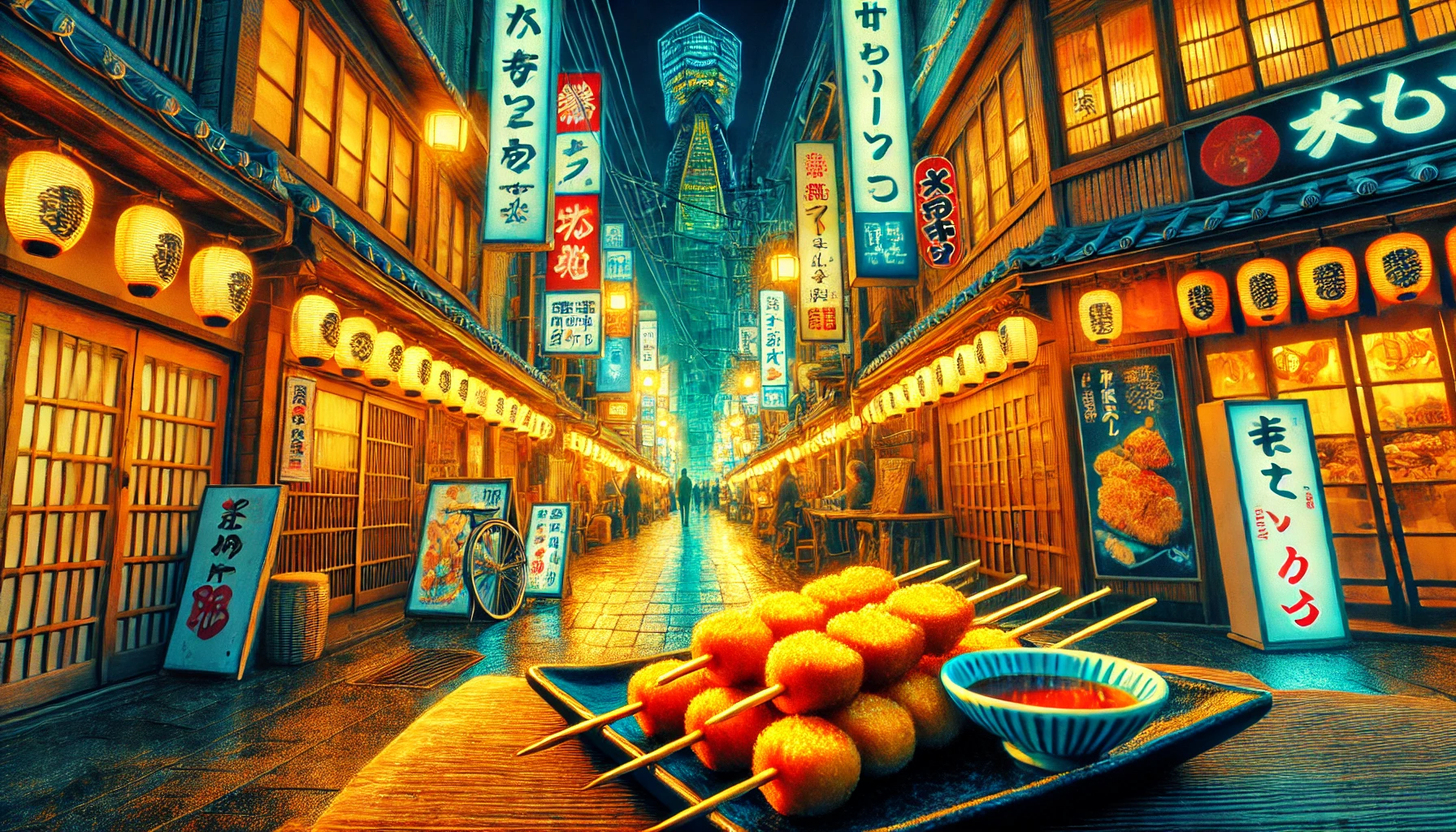
The most famous rule grew with the dish itself. At many traditional counters, sauce sits in a shared pot. You dip the skewer once; you do not put a bitten stick back in. That habit is hygiene first, and it also keeps the sauce usable for everyone at the bar.
Kushikatsu and Kushiage: Osaka and Beyond
Names and styles shift with the map. In Osaka and much of Kansai, people usually say kushikatsu. In Tokyo and other parts of Kanto, kushiage is the more common label for breaded fried skewers. Broad regional habits (with plenty of exceptions) include:
- Osaka-style kushikatsu: often one ingredient per stick, a thicker batter tradition, and a shared Worcestershire-style sauce.
- Tokyo-area kushiage / kushikatsu: pork and onion on the same skewer is a classic pattern; batter and panko can run lighter than the old Shinsekai style.
- Nagoya area: you may meet miso-based dips linked to local miso katsu tastes, not only the thin brown sauce of Osaka counters.
In everyday speech, many diners treat kushikatsu and kushiage as near-synonyms. What matters at the table is the house style: how thick the crust is, whether the sauce is shared, and which sticks they fry first.
Ingredients and Preparation
Versatility is half the fun. Pork, chicken, and beef share menus with shrimp, squid, and oyster. Vegetables such as eggplant, onion, asparagus, lotus root, and kabocha appear in season. Creative counters add cheese, mochi, chikuwa, or bacon-wrapped asparagus. The basic kitchen path stays short:
- Skewering: ingredients are cut into bite-size pieces and fixed on bamboo sticks.
- Breading: a flour–egg batter, then fine panko. The crumbs give the light crunch that separates this dish from a simple pan-fried cutlet.
- Frying: hot vegetable oil until the crust turns gold. Many home cooks fry milder vegetables first so the oil stays cleaner for later meat and seafood.
The dip is usually a thin brown sauce related to tonkatsu / Worcestershire families—sweet-salty, sometimes sharpened with soy or ketchup in house blends. Salt, mustard, or shichimi can appear as side options. For another classic breaded cutlet without a skewer, see Japanese tonkatsu.
Types of Kushikatsu
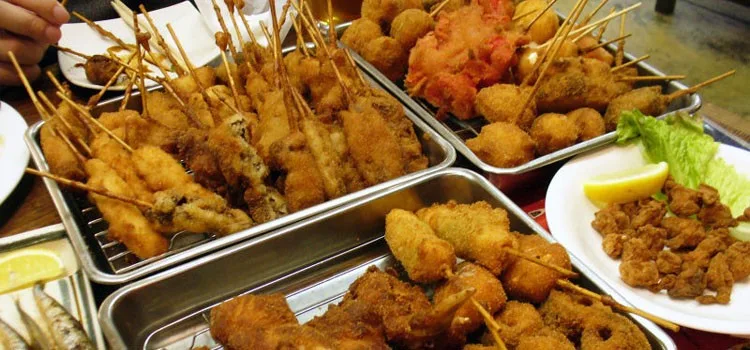
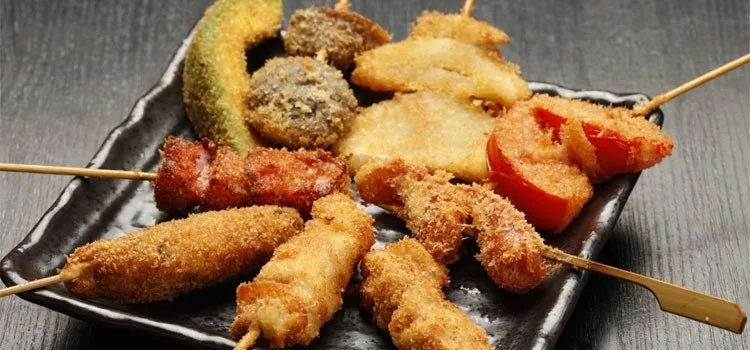
Menus are built like a tasting board. You mix a few sticks of meat, a vegetable, and something unexpected instead of ordering one large plate.
Meat Kushikatsu
- Pork: loin or belly remain the everyday standard.
- Chicken: breast, thigh, skin, gizzard, or tsukune meatballs.
- Beef: less common than pork, but popular when the cut is tender.
- Other: sausage, quail egg, and, in some shops, horse meat.
Seafood Kushikatsu
- Shrimp: crisp shell of crumbs around a soft center.
- Squid: a firmer chew that still takes the sauce well.
- Oysters and scallops: seasonal favorites near the coast or in winter menus.
Vegetable Kushikatsu
- Eggplant: soft and slightly sweet after frying.
- Asparagus: clean snap under the crust.
- Kabocha squash: a sweet winter regular.
- Onion, lotus root, shishito: common rotation sticks on busy counters.
Creative Options
- Cheese: melts inside the crust—an easy tourist favorite.
- Mochi: stretchy rice cake under the same panko shell.
- Cherry tomatoes or pickled ginger: bright contrast after heavier meat sticks.
Etiquette: The Shared Sauce Rule
In traditional Osaka shops, the sauce pot is communal. The hard rule is simple: no double-dipping. Once the skewer has touched your mouth, it does not go back into the pot. The reason is hygiene—and, in shared oil-and-sauce culture, basic respect for the next person at the counter.
Dip once. Want more sauce? Use a cabbage leaf, brush, or spoon—never a bitten skewer.
Many places set free cabbage on the counter for exactly that job: scoop sauce and pour it over the remaining stick. Others leave a brush or ladle on the pot. Tourist-facing menus often print the rule in English and other languages because it is easy to miss if you have never eaten at a shared-sauce bar. If a shop serves individual sauce cups, follow that house style instead.
Where to Try Kushikatsu in Osaka
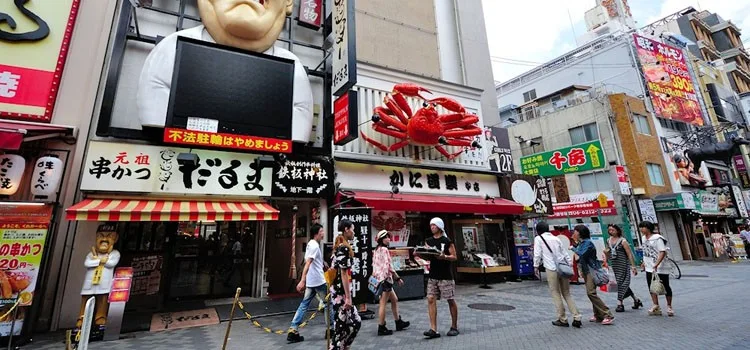
If you are in Osaka, Shinsekai remains the easiest place to compare styles in one walk. Three well-known names still draw lines for good reason:
Kushikatsu Daruma (串カツ だるま)
An iconic Shinsekai name with multiple branches across Osaka. Daruma is known for a long skewer list—classics beside more playful combinations—and a counter energy that matches the neighborhood. Expect the shared-sauce etiquette and clear signs about double-dipping.
Yakko (やっこ)
Another Shinsekai favorite, often praised for a thin, crisp batter. Some regulars notice the fry fat choice (including lard in traditional setups) as part of the flavor. Space can be tight; the wait is part of the experience on busy nights.
Yaekatsu (八重勝)
Popular and usually larger, Yaekatsu still draws queues. A frequent talking point is a lighter batter that may include yam for softness. Quick service and a relaxed hall make it a practical stop when the smaller counters feel full.
For a wider city plan around food and neighborhoods, pair the skewer crawl with an Osaka travel overview. If you prefer sit-down drinking snacks after the fryers, an izakaya night covers a different side of Japanese bar food—closer in spirit to casual yakitori sticks than to the panko crust of kushikatsu.
Practical Tips Before You Order
- Respect the pot: one dip per clean bite; use cabbage or utensils for extra sauce.
- Order in rounds: start with vegetables or milder sticks, then move to richer meat and seafood.
- Watch the peak: Shinsekai fills up at dinner; earlier seats mean shorter lines at famous shops.
- Read the board: some shops price by the stick; others run set menus. Confirm before stacking a mountain of orders.
Osaka still wears kushikatsu as everyday pride more than as a museum piece. Stand at the counter, keep the sauce clean for your neighbors, and let the next skewer decide whether you are a pork-and-onion regular or a cheese-and-mochi tourist for the night.



Community
Comments
0 comments
There are no published comments in this language yet.
Send comment