
Thin beef, soft onion, and a sweet-savory broth over hot rice: that is the everyday bowl that keeps Yoshinoya, Sukiya, and countless home kitchens busy. Gyudon looks simple on the tray, yet the history behind it runs through Meiji-era beef pots, Tokyo fish markets, and a style of fast food built for people who sit down and eat, not walk with a sandwich.
Below you will find what the dish is, how it took shape in Japan, where to order it, and a home recipe you can adjust to taste — without needing a restaurant kitchen.
Contents 6
What is gyudon?
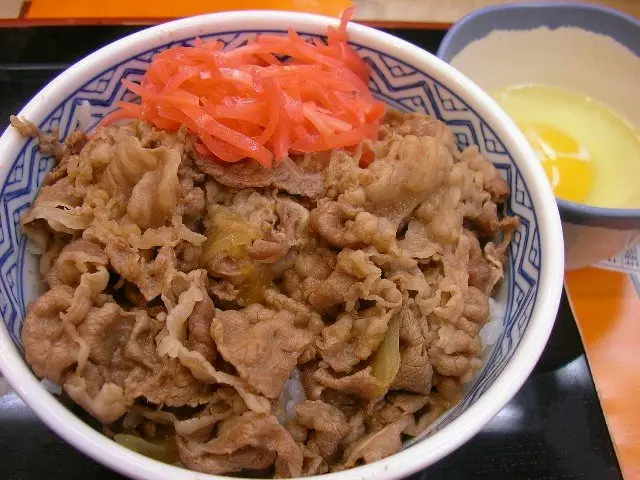
Gyudon [ぎゅうどん / 牛丼] literally means beef bowl. It is a donburi: a deep bowl of steamed rice topped with thin slices of beef and onion simmered in a mildly sweet sauce. The classic broth leans on dashi (stock from kelp and dried fish), soy sauce (shoyu), and mirin or sugar for sweetness; many home versions also use sake.
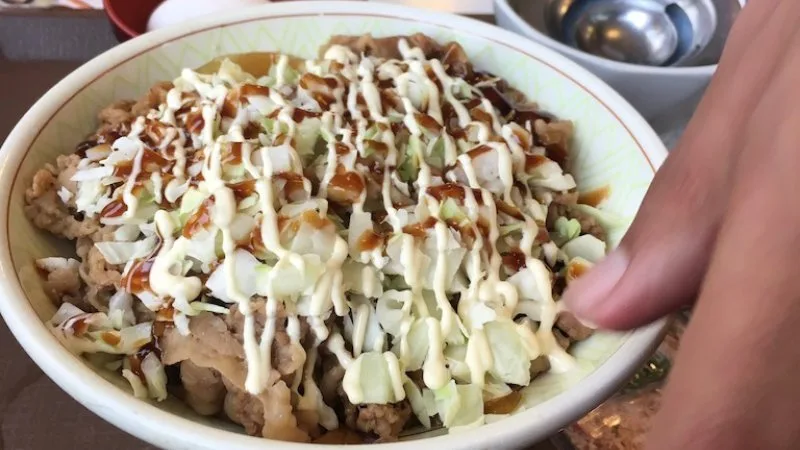
Some bowls still feel closer to old sukiyaki-style toppings, with shirataki (konjac noodles) or tofu. Chain shops today usually keep it lean: rice, beef, onion, and sauce. Cheese, mayonnaise, kimchi, grated ginger, or a soft egg on top are common add-ons depending on the store and the customer.
People often eat gyudon with beni shoga (red pickled ginger), a pinch of shichimi chili blend, and a side of miso soup. In shops, regulars sometimes ask for extra broth (tsuyudaku) or almost none (tsuyunuki) — a small order habit that shows how personal this “standard” bowl can be.
A short history of the Japanese beef bowl
Gyudon grew out of gyunabe [牛鍋], a beef hot pot popular in the Kantō region after the Meiji Restoration, when eating beef became more common in Japan. Early pots used onion and miso to tenderize tougher meat; later kitchens shifted toward a sweet-savory stock (warishita) with soy sauce and mirin or sugar — the same flavor family as modern sukiyaki.
Serving that simmered beef over rice in a deep bowl turned the pot into gyumeshi / gyudon. By the 1890s the dish was already popular in Tokyo. In 1899, Eikichi Matsuda opened the first Yoshinoya at the Nihonbashi fish market, helping fix the beef bowl as quick, affordable city food. After the Great Kantō Earthquake of 1923, gyudon became even more widespread in a rebuilding Tokyo, settling into the thin-sliced beef and onion style most people recognize today.
Where can you eat gyudon?
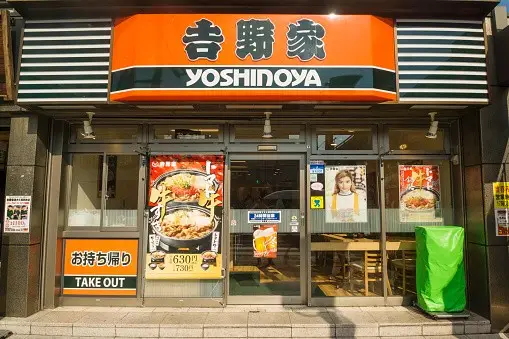
You will find gyudon in many Japanese restaurants, but specialized chains made it a national habit. The best-known names are Yoshinoya (the oldest major chain), Sukiya (now the largest gyudon network in Japan), and Matsuya, which often lists the same idea as gyumeshi [牛めし]. Many locations run late or around the clock, which is why the bowl works as both lunch and a late-night reset.
Related bowls share the same logic: butadon [豚丼] uses pork instead of beef; other shops play with cheese, spicy toppings, or fish. Unagi don (eel over rice) is another donburi classic, though it is a different product and price range from chain gyudon.
Outside Japan, Sukiya and similar brands have opened abroad. In Brazil, for example, Sukiya has several stores, mostly in the São Paulo area — useful if you want the chain experience without a ticket to Tokyo. Even without a shop nearby, the home version is realistic: thin beef, onion, and a small set of pantry seasonings.
If you are mapping the wider world of Japanese rice bowls, our guide to donburi dishes sits next to this page. For soy sauce itself — the backbone of the gyudon broth — see curiosities about shoyu. Broader plate culture lives in pieces like the list of popular Japanese foods.
Recipe — how to make gyudon at home
There is no single official formula. Chains guard their ratios, and every household tweaks sweetness and salt. The recipe below is a home-scale example for about four bowls. Use paper-thin beef (ribeye or chuck sold for shabu-shabu or sukiyaki works well). If you only have a thicker cut, freeze it briefly and slice as thin as you can.
- Cooked Japanese short-grain rice (about 500–600 g total, hot)
- 500 g thinly sliced beef
- 1 large onion, thinly sliced
- 2–3 green onions (scallions), cut into short pieces
- ½ cup water or dashi (or water + a pinch of hondashi)
- ¾ cup soy sauce (shoyu)
- ¾ cup mirin
- About ¼–½ cup sake (or dry white wine if that is what you have)
- 4 tablespoons sugar, or to taste
- Beni shoga (red pickled ginger), to serve
These liquid amounts are generous so you can spoon plenty of sauce over the rice; if you prefer a drier bowl, reduce the soy sauce and mirin a little and taste as you go.
How to prepare gyudon
1 — Rice. Rinse short-grain rice until the water runs almost clear. Cook it as you usually do for Japanese rice (rice cooker or pot). Keep it hot and fluffy; donburi bowls need a solid base of rice under the meat.
2 — Simmer the topping. In a wide pan, combine water or dashi, mirin, soy sauce, sake, and sugar. Bring to a boil, add the sliced onion, lower the heat, and cook until the onion softens. Raise the heat, add the beef in loose layers, and cook only a few minutes until the slices lose their raw color — thin beef turns tough if you leave it too long. Stir in the green onion, mix once, and take the pan off the heat.
3 — Assemble. Fill four bowls about halfway with hot rice. Spoon beef and onion on top, then ladle the remaining sauce over the meat. Finish with beni shoga (and a soft egg if you like). Serve immediately while the broth still soaks into the rice.
Optional touches many people add at the table: shichimi, extra green onion, or a soft-poached egg. Leftover beef and onion keep in the fridge for a couple of days; reheat gently with a splash of the cooking liquid so the meat does not dry out.
Gyudon in one bite
Gyudon is comfort food with a clear job: hot rice, quick-cooked beef, onion sweetness, and a soy-mirin broth you can customize with more or less sauce. Whether you order tsuyudaku at a Tokyo counter or cook a pan at home, the bowl rewards small choices — cut of beef, sweetness, ginger on top — more than complicated technique.

Community
Comments
0 comments
There are no published comments in this language yet.
Send comment