
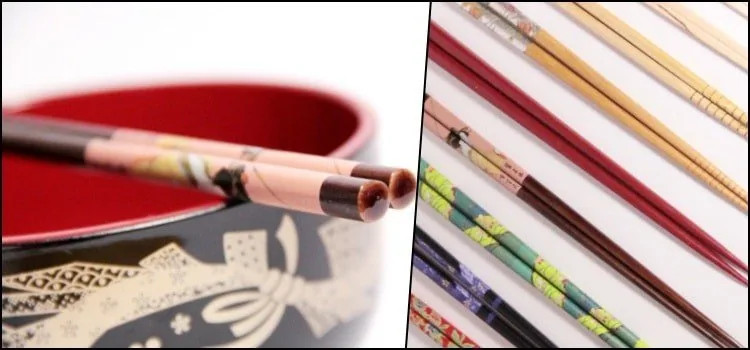
By the title, you must be thinking: "What do you mean, chopsticks in food? Where am I supposed to put the chopsticks?" The issue here involves a very specific action: taking a pair of chopsticks and sticking them vertically into your bowl, or piercing dishes directly. In Japanese dining etiquette, standing chopsticks upright carries grave meaning, and locals consider it deeply disrespectful at any dinner table.
"Why does a simple gesture provoke such a strong reaction?"
This guide explains the cultural history behind Japan's strictest chopstick taboos, their connection to Buddhist funerary traditions, and the practical habits that will keep your meals respectful and stress-free.
Contents 5
The reason you should never stick chopsticks upright into food
The practice of sticking a pair of chopsticks vertically into a bowl of food (especially white rice) is known in Japanese as tsukitatebashi (突き立て箸) or tatebashi (立て箸), and sometimes referred to as hotokebashi (仏箸). This custom mirrors a solemn Buddhist funeral rite where a bowl of freshly cooked rice, called makurameshi (枕飯, "pillow rice"), is placed at the altar near the head of the deceased. In that funerary offering, chopsticks are placed upright in the center of the mound to guide the departed soul, resembling the burning of incense sticks (senkō, 線香).
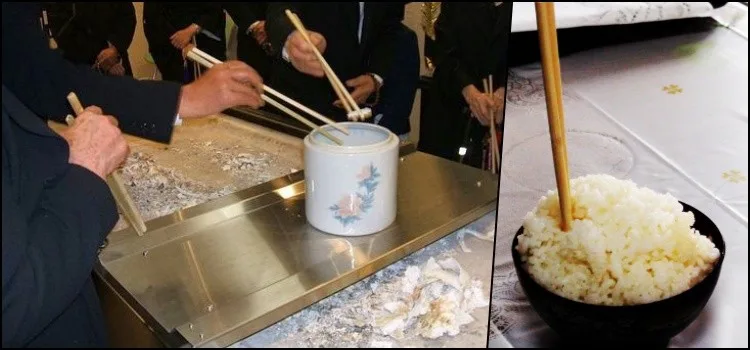
Because upright chopsticks belong exclusively to memorial rituals, doing this at an everyday meal brings thoughts of death directly to the dinner table. This association is shared across East Asia; in China and Korea, leaving chopsticks planted vertically in rice is equally considered a grim omen and a breach of family respect.
Hashiwatashi and funeral rites: passing food between chopsticks
Beyond sticking chopsticks into rice, passing food directly from your chopsticks to another person's chopsticks is considered the single most severe taboo in Japan. Known as hashiwatashi (箸渡し) or awasebashi (合わせ箸), this gesture replicates the Buddhist cremation ritual called kotsuage (骨上げ, "gathering of the bones").
During kotsuage, relatives gather after cremation and use specialized pairs of chopsticks to transfer the remaining bone fragments of the deceased into the funeral urn. Passing anything utensil-to-utensil at a meal immediately calls this grief-stricken ceremony to mind. If you want to share food with someone at the table, place the portion directly onto their small side plate (torizara, 取り皿) so they can pick it up themselves.
Other common chopstick taboos: understanding kiraibashi
Japanese dining etiquette encompasses a category of bad habits and forbidden actions known collectively as kiraibashi (嫌い箸, "disliked chopsticks") or imikibashi (忌み箸). Avoiding these errors shows mindfulness and culinary respect:
- Watashibashi (渡し箸): Resting your chopsticks across the top rim of a bowl like a bridge. In traditional settings, this signals that you are finished eating or that you reject the meal before you are done.
- Sashibashi (刺し箸): Spearing or skewering food with the tip of a chopstick as if it were a fork. Chopsticks are designed to pinch and cradle food, not puncture it.
- Mayoibashi (迷い箸): Hovering your chopsticks back and forth over multiple dishes while deciding what to take. It conveys greed and indecision; choose with your eyes before reaching out.
- Yosebashi (寄せ箸): Using chopsticks to drag or slide a bowl across the table. Tableware should always be moved gently with your hands.
- Neburibashi (ねぶり箸): Licking sauces or grains of rice off the tips of your chopsticks.
How to rest chopsticks and handle waribashi properly
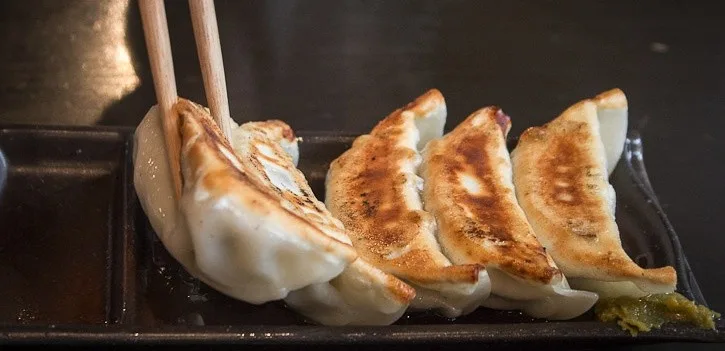
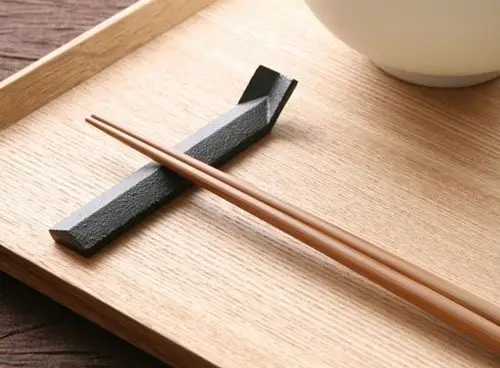
When you pause during a meal to take a drink or chat, place your chopsticks horizontally on the provided ceramic rest called a hashioki (箸置き). Lay them with the tips pointing to the left, parallel to the table edge. If no rest is provided, you can rest them neatly on the rim of a tray or plate without crossing them.
When dining at casual restaurants, you will often use disposable wooden chopsticks known as waribashi (割り箸). If there is no ceramic rest on the table, fold the paper wrapper (hashibukuro, 箸袋) into a small triangular stand to create your own clean rest. After snapping waribashi apart horizontally near your lap, avoid rubbing them together vigorously; doing so signals to the host that you consider their utensils cheap and splintered.
For a complete breakdown of grip techniques and traditional dining habits, take a look at our detailed guide to 15 rules for eating with chopsticks.
Dining with confidence and cultural respect in Japan
Japanese hosts and restaurant staff appreciate sincere effort and curiosity far more than perfection. An accidental slip with your utensils will not ruin your meal, but understanding the funeral roots of tsukitatebashi and hashiwatashi allows you to dine with genuine cultural awareness and empathy.
Before every meal, expressing gratitude with itadakimasu and gochisōsama deshita brings warmth and appreciation to the table. For travelers eager to explore the highest level of culinary presentation, discovering traditional kaiseki seasonal dining showcases the harmony between seasonal ingredients, elegant plating, and refined etiquette.
Have you ever encountered these chopstick customs while traveling in Japan, or caught yourself making one of these mistakes? Share your experiences and questions in the comments below.


Community
Comments
0 comments
There are no published comments in this language yet.
Send comment