

Just as many people around the world look to horoscopes and zodiac signs to understand character, in Japan, another framework captures popular imagination. Instead of consulting constellations, Japanese popular culture often turns to blood types. This belief system, known as ketsueki gata, suggests that a person's ABO blood group shapes their temperament, personal strengths, and compatibility with others.
Contents 15
What is Ketsueki Gata?
In Japan, blood types are widely regarded as a cultural shorthand for personality. The concept is formally referred to as ketsuekigata seikaku handan (血液型性格判断), meaning blood type personality judgment, while blood type horoscopes and fortune telling are called ketsueki gata uranai (血液型占い). It functions much like astrology and horoscopes in Japan, serving as an everyday conversational topic and social icebreaker.
Surveys conducted across Japan show that substantial portions of the population follow these ideas with interest. Around 29 percent of men and 45 percent of women report taking blood type personality classifications seriously, and many more treat them as lighthearted entertainment.
The practice extends well beyond casual conversations between friends. In Japanese media, idols, voice actors, and public figures regularly have their blood types listed in official profiles. Video game characters, manga heroes, and anime figures also carry canonical blood types. For fans and otakus following their favorite waifus or husbandos, knowing a character's blood type adds another layer of personality and relatability.
The Origins: Takeji Furukawa and the 1927 Study
The roots of modern Japanese blood type theory trace back to the early twentieth century. Austrian physician Karl Landsteiner discovered the ABO blood group system in 1901, winning the Nobel Prize in 1930. In the years following that discovery, European researchers explored whether blood groups correlated with geographical or racial differences.
In Japan, the connection between blood groups and psychological traits gained formal attention in 1927. Takeji Furukawa, a professor and researcher at the Tokyo Women's Higher Normal School, published a paper titled "The Study of Temperament Through Blood Type." Furukawa had observed differences among student applicants and questioned admissions procedures based solely on academic testing. He argued that personality assessments through blood grouping could create a more comprehensive admissions process.
Furukawa's findings attracted public attention and even military interest at the time, but the methodology faced immediate skepticism from established scientific peers. After World War II, academic interest in the theory faded almost entirely from serious scientific discourse.
Masahiko Nomi and the 1970s Revival
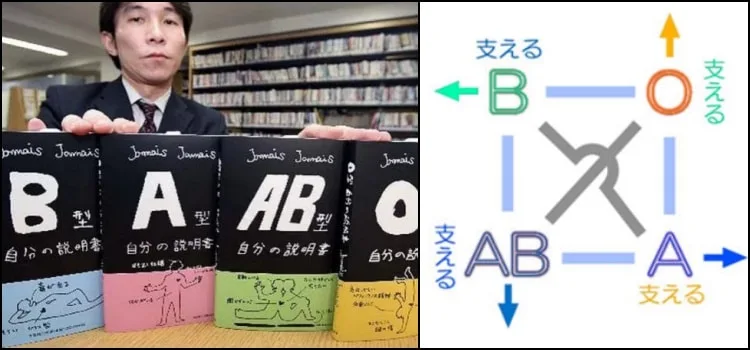
The concept experienced a massive resurgence in the 1970s, largely due to one man: Masahiko Nomi. Nomi was an author and broadcaster with no medical or psychological training, but he possessed a keen sense for popular storytelling. Drawing inspiration from Furukawa's earlier writings, Nomi published a series of accessible, engaging books on the relationship between blood groups and human behavior.
Nomi's publications became runaway bestsellers. Readers found his descriptions relatable, and Japanese television programs quickly adopted the topic. Following Nomi's death in 1981, his son Toshitaka Nomi continued promoting the framework through the Institute of Blood Type Humanics, keeping the subject in the cultural spotlight for decades.
The publishing phenomenon peaked again in 2008, when four separate books dedicated to each of the four blood types ranked among the ten bestselling books in Japan for the entire year.
Why Blood Type Theory Became Popular in Japan
Several cultural and practical factors explain why blood type personality theory flourished so strongly in Japan compared to Western nations.
First, the ABO blood distribution in Japan is relatively balanced. While some populations around the world have heavy skews toward a single blood group, Japan's population presents a practical spread across all four types. This makes the system functional for everyday comparisons and social sorting.
Second, asking about blood types functions as a polite, non-intrusive social ritual. Asking someone "Anata nani-gata?" (What blood type are you?) offers a safe conversational gambit. It breaks the ice without prying into private personal history, family background, or political beliefs.
Third, blood types fit comfortably alongside broader Japanese superstitions and cultural beliefs. Much like consulting a Daruma lucky charm for perseverance or visiting shrines for seasonal blessings, checking blood type profiles provides a familiar, communal way to reflect on behavior.
The Four Blood Types and Their Traits
In Japanese popular psychology, each blood group carries a recognizable profile of perceived strengths and vulnerabilities.
Type A: Earnest, Cooperative, and Cautious
Type A represents the largest group in Japan. People of this blood type are traditionally described as organized, responsible, cooperative, and attentive to detail. They value social harmony, respect rules, and work patiently toward long-term goals. In group settings, Type A individuals are considered reliable team players who think carefully before acting.
On the flip side, Type A personalities can be overly sensitive to criticism, cautious to a fault, and prone to stress. Their desire for order can make them seem inflexible, stubborn, or excessively worried about how others perceive them.
Type B: Passionate, Creative, and Independent
Type B is often considered the most individualistic of the four groups. Individuals with Type B blood are viewed as creative, passionate, optimistic, and intensely curious. When a project captures their enthusiasm, they pursue it with total dedication. They tend to be candid, cheerful, and unbothered by rigid social conventions.
The common stereotype also attributes certain challenges to Type B. Critics describe them as unpredictable, impatient, self-centered, and quick to lose interest when novelty wears off. In Japanese media, Type B characters are frequently cast as lovable rebels or eccentric free spirits.
Type O: Confident, Outgoing, and Ambitious
Type O individuals are widely characterized as confident, sociable, resilient, and naturally charismatic. They are often seen as natural leaders who bring enthusiasm to collaborative efforts. Practical and goal-oriented, they handle setbacks with resilience and express their intentions openly.
Perceived drawbacks for Type O include a tendency toward arrogance, competitiveness, and stubborn pride. Because they focus primarily on the bigger picture, they may overlook subtle emotional cues or fine details, earning a reputation for being slightly rough around the edges.
Type AB: Rational, Adaptable, and Enigmatic
Type AB is the rarest blood group in Japan and is considered a blend of Type A and Type B traits. People with Type AB are described as rational, adaptable, artistic, and intellectually sharp. They can analyze situations from multiple perspectives with calm detachment, often showing great diplomacy and composure.
Because they combine seemingly opposing tendencies, Type AB individuals are often stereotyped as dual-natured or enigmatic. They can appear aloof, emotionally distant, critical, and hard to read, keeping their inner thoughts guarded behind a polite exterior.

Blood Types and Romance: Dating and Compatibility
Romantic compatibility represents one of the most popular applications of ketsueki gata. Matchmaking services, dating applications, and lifestyle magazines in Japan frequently offer pairing analyses based on blood group combinations.
Under traditional compatibility guidelines, certain combinations are regarded as harmonious:
- A and O: Type O provides reassuring confidence that eases Type A anxiety, while Type A brings organization that balances Type O spontaneity.
- A and A: Shared values of punctuality and mutual consideration create strong mutual understanding, though both partners must work to avoid holding back frustrations.
- B and O: Type O appreciates Type B creativity and independence, offering a supportive anchor without trying to restrict their freedom.
- AB and Any Type: Type AB adaptability allows them to connect across diverse personalities, though relationships with Type B require clear communication to navigate unpredictable moods.
In social dating contexts, young couples also combine blood type curiosity with learning romantic phrases and expressions in Japanese to add playfulness to courtship rituals.
What Science Says About Blood Type Personality
From a scientific and medical perspective, blood type personality theory is classified as a pseudoscience. Comprehensive psychological research has repeatedly evaluated whether ABO antigens correlate with measurable personality traits, and empirical evidence consistently finds no connection.
One landmark study led by Japanese psychologist Kengo Nawata analyzed data from over 10,000 individuals across Japan and the United States. The investigation evaluated blood types against standard psychological dimensions and concluded that blood type explained less than 0.3 percent of the variance in personality traits, a figure well within random chance.
Psychologists explain the persistence of ketsueki gata through well-documented cognitive mechanisms:
- The Barnum Effect: People readily accept broad, generalized personality descriptions as uniquely accurate for themselves, similar to how astrology readings operate.
- Confirmation Bias: Believers remember instances where a friend matched their blood type stereotype and overlook countless situations where they acted completely out of character.
- Self-Fulfilling Prophecy: Because Japanese children grow up hearing about blood type traits, some individuals unconsciously adopt behaviors associated with their group over time.
Bura-Hara: Blood Type Harassment
While blood type discussions are usually harmless entertainment, the phenomenon has a darker dimension known as bura-hara (ブラハラ), short for blood harassment.
Bura-hara refers to interpersonal prejudice, social judgment, or unfair treatment based on someone's blood group. In workplace settings, managers have occasionally used blood types to assign team roles, assuming Type A employees belong in accounting while Type B employees should be kept away from collaborative duties. Some job seekers have even reported awkward questions about blood type during employment interviews.
In response to these issues, Japan's Ministry of Health, Labour and Welfare issued formal guidance reminding employers that hiring decisions must rely on individual competence and qualifications rather than blood types. School programs and media regulators have also encouraged thoughtful coverage to prevent teasing and bullying among students.
Blood Type Distribution in Japan
The distribution of blood types in Japan provides a balanced foundation that supports the cultural endurance of ketsueki gata. Approximate percentages among the Japanese population are distributed as follows:
- Type A: Approximately 39.8 percent
- Type O: Approximately 29.9 percent
- Type B: Approximately 19.9 percent
- Type AB: Approximately 9.9 percent
Because no single blood type completely dominates the demographic landscape, social circles regularly encounter representatives of all four groups, keeping comparisons active in daily conversation.
Blood Types in the Japanese Language
Understanding the vocabulary around blood types helps learners recognize conversations, media headlines, and questionnaire fields in Japan. Here is a practical glossary of relevant terms:
Responsive Table: Scroll the table sideways with your finger >>
| Meaning | Japanese | Romaji |
| Blood | 血 | chi |
| Liquid, fluid | 液 | eki |
| Type, model | 型 | kata |
| Blood (scientific term) | 血液 | ketsueki |
| Blood type | 血液型 | ketsuekigata |
| Rh factor | アールエッチ | aaruecchi |
| Type A | エー | ee |
| Type B | ビー | bii |
| Type O | オー | oo |
| Formula or system suffix | 式 | shiki |
| Negative (Rh-) | 陰性 | insei |
| Positive (Rh+) | 陽性 | yousei |
Here are two common conversational phrases you will encounter in Japan:
- 血液型は何ですか (Ketsuekigata wa nan desu ka?) meaning "What is your blood type?"
- 私の血液型はO型Rh(+)です (Watashi no ketsuekigata wa O-gata Rh purasu desu) meaning "My blood type is O Positive."
Conclusion
Ketsueki gata represents a distinctive intersection of modern science, folklore, and pop culture in Japan. While medical research clearly demonstrates that ABO blood antigens do not determine human temperament, the framework endures as a beloved social shorthand, an expressive storytelling tool in manga and anime, and a fascinating mirror of Japanese cultural values.





Community
Comments
0 comments
There are no published comments in this language yet.
Send comment