
Baseball in Japanese is called yakyuu [野球] or simply beesubooru [ベースボール], and it stands as the most popular spectator sport in Japan. While soccer and traditional martial arts hold proud places across the country, baseball boasts the largest stadiums, the most devoted television audiences, and an unmatched grassroots culture spanning primary schools to corporate leagues.
The Japanese name for baseball, yakyuu [野球], literally combines the characters for field and ball. American educator Horace Wilson first introduced the sport to Japan in 1872 while teaching English at Kaisei Gakko in Tokyo. Eager students embraced the athletic discipline of the game, leading to the creation of Japan's first organized baseball team, the Shimbashi Athletic Club, founded in 1878 by railway engineer Hiroshi Hiraoka. When an amateur Japanese squad from the First Higher School of Tokyo defeated a foreign team from the Yokohama Country & Athletic Club in 1896, the victory made national headlines and cemented baseball as a symbol of Japanese modern sporting prowess.

Whether you follow Major League stars or explore the unique traditions of Japanese teams, understanding how the game functions makes every inning thrilling. Here is a clear guide to the rules, the professional leagues, and the cultural passion that defines Japanese baseball.
Contents 7
How does a baseball game work?
A standard professional baseball roster features 25 or more active players, each filling specialized roles across offensive and defensive lineups. A team lineup includes starting pitchers, relief pitchers, catchers, infielders, outfielders, designated hitters, and tactical pinch hitters. The manager guides overarching game strategy, supported by specialized coaching staff managing batting, pitching, and base running.
The core objective appears straightforward: the offensive team attempts to score runs by hitting the ball and advancing around four bases, while the defensive team works to record three outs to end the opponent's turn. Both teams alternate between offense and defense. One complete pair of half-innings forms a single inning. Standard professional games last nine innings, with extra innings played if the score remains tied.
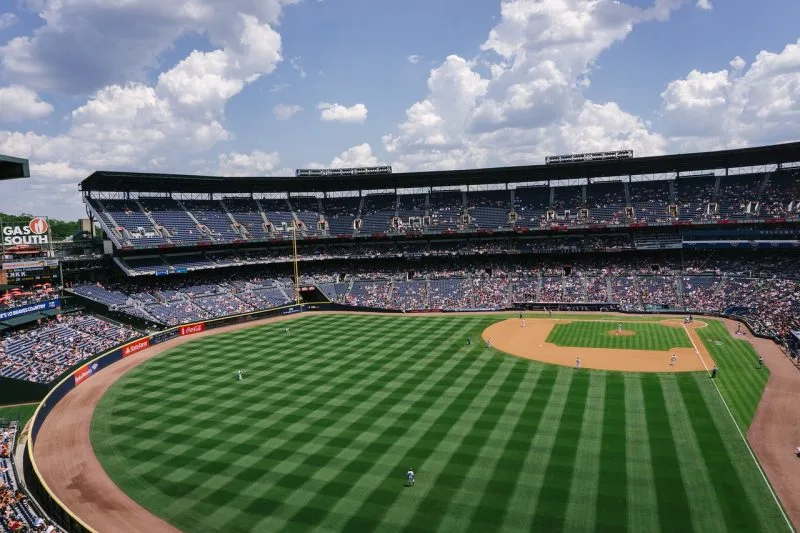
The pitcher throws the baseball toward home plate from an elevated mound sixty feet and six inches away. Each pitch must pass through the strike zone, an imaginary rectangular area over home plate positioned between the batter's knees and the midpoint of their torso. When the batter swings and misses, or watches a pitch pass cleanly through the strike zone without swinging, the umpire calls a strike.
The batter scores a run upon completing a full circuit around first base, second base, third base, and finally touching home plate. When a batter hits the ball over the outfield fence in fair territory, they achieve a home run. A home run automatically allows the hitter and any teammates already occupying bases to round all four bases and score without risk of elimination.
How is a batter eliminated?
The defensive team can eliminate an opposing batter or base runner through several primary plays:
- Strikeout (sanshin): When a batter accumulates three strikes during a single plate appearance, they are called out.
- Ground out: When the batter hits a ground ball, a defensive infielder retrieves the ball and throws it to first base before the runner reaches the bag.
- Flyout: When a fielder catches a hit ball in the air before it touches the turf or dirt, the batter is immediately out.
- Tag out: A fielder securely holding the baseball touches an advancing runner who is not safely standing on a base.
- Force out: When a runner must advance because an incoming runner trails behind, a fielder holding the ball needs only touch the destination base before the runner arrives.
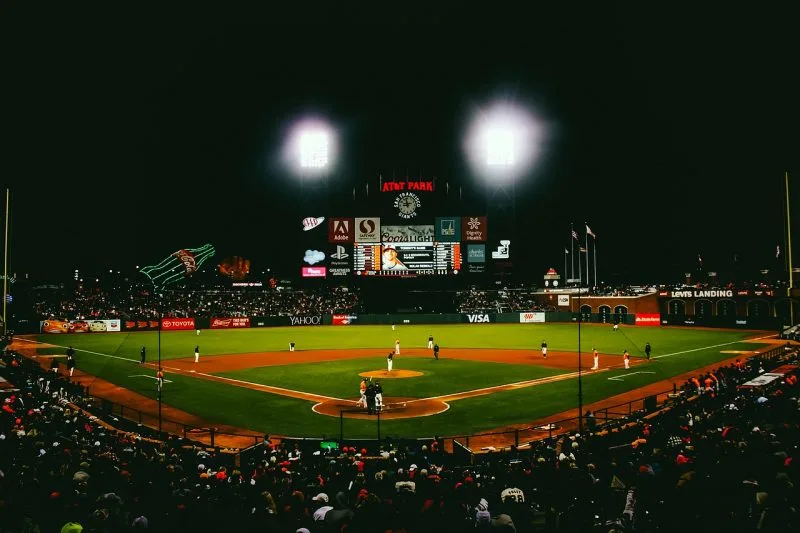
If a pitcher misses the strike zone and the batter does not swing, the pitch is recorded as a ball. Four balls yield a walk (shikyuu), granting the batter safe passage to first base. If a pitched ball directly strikes the batter's body while they attempt to evade it, the batter advances to first base on a hit-by-pitch (dead ball). When a batter hits the ball outside the fair foul boundary lines, the play becomes a foul ball, counting as a strike unless the batter already holds two strikes.
Runners can also attempt to steal bases while the pitcher initiates their delivery to the plate. If the catcher throws the ball to the baseman before the runner slides into safety, the runner is caught stealing and eliminated. This dynamic interplay creates high strategic tension on every pitch.

Professional baseball in Japan
Top-tier baseball in Japan is organized under Nippon Professional Baseball (NPB). Established in its modern format in 1950, NPB consists of twelve iconic franchises divided equally into two six-team leagues: the Central League and the Pacific League. Historic clubs such as the Tokyo Yomiuri Giants, Hanshin Tigers, Hiroshima Toyo Carp, and Fukuoka SoftBank Hawks command fiercely loyal followings across the archipelago.
The NPB regular season spans 143 games between late March and October. At the conclusion of the season, the top three finishers from each league qualify for the Climax Series playoffs. The two league champions then clash in the prestigious Japan Series (Nippon Series), competing in a best-of-seven tournament to decide the undisputed national champion.
Beyond the professional ranks, high school baseball represents a profound cultural phenomenon in Japan. Held twice a year at the historic Hanshin Koshien Stadium in Hyogo Prefecture, the National High School Baseball Championship captures the collective attention of the country. Thousands of regional schools compete in knockout qualifiers, with 49 tournament qualifiers playing live on national television. Defeated players traditionally gather scoops of Koshien dirt in cloth pouches as sacred keepsakes of their tireless dedication.
Attending a Japanese baseball match is an unforgettable cultural event. Unlike typical Western games where spectators remain mostly quiet between pitches, Japanese stadiums feature organized supporter clubs known as ouendan. Equipped with brass instruments, taiko drums, and team megaphones, the ouendan lead stadium-wide rhythmic chants for each individual batter. During the seventh-inning stretch, known as the Lucky Seven, entire stadiums release thousands of colorful whistling jet balloons into the night sky, creating an electrifying festive display that reflects traditional reasons to know Japan and its culture.
International connections and baseball history
The bond between Japanese baseball and international competition stretches back more than a century. In 1934, a legendary tour of American All-Stars featuring Babe Ruth, Lou Gehrig, and Jimmie Foxx traveled across Japan, playing exhibition matches that drew hundreds of thousands of spectators and accelerated the formation of Japan's first professional circuit in 1936.
Japanese emigrants took baseball across the Pacific, planting deep roots in Hawaii, California, and South America. In Brazil, where Japanese immigration began in 1908 aboard the Kasato Maru, immigrant communities founded amateur leagues that transformed the sport into a popular regional discipline during the 1920s and 1930s. Although local media coverage waned in later decades, baseball remains a cherished community tradition within nikkei associations across Sao Paulo and Parana.
In modern times, the global flow of talent has reversed with spectacular results. Trailblazing players such as Masanori Murakami, Hideo Nomo, and Ichiro Suzuki proved that Japanese mastery of pitching precision and situational hitting excels at the highest levels of Major League Baseball. Today, superstar two-way sensation Shohei Ohtani has redefined international sports history, while Japan's national team, Samurai Japan, has claimed multiple World Baseball Classic titles through their signature commitment to disciplined teamwork and strategic fundamentals.
Anime related to baseball
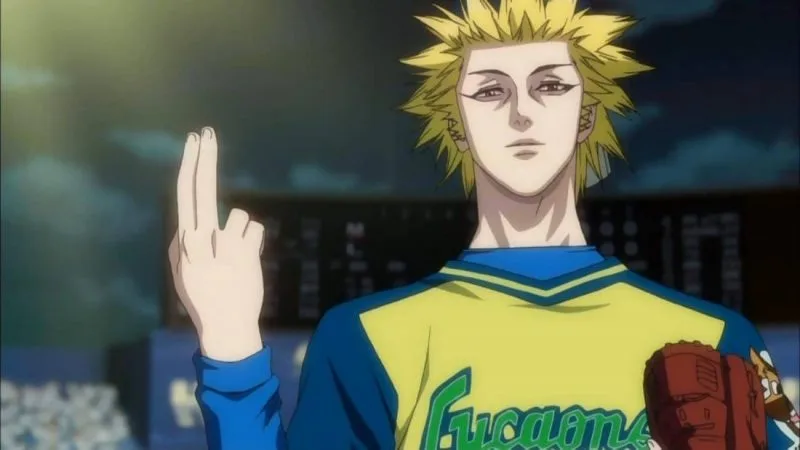
Baseball holds an exceptionally rich legacy in Japanese animation and manga, serving as the backdrop for stories of psychological warfare, coming-of-age drama, and team camaraderie. My personal fascination with baseball deepened dramatically after watching the psychological sports anime One Outs. Created by Shinobu Kaitani, the acclaimed mangaka behind Liar Game, the series follows Tokuchi Toua, an enigmatic street pitcher with an uncanny ability to read human psychology, who enters professional baseball under a high-stakes financial contract. Rather than relying solely on athletic strength, the series showcases tactical manipulation and high-pressure mind games.
Several other celebrated series showcase different aspects of the sport and serve as prime examples of inspirational and motivational anime:
- Ace of Diamond (Daiya no Ace): A grounded, high-intensity chronicle of high school players battling fierce internal competition to earn roster spots and reach Koshien.
- Major: An expansive multi-generational epic tracking pitcher Goro Honda from little league childhood to the professional big leagues.
- Touch: Mitsuru Adachi's legendary masterpiece blending twin sibling drama, romance, and the pursuit of a shared Koshien dream.
- Cross Game: Another brilliant Adachi narrative exploring grief, baseball dedication, and emotional bonds with understated elegance.
- Big Windup! (Ookiku Furikabutte): A sensitive and detailed exploration of pitcher-catcher psychology, team chemistry, and physical mechanics.
Baseball vocabulary in Japanese
Japanese baseball commentary and stadium dialogue feature a fascinating blend of traditional kanji terminology and English loanwords rendered in katakana. While players and announcers frequently use loanwords on the diamond, formal print media and scorecards consistently employ native kanji descriptions. This unique linguistic dynamic highlights how foreign vocabulary adapts to the Japanese language, a phenomenon explored further in our guide to English and its influence in Japan.
The table below provides key baseball terms in Japanese kanji, katakana, romaji, and their English equivalents:
| Japanese (Kanji / Kana) | Romaji | English Meaning |
|---|---|---|
| 野球 (やきゅう) | yakyuu | Baseball |
| ベースボール | beesubooru | Baseball (loanword) |
| 投手 (とうしゅ) | toushu | Pitcher |
| 先発投手 (せんぱつとうしゅ) | senpatsu-toushu | Starting pitcher |
| 救援投手 (きゅうえんとうしゅ) | kyuuen-toushu | Relief pitcher |
| クローザー | kuroozaa | Closer |
| 捕手 (ほしゅ) | hoshu | Catcher |
| 内野 (ないや) | naiya | Infield |
| 外野 (がいや) | gaiya | Outfield |
| 一塁 (いちるい) | ichi-rui | First base |
| 一塁手 (いちるいしゅ) | ichi-rui shu | First baseman |
| 二塁 (にるい) | ni-rui | Second base |
| 二塁手 (にるいしゅ) | ni-rui shu | Second baseman |
| 三塁 (さんるい) | san-rui | Third base |
| 三塁手 (さんるいしゅ) | san-rui shu | Third baseman |
| 遊撃手 (ゆうげきしゅ) | yuugekishu | Shortstop |
| 左翼, レフト (さよく) | sayoku / refuto | Left field |
| 左翼手 (さよくしゅ) | sayokushu | Left fielder |
| 中堅, センター (ちゅうけん) | chuuken / sentaa | Center field |
| 中堅手 (ちゅうけんしゅ) | chuukenshu | Center fielder |
| 右翼, ライト (うよく) | uyoku / raito | Right field |
| 右翼手 (うよくしゅ) | uyokushu | Right fielder |
| 指名打者 (しめいだしゃ) | shimei-dasha | Designated hitter |
| 監督 (かんとく) | kantoku | Manager / Head coach |
| 審判 (しんぱん) | shinpan | Umpire / Referee |
| 打席 (だせき) | daseki | At bat / Plate appearance |
| 打率 (だりつ) | daritsu | Batting average |
| 安打 (あんだ) | anda | Base hit |
| 二塁打 (にるいだ) | ni-rui da | Double |
| 三塁打 (さんるいだ) | san-rui da | Triple |
| 本塁打, ホームラン (ほんるいだ) | hon-rui da / hoomuran | Home run |
| 打点 (だてん) | daten | Runs batted in (RBI) |
| 得点 (とくてん) | tokuten | Run scored |
| 三振 (さんしん) | sanshin | Strikeout |
| 四球, フォアボール (しきゅう) | shikyuu / foa-booru | Walk (base on balls) |
| 死球, デッドボール (しきゅう) | shikyuu / deddo-booru | Hit by pitch |
| 盗塁 (とうるい) | tourui | Stolen base |
| 出塁率 (しゅつるいりつ) | shutsuruiritsu | On-base percentage |
| 長打率 (ちょうだりつ) | choudaritsu | Slugging percentage |
| 防御率 (ぼうぎょりつ) | bougyoritsu | Earned run average (ERA) |
| 勝利 (しょうり) | shouri | Win |
| 敗戦 (はいせん) | haisen | Loss |
| セーブ | seebu | Save |
| 試合 (しあい) | shiai | Game / Match |
| 野球場 (やきゅうじょう) | yakyuujou | Baseball stadium / Ballpark |
Experiencing baseball in Japan: tickets and stadium culture
For visitors traveling to Japan, attending an NPB fixture provides one of the most vibrant cultural experiences available. Regular season tickets can frequently be purchased directly at stadium box offices on game day for weekday matchups, though high-demand games involving rivals like the Giants and Tigers often sell out well in advance. Purchasing tickets online through official club portals, convenience store ticketing kiosks (such as Lawson or 7-Eleven), or specialized travel agencies guarantees admission for weekend series.
When choosing seats, decide between the relaxed family sections around home plate or the energetic cheering sections (ouenseki) located in the outfield pavilions behind the foul poles. In the outfield seats, you can stand, wave team banners, chant player anthems, and share celebratory high-fives with passionate local supporters. From stadium bento boxes featuring regional specialties to the famous beer draft vendors (uriko) ascending steep aisles with portable kegs, Japanese baseball delivers an energetic sporting festival that welcomes newcomers and lifelong fans alike.

Community
Comments
0 comments
There are no published comments in this language yet.
Send comment