
A bowl of matcha is never only a bowl of matcha in chanoyu. The room, the season, the flower in the alcove, the bowl placed in a guest’s hands: each detail changes the moment. That is why the Japanese tea ceremony can feel quiet without being empty. It asks host and guest to pay attention to one another through an ordinary act—preparing and receiving tea.
Often called chadō or sadō (茶道), the Way of Tea, chanoyu (茶の湯) is a living practice rather than a performance to watch from a distance. Its procedures can be precise, but their purpose is hospitality. Understanding that difference makes the utensils, bows and careful movements far easier to appreciate.
Contents 8
What does chanoyu mean?
Chanoyu literally means “hot water for tea.” In English, “Japanese tea ceremony” is useful shorthand, yet it can make the practice sound more distant or rigid than it is. Chanoyu includes the preparation of matcha, but also the setting, sweets, utensils, conversation, seasonal choices and the relationship between host and guests.
Chadō, the Way of Tea, gives the practice another emphasis: it is something learned over time. A guest may attend a single gathering; a practitioner may spend years learning how to handle a bowl, arrange a room or select an object that suits the season. Neither perspective needs to turn tea into a test of perfection.
How tea became a Japanese art
Tea reached Japan from China during the early centuries of cultural exchange with the continent. By the early ninth century it was known at court and in Buddhist circles. In the late twelfth century, the monk Eisai returned from China with powdered tea and helped establish its use among Zen communities.
For a time, tea gatherings among the elite could be loud displays of rare Chinese utensils and connoisseurship. Over the fifteenth and sixteenth centuries, masters such as Murata Jukō, Takeno Jōō and Sen no Rikyū shaped a different ideal. Their tea favored restraint, close attention and beauty found in modest materials rather than display alone.
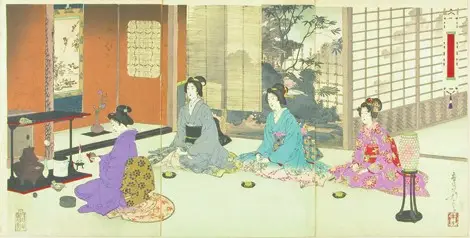
Sen no Rikyū and the spirit of the Way of Tea
Sen no Rikyū (1522–1591) is the tea master most closely associated with the form of chanoyu recognized today. His influence was not about making tea needlessly complicated. It was about treating preparation, setting and welcome as one whole act.
The four principles commonly associated with the Way of Tea are wa (harmony), kei (respect), sei (purity) and jaku (tranquility). They are not a checklist for guests to recite. They explain why a host considers the weather, why a bowl is chosen with care and why a guest notices what has been prepared for that particular meeting.
Another idea linked to tea is ichigo ichie (一期一会), often translated as “one time, one meeting.” The point is not to make the occasion solemn for its own sake. It is to recognize that the people, season and circumstances gathered around that bowl will not return in exactly the same form.
What happens during a tea gathering?
A full formal gathering, called chaji, may include a light meal, sweets, thick tea (koicha) and thin tea (usucha). It can take several hours. Many visitors, however, encounter a shorter gathering focused on sweets and a bowl of thin tea. The school, host, season and occasion all affect the sequence.
The host prepares the tea in front of the guests. Rather than treating the procedure as a magic trick, chanoyu makes the work visible: water is heated, utensils are handled, matcha is measured and whisked, and the bowl is offered. Guests respond with attention and thanks. Conversation may be quiet, but it is not necessarily absent.
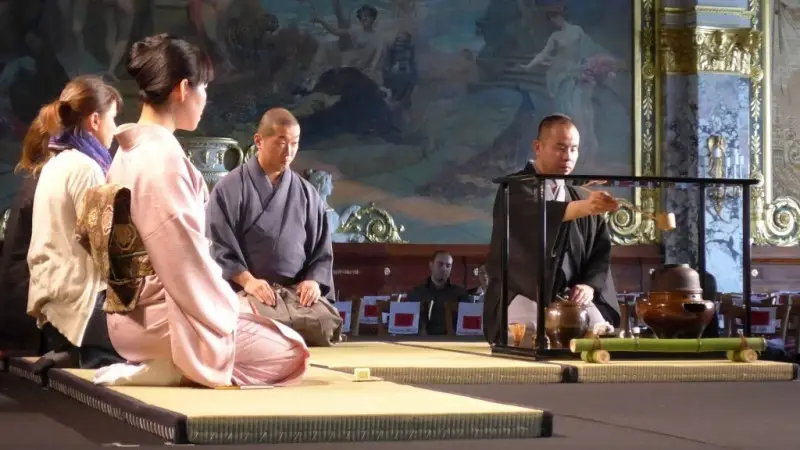
The tea room and its utensils
A traditional tea room is a chashitsu (茶室). It may sit beside a garden path, or roji, which helps guests leave everyday bustle behind before they enter. Inside, the room is usually simple: tatami flooring, subdued surfaces and a tokonoma alcove with a scroll, flowers or another seasonal display.
The tools are called dōgu (道具). Their variety is enormous, and a short list cannot explain every school or occasion. Still, several names help a first-time guest recognize what is happening:
- Chawan — the bowl from which matcha is served.
- Chasen — a bamboo whisk used to blend matcha and hot water.
- Chashaku — a bamboo scoop for matcha.
- Natsume or chaire — containers used for tea, depending on the style of service.
- Kama — the kettle that heats the water.
- Hishaku — the bamboo ladle used to handle water.
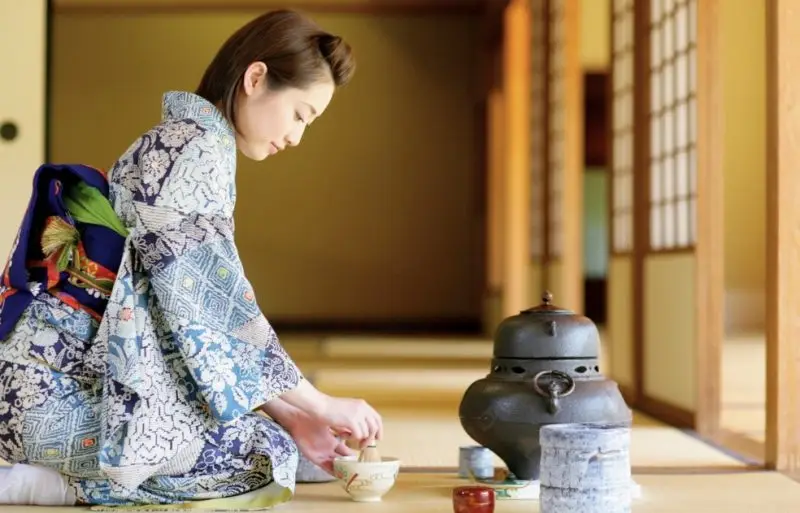
Guest etiquette: what matters most
A visitor does not need to memorize every movement before attending a tea gathering. Hosts expect newcomers and usually guide them. The safest approach is to arrive on time, wear clean and modest clothing, avoid strong fragrance and follow the host’s lead. Jewelry that could scratch a bowl is best removed when appropriate.
When a bowl is offered, guests commonly bow or express thanks before receiving it. In many settings, the bowl is turned slightly so its front is not faced directly while drinking, then returned with care. Exact gestures differ among schools, so it is wiser to watch and ask quietly than to perform a rule from memory at the wrong moment.
Sweets are usually served before the tea, and they matter: their sweetness balances matcha’s bitterness. The bowl itself also deserves attention. Its shape, glaze, age or small irregularity may have been selected for the day, not merely because it was available.
Chanoyu, matcha and everyday Japanese tea
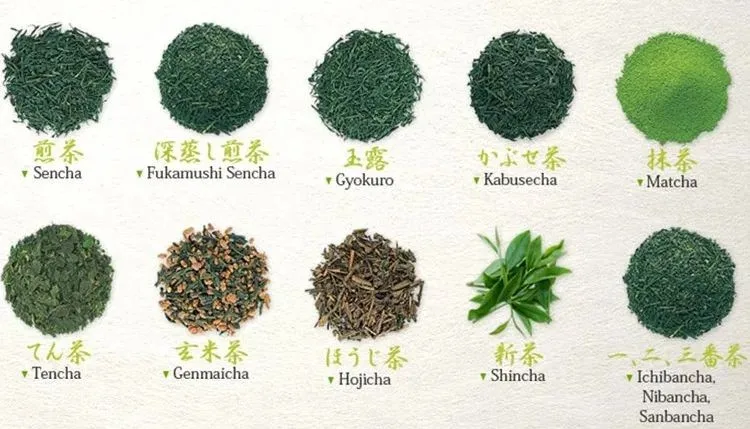
Chanoyu centers on matcha, powdered green tea whisked into hot water. That does not mean matcha is Japan’s only important tea. Sencha, gyokuro, hōjicha and many other teas are normally steeped from leaves rather than whisked as a powder. If you want to compare them, see our guide to Japanese tea types, including sencha and matcha.
Matcha also appears in sweets, noodles and modern drinks, but those uses are separate from chanoyu. The ceremony gives the powder a particular setting and set of relationships. A cup bought on the way to work can be excellent tea; it is simply answering a different need.
Can visitors take part in a tea ceremony?
Yes. Cultural centers, tea schools and some travel experiences offer introductions designed for visitors, especially in Kyoto and other cities with strong tea traditions. A formal gathering and a short introductory experience are not the same thing, but both can offer a meaningful first encounter when the host explains the setting.
Go with curiosity rather than fear of making a small mistake. Chanoyu has detailed procedures because they support a shared moment of care. For a guest, the essential response is simpler: notice what has been prepared, accept the bowl with gratitude and give the encounter the attention it asks for.





Community
Comments
0 comments
There are no published comments in this language yet.
Send comment