
In this article, we will see 10 strange foods that you can only eat in Japan. Foods that you never imagined existed in this great country of noodles, rice, and sushi.
Most of these delicacies are only consumed in certain parts of Japan, so not even a Japanese person has had the chance to try all these dishes. Not only I but many Japanese people stay away.
We also recommend reading:
Contents 10
1. Natto - Fermented Soybean
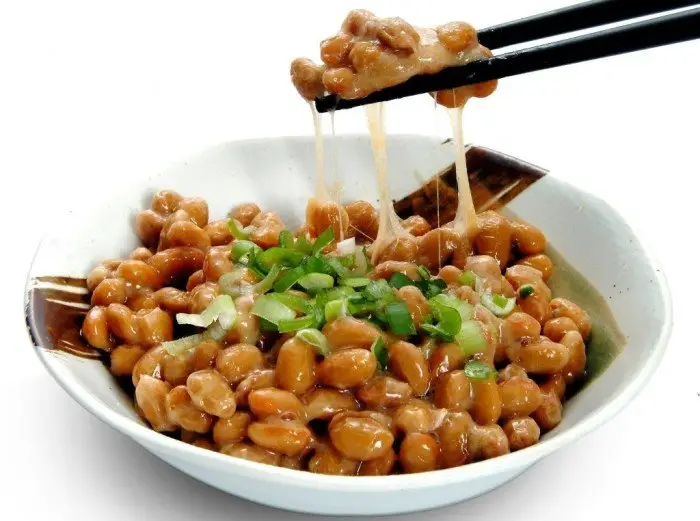
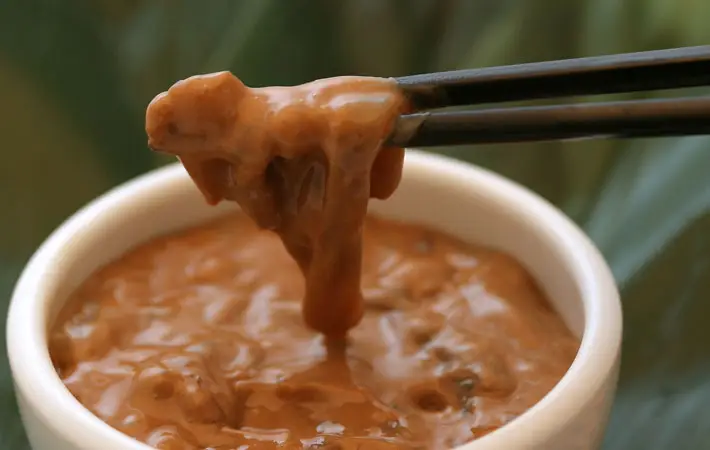
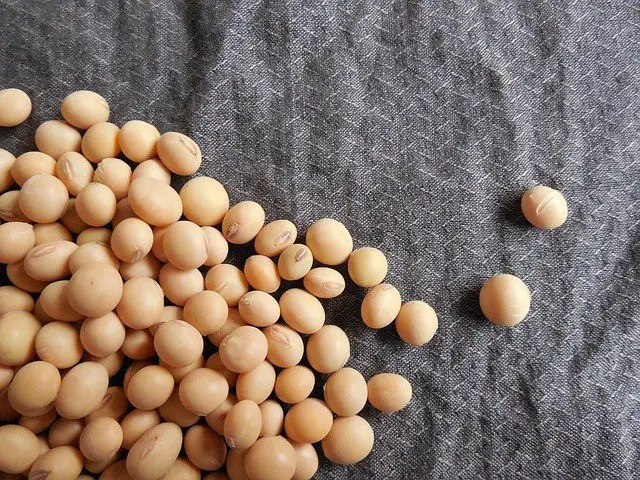
Natto is fermented soybean, which has a very strong smell and a quite viscous texture. Recently, the health benefits of natto have been widely publicized, and now people can buy it in supermarkets all over Japan.
However, thirty years ago, it was not common for people in western Japan to eat it. It is rich in protein, vitamin K, and dietary fiber. In some Japanese restaurants outside Japan, you can order natto. It may not be possible to eat the original, but they often offer natto-maki, a sushi roll with natto inside.
Also read: Amanatto – The Bean Jelly
2. Shirasu - Grated Fish
Shirasu is small fish, usually sardine, eel, herring, or ayu. It is eaten raw or dried after being cooked in saltwater. It is rich in protein and calcium. It is not a dish with strange flavors or ingredients, but it has a rather bizarre appearance.

3. Inago no tsukudani
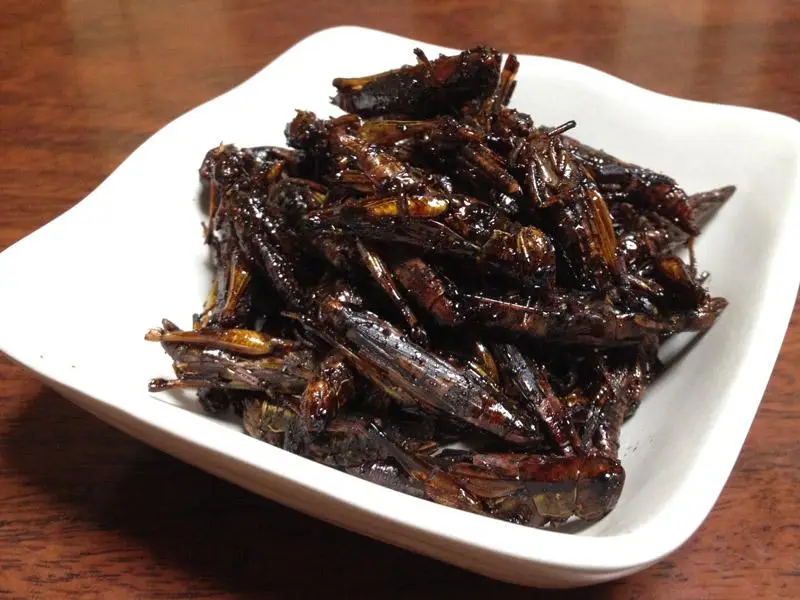
Inago is a type of grasshopper and is commonly consumed in Nagano and other mountainous regions, where seafood is not very accessible. Inago is first fried in a pan, then boiled in boiling water for a while and then cooked in soy sauce and sugar to produce tsukudani. Tsukudani in other parts of Japan is made from small fish, shellfish, and seaweed.
4. Kurage (Jellyfish)
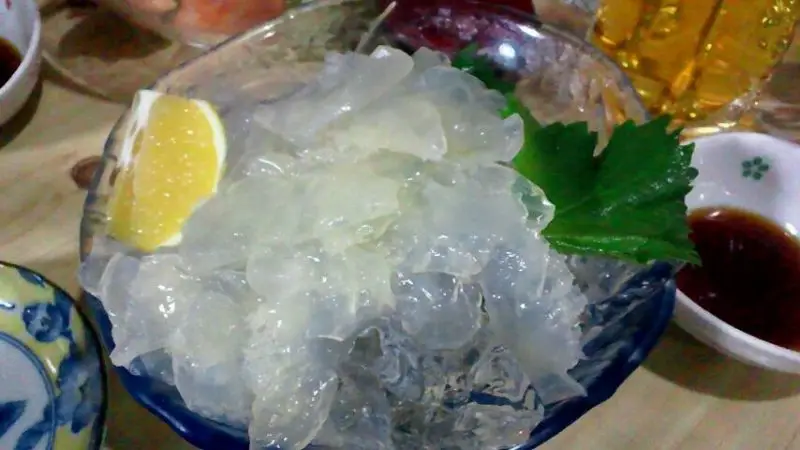
Jellyfish is eaten raw or dried. Despite its appearance, it does not have a jelly-like texture; it is crunchy. Only six types of jellyfish are consumed.
5. Namako (sea cucumber)
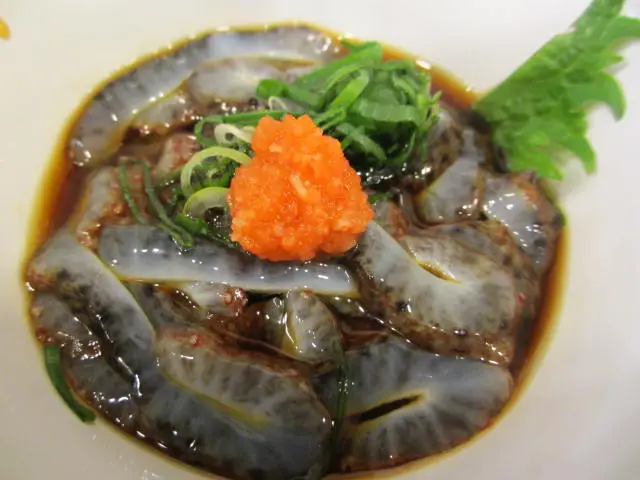
Despite its unappealing appearance, sea cucumber is one of the best Japanese delicacies. It has been consumed by the Japanese for over a thousand years. A sea cucumber is often eaten raw with vinegar to enjoy its unique crunchiness. It is also possible to find it dried.
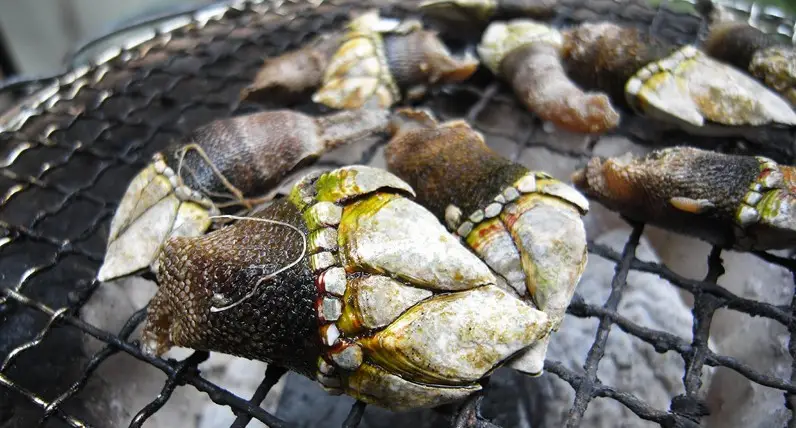
6. Kamenote
Kamenote is a marine crustacean, its name refers to a turtle's hand, and it can be found on rocky shores. It is more commonly consumed in southern Japan.
People often put it in miso soup or cook it in brine. Although they are not of the same species, barnacles, which are quite similar, are also consumed in Spain and Portugal.
7. Suppon (Turtle Shell)
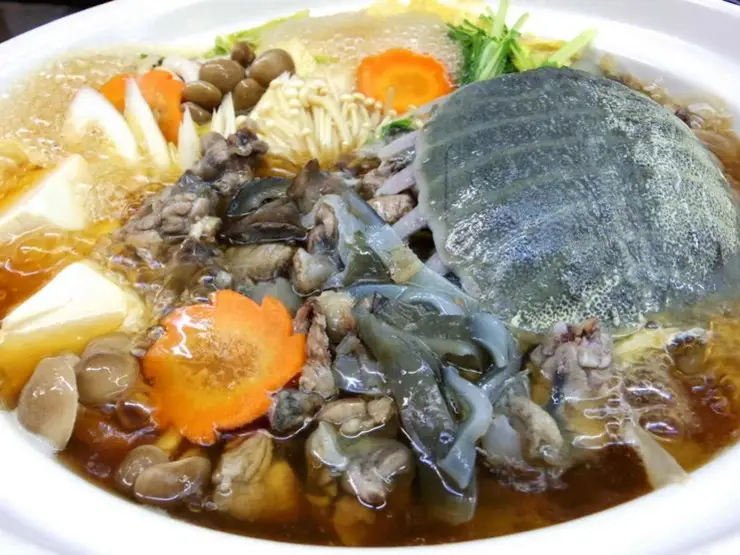
According to archaeologists, suppon is a soft-shelled turtle, consumed by the Japanese since the Jomon period (2500-1500 BC). Nowadays, it is often eaten as nabe (hot pot), suimono (soup), or zosui (Japanese risotto); the broth made from suppon is tasty. There are rumors that the shell is an aphrodisiac.
8. Basashi (Horse Meat)
Even though this meat is viewed negatively in Brazil, horse meat is eaten in many countries around the world, more than people think. However, Japan consumes this meat raw. It is often eaten as sashimi with grated ginger or garlic and soy sauce.

9. Kusaya
Kusaya is a salted dried fish produced in the Izu Islands. It is made by marinating fresh fish in Kusaya-jiru (similar to fish sauce) for 8-20 hours and then washing it with fresh water and finally drying it in the sun for 1-2 days. Kusaya was given to the Shogun as a gift during the Edo Period. It is famous for its unique smell.

10. Shiokara
Shiokara (塩辛) is made from the entrails of various marine creatures. It is a preserved food made from the fermentation of internal organs mixed with about 10% salt, 30% rice malt, fermented and packed in a plastic container.
Source: Tsunagujapan





Community
Comments
0 comments
There are no published comments in this language yet.
Send comment