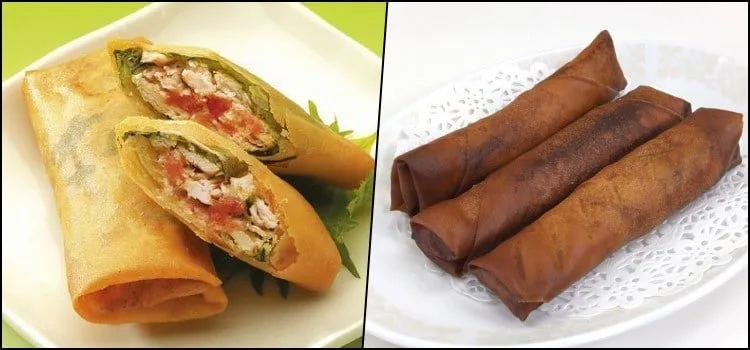
Spring rolls are one of the most popular wraps in Asian cuisine around the world. In this article, we will see the origin of Harumaki, its meaning, curiosities, and a recipe for you to make your own spring rolls.
Although it is a typical preparation of Chinese cuisine, this dish is very well known and consumed in Japan. So much so that in Brazil it is more commonly called Harumaki, its name in Japanese.
The spring rolls usually have a crispy dough or are similar to pancakes, are fried, and served with various sauces. But why are they called spring roll or Harumaki?
Origin of Harumaki
Harumaki [春巻き] is literally called spring roll because it was originally consumed during spring festivals and New Year festivals. Its name literally means spring (haru) wrapped (maki).
Its Chinese origin spread easily throughout Asia and the world, becoming one of the most popular snacks. Each region tends to have a different roll, and there are endless variations to discuss in this article.
The difference of this dish is that you can change the filling to your liking and needs. You can include everything from meats, shrimp to carrots, bamboo shoots, cabbage, and onion. There is also the possibility of making it with a sweet filling.
Harumaki Recipe
Let’s see the recipe for the traditional Harumaki or vegetable spring roll.
Dough for approximately 20 servings:
1/2 kg of wheat flour
1 level tablespoon of salt
500 ml of water
Preparation of the dough:
Start by mixing the flour and salt, adding water gradually;
Mix until the dough is smooth and slightly wet;
In a preheated skillet, place the dough as if it were a pancake;
Let the dough become thin and then flip it;
Vegetable Filling
Ingredients:
1 grated carrot
1/2 broccoli
1 cabbage cut into strips and pre-cooked
2 cloves of garlic
1 grated onion
Pepper and salt to taste
1/2 cup of water with 1 level tablespoon of cornstarch
1 vegetable broth cube
Preparation of the filling:
Brown the onion well with the garlic in 3 tablespoons of oil
Add the carrot and sauté for a while
Add the cabbage and the broth cube, then the broccoli
Add the water with the cornstarch and stir everything
Add salt and pepper to taste
Assembly:
Place the dough on a flat surface and put the filling right in the middle
Fold the bottom and top ends
When it is well sealed, fry it, leaving the ends down;
Did you like the recipe? Have you ever eaten any Harumaki? We appreciate your comments and shares!
Pac-Man is not just an electronic game nor just a well-known “face.” Much more than that, Pac-Man has become a cultural symbol, both of Japan and of video games. The game was first made for Arcade in the early 1980s. Even with a very simple mechanic, the game became very popular.
The round yellow character that resembles a pizza runs through a maze trying to collect points and escape from ghosts. This is a brief and explained summary of the game. The hope of the game was to attract both girls and boys. And this goal was achieved; with a bit of humor and a beautiful comic appeal, the game became famous.
A bit of the history of the yellow character
Toru Iwatani, a designer from the gaming company Namco, wanted to create a game that resembled a cartoon. Toru says that his inspiration for creating the character was a pizza he was eating. The pizza was missing two slices, which looked like a mouth. So in 1980, the game was released under the name “Puck-Man.”
In the same year, an American company bought the rights to the game. It was then that the main character was renamed to Pac-Man. In 1981, the game became famous throughout American territory. The game surpassed another hit, Asteroids, earning over a billion dollars in its first year. Pac-Man was one of the first games to launch a major advertising campaign. T-shirts, cups, mugs, sweaters, pants, books, board games, and much more were themed around the game.
The game was considered revolutionary for its time. The “Power Up” mechanic was introduced much earlier in Pac-Man than in the “Mario Bros” franchise. This mechanic gives a temporary special ability to the character. Something that also caught attention was the artificial intelligence. Each ghost had its own personality and distinct functions in the game. While one chased Pac-Man, some tried to surround him, and another only moved if the others were nearby.
In 1981, two sequels were released, basically the same game. The difference was that the main character in one was a female character, and in the other, it was a child version. Over time, newer and more modern versions of the game emerged. Until in 1982, an animation based on Pac-Man was produced, and in 1987 it arrived in Brazil, being aired by TV Bandeirantes.
Some curiosities about Pac-Man
Billy Mitchell holds the record for completing the game in 6 hours, achieving a score of 3,333,360 points without dying once;
In the first 18 months, more than 350,000 Pac-Man arcade machines were sold, leading to nearly a billion dollars;
The original ghosts in the game have names: Blinky the red, Inky the blue, Pinky the pink, and Clyde the orange;
The original game had a size of only 24 KB;
The character was also inspired by Popeye, who ate and became strong;
In 1981, a song called “Pac-Man Fever” was released, selling over 2.5 million copies;
Pac-Man was the best-selling game for the Atari 2600 console, with over 7 million copies sold;
Have you ever played a Pac-Man game? Did you know his story? Leave in the comments what you thought and share the article on social media.
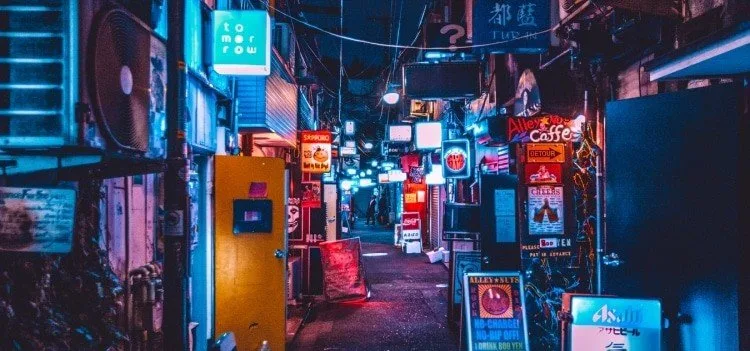
Do you know the meaning of Izakaya? Have you heard of the traditional Japanese bars? In this article, we will talk all about these small bars that are family-run and homey, used as a meeting point among friends.
What are Izakaya?
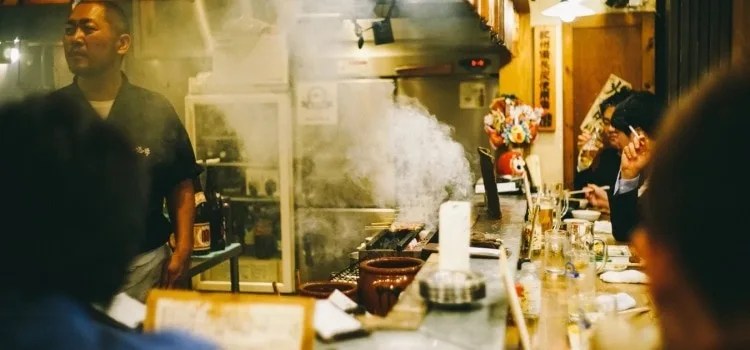
After a long day at work, to gather the family or even to drink with friends, the Izakayas [居酒屋] are a great choice. Izakayas are taverns or bars that have a very comfortable and friendly atmosphere.
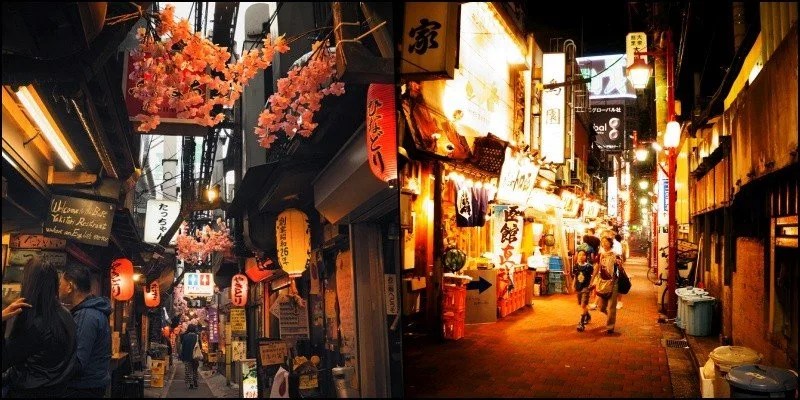
They serve a great and varied diversity of dishes and drinks. Nowadays, these homey bars have expanded and come in all sizes, but the focus is still on entertaining and relaxing people with simple and cheap drinks and dishes.
It is believed that there are more than one and a half million Izakayas spread across Japan. You can find an izakaya anywhere in Japan, from small towns to busy streets. They are also very popular around train and subway stations.
Even though bars are mostly remembered for mess, drunken people, and a lot of noise, izakayas are different. They were inspired by the “tea houses” of the Edo period in Japan. In the 17th century, these houses began selling sake and making simple dishes. This became very popular at the time.
The word Izakaya is formed by the ideograms [居酒屋] which means something like a bar that serves dishes and snacks. The word has the ideogram [居] which means residence, [酒] which means sake, and [屋] which represents store or sale.
The main aspect that unites all Izakayas is that they are all casual places, made for relaxation and unwinding with plenty of common drinks and food. But they always remain true to the traditions and classic roots and Japanese ingredients.
What can be found in an Izakaya
You can find a gigantic variety of dishes. The most common are sashimi, fried chicken, grilled rice balls, Edamame, gyoza, among others. The most ordered are yakitori, which are pieces of chicken grilled on bamboo skewers. And also oden, which are potatoes, vegetables, octopus, and eggs boiled in a broth. Some Izakayas specialize in seafood.
These dishes are mainly served as accompaniments to sake and beers in general. The drink menu is as well-crafted as the food menu. The Japanese beer called shochu stands out.
This drink is usually distilled from sweet potatoes, barley, rice, wheat, or brown sugar. Such drinks are often consumed neat, mixed with water, with fruit juice, and even with tea. But of course, soft drinks are also served.
Often the customer receives a wet towel called “oshibori” to clean their hands. And soon after, an “otoshi,” which are small portions of appetizers. Menus can be found from on top of tables to hanging on walls and ceilings.
Dishes are usually shared with everyone at the table. Traditionally at first, izakayas were quite simple and frequented only by men. But nowadays, more and more women and students gather in these places.
Izakayas are very popular among the Japanese and all tourists who visit them. They stand out for their exciting and welcoming atmosphere and traditional and warm services. Have you had the chance to visit an Izakaya? What was your experience?
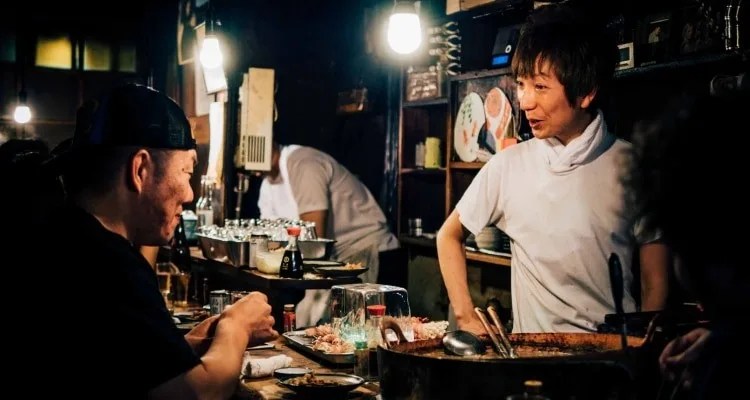
Photo we took at an Izakaya
My Experience at an Izakaya
I went to an Izakaya for the first time in the Izu region in the city of Ito. At the first Izakaya I went to, we had a Sake where it was poured into a cup that was inside another wooden container, filling both containers.
Afterward, we went to a Snack Bar, sang a couple of songs in “Karaoke,” and then went to another top Izakaya, much more family-oriented where we talked a lot with the owner and even took pictures with them. That day was an incredible experience while we were staying at K’s.
Of course, during the trip, we went to several other restaurants that served drinks, especially some with German beer and also the Sapporo brewery itself in Hokkaido. I also went to an Izakaya in Tokyo and had Yakitori.
Do you know the real meaning of the word Otome? Many Brazilian otakus mistakenly associate the term otome as a feminine version of otaku. In this article, we will see its true origin, history, and meaning.
Many Brazilian otakus, ignoring the nature of words, end up using terms without knowing their real meaning. The term “otaku” itself is already derogatory in Japan, as seen in the history of the origin of this term.
Other Brazilians claim that otome means princess, and for this reason, it was chosen to be the feminine of otaku in the West. Is that really all there is to it?
The word Otaku [オタク] is a term used to refer to people who are addicted to something. This word began to be frequently used to refer to fans of anime and manga. The video below talks more about it:
The Meaning of the Word Otome
In Japan, the word Otome [乙女] actually means “maiden,” in the context of a pure and virgin girl. It has absolutely nothing to do with obsession for manga and anime, nor does it relate to the word otaku.
The original word otome [乙女] derives from the ideograms for woman [女] along with [乙], which means last, duplicated, strange, witty. However, its origin comes from the ancient verb otsu [復つ], which means to become young.
In fact, the word otome can also be a colloquial alternative version of shoujo [少女], which means little girl; maiden; young woman; girl generally between 7 and 20 years old.
The word otome [乙女] can also mean daughter, girl, and young woman just like shoujo. There is also a unique ideogram that has one of its readings as otome [嫮], which means beautiful girl.
There are several compound words with otome [乙女] that help you understand the essence and meaning of the word. For this, let’s list some of these words below:
Japanese
Romaji
Meaning
乙女座
otomeza
virgin (constellation)
乙女百合
otomeyuri
lily of the unmarried
乙女男子
otomedanshi
effeminate man
乙女心
otomekokoro
girl’s feeling
乙女桜
otomezakura
primrose
乙女チック
otomechikku
feminine; girl
Some girls do not like to be called otome because they think it means virgin, but that is not the only meaning of the word. In fact, there are even Japanese girls who have the name otome with the same ideograms.
Origin of the Term Otome
Some Western otakus claim that this term originated because of a street called Otome Road in Tokyo, where there were several stores selling products aimed at otakus, but predominantly frequented by girls.
The stores on this street were famous for selling Yaoi manga and anime. In fact, the term may fit appropriately, since otakus in Japan have a reputation for not engaging in relationships, relating to virginity.
The term otome is also used in a genre of romance visual novel games called otome game. This term has been used for a long time and may have a slight relation to the popularization of otome in the West.
For the Japanese, the word otome is not an insult just for meaning a pure or virgin girl. In fact, this is the ideal image of Japanese girls. Probably a Japanese person has already used this term with their beloved.
The simple fact that otome is used as a genre of relationship games makes this term quite related to girls addicted to anime, manga, and games.
How Did the Term Become Popular?
Because of the large number of otaku girls who frequent Otome Road, the term began to be incorrectly used by anime fans in the West to differentiate otakus.
Probably some foreigner or a Japanese person living in Japan spread this term in the West through forums like 2chan and 4chan or YouTube channels.
Otome Road is located in Ikebukuro – Tokyo
It is impossible to know exactly when this started, what confusion was made, and who made such confusion. I only noticed people using this term on Facebook pages and groups related to anime/manga.
In the mid-2011/2012, there were several otaku pages on Facebook that are probably still active but no longer attract as much attention as before. Also, the reach of Facebook pages has decreased by 90%…
Fujoshi Was Once the Feminine of Otaku
A more appropriate term for most girls who frequent Otome Road should be Fujoshi, since they love yaoi and have nothing to do with purity. Wait, has this already happened?
Did you know that the term Fujoshi was once used to refer to Otaku girls? The first time the term appeared in Japanese media, it was considered a feminine of Otaku.
Everything happened in 2005 in the Japanese magazine Aera. We do not know if the term caught on, but it generally makes sense since most otome like Boys Love Animes.
If you do not understand what I am talking about, the term fujoshi refers to fanatic girls who enjoy watching anime or reading manga with homosexual romances involving boys.
Otaku or Otome? Which to Use?
Otaku is a unisex word. That is, it applies to both female and male genders. However, there are still some people who keep insisting “HURR DURR DO YOU WANT TO BE MY OTOME?” in 2018.
If someone corrects you saying you should be called otome, show them this article. There is no right or wrong term; in Brazil, it is just slang, so it does not apply to the true meaning of the Japanese language.
I personally do not even like to be called otaku; nowadays, even in Brazil, this term has become derogatory. The otakus and otomes in Brazil are being seen like those in Japan.
Otaku in Japan is a pejorative term that involves not only fans of anime but people addicted to anything. You can read more about the term otaku in this other article.
The Paleolithic period of Japan is where it all began. Early Japanese history is traditionally divided into five main periods: the Paleolithic (c. 50,000 BC – c. 12,000 BC), Jomon (c. 11,000 BC – 300 BC), Yayoi (300 BC – 300 AD), Kofun (300 AD – 552 AD), and Yamato (552 AD – 710 AD).
Although the dating of these periods is complex and cultures, in any case, tend to overlap, it is clear that the early Japan underwent profound changes in each of these significant periods.
The Japanese Paleolithic period is the period of human habitation in Japan dated from 50,000 BC to 12,000 BC. It was the period that preceded the Jomon Period. However, the starting date is debated, with 35,000 BC being the most accepted date.
The first human bones were discovered in the city of Hamamatsu, Shizuoka. According to radiocarbon dating, the fossils date back about 14,000 to 18,000 years.
The development of tools made with polished stones, which emerged later in the Neolithic period for the rest of the world, makes this period of prehistoric Japan unique compared to other prehistoric periods.
The First Inhabitants of the Archipelago
The first humans to inhabit the archipelago would be Stone Age hunters from northeast Asia. Traveling in small tribes and using weapons with stone tips, they followed herds of wild animals across land bridges to Japan, formed during the Ice Age.
While many believe they came earlier, it is known that these hunters arrived in Japan no earlier than 35,000 BC. Paleolithic artifacts include finely made blade tools, similar to those from Siberia and Eurasia.
Since no pottery has yet been discovered, on the other hand, the Paleolithic Period in Japan is also referred to as the “pre-pottery” period (Sendoki). In this way, it helps to distinguish its inhabitants from those of the following eras.
Events and Tool Development
A massive volcanic eruption in southern Japan, in Kyushu, around 24,000 to 22,000 years ago spread a distinct ash, the Aira-Tanzawa (AT) pyroclast, across much of the country, dating events in Japan as “before or after AT.” At the same time, the first stone tools began to be made.
From that moment on, pebbles became less important. Small and well-made tools, especially knife-shaped ones, became more important around 16,000 years ago.
The small tools made of quartz and obsidian that predominated between about 16,000 and 13,000 years ago show considerable similarity to tools of the same age in northeast Asia and Europe. The tools from sites on Hokkaido Island are almost identical to those from the Far East and Siberia.
Did you know that there is also a sand dune desert in Japan? Just like the sand dunes in Maranhão, Japan has its tourist desert known as Tottori Sakyu [鳥取砂丘]. There are more than 30Km of sand spread to the east of the city of Tottori in the Chugoku region, measuring 16 kilometers in length and two kilometers in width.
The dunes are formed by the winds from the Sea of Japan, which bring sand from the ocean floor to the beach, and every year the landscape is prone to change.
In some places of the dunes, the hills reach up to 90 meters in height, offering a spectacular view of the sea and the horizon; the slope of the dunes can reach up to 40 degrees, making Tottori a popular destination for tourists and also for sandboarding enthusiasts.
Sakyu [砂丘] is the Japanese word for sand dunes or sand hills.
Tottori Sakyu – The Desert of Japan
It is said that this small desert existed thousands of years ago, when ashes from the Daisen Volcano mixed with sand from the Sendai river carried to the sea, which eventually deposited the sand on the coast of Japan.
In this desert, it is possible to ride camels, horses, and even wheelchair users have a special chair to walk on the sand. The sand dunes in Tottori attract more than 2 million tourists each year.
The temperature of the sand is high and can reach up to 60º. Some plants hamahirugao and hamanigana manage to grow due to the moist sand underneath. In winter, the Tottori dunes are covered by meters of snow.
To ride a camel in the dunes of Japan, you pay about 1300 yen.
Lighting and Tottori Sand Museum
At the end of the year, the place also gains beautiful lighting at night called Tottori sakyu illusion. Lighting in tourist spots is something popular throughout Japan between November and December.
In the Tottori desert, you can also find a Sand Museum with large sand sculptures by artists from around the world. Previously, the sand exhibitions were held outdoors, but in 2012 the sand museum moved to its own permanent building.
To enter the sand museum, you pay 600 yen. The museum closes from early January to mid-April with the aim of changing its exhibitions annually. Each year you visit is a new experience.
The Tottori desert is also the setting for several Japanese films and dramas.
Ready to visit the dunes of Japan?
To visit the sand dunes in the Tottori region, you can take a bus from Tottori station to Tottori Sakyu [鳥取砂丘] and get off at the last stop.
The Tottori dunes are yet another one of the thousands of places you should visit in Japan. Have you had this opportunity? What was your experience? We would love to hear your comments. To finish, let’s leave some videos of this beautiful desert in Japan:
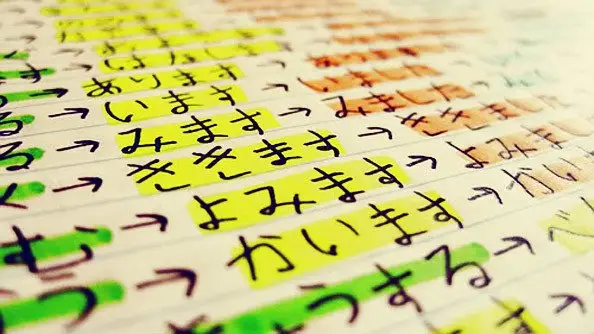
The other day I was talking to a Japanese woman on social media and she wrote the verb miru (to see) in a way that surprised me. It was the same verb, with the same pronunciation, but written with a different kanji. This reminded me of how much the Japanese love these details: one kanji changes and suddenly the meaning of the verb becomes much more specific. Does it seem confusing? Don’t worry, it’s not as complicated as it seems — and that’s exactly what we’re going to break down here.
The verb miru has several ways to be written in Japanese. They all mean something like “to see,” “to look,” or “to watch,” but depending on the chosen kanji, the meaning changes, sometimes in a very subtle way, other times more directly. Let’s understand this step by step.
Miru (見る) — The Basics of “Seeing”
This is the most common miru, the one you probably learn right at the beginning of your Japanese studies. Written with the kanji 見る, it basically means “to see,” “to look,” “to observe,” or “to watch.” It is the generic verb for everything related to vision or perception.
You use this miru in everyday situations, such as:
Seeing a person passing by on the street;
Looking at an object;
Watching something on TV;
Examining or evaluating something in general.
Additionally, miru (見る) also appears in more abstract constructions, expressing ideas like “it seems that…” or “to have an opinion” about something. In other words, it is not limited to just the physical act of seeing.
It is a simple kanji, but extremely versatile — that’s why, even when there are other options, many Japanese prefer to stick with it in their daily life.
Miru (観る) — To Contemplate and Appreciate
When you use 観る to write miru, the meaning takes on a more refined tone. Here, the act of seeing involves appreciation, contemplation, or careful observation. It is not just looking for the sake of looking — it is seeing with intention, with special attention.
You will see this miru in contexts such as:
Observing a beautiful landscape or scenery;
Watching a show, movie, or play;
Contemplating works of art, such as paintings or sculptures;
In certain cases, even related to spiritual practices, such as meditation or divination.
In summary: while 見る serves for the everyday act of seeing, 観る appears when there is appreciation or contemplation involved, something that requires a deeper look.
Curiosity: the kanji 観 also carries the sense of “vision” in a broad sense, like point of view or global perception. It appears in words like 観光 (kankou, tourism) and 世界観 (sekaikan, worldview).
Miru (視る) — To Inspect and Analyze
The miru written with 視る carries a technical and attentive sense. It is not just to see or look, it is to inspect, supervise, or analyze something more critically. Think of someone observing data, monitoring cameras, or inspecting a process — it is this type of “seeing.”
This verb is usually used in:
Technical inspection situations;
Monitoring or supervision;
Analyses that require a critical and detailed look.
It is less common in everyday life, but very useful in professional or academic contexts.
Miru (診る) — To Clinically Examine
When the subject is health, the Japanese use miru with the kanji 診る. This is the verb that expresses the act of a doctor examining a patient, making a diagnosis, or evaluating a clinical condition.
You will see this verb, for example:
In medical consultations;
When the doctor examines tests or symptoms;
In the context of diagnosis and health analysis.
This miru is extremely specific, used almost exclusively in the medical environment.
Miru (看る) — To Care and Watch Over
The last one on our list is the miru with the kanji 看る, also very present in the health context, but with a focus more on care and vigilance. It appears when someone, like a nurse, takes care of or observes a patient, ensuring the person’s well-being.
Some practical examples:
Caring for a sick or elderly person;
Observing a patient to ensure everything is okay;
Paying continuous attention to someone under care.
Although this verb also involves “seeing,” it has a connotation of attention, protection, and care.
Other Similar Cases
There are also other uncommon forms, such as 覧る, 覗る, and 監る, but nowadays almost no one uses these verbs in isolation. They appear more as part of other compound verbs, like 覗く (nozoku, to peek), which remain alive in modern vocabulary.
This game of kanjis and meanings does not happen only with miru. The verb kiku (to hear, to ask) also has its variations:
聞く — To hear in general, to listen to sounds;
聴く — To listen attentively or to appreciate music;
訊く — To ask or seek information.
That’s why, when in doubt, the best thing you can do is consult the site sknihongo. There you can see the kanji, meanings, and contexts of use in a super practical way.
Shintoism is the term for the indigenous religious beliefs and practices of Japan. Shintoism has no founder, no official sacred scriptures, nor fixed creeds, but it has preserved its main beliefs and rituals over time. The word Shintoism came into use to distinguish the indigenous Japanese beliefs from Buddhism, which was introduced to Japan in the 6th century AD.
Shintoism (along with Buddhism) is closely linked to Japanese society and culture. The relationship of Shintoism with other religions in Japan is generally cooperative and harmonious. Shintoists insist on maintaining their own characteristics and inner depth while working for the peaceful coexistence of human beings.
Aspects of Shintoism
Shintoism is the ethnic religion of Japan that focuses on the belief that spiritual powers manifest in natural places, such as mountains, rivers, and other aspects of nature, including people and animals.
There is no founder of Shintoism, but some of its practices date back to the 8th century. As an ancient religion, Shintoism took hold of small villages and then spread throughout Japan. Eventually, it became a recognized religion.
Shintoism does not have a Bible, but it has several model texts. Shintoism as a system of religion or belief was originally created to distinguish the beliefs of the indigenous Japanese peoples from the beliefs of Buddhism, which began in the 6th century. Therefore, it is possible to practice both Buddhism and Shintoism, as they do not contradict each other.
Basic Principles of Shintoism
At the core of Shintoism are beliefs in the mysterious power of creation and harmonization (musubi) of kami and the true way (makoto) of kami. The nature of kami cannot be fully explained in words because kami transcends the cognitive faculty of man. Dedicated followers are able to understand kami through faith and generally recognize various kami in a polytheistic form.
The kami (gods or spirits) began as the mysterious forces of nature primarily associated with permanent features in the landscape, such as unusual mountains, rocky cliffs, caves, springs, trees, and stones.
Many folk tales have evolved around these sacred places, which often refer to the possession of animals and mainly involve foxes, badgers, dogs, and cats among people. Celestial bodies play only incidental roles as Shinto gods.
Shintoism maintains a generally positive view of human nature. A common Shinto saying is that “man is the child of kami“. First, this means that a person has been given life by kami and that their nature is therefore sacred.
In fact, this divine nature is rarely revealed in man, which gives rise to the need for purification. Secondly, it means that daily life is made possible by kami and, therefore, the personality and life of people deserve respect. An individual must revere the basic human rights of all, as well as their own.
Practices of Shintoism
Shinto ceremonies are intended to attract kami for benevolent treatment and protection and consist of abstinence (imi), offerings, prayers, and purification (harae). Purification, washing with water, symbolically removes the dust and impurities that cover the inner mind.
A traditional Japanese house has two family altars: one, Shinto, for its kami guardian and the goddess Amaterasu Omikami, and another, Buddhist, for the family ancestors. Pure Shinto families, however, will have all ceremonies and services in Shinto style.
Shintoism does not have weekly religious services. Some may go to the shrines on the 1st and 15th of each month and on occasions of rites or festivals (matsuri), which occur at fixed times during the year. Followers of Shintoism visit the shrine at their convenience; although some devoted hearts pay respect to the shrine every morning.
Shinto shrines are considered the home of kami. The most important building of the shrine is the inner shrine (honden), in which a sacred symbol called shintai (“divine body”) or mitama shiro (“symbol of the divine spirit”) is enshrined.
The usual symbol is a mirror, but sometimes it is a wooden image, a sword, or some other object. In any case, it is carefully wrapped and placed in a container. It is forbidden to see it as only the chief priest can enter the interior of the shrine.
Torii | Rituals | Festivals
A torii (gate) stands at the entrance of the shrine grounds. Proceeding to the main approach, a visitor arrives at a purification basin where hands are washed and the mouth rinsed. Normally he or she will make a small offering at the altar (haiden) and pray. Sometimes, a visitor may ask the priest to perform rites of passage or offer special prayers.
Several Shinto rites of passage are observed. The first visit of a newborn baby to the guardian kami, which occurs 30 to 100 days after birth, is to initiate the baby as a new adherent.
The Shichi-go-san festival (seven-five-three) on November 15 is the occasion for five-year-old boys and three and seven-year-old girls to visit the shrine to thank Kami for their protection and pray for their healthy growth.
January 15 is Adult’s Day. The youth in the village often join the local youth association on this day. At this time, it is the day of celebration for Japanese who have reached their 20s.
Japanese people often have their wedding ceremonies in Shinto style and pronounce their wedding vows to kami. However, Shinto funerals are not common, due to Shintoism’s concerns about ritual purity. Most Japanese have their funerals in Buddhist style.
Some Information About the Religion
The name “shinto” derives from the Chinese “shin tao“, which means “way of the gods”;
There are at least six Shinto sects, namely: 国家神道 (kokkashindō), 神社神道 (jinjashindō), 皇室神社 (kōshitsu jinja), 民俗神道 (minzokushindō), 宗派神社 (shūha jinja) and 古神道 (koshindō);
In Shintoism, transgressions and wrongdoings are considered impurities that must be cleansed for mental tranquility;
In jinjas (temples), it is considered taboo to do anything wrong there;
When a child is born in Japan, their name is included in a jinja, making the child a “family child”. When the person dies, they become a “family spirit”;
The gods of Shintoism are mostly guardians of people. However, some may be malevolent;
Did you like the article? Share it with friends! We also recommend reading:
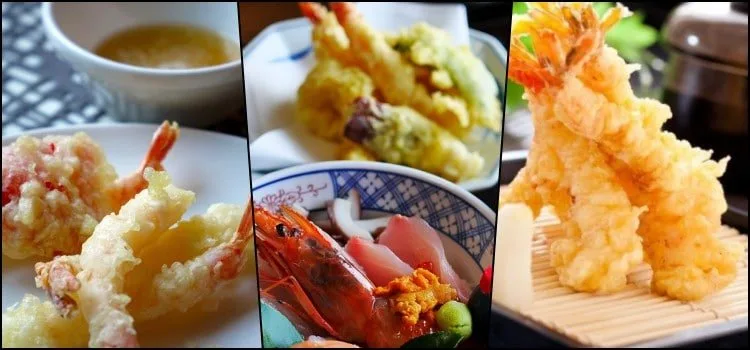
Tempura (てんぷら or 天麩羅) is one of the most common dishes served in Japan. Many even think that this is typical Japanese food. However, this dish is a classic of Portuguese cuisine, although Japan popularized it worldwide. This gastronomic work was introduced to Japan around the 16th century, in the port city of Nagasaki.
The dish consists of mixed and fried vegetables and seafood, usually served with rice or noodles. The technique of frying food like this was not widely used in Japan. But it soon became a very popular snack in the country. Changes were made from the beginning so that the flavor would be pleasing to the Japanese palate. It was with these changes and adaptations that the dish ended up becoming truly Japanese food.
History and curiosities of Tempura
As already mentioned, it all started in Nagasaki, a Japanese port city, around the 16th century. At that time, amid a civil war, Japan was isolated from the rest of the world. The only external contact was through merchants and missionaries, mainly Dutch, Chinese, and Portuguese.
At first, the dish was expensive, so it did not spread among common people. Only from the Edo period (1603-1867) did the meal become cheaper, becoming very popular among most people. Initially, it was considered just a snack, but over time it became the main dish in many restaurants.
A certain story tells that the first Shogun of the Edo period (Commander of the army) named Tokugawa Leyasu really liked tempura. Even though he was very concerned and careful about his health, he regularly consumed the dish. So much so that one time he ate excessively and ended up passing away.
Even though the veracity of this story is questionable, it is a fact that tempura was a very common and famous dish since the Edo period. Today, tempura is an essential part of traditional Japanese cuisine.
Tempura Recipe
Vegetable Tempura
Remember that the ingredients mentioned are mere suggestions. You can use vegetables of your choice, as well as fish and seafood.
Ingredients (tempura batter)
1 cup of wheat flour
3 tablespoons of oil
2 tablespoons of cornstarch
1 cup of cold water
1 tablespoon of baking powder
1 egg
Salt to taste
Ingredients (tempura filling)
1 cup of chopped onion
1 cup of sliced carrot
1 cup of chopped green onion
2 cups of chopped cabbage
Preparation method:
Batter:
1 – Beat the egg adding the cold water, mixing them slowly;
2 – Add the flour and the other ingredients;
3 – Stir until the batter is well homogeneous;
Filling:
1 – With the batter ready, add the vegetables and mix;
2 – Heat a frying pan with oil;
3 – With the oil very hot, place small portions in the frying pan and let them brown on both sides;
4 – Let fry for approximately 3 to 5 minutes;
5 – Remove from the oil and let drain the fat;
I hope you enjoyed the article. Have you had the chance to eat or make tempura? What was your experience? We appreciate all comments and shares. xD
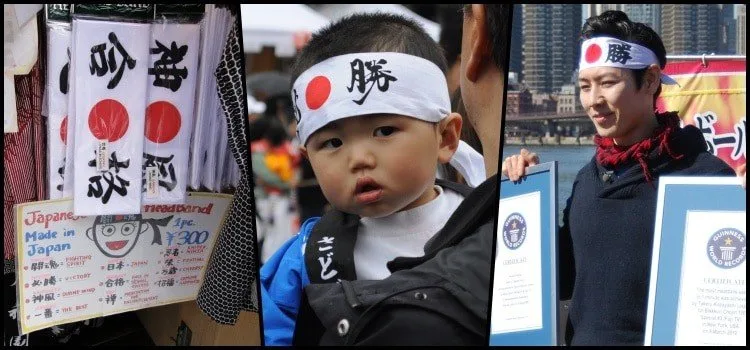
Do you know about Japanese bandanas? In this article, we will talk about hachimaki [鉢巻]. It is very likely that you have seen in some movie or anime a person tying a long white and red cloth around their head.
The word hachimaki literally means “to wrap around the head.” It is usually made of white and red fabric, can be considered a bandana or headband, and is used in Japan for various reasons.
The word hachi can also mean “container,” perhaps due to the ancient barrels made entirely of woven bamboo, whose rim was called hachimaki. Hachi is also the name of the famous dog and means lucky number.
Situations where a Hachimaki is used
The hachimaki can symbolize perseverance, effort, and courage. They are used on many occasions such as traditional events in the country, sports fans, students, and even by women giving birth to increase motivation and show determination.
Here is a list of situations where a motivational Japanese bandana is used:
The origin of hachimaki is a bit uncertain. One theory links it to religious ascetics in Japan. Others say that it emerged during the time of the samurai. Because they would wear the cloth on their heads due to the heavy helmets.
The cloth would have protected many users, as the helmet would grip the head, absorb sweat, and prevent hair from falling into their eyes. Others link the emergence of hachimaki to the first religious mentors in Japan.
Regardless of its origin, the hachimaki has become a Japanese symbol. An interesting fact is that during World War II, kamikaze pilots wore this cloth on their heads with the words seven lives or hisshou [必勝] which means certain victory.
During all battles, they would wear the hachimaki as a symbol of war spirit. It was also used as protection, as the helmet they wore was uncomfortable and could even hurt when worn directly on the head.
Because of the war, the bandana gained worldwide fame. Samurai also wore the bandana for the same reason; besides providing comfort, it could absorb sweat. Bandanas can also be found with other writings.
You can buy your Japanese bandana on Amazon below:
The Hachimaki used Today
These bands are also often used cheering (nejirihachimaki) or tied with a knot at the front (mukouhachimaki) which are typically used by sushi chefs, carpenters, fishmongers, and other professions. The purpose of this use is also to show confidence in the activity performed.
Today, the hachimaki is mainly used by athletes and people who exercise, to absorb sweat. In movies and Western pop culture, the bandana is used a bit out of context.
Because it is generally used and associated with people who practice martial arts. Even though many of these fighters use the hachimaki, they are far from being the only ones who wear it.
Anything can be written or drawn on the hachimaki. But, there are typical phrases and slogans, always associated with something motivational. Some of these bandanas can completely cover the head (kengakafuri).
It is also very common to have the red circle of the Japanese flag drawn on it. Always demonstrating the effort that the user shows and the nationalist or sports pride.
Have you seen these bandanas anywhere? Did you know they had this name? I hope you enjoyed this short article. We appreciate comments and shares.
Have you ever noticed in an anime a character using a strip of cloth or gauze on their chest and abdomen looking like a mummy? The name of this accessory is sarashi (さらし), which consists of a thick cotton cloth that was historically worn under a kimono to slim the body and hide the little fat of Japanese women.
The sarashi was also used after the birth of children and as protective clothing by men. Over time, the cloth gained use in battles and frequently appears in anime and manga as a symbol of a warrior. Warrior women also wear this cloth to prevent their melons from bouncing during a fight (it would serve as a distraction).
Interestingly, the name sarashi in hiragana (晒し) means to expose (to the sun, public, danger…) and in some cases even public humiliation. The ideogram also involves whitening and is often part of words like whitening powder and things of that sort. Probably this piece received this name because of the white cotton cloth called sarashimomen (晒木綿).
Who uses sarashi?
Women today often use a sarashi as a sports bra, and when they crossdress (dress as men) or really want to prevent their breasts from standing out, either because of men or to avoid envy from women. Since standing out and differentiating in Japan in certain areas can cause discomfort.
Japanese delinquents like bosozoku, yakuza, and yankii also tend to wear a sarashi under their shirt or blouse to appear more rebellious and strong. In fact, the sarashi can have various purposes and can be worn by men, women, children, or the elderly.
Wearing the sarashi and exposing oneself when it comes to battles creates an appearance of strength and toughness. It also offers a protective function against injuries and stabs in fights. This cotton cloth can symbolize resistance and virility. Men can also use the sarashi to hide their little belly.
Some guides say that to wear the sarashi you should cut it in a way that fits your body. It should be wrapped below the armpits without creating wrinkles.
Anime characters who wear sarashi
Several characters use this accessory, let’s list some below:
Bleach – Various characters;
Urusei Yatsura – Ryuunosuke;
Gurren-Lagann – Kamina;
Samurai X – Sanosuke Sagara;
FMAB – Ling Yao;
Fairy Tail – Erza Scarlet
Love Hina – Motoko and Tsuruko Aoyama;
Tenjho Tenge – Aya Natsume;
Beelzebub – Aoi Kunieda;
Nobunaga the fool – Joana Darc (hiding her breasts);
Vocaloids – Rin and Len Kagamine;
Touhou – Reimu;
Did you already know or notice this cloth on anime characters? What did you think of this article? If you liked it, share it with friends and also read:
Everyone who wants to learn a language will need a dictionary, whether digital or in book form. So what is the best Japanese dictionary for you to acquire or use? In this article, we will do a little search and recommend some dictionaries for Japanese students.
The Japanese language is a bit complex, requiring dictionaries focused on ideograms, romanized forms, or kana. One of the easiest ways is to use an online dictionary; what we recommend is the famous jisho.org, where we have even written an article talking about it.
There are also electronic dictionaries that are complete but cost more than 1000 reais. I think it’s unnecessary since there are paid apps for mobile devices that can replace this electronic one. I know that the electronic dictionary has several advantages that these apps do not have, but I don’t believe it’s worth it.
The big problem is that many prefer to have a book at home to read and consult without using the internet. I just want to remind you that a dictionary is a research tool and not a study tool. Using the dictionary excessively to try to memorize words is a setback in learning Japanese. There are various types of dictionaries, some focused on useful words, vocabulary, topics, and not to mention the patterns of consultation.
The best physical Japanese dictionaries
In terms of standard Japanese dictionaries, we have the famous Michaelis which is available in several languages. It tends to be practical and complete, in addition to being large in size. There is a Japanese-Portuguese version and a Portuguese-Japanese version. I can’t say which one is a priority, but if possible, it’s good to have both dictionaries.
The Michaelis dictionaries are the main options among the few standard Japanese dictionaries available in the Brazilian market. Some resort to apps or other conversation guides, but they are incomplete and do not have all the words, especially the ones we are looking for. Another well-known dictionary, but expensive and rare, is by Noemia Hinata. This one and the Michaelis are the most known and purchased in Brazil. Besides these, we have a pocket visual dictionary that also includes the English language, making it a good option.
Standard dictionaries in Portuguese are running out. We only have to talk about differentiated dictionaries focused on vocabulary. We have one by Thomas P. Koziara with 20,000 words. Another Japanese dictionary is one that has 3 different versions focused on commonly used useful words. Another recommendation is a Portuguese-Japanese conversation guide embedded with a concise dictionary of 1500 words. We can also mention another vocabulary book focused on topics.
Before making any choice, we recommend checking the book’s description, comments, and stock to avoid possible problems. There are few materials in Portuguese, which makes it difficult to create our list of dictionaries. We will also leave the only book in Portuguese focused on kanji that I found.
If you want material focused on kanji, we recommend reading our article about RTK.
To conclude the article, I will leave some English-Japanese dictionaries for you. I can also leave other related materials and books entirely written in Japanese, such as illustrated dictionaries, etc. I hope you enjoyed the article! If you want to share it with friends, I appreciate it!
A Butsudan [仏壇] is literally a “Buddhist altar,” a sanctuary commonly found in temples and homes in Japan. It usually contains a series of subsidiary religious accessories, called butsugu, such as candlesticks, incense burners, bells, and platforms to place offerings like fruits, tea, or rice.
Some Buddhist sects place memorial tablets ihai, ashes of the deceased for deceased relatives inside or near the butsudan. The defined space occupied by the butsudan is referred to as Butsuma.
The arrangement of the butsudan
A butsudan is a defined platform, often ornate or simply a wooden cabinet sometimes created with doors that attach and protect a religious icon or Gohonzon, usually a statue or painting of a Buddha or a bodhisattva, or a calligraphic mandala scroll.
If there are doors used, the sanctuary consecrates the Gohonzon icon during religious observances and closes after use. In the case of no doors, a brocade or white cloth is sometimes placed to render its sacred space.
Meaning of the Butsudan in Japanese culture
Traditional Japanese beliefs associate this sanctuary with a house of Buddha, the Bodhisattva, and the deceased relatives consecrated within it. In some Buddhist sects, when this sanctuary is replaced or repaired by the family, a restoration ceremony follows.
The sanctuary is commonly seen as an essential part of the life of a traditional Japanese family, as it is the center of spiritual faith within the family, especially in dealing with the death of family members or reflecting on the lives of ancestors.
This is more frequent in many rural areas, where it is common for most households to own a butsudan, in contrast to urban and suburban areas, where the ownership rate is less frequent.
This is truly unique to Japan. No other Buddhist country participates in this practice (except for some Mongolians). Due to having so many temples in other Asian countries, people do not need to make altars in their homes. Shinto also has a similar sanctuary called Kamidana. This sanctuary is often a suspended miniature of a Shinto temple.
Where to buy a Butsudan?
Unfortunately, those living abroad need to turn to the internet to purchase a butsudan altar. To conclude the article, I will leave a list of related products on the Ebay site for you to take a quick look:
Just like there are people who believe in horoscopes and that their personality is determined by their zodiac sign, in Japan, things work differently. Instead of horoscopes, the Japanese believe that personality is determined by a person’s blood type (Ketsueki gata).
Ketsueki Gata – Blood Types
In Japan, blood types are considered an important indicator of a person’s personality. It is known as the “Blood Type Personality Theory.”
Although this is more of a superstition, many people believe in it. In fact, a survey conducted in Japan shows that 29% of men and 45% of women believe in this “theory.”
In Japan, personality determined by blood type is called Ketsuekigata seikaku handan (血液型性格判断), and the horoscope involving blood type is called Ketsueki gata uranai (血液型占い).
Besides personality, some believe that blood type can affect temperament and even compatibility in romantic relationships.
Perhaps this is one of the main reasons that idols, celebrities, anime characters, manga, and games have their blood type highlighted in some related publication. All to make otakus love their waifus even more.
Blood Type Personalities in Japan
Below we will see a brief summary and quick description of the blood types in Japan. There are complete books and materials specialized in just one blood type; the material created involving blood types is enormous, just like the horoscopes that receive daily predictions.
Type A
The majority of Japanese people are blood type A. According to the theory, people of this blood type are organized, intense, detail-oriented, rational, reserved, polite, reliable, patient, responsible, and perfectionists.
On the other hand, type A people are shy, obsessive, sensitive, obtuse, orthodox, stressed, distant, stubborn, and exaggerated.
Type B
Type B people are considered passionate, relaxed, cheerful, extroverted, adventurous, curious, unconventional, carefree, active, flexible, unpretentious, and creative.
On the other hand, they are selfish, irresponsible, immature, unpredictable, erratic, indecisive, unforgiving, uncooperative, and lazy.
Type AB
Type AB people are seen as eccentric, well-behaved, moderate, artistic, sociable, mysterious, charismatic, popular, adaptable, diplomatic, talented, and spiritual.
On the other hand, they are prejudiced, impatient, complicated, forgetful, petty, hypocritical, vulnerable, and distant.
Type O
Type O people are viewed as optimistic, confident, devoted, ambitious, athletic, sincere, loyal, vain, independent, influential, idealistic, and intuitive.
On the other hand, they are cold, cruel, rude, envious, insecure, arrogant, imitative, uncommitted, authoritarian, and inflexible.
Where Did This Blood Type Theory Come From, After All?
In 1927, psychologist Takeji Furukawa was a teacher at a women’s school affiliated with a university. He began to question the school’s enrollment system, which was based on academic ability. He wanted a system that also considered the personalities of the candidates.
After World War II, discussions about blood type theory disappeared for a while. But in the 1970s, a journalist named Masahiko Nomi, influenced by Takeji Furukawa, published a book about the relationships between blood types and personalities. This book became a bestseller and helped spread the theory more widely.
The trend diminished significantly in the 2000s due to movements that were against this theory. So, even though people’s personal thoughts about blood type personalities are still quite strong, there are not as many media outlets about it as before.
Curiosities Related to Blood Type
Just like the Horoscope and other similar things around the world, blood type in Japan receives various materials on the subject. Books, magazines, newspapers, TV programs, campaigns, and personal interpretations. Even Facebook joined in and allows Japanese people to put their blood type on their profile.
Discrimination Based on Blood Type – Surprisingly, Japanese people can discriminate or even form an opinion without knowing more deeply based on a person’s blood type. Sometimes, the fanaticism is so great that this act of discrimination has even received a name. Burahara (ブラハラ) is the name of this social phenomenon that judges others based on their blood type.
Blood Types in Japanese
Now let’s talk about blood in the Japanese language. Here you will learn how to say blood type in Japanese, ask about it, or read about the subject. See below a list of words related to blood:
Responsive Table: Scroll the table sideways with your finger >>
Portuguese
Japanese
Romaji
Blood
血
chi
Liquid, Fluid
液
eki
Type, model
型
kata
Blood (scientific term)
血液
ketsueki
Blood Type
血液型
Ketsuekigata
RH
アールエッチ
aaruecchi
A
エー
ee
B
ビー
bii
O
オー
oo
Formula/type (suffix = A式)
式
shiki
Negative
陰性
insei
Positive
陽性
yousei
[血液型は何ですか] – What is your blood type?
私の血液型はO型Rh(+)です – My blood type is O Positive;
I hope you enjoyed the article. We appreciate comments and shares. We also recommend reading:
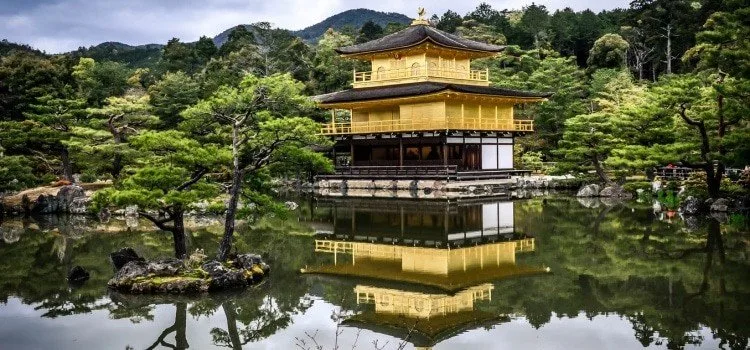
Do you know the golden temple or golden pavilion of Japan? In Kyoto is located the famous Kinkakuji temple, one of the great highlights of the ancient capital of Japan. In this article, we will see some details about this beautiful place.
Kinkakuji [金閣寺] is the “nickname” given to the temple Rokuonji [鹿苑寺]located in the city of Kyoto in Japan. These golden pavilions were built in the year 1397. Each pavilion is covered in pure gold with a golden phoenix on top of its roof, living up to its nickname.
The temple is also surrounded by a mirrored lake called Kyōkochi. Other pavilions and shrines accompany the area of the site, in addition to the beautiful garden and foliage that add charm to the entire landscape of the place.
The history of Kinkakuji
The temple was the retirement home of the shogun (commander of the army) Ashikaga Yoshimitsu. Shortly after the death of this shogun, in 1408, the house became a Zen temple of the Rinzai sect. This temple has been burned several times throughout history.
Among these are two times during the Onin War, a civil war that destroyed much of Kyoto. And in 1950, a fanatic monk set the place on fire. The current structure was rebuilt in 1955. Kinkakuji is one of the must-see tourist spots for visitors to Kyoto; let’s see some curiosities about it.
As already mentioned, the structure was a private property, originally intended to be a place of tranquility and rest for a shogun. It was also built to reflect his great power and influence.
Just before dying, Yoshimitsu instructed his son to hand over the entire property to the Zen Buddhist monks. For a long time, Kinkakuji served as a place for monks to meditate in tranquility, as it was a peaceful and isolated place.
The temple was destroyed and rebuilt several times during the Onin War (1467-1477), and in 1950 it was set on fire by a 22-year-old monk who soon after attempted suicide.
Even after many fires and other problems, and having a large part of the structure destroyed, one pavilion survived. This is the golden pavilion, which eventually became a cultural symbol. Kinkakuji is considered an architectural marvel, not only for its luxurious finish. Each of the three floors was built in a different style.
The first floor was built in the Shinden style, which was used in elite mansions of the 11th century. Basically, it is a large open room with white walls that open to the lake. This space was generally used for public meetings and as an entertainment area.
The second floor was built in the style of Samurai houses. It was often used for private meetings and to receive special guests. The Buddhists used this floor as the Buddha’s room. From this floor, one can see the incredible and beautiful gardens, which were designed to be viewed from this height.
And finally, the third and last floor was built in the style of Buddhist architecture, where it was the private residence of Yoshimitsu. Here we have more rounded windows compared to the other floors. At the top of the roof is the Chinese phoenix called fenghuang in gold.
Shall we visit Kinkakuji?
Hello, although the article was written by my friend Marcelo, this is Kevin to talk about some details of my visit to the golden temple of Japan. It was late September on a rainy afternoon. The place seemed interesting and full of tourists even with the weather. The surroundings were full of shops and people walking through the neighborhood even though it was not the center of Kyoto.
I don’t remember well, but there were some other interesting monuments and buildings in the area. One of the main highlights is the beautiful lake and garden that create a pleasant environment for the golden temple. No matter the season you visit, the temple will always be showcasing!
If you cannot visit the golden temple in Kyoto, know that there are two small replicas here in Brazil. One is in Itapecerica da Serra (SP) and the other in Curitiba (PR) in the Japan square.
The entire place is surrounded by a beautiful garden. This is designed to provide different views of the lake as you walk. If you are passing through Kyoto, Kinkakuji is open for visitation. It costs about 500 yen (around 15 reais) and is open from 9:00 AM to 5:00 PM.
We recommend using GetYourGuide to find a tour guide or interesting tour packages for the Kyoto region and Kinkakuji. I hope you enjoy.
Did you find it interesting? Have you visited or already knew the place? Let us know in the comments and share with friends.
Since Japan is a constitutional monarchy, Japanese politics works differently from our politics, as we are a republic. In the monarchy, the head of state (monarch), being a ceremonial role that has no control over the government, is not elected. In Japan’s elections, the head of government (Prime Minister) and the state ministers are elected.
If you are wondering how Japanese politics and government work, what the governmental method is, how many parties exist, among other things, in this article I will clarify how the government administers the archipelago.
Japan is a multi-party democratic constitutional parliamentary monarchy, where the Emperor is the head of state and the Prime Minister is the head of government and head of the Cabinet of Japan.
Legislative power rests with the National Diet (which would be comparable to our National Congress), which is composed of the House of Representatives and the House of Councillors. Judicial power rests with the Supreme Court and lower courts, and sovereignty rests with the Japanese people under the Constitution of 1947.
Just like in Brazil, there are several political parties in Japan, as there are more than 30 Japanese parties in total. However, since 1955, one of the Japanese parties known as 自由民主党 (Liberal Democratic Party) has dominated elections in the chambers along with the 民進党 (Democratic Party).
Of the more than 30 parties, only 11 parties are represented in the National Diet. The other parties are represented by local city halls/provinces.
What is the people’s participation in Japanese politics?
Japan is a nation with good education and preparation of young people for the job market. However, regarding politics, younger people have little or no interest in voting.
Women do not feel very welcomed in politics, given the small number of women in Japanese politics.
The segment that actually votes is middle-aged to elderly men, the majority being elderly.
This is something that, at the same time, is a concern for politicians in general since the elderly population will soon pass away. The young population will remain as the electoral base. But politicians are not very concerned about changing legislation in favor of the younger population. Essentially, they support the retirement of the elderly.
Women find few opportunities in politics as Japan still maintains a fairly conservative culture regarding women. In Japan, women cannot maintain a job and a child at the same time. What is expected of women is marriage and the role of housewife.
Young people and women do not see many options for themselves in politics. As a consequence of policies favoring men and retirees, they distance themselves from politics and abstain from voting.
Akihito, also known as 天皇陛下明仁 (His Majesty, Emperor Akihito) is the 125th Emperor of Japan, holder of the Chrysanthemum Throne after succeeding his father, Emperor Shōwa (Hirohito, when he was alive).
Akihito has reigned over the country since January 1989, following his father’s death, and his era is known as the Heisei Era (平成時代) and, indeed, this will be Akihito’s posthumous name, according to the tradition of the Japanese monarchy.
When Akihito dies, he will be renamed and known as Emperor Heisei. However, according to an announcement from the Japanese government made in December 2017, Akihito will abdicate the throne in April 2019.
Previous Life as Prince
Akihito was born in the Imperial Palace of Tokyo in the City of Tokyo on December 23, 1933. Named Prince Tsugu (継宮 tsugu-no-miya) as a child, he was raised and educated by his private tutors and later attended the primary and secondary departments of Gakushūin (noble family school) from 1940 to 1952.
Unlike his predecessors in the imperial family, Akihito did not receive a commission as an army officer, at the request of his father, Hirohito. Thus, Akihito was the crown prince of the Chrysanthemum Throne from birth.
His formal investiture as Crown Prince (立太子礼 rittaishi-no-rei) was held at the Imperial Palace of Tokyo on November 10, 1952.
In August 1957, he met Michiko Shōda on a tennis court in Karuizawa near Nagano. Eventually, the Imperial House Council formally approved the Crown Prince’s engagement to Michiko Shōda in 1958.
It was the first time a commoner would marry a member of the Imperial Family. The engagement ceremony took place on January 14, 1959, and the wedding on April 10, 1959.
Emperor Akihito and Empress Michiko have three children: sons Naruhito, Crown Prince of Japan and Fumihito, Prince Akishino, and daughter Sayako, Princess Nori.
Official Functions of the Emperor
Despite the pressure, Akihito made several statements of remorse to Asian countries. For the suffering caused by the Japanese occupation, he expressed remorse to China made in April 1989.
He offered prayers and flowers at various memorials, honoring Japanese who died, American soldiers, Korean workers, and local islanders. Thus was the first trip of a Japanese monarch to a World War II battlefield abroad.
In 2016, NHK reported that the Emperor intended to abdicate in favor of Crown Prince Naruhito. The reason would be his age and health. An abdication within the Imperial Family had not occurred since 1817.
Subsequently, the Emperor gave a televised speech, where he emphasized his advanced age and deteriorating health; this was interpreted as an implication of his intention to abdicate.
In 2017, the law that would allow Emperor Akihito to abdicate was issued by the Japanese government cabinet. Months later, the National Diet approved the law allowing Akihito to abdicate. Thus, the government will organize the process of handing over the position to Crown Prince Naruhito.
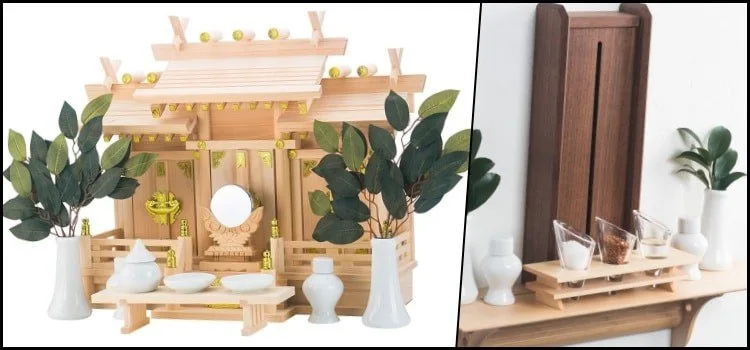
Kamidana (神棚 kami-dana, lit. “shelf of god”) are miniature household altars provided to consecrate a kami of Shinto. They are most commonly found in Japan, the home of the kami worship.
The shrine is typically placed high on a wall and contains a wide variety of items related to Shinto-style ceremonies, the most prominent of which is the shintai, an object intended to house a chosen kami, thus giving it a physical form to allow for worship.
The kami within the shintai is often the deity of the local shrine or one particular to the profession of the homeowner. A part of the kami has been specifically obtained for this purpose from a shrine through a process called kanjō. Worship generally consists of offering simple prayers, food (e.g.: rice, fruits, water), and flowers.
Before worshiping at the shrine, it is ritually important for family members to purify their hands. In Japanese homes, while maintaining a kamidana, a butsudan is also maintained.
Maintaining a Kamidana
A household kamidana is typically installed in your home to consecrate an ofuda, a type of charm. Both the kamidana and the ofuda can be purchased at any large Shinto shrine. Ofuda by themselves can be displayed on a counter or in any visible place, as long as they are kept in their protective bags.
However, when an ofuda is consecrated in a shrine, there are several rules that must be followed to ensure proper installation. First, a shrine cannot be placed on the floor or at eye level. It must be above the eye level of an average person. Second, it cannot be placed over an entrance, but must be built in a space that people will not walk under.
Finally, when an ofuda is consecrated, after removing the bag, it is customary to leave an offering of water, sake, or food in front of the shrine, which should be changed regularly. These rules apply to both homes and martial arts dojos. Ofuda are replaced before the end of each year. However, the shrine can be kept in the house until they are no longer usable.
What is kept besides the Kamidana
At the center of the shrine is the taima, an inscription from the Shinto shrine in Ise, which represents a universal kami. The shrine may also include a shimenawa, a sacred rope of twisted rice straw traditionally used to demarcate a sacred area.
Both verbs 思う and 考える can be translated into Portuguese as think. So the following question arises: What is the difference between these words? In this article, we will make a complete analysis of the meaning of these words.
First, we have the verb omou (思う) which literally means to think, but depending on its use can mean to consider, believe, judge, evaluate, imagine, suppose, dream, hope, feel, desire, want, recall, and remember. There is also a noun 思い which means thought, imagination, mind, heart, desire, expectation, hope, love, affection, feelings, emotions, and experiences.
On the other hand, the verb kangaeru (考える) literally means to think about something, consider, ponder, reflect, come to a conclusion, plan, foresee, anticipate, hope, consider, and doubt. It is obvious that we cannot say that these words mean all of this; they are just the senses and ideas they can convey when used in a conversation or text.
Differences between 思う and 考える
omou (思う) is more subjective or emotional; it can be related to worries, hopes, affection, assumption, and imagination. It involves opinions; you think with your heart and not with logic. On the other hand, kangaeru (考える) is a more objective and logical thought. It involves examining pros and cons, thinking with your head.
When you think or believe something, you have a certain subjective opinion, you use omoi as in the sentence below:
おいしいと思う
oishii to omou
I think it is delicious
When the speaker wants to express a personal opinion or thought, they can use a verb in the simple form, an adjective, or a nominal phrase followed by と思う. Although 考える has the same meaning, it usually relates to planning. As in the example below:
将来、医者なろうと考える
shourai isha ni narouto kangaeru
I think about (plan to) become a doctor in the future
Other ways of thinking
There is also another way to write omou (思う) using another kanji (想う) that has the same meaning of to think. The verb 想う is rarely used and gives an idea and feeling of feeling and visualizing, as if seeing images in your head.
There is also the verb sonjiru (存じる) which conveys the idea of thinking, knowing, considering but also involves thinking. The verb oboeru (覚える) which means to memorize, have in mind, and decorate, can relate to thinking and relating.
This is not the first time there are two similar words or even one word with the same pronunciation and meaning, but with different ideograms. To conclude, let’s list other similar articles. We appreciate your comments and shares!
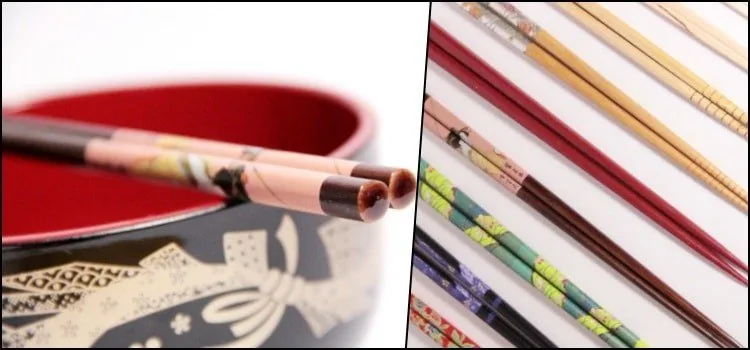
By the title, you must be thinking “What do you mean, chopsticks in food? Where am I supposed to put the chopsticks?“ Hold on. The taboo in question is not about leaving chopsticks in the food while you are eating but rather, taking a pair of chopsticks and sticking or piercing the food. Within Japan’s social etiquette, this is considered disrespectful.
“Oh, but what does that mean? Why is it considered taboo?“
In this article, I will explain why, under no social circumstances, should one do this.
The reason you should not stick/pierce/insert chopsticks into food
Basically, the act of inserting a pair of chopsticks into food in a vertical position (especially in a bowl of rice) is considered inappropriate because it symbolizes a pair of lit incense sticks at a funeral. In fact, the act of penetrating utensils into food is seen as an offering to the dead at funerals.
This is something that is not only considered taboo in Japan but is also regarded as taboo throughout East Asia. In China and Korea, the act of sticking a pair of chopsticks and leaving them inserted in a bowl of rice is considered rude on social occasions as it is also seen as a way to make an offering to the dead.
Other things you should not do with chopsticks
Besides inserting a pair of chopsticks into food, it is also considered inappropriate to share a piece of food from one chopstick to another as it also relates to funerals. At Japanese funerals, fragments of the deceased’s bones are passed from one chopstick to another.
Placing utensils on top of your bowl during a meal tells everyone around you that you no longer want your dish. If you haven’t finished eating, then this can be rude as it may indicate that you did not like the food.
If the utensils are not disposable, place them along the left edge of your plate. Make sure they are placed together and do not cross. Try not to let your hand or the utensils go from plate to plate while you decide what to eat. It is better to take a little from each dish, rather than just what you always eat.
Usually, there is a lot of food available in a restaurant, so relax and grab anything if you can’t choose what to eat.
I hope you enjoyed this little article. We recommend reading other related articles such as:
Laws are important to keep things in order; unfortunately, not everyone follows them strictly. Some turn a blind eye or think that doing certain things is unnecessary and does not harm anyone. Brazilians have become famous for breaking rules and laws, while the Japanese manage to obey many laws strictly and are known for following a polite, honest, and humble lifestyle.
Unfortunately, not all people are the same; there will always be those who do not care about laws and rules. Still, for many, it is impressive that the Japanese do not throw trash on the streets, do not cut in line, or break small traffic rules. Many think this is the result of good administration and severe punishment for those who disobey the laws. Is it really?
Strict laws are very helpful, but they are not the main reason for the organization and harmony in Japan. Many developed countries have strict laws but a high rate of problems, fatalities, and lack of organization due to the population breaking rules and laws.
Not to mention that many things the Japanese do for others are not laws; they are simply motivated to act this way. In conducting research, I concluded that everything is based on principles and not laws.
What is a principle?
The Japanese manage to be obedient, polite, honest, and humble because of their culture and social pressure to do what is right. Despite all cultural influence, the Japanese can only obey rules and laws strictly when they have principles, which serve as a compass to keep them on a path within the law.
A principle can be defined as “rules or code of (good) conduct by which someone strives to lead their life.” Principles influence our decisions and determine the direction we take in life. A principle is like a predecessor of the law, a process, beginning, start, foundation, cause, root, and reason.
What are the advantages of having principles?
A person with principles does their utmost to avoid things they consider wrong. A person without principles, even if they use their conscience or think that a certain action is not harmful, ends up taking the first step that leads to error. A person with principles thinks of others, while a person without principles thinks of themselves.
Laws are like someone taking a flashlight and pointing it in a dark direction to know what to do. Principles are like turning on a light instead of just a flashlight. Walking with a flashlight is much more dangerous than having a fully lit path.
With principles, there is no need for anyone to tell you whether something is right or wrong. There is no need for parents, police, rulers, and religious leaders to say that this is harmful to society in the short or long term. There are no signs saying it is prohibited to throw trash on the streets; they know that this is harmful to themselves and to others. Not even trash cans usually exist on every corner as some might imagine.
One of the main culprits of disobedience to laws and rules is the famous culture of “me first“. This type of thinking is a manifestation of selfishness and haste, as people break laws for their own advantage. In Japan, this type of thinking is not viewed favorably.
What is the most important principle?
One of the most important principles in the world is love for others. If we have love and put others first, we will avoid doing anything harmful to others, such as stealing, killing, lying, deceiving, hiding, and others. A basic principle of the Bible that unfortunately many who claim to be religious do not follow.
How do Japanese who are not Christians manage to succeed in this task of showing love and thinking of others even in small things?
It is obvious that most of the time the Japanese do good not out of love, but merely to maintain appearances or to follow their cultural standard. Regardless of a person’s culture, belief, or education, if they try to do things out of obligation, just to comply with laws, they will end up making mistakes. That is why Japan is far from being perfect!
When we are exposed to opportunities, advantages, and anything else that involves self-benefit, we can be easily tempted to break laws to gain it. Even if a person is good, they can err. What can we say today in Brazil? A country where what is wrong seems right, and those who do what is right are often ridiculed for it?
Perhaps if those who claim to be religious cared more about basic principles than about laws, they would be able to obey the laws they talk so much about. The principle of treating others as you would like to be treated is fundamental and can easily bring peace and order to the world. You do not need to have a religion to know that this thought is the most logical and correct.
What are the Japanese principles?
In Brazil, we are raised with wrong principles. The Japanese, on the other hand, tend to have basic principles based on proverbs, ancient art, education, Buddhism, and Shintoism. Below we can list some random things that positively influence the Japanese in obeying the laws strictly and maintaining peace and order in the country.
The nail that sticks out gets hammered down;
Simplicity or elimination of disorder;
Discipline and ethics – Japanese martial arts are all based on this;
Concept of zen (involves various things);
Wabi-sabi – Imperfection is something normal; mistakes happen;
Throughout a Japanese person’s life, they learn to live in a society without trying to rise above and bring others down or stand out. Sometimes limiting oneself can be harmful, but there is nothing wrong with being taught to consider the opinions of others before one’s own.
Some live criticizing when someone says that a person is influenced by friendships and the lifestyle they lead or what they hear, watch, and play. It is enough to analyze each country’s lifestyle well to reach the conclusion that culture has a strong influence or reflection on its people.
There are many genres of anime that we know, from dramas, suspense to fights. But something that is very popular in anime in general is comedy. Regardless of the anime’s style, there is always that funny character or moment in the work. There are also those animes where the story and characters are all a comedy.
And it is about these animes that we will bring a list of the best in this article. Of course, there are many animes whose main genre is comedy. Over the years, hundreds of animes in this style have been released. It’s even hard to put together a list with sub-genres since comedy animes tend to be quite distinct and can involve action, romance, and nonsense comedy that we have already covered in other articles.
We will mention the synopses of some animes in each sub-genre and then provide a list with more animes within that sub-genre. I will bold in these lists the animes that I have watched and recommend.
Light and Popular Comedy Animes
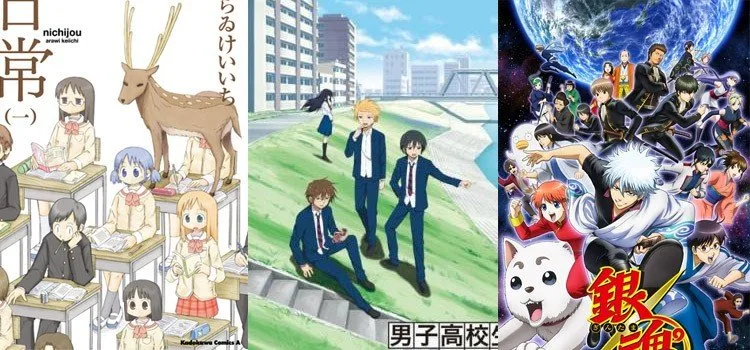
Gintama – Even though the anime has many episodes, each episode guarantees you a good laugh. The anime tells the story of a samurai and his friends who live to hunt bounties, taking any job to survive. It is very common in the anime to break the fourth wall, and there are many references to other animes.
Barakamon – The main character of the story is a very famous and arrogant Japanese calligrapher. However, after facing a punishment, he is forced to move to a small rural island. Even imagining that he would have some peace in this place, his neighbors and many children are always bothering him.
Nichijou -It is a very simple, peculiar, and funny anime. It tells the daily life of 3 friends who are in their first year of high school with a lot of humor. The anime shows everyday situations, with a bit of exaggeration, making something normal seem crazy and funny.
Most animes have comedy!
Hataraku Maou-sama! – Have you ever imagined if the demon king took on human form and had to work in a fast food restaurant to survive? Seeing himself with no way out, the demon king Maou Satan gives up for now on conquering the world and ends up in a big modern city. There he discovers the hard life, having to work to pay the bills and survive in this world.
Mob Psycho 100 – The story revolves around a very strange and introverted young boy called “Mob”. He possesses powerful psychic abilities, which he does not use completely because he believes that if he does, life becomes dull. His goal is to be a normal boy, even though his life is anything but ordinary.
GTO (Great Teacher Onizuka) – One of the less light-hearted in the category, it could be in the black humor category. This anime tells the story of a delinquent who becomes a teacher in a class full of hellish students. It is a great anime that even received movies and two TV series. Very funny!
Other animes in the genre:
Azumanga Daioh;
SKET Dance.
Gekkan Shoujo Nozaki-kun.
One Punch Man.
Baka to Test to Shoukanjuu.
Working!!
Arakawa Under the Bridge;
Seitokai no Ichizon;
Minami-ke;
Ouran Koukou Host Club;
School Rumble;
Detroit Metal City;
Panty & Stocking with Garterbelt;
Sakigake!! Cromartie Koukou;
Sakamoto Desu Ga!;
Masamune-kun no Revenge;
Animes with Black Humor Comedy
Shimoneta to Iu Gainen ga Sonzai Shinai Taikutsu na Sekai – The anime takes place in a country where there is a law that prohibits perverted language and actions. Our protagonist named Okuma Tanukichi, upon enrolling in a school, joins the group that is against the country’s law.
Blood Lad – Here we have Staz, a vampire who is the boss of a territory in the demon world. He is an otaku, like a good otaku, he is crazy about everything related to manga, anime, and games. One of his biggest desires is to meet a Japanese girl. One day, a human girl named Fuyumi ends up in the demon world.
Prison School – A strict all-girls high school called Hachimitsu Academy decides to open enrollment for boys. In this, a group of boys, seeking fun and mischief, enters this school. Soon they find themselves in a hostile and authoritarian environment, far from what they thought it would be. Seeing this, the student council decides to set a trap for these boys. (ecchi)
Bokusatsu Tenshi Dokuro – A young man builds a machine that makes all women stop maturing. This keeps them looking childlike, no matter how many years pass. Because of this, angels are sent to the past to prevent the young man from building such a machine. Dokuro, one of the angels sent, decides to revive the young man every time she kills him. These deaths are always impulsive and exaggerated.
Golden Boy – A 25-year-old guy named Kintaro Oe decides to travel around Japan by riding his bicycle. He then drops out of college to take on different jobs wherever he goes. He always gets into various funny and compromising situations regarding women.
NHK ni Youkoso – The anime portrays the failed life of a hikikomori and his struggle to abandon this lifestyle. The anime is captivating and inspiring, helping to understand the problems and fight against them.
Seto no Hanayome – One of the best comedy animes of all time, which tells the story of a boy who is forced to marry a mermaid who has a super protective father and is the head of the mafia.
Baka to Test to Shoukanjuu – A quite popular nonsensical comedy anime that tells the story of a dumb class in a school that has a hierarchy of classes based on intelligence. The anime is great and has 2 seasons.
Azumanga Daioh – Another anime that tells the school life of crazy people.
Other animes in the genre:
Seitokai Yakuindomo
Danshi Koukousei no Nichijou
Joshiraku;
Sora no Otoshimono;
Mitsudomoe;
Panty & Stocking with Garterbelt;
Full Metal Panic Fumoffu;
Jinrui wa Suitai Shimashita;
Haiyore! Nyaruko-san;
GTO (Great Teacher Onizuka)
Gag Manga Biyori;
Yondemasuyo, Azazel-san;
Gekkan Shoujo Nozaki-kun
Galaxy Angel;
Binbougami-ga!;
Sayonara Zetsubou-sensei;
My Bride is a Mermaid;
Tantei Opera Milky Holmes;
Kill Me Baby;
Kore wa Zombie Desu ka?;
Sket Dance;
Seitokai no Ichizon;
Ouran Koukou Host Club;
Arakawa Under The Bridge;
Nisemonogatari;
Crayon Shinchan;
Cromartie High School;
Romantic Comedy Animes
Now let’s look at some romantic comedy animes. Remember that we have another article focused on romance animes and another focused on romantic comedy romcom.
Zero no Tsukaima. – The anime tells the story of a Saito who is summoned by a girl named Louise from a magic school in another world. He ends up becoming her pet and then a long love story begins.
Kaichou wa Maid-sama!. – The anime tells the story of a student council president who is poor and works in a Maid Café. One day, the most popular boy in school falls in love with her and starts to pursue her, the problem is that she hates boys.
Lovely Complex. – This romantic comedy tells the story of a tall girl and a short boy who are always fighting and teasing each other. One of the most famous romantic comedy animes of all time. A classic romance!
Golden Time. – A university student named Banri is attracted to a pursuing girl named Kouko. The problem is that in the past he suffered an accident in which he lost his memory. Perfect anime!
Toradora. – Tells the story of a cleanliness-obsessed guy who has a scary look and is in love with a girl. He meets a short tsundere who is in love with his friend and is also friends with the girl he likes, thus the two team up to try to get closer to them. Most popular of all time!
Ore Monogatari. – A romantic comedy that tells the story of a giant guy who has never been loved, who meets a beautiful girl who falls in love with him. A very peculiar romantic comedy anime!
If you haven’t heard any music from this band yet, I’m here to introduce you. One Ok Rock (ワンオクロック) is a very famous Japanese rock band worldwide. They are inspired by bands like Nirvana, Blink-182, Foo Fighters, among others. Various genres have also been experimented with and mixed into the band’s essence, ranging from alternative rock, pop rock to emo and hardcore.
The band’s name comes from the English expression “one o clock,” which means “at one o’clock.” This was the time that the group usually scheduled on weekends to rehearse. However, because the pronunciation of the letters L and R is the same, the Japanese pronounced it “one o krock.” Taking advantage of this, the group separated and altered the expression, making One Ok Rock the name of the band.
History and emergence of the band One Ok Rock
The band One Ok Rock was formed in Tokyo in 2005. With the dream of becoming famous and having their own band, Toru Yamashita, a high school student, joined his friend Ryota Kohama with this goal. Toru played guitar and insisted that his friend Ryota learn to play bass. Both curiously were part of a hip-hop group called “HEADS.”
On one occasion, while watching a cover band show, Toru really liked the performance of that band’s vocalist. That was Taka Moriuchi, who after much insistence from Toru joined the band. Another guitarist, named Alex Onizawa, born in San Francisco, who previously worked as a fashion model, also joined the initial lineup.
After many successful shows in the Tokyo area, One Ok Rock debuted their first EP in 2006. Soon after, a mini-album called Keep It Real was also released. It was only then that the last member joined, Tomoya Kanki, as the drummer. Tomoya had already been playing with the group during the album recordings but only became an official member in 2007. That same year, the first hit single, “Naihi Shinsho”, emerged. This song paved the way for radio play and secured a deal with the major label Amuse.
Overcoming problems, heading towards success
In 2007, along with the release of the first studio album called “Zeitakubyou,” there was also a nationwide tour. Two LPs, “Beam of Light” and “Kanjou Effect,” were released in 2008. However, in 2009, guitarist Alex was accused of harassment. He ended up admitting the charges and was subsequently tried and imprisoned.
Because of this incident, the release of the song “Around the World Shounen” was postponed. This same song had been selected to be the theme of a soap opera, but due to the incident, the choice was suspended. A tour scheduled for that year was also canceled. It was soon announced that the band would continue without any ties to guitarist Alex. The band did not stop, as in 2010 the album “Niche Syndrome” was released, in 2011 “Zankyo Reference,” and in 2013 the album “Jinsei×Boku.”
In 2014, One Ok Rock participated in a major music festival in the United States. Then in 2015 came the album “35xxxv,” which was re-released in a deluxe English edition after the band signed with Warner Bros. One Ok Rock quickly became popular in the United States, leading to the recording of a second international album in 2016. With much musical experience, the band released the album “Ambitions” in 2017, which became a commercial success.
The band has won several awards throughout its journey. Among them, the awards for Best Rock Video in 2012, 2013, and also 2014 stand out. In 2016 at the MTV Europe Music Awards, the band won as Best Japanese Artist. They also had songs chosen as themes in two live actions of the anime Samurai X. The band continues to be active, achieving great success to this day. I will leave a list below with some of the best songs by the band in my opinion.
Wherever You Are
Clock Strikes
The Beginning
Dreamer
Liar
C.h.a.o.s.m.y.t.h.
Cry Out
Pierce
Re:make
We Are
Be the light
No scared
Naihi Shinsho
Did you already know the band? Which song do you like the most? Let us know in the comments and share with your friends.
To file for divorce in Japan, both parties, husband and wife, must agree to the process. However, if one party passes away, the widow (er) can initiate a process known as shigo rikon (死後離婚 lit.: “divorce after death”).
This process is becoming increasingly common in Japan, especially among women who, in most cases, no longer want to have any relationship with the parents of the deceased spouse, as it is known that the widow (er) has a legal obligation to care for their aging in-laws.
How does posthumous divorce work?
If you want to sever ties with your in-laws, you only need to fill out an official form. The form asks for your personal information and the personal information of the deceased spouse.
The in-laws cannot interfere in this matter, nor do they receive an official notification of the divorce after the fact. A widow (er) can file this termination report at any time after the death of a spouse. There is no waiting period or deadline for its submission.
Although this process is not new, only today are Japanese people opting for Shigo Rikon because, due to social pressures, it was not customary to choose this type of procedure.
According to statistics compiled by the Ministry of Justice, the number of posthumous divorces grew only very gradually until 2013 (April 2013 to March 2014), when 2,167 forms were submitted.
The number of forms modestly increased to 2,202 in the fiscal year of 2014, but jumped more than 550 to 2,783 the following year, and by the end of 2016 reached 4,032, an increase of almost 50%.
Shigo Rikon and the traditional view
Since Japan was an agricultural country for much of its history, these traditional views come from villages where agricultural culture had a collectivist tendency.
Until the second half of the 20th century, most of the Japanese population were farmers and agricultural workers. When a woman married, she practically ceased to be part of her family and became part of her husband’s family and vice versa.
When a spouse passed away, the surviving party had the legal obligation to take care of their in-laws after the death of the husband/wife.
This legal obligation was even included in the Civil Code of Japan in the late 19th century, after the Meiji Restoration. However, this system was revoked after World War II, under the New Constitution.
It was after World War II that it became possible to sever marital ties even with the death of the spouse.
Shigo Rikon and the present day
These legal provisions included in pre-war Japan were abolished after World War II. However, the thinking behind them remains ingrained in the minds of today’s older Japanese.
However, industrialization caused the youth of the time to migrate to more urban areas. As a consequence, a different lifestyle was adopted, directly affecting this traditional view.
It has now become common for women to hold jobs outside the home. Many wives continue to work after marriage, just like their husbands. Thus, they help support the family financially while also managing the household and raising children.
This family style where both parents work demands a lot. Therefore, there are not many financial and emotional conditions to support the in-laws of the deceased spouse.