
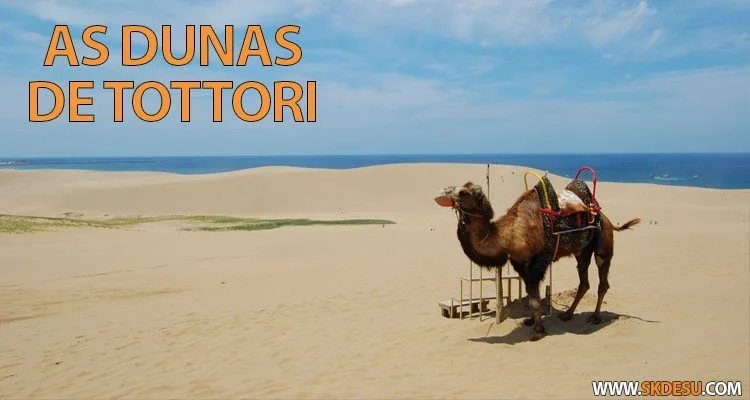
Did you know Japan also has a sand-dune “desert”? Not a Sahara clone, but a coastal landscape that still surprises first-time visitors: Tottori Sakyu [鳥取砂丘], the Tottori Sand Dunes. The main dune field stretches about 16 kilometers along the Sea of Japan and up to roughly two kilometers inland, just east of Tottori City in the Chugoku region—part of San’in Kaigan National Park.
Winds off the Sea of Japan keep reshaping the surface, so ridges, bowls, and wind patterns called fu-mon never look exactly the same twice. That living sand is the real draw: a rare open horizon on a trip often packed with cities and mountains.
Sakyu [砂丘] is the Japanese word for sand dunes or sand hills.
Contents 5
Tottori Sakyu — Japan’s best-known sand dunes
The dunes formed over a very long coastal cycle: sand and sediment carried by the Sendai River were washed to the sea, then piled back along the shore by currents and wind. Local explanations also connect older volcanic material from the Daisen area with that coastal sand. What visitors walk today is not a barren empty lot—it is a protected landscape that still moves with the weather.

In the main sightseeing zone between the visitor facilities and the sea, one landmark ridge is Umanose (“Horse’s Back”), around 47 meters high. Climbing it is short on the map and longer on the legs: soft sand, steep faces, and—once you reach the crest—a full view of the Sea of Japan. Japan-guide notes dunes up to about 50 meters in height across the field; official tourism pages highlight Umanose as the first-timer climb.
On hot days the surface sand can climb toward roughly 60°C, so closed shoes or careful barefoot timing matter. Coastal plants such as hamahirugao and hamanigana still find moisture under the dry top layer. In winter, snow can settle over the dunes and turn the same route into a quieter, monochrome walk.
Things to do at the dunes
The sand is free to enter 24 hours a day, which is why early morning is prized for clean fu-mon before footprints fill the slopes. Most day visitors start at the Tottori Sand Dunes Visitor Center or the Sakyu Center area for maps, toilets, and a first look from the observation terrace.
- Camel and horse-cart rides near the entrance for a short “desert” photo run—camel rides are often listed around 1,600 yen for one rider and 2,600 yen for two (hours commonly about 9:30–16:00; winter starts later).
- Chairlift between the center parking side and the dune approach (adults about 300 yen one way / 400 yen round trip).
- Sandboarding, fat bikes, paragliding, and other paid activities offered by local operators when weather allows—book on site or through current listings rather than assuming year-round service.
Accessibility gear for sandy ground is sometimes available through visitor facilities; ask at the center on the day, because equipment and rules change with season and crowd levels.
The Sand Museum and night illuminations
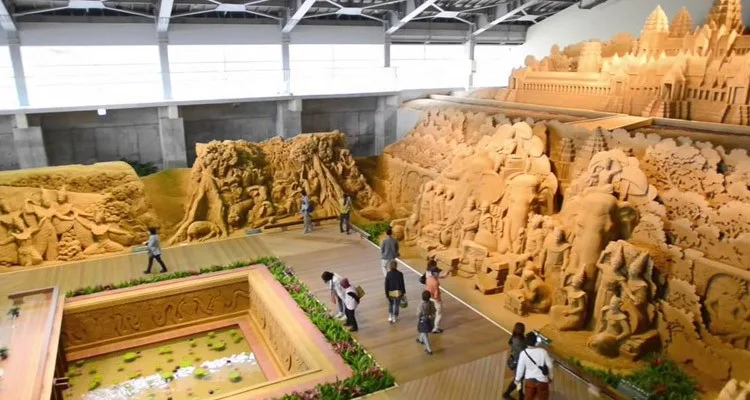
A short walk from the main dune access stands The Sand Museum (砂の美術館)—built around large sculptures made only of sand and water. Outdoor and temporary shows came first; since 2012 the museum has occupied a permanent building, so rain no longer cancels the art. Themes usually rotate once a year (often a country or region); the indoor hall is open roughly 9:00–18:00 (last entry 17:30) during exhibition season and closes for reconstruction between early January and mid-April.
Adult admission is currently about 800 yen (students 400 yen; young children free)—confirm on the museum site before you go, because exhibitions and special hours shift. The room tracks outside temperatures to protect the sculptures, so dress for summer heat or winter cold even though you are indoors.
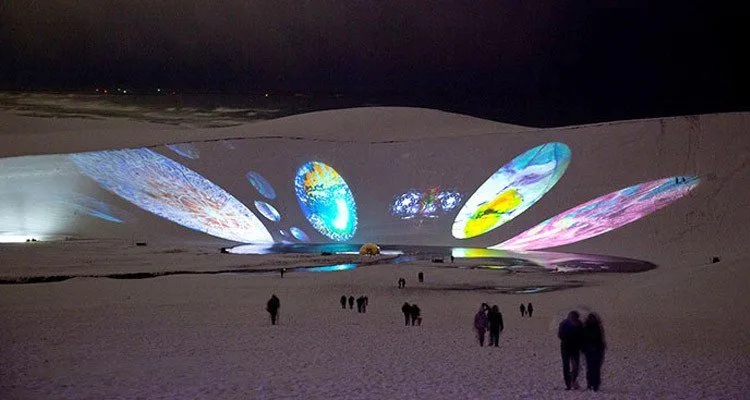
Toward the end of the year the dunes also join Japan’s winter light culture with events such as Tottori Sakyu Illusion—temporary night lighting that turns the sand into a stage rather than a daytime hike. Exact dates change every season; treat them as a bonus if your trip lands in late autumn or early winter.
Beyond tourism infrastructure, the dunes show up in Japanese film and drama as a ready-made “elsewhere” landscape—another reason locals treat Tottori as more than a transfer city.
How to get there and visit smart
From JR Tottori Station, take a local bus bound for Tottori Sakyu [鳥取砂丘] and ride to the last stop (about 20 minutes; city buses are often around 380 yen one way, with roughly hourly service). On weekends and holidays the Kirin Jishi Loop Bus is another option (about 300 yen per ride or a day pass). Taxis run roughly 20 minutes and can cost around 3,000 yen one way. Keep some cash: many Tottori local buses still do not take nationwide IC cards.
If you are building a wider Japan map, Tottori is one of the 47 prefectures that rewards a detour off the Tokyo–Osaka spine. Pair practical packing habits from a general Japan travel checklist with dune-specific rules: no litter, no vehicles on the sand, no removing sand, no writing or graffiti on the dunes, and no swimming on the open sandy coast beyond the ridge. Drones and large photo productions usually need prior notice at the visitor center.
Summer needs water, a hat, and real breaks—there is almost no shade on the open sand. Spring and autumn are gentler for long walks; winter can deliver snow on dunes if you want a rarer photo. For another Sea of Japan coastal stop on the same broad western corridor, some travelers continue toward places like Tsunoshima’s bridge and cobalt water when time allows.
Is Tottori Sakyu worth the trip?
If your Japan itinerary is only megacities, the dunes feel almost unfair: twenty minutes from a prefectural capital and you are climbing soft ridges with the sea in front of you. Stay long enough to walk past the first photo stop, check whether the Sand Museum’s current exhibition is open, and leave room for how different the same slope looks at golden hour or under snow. That is the point of Tottori Sakyu—not proving Japan “has a desert,” but standing in a landscape that keeps rewriting itself with every windy day.





Community
Comments
0 comments
There are no published comments in this language yet.
Send comment