
When we think of Japanese cuisine, it is almost automatic to imagine someone using chopsticks (箸, hashi) to lift a piece of sushi or a clump of sticky rice. That image is not wrong — it just stops short. The real question is whether Japanese people eat only with those two sticks, or whether forks, knives, and spoons have a regular place at the table too.
They do. The tool usually follows the dish: washoku leans on chopsticks; yōshoku and plenty of everyday meals reach for Western cutlery without drama.
Contents 6
The Role of Chopsticks in Japanese Cuisine
Chopsticks are a core tool of Japanese gastronomy and have shaped how food is prepared as much as how it is eaten. They work especially well with dishes already cut into bite-sized pieces, such as:
- Sushi and sashimi: the tips let you pick up delicate pieces without crushing them. Nigiri is also often eaten by hand — chopsticks are common, not mandatory.
- Noodles (ramen, soba, udon): chopsticks lift long strands cleanly; a quick slurp cools the noodles and is normal at a noodle shop.
- Japanese rice: short-grain rice sticks together, so small mouthfuls are easy to lift from the bowl.
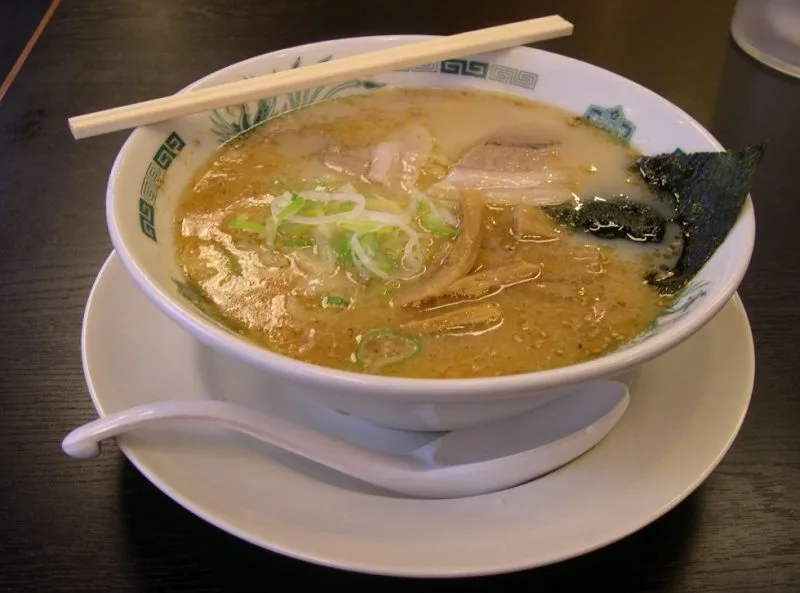
For more on noodle bowls themselves, see our ramen guide and this look at donburi rice bowls.
But… what about spoons?
Not everything stops at chopsticks. Several familiar Japanese dishes arrive with a spoon, especially when there is broth or a thick sauce.
A classic pair is ramen: chopsticks for the noodles, and a deep Chinese-style spoon (renge) for the soup. At home, miso soup (miso-shiru) is often sipped straight from the bowl; overseas restaurants sometimes place a spoon on the table even when locals would not bother.
Thicker plates also invite a spoon. Japanese curry rice (karē raisu) is the everyday example: rice and sauce are mixed into a soft mass that is far easier with a Western spoon than with chopsticks. Fried rice (chāhan) often comes the same way, because the grains are looser than plain white rice. Soft desserts and chawanmushi (savory egg custard) also go better with a spoon.
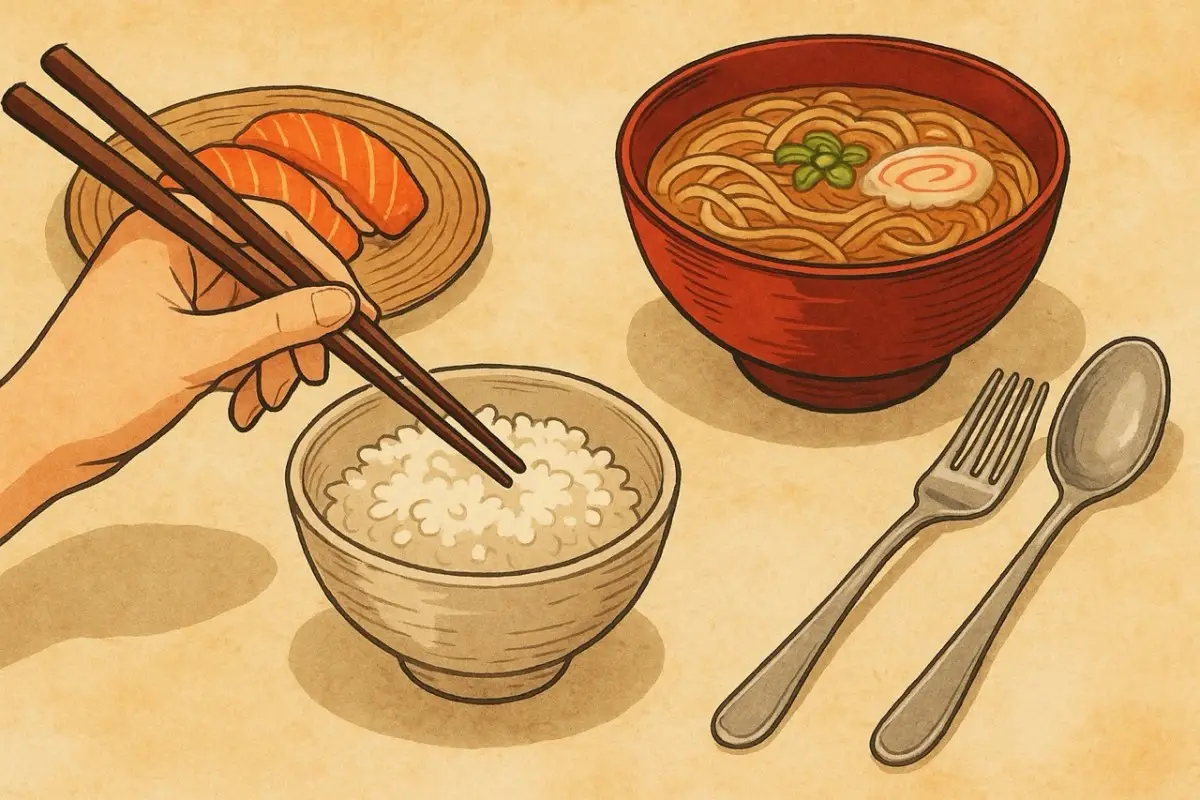
When Cutlery Is the Better Option
Chopsticks dominate traditional meals, but Japanese people switch tools without hesitation when the food calls for it — especially outside classic washoku.
- Western and international dishes: Italian, French, steak, and many café plates come with fork, knife, and spoon set out as they would be in Europe or the Americas.
- Pasta and sandwiches: a fork (and sometimes a knife) is the default; chopsticks are not expected.
- Food that needs cutting at the table: Japanese cooking often does the knife work in the kitchen, so chopsticks can finish the job. A whole Western-style steak, though, is normally eaten with knife and fork.
- Breakfast habits: toast, yogurt, cereal, or eggs are commonly eaten with Western utensils, even in households that use chopsticks at dinner.
In short: the stereotype of an entire country locked to chopsticks ignores how mixed everyday Japanese meals already are.
Adaptation at Home and in Restaurants
Globalization did not invent cutlery in Japan; it made the mix more visible. Family drawers usually hold both reusable chopsticks and a set of forks, knives, and spoons. People pick the tool that matches the plate in front of them, not a single national rule for every meal.
Restaurants follow the same logic. A sushi counter or izakaya defaults to chopsticks (often disposable waribashi). A pasta shop or family restaurant lays out Western silverware. Chinese-style dishes may add a renge. If you struggle with chopsticks, it is normal to ask quietly for a fork or spoon — staff are used to the request, and spearing food on a single stick is the option to avoid.
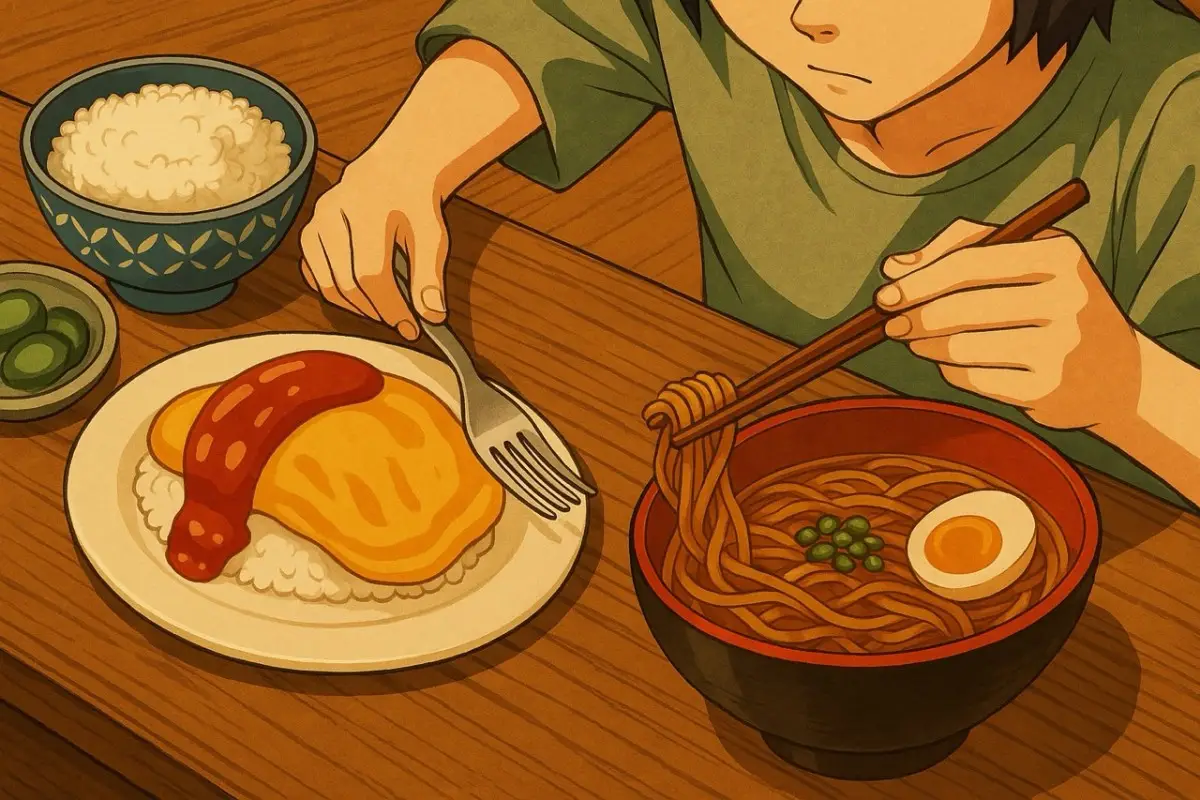
Why Chopsticks Still Lead for Many Dishes
Even with cutlery everywhere, chopsticks remain the first choice for a large share of Japanese food. The reasons are practical more than mystical:
- Childhood habit: most people grow up using chopsticks daily, so the motion becomes automatic.
- Food designed for them: sticky rice, noodles, and bite-sized pieces are simply easier to manage with two sticks than with a fork.
- Table manners: formal Japanese meals still treat chopsticks as the expected tool; certain taboos (standing chopsticks upright in rice, passing food chopstick-to-chopstick) matter more than which Western utensil you own. For the main social rules, read our note on chopstick taboos at the Japanese table.
- Less clatter: chopsticks rarely scrape ceramic the way metal cutlery can, which keeps a quieter table in many homes and shops.
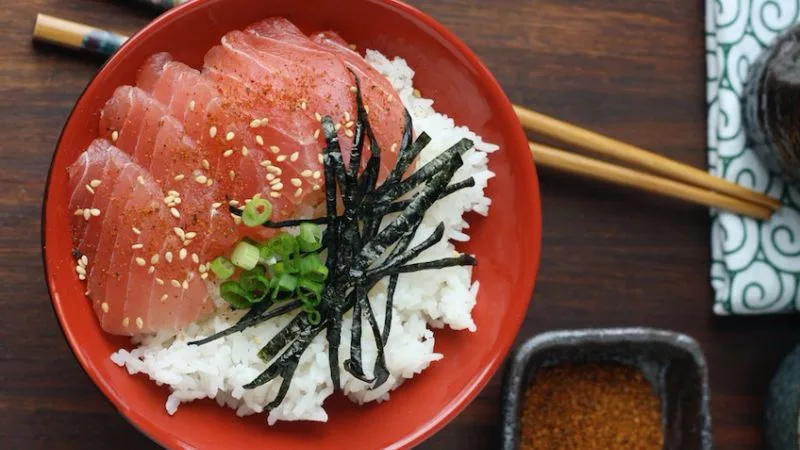
A Matter of Practicality and Context
In Japan, the choice between chopsticks and cutlery depends on the dish and the setting. The idea that Japanese people eat only with chopsticks is a myth. Tradition and modern habits sit side by side: hashi for sushi and noodles, a renge for ramen broth, a spoon for curry, knife and fork for steak.
If you visit Japan, expect chopsticks by default for Japanese-style meals — and do not be surprised when the same diner who just finished ramen later eats cake with a fork. The tool is not a loyalty test; it is whatever makes that plate easiest to enjoy.

Community
Comments
0 comments
There are no published comments in this language yet.
Send comment