
Today I bring you a great destination if you are considering going to Japan. Kyoto (京都) is one of the biggest tourist destinations in the country and draws visitors from all over the world. What’s good there? I don’t know if you are interested in temples, historical centers, different cultures or industrial hubs, so I will not name just one. I will walk through several sides of this city.
But before we look at the reflection in the water, let’s see what’s in it. This way we can be better informed when a temple, a neighborhood or a historical date suddenly matters. It will also be useful because Kyoto is rich in historical landmarks, and without that background a lot of the city stays only a pretty backdrop.
Contents 18
General Information about Kyoto
Kyoto is both the city of Kyōto-shi and the namesake of Kyōto Prefecture. It sits in the southern center of Honshū, in the Kansai region. In 2010 the city had about 1.47 million people. Around 2020 it was about 1.46 million. As Heian-kyō it was founded in 794 and remained the seat of the imperial court until 1868, when the court moved to Tokyo. That is why it is often called the old capital.
Kyoto sits close to Osaka, Kobe, Nara and Shiga Prefecture, all full of their own sights. The surroundings form the Keihanshin region, home to more than 18 million people, the second-largest population cluster after Tokyo.
History of Kyoto
Little is known about the basin before the 6th century. In the 8th century Emperor Kanmu wanted to move the court away from Nara, where a large Buddhist clergy had become involved with the imperial government. Nagaoka-kyō was built first, in 784. Ten years later, in 794, a new city called Heian-kyō became the seat of the court. That began the Heian period in the history of Japan. And this is basically the beginning of Kyoto, which remained the capital of Japan until the Meiji Restoration.
Between 1467 and 1477 the city suffered great destruction during the Ōnin War, and did not recover until Toyotomi Hideyoshi rebuilt it in the 16th century. He also created new streets to double the number of north-south streets in the city center. Thus, a few years later, during the Edo period, the city grew and became one of the three largest cities in Japan, alongside Osaka and Edo (today’s Tokyo).
Kyoto and World War II
As many of us know, Japan was largely destroyed during the Second World War, and the two atomic bombs caused disturbing damage both physically and mentally. Kyoto sat on the American target list because it was large, still standing, and treated as an intellectual center, a city whose people would understand what such a weapon meant. In 1932 its population had already passed one million.
We have to thank Henry L. Stimson for his insistence on trying to save this cultural center he had known during his diplomatic travels and also on his honeymoon. This man was Secretary of War in the Roosevelt and Truman administrations. Kyoto was removed from the atomic targets and, on 24 July 1945, Nagasaki was added in its place. Kyoto did not come out completely unscathed. It still suffered some conventional bombings.
Location of Kyoto
As a result of being cut from the bombing targets, Kyoto is one of the few Japanese cities that still has a large number of pre-war buildings. But modernization is taking over the city and hiding traditional architecture in favor of modern buildings.
Kyoto is situated in a valley, part of the Yamashiro basin, in the eastern part of a mountainous region known as the Tamba plateau. It is surrounded by three mountains named Higashiyama, Kitayama and Nishiyama. This basin contains three rivers: the Uji River to the south, the Katsura River to the west, and the Kamo River to the east.
Structure of Kyoto
It was originally built according to the traditional Chinese feng shui custom. The front of the imperial palace faced south, resulting in Ukyō, the right side of the city to the west, and Sakyō, the left side of the city to the east.
Nowadays, in the southern part of the old palace is the main business district, and in the northern part is the greener, less populated area of the city. Kyoto is almost entirely dependent on Lake Biwa for its water supply, with some water also coming from the Uji River. Kyoto has eleven wards that together form the city. And like other Japanese cities, it also has only one mayor and a city council.
Culture of Kyoto
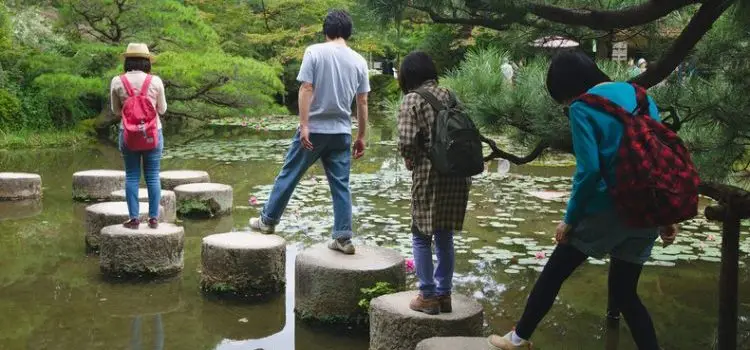
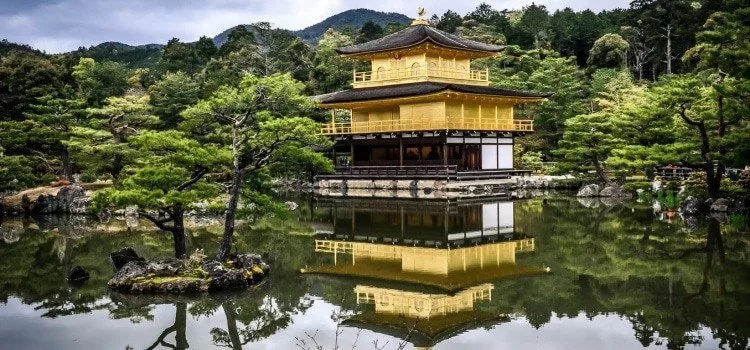
With over 2,000 religious places as well as palaces, gardens and intact architecture, Kyoto is one of the most preserved cities in Japan. Who has never heard of the Kinkaku-ji temple? That one known as the golden pavilion. I will not spoil the surprise by listing everything here. This is a city whose culture still shows up in daily life, not only in museum rooms.
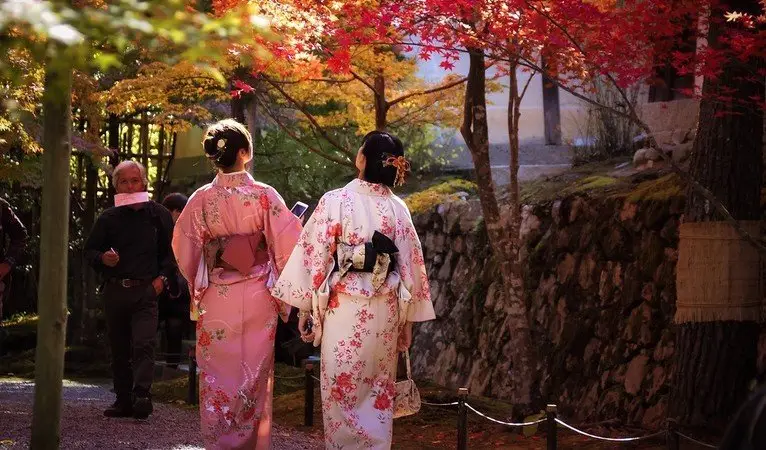
Kyoto is also known for its cuisine. As it is a city far from the sea and also home to many Buddhist temples, a great variety of peculiar vegetables was developed in the region, the kyō-yasai you still see in the markets. The dialect spoken is called Kyō-kotoba or Kyōto-ben, derived from the Kansai dialect. The dialect was indeed the standard Japanese at the time when Kyoto was the capital and influenced the development of the Tokyo dialect, the modern standard Japanese.
Economy of Kyoto
To talk about Kyoto’s industry, we have to mention information technology, electronics, tourism, handicrafts and sake production as the most relevant. So it will be about them that we will talk. Like any other city, there are several other sectors that will not be mentioned here.
More than half of Kyōto Prefecture’s population lives in the city itself. The prefecture’s economy also differs between the inland basin and areas closer to the sea. Nintendo, tourism and traditional crafts sit next to each other in a way that still surprises people who arrive expecting only temples.
Sectors of Kyoto's economy
Information technology and electronics are the main activities in Kyoto. It is home to the headquarters of companies like Nintendo, Intelligent Systems, Nissin Electric, Screen Holdings and others. Tourism also plays a large part in the economy. Its cultural heritage is a major attraction visited by tourists from all over the world and even school groups from all over Japan. Yes, there they respect their heritage regardless of the age of the people.
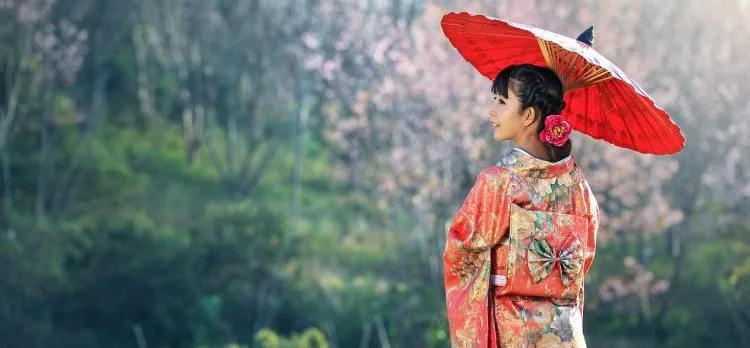
Handicrafts such as products from artisans and particularly the kimono weavers in this city are extremely popular. The latter was grand in past centuries but has declined in recent years. Even so, the city remains a major center for kimono manufacturing.
And to finish, we have the sake industry, a traditional industry in Kyoto. Companies like Gekkeikan and Takara Holdings are based in the city, among the largest names in the trade. Sake is Japan’s rice drink, and Fushimi in the south of the city is one of the historic brewing districts.
Education and transportation in Kyoto
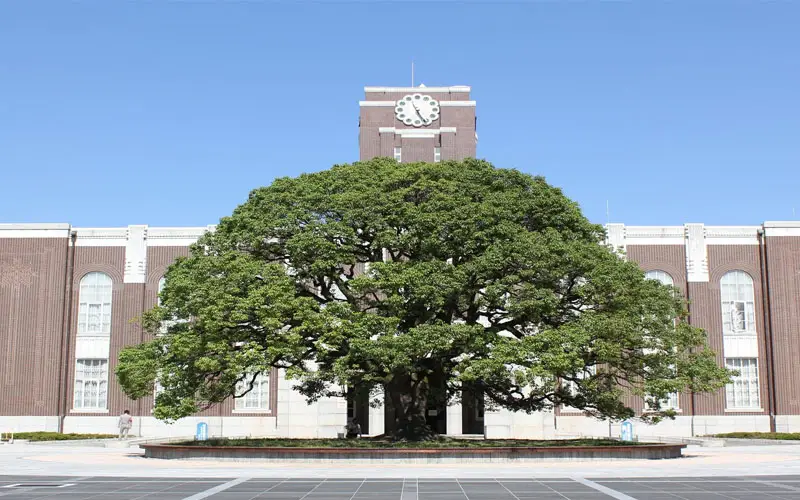
With the right attributes, any city can have a good education, but Kyoto stands out in this area for being one of the academic centers of Japan. In addition to the 40 higher education institutions located in the city, Kyoto University stands out among them for being considered one of the best in the country.
It is the second university in Japan, behind only the University of Tokyo, according to Times Higher Education. In the 2026 ranking it sits at 61st in the world. Other famous private universities are also based in the city, such as Dōshisha University and Ritsumeikan University.
Buses, city rail and JR lines spread from Kyoto Station, which is why so many trips start there. But now we will move on to the main objective of this article, which is to present some options for tourism.
Tourist Attractions in Kyoto
Let’s primarily mention the main tourist attractions and then make a list of other interesting specific points.
Fushimi Inari Shrine
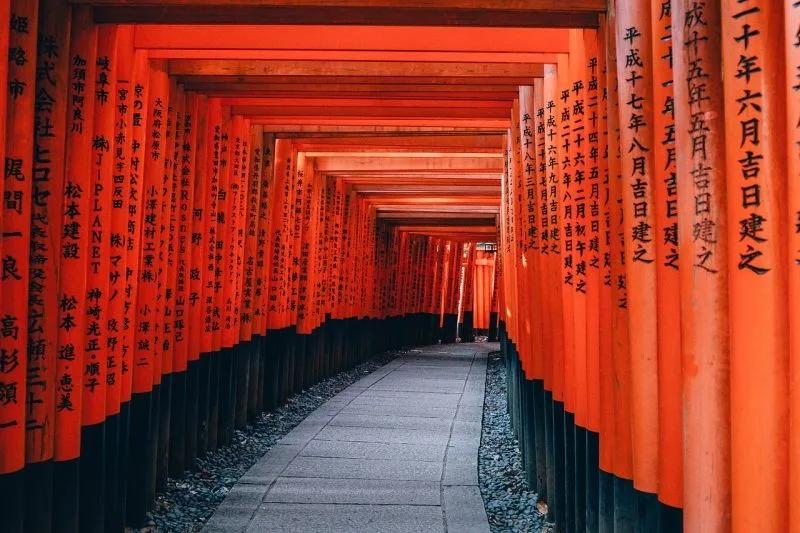
It is an important Shinto shrine in southern Kyoto. It is famous for its thousands of red gates, which extend along a network of trails behind its main buildings. The trails lead to the wooded forest of the sacred Mount Inari, which is 233 meters high and belongs to the shrine's grounds.
Fushimi Inari is the most important of several thousand shrines dedicated to Inari, the Shinto god of rice. Foxes are believed to be messengers of Inari, which is why you see so many fox statues on the grounds. The shrine has ancient origins, traditionally dated to 711, well before the capital moved to Kyoto in 794. Those red gates are torii, and walking the mountain is how most people first meet them.
Kyoto Railway Museum
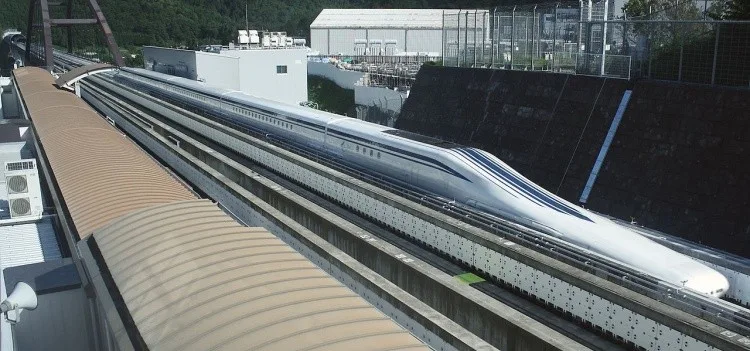
The Kyoto Railway Museum was inaugurated in April 2016 by JR West at the former site of the Umekoji Steam Locomotive Museum, about a 20-minute walk from Kyoto Station.
Covering three floors in an area of 30,000 square meters, the museum displays a total of 53 retired trains, from steam locomotives to electric trains and the latest shinkansen. Visitors can also walk underneath and observe the inner workings of a retired freight locomotive.
In addition to the railway museum, there are many other museums such as:
- Samurai and Ninja Museum
- Gekkeikan Okura Sake
- Kyoto International Manga Museum
- Kyoto Shibori Museum
- Kyoto National Museum
- Kyoto Municipal Museum of Art
- Jotenkaku Museum
Nishiki Market and Shopping
Nishiki Market (Nishiki Ichiba) is a narrow shopping street spanning five blocks, lined with over a hundred shops and restaurants. Known as "Kyoto's Kitchen," this retail market specializes in food-related items, such as fresh seafood, produce, knives and pots, making it a great place to find seasonal foods and Kyoto specialties.
The shops found throughout the market vary in size, from small narrow stalls to large two-story stores. Most specialize in a specific type of food, and almost everything sold in the market is produced and sourced locally. Tourists particularly enjoy the inviting and pleasant atmosphere that this place offers.
Other popular shopping places in Kyoto are:
- Kitano Tenmangū
- Shinkyogoku
- Gion
- Nishijin
Kinkakuji (Golden Pavilion)
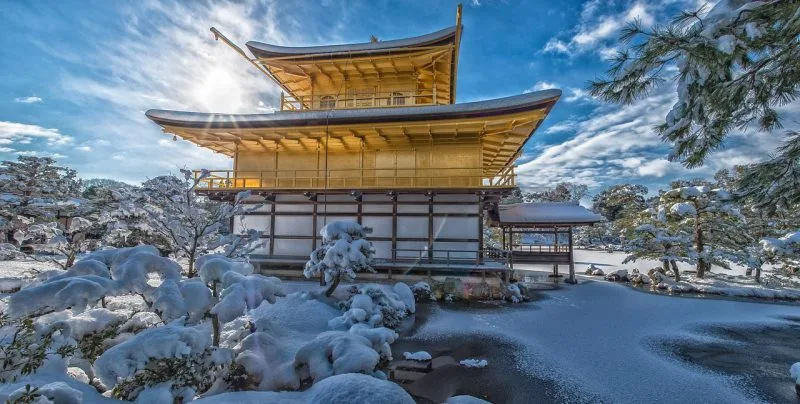
Kinkakuji is a Zen temple in northern Kyoto, whose last two floors are completely covered in gold leaf. Formally known as Rokuonji, the temple was the retirement villa of shogun Ashikaga Yoshimitsu and, according to his will, became a Zen temple of the Rinzai sect after his death in 1408.
Kinkakuji is a structure built overlooking a large lake. It has burned down numerous times throughout its history, including twice during the Ōnin War, and once again in 1950, when it was set on fire by an obsessed monk. The current structure was rebuilt in 1955.
In addition to the golden temple, there is the silver temple called Ginkakuji located in the eastern region of Kyoto at the foot of Mount Tsukimachi. Its construction began in the late 15th century. We have a longer visit to Kinkaku-ji, the Golden Temple of Kyoto.
Arashiyama - Bamboo Grove and Monkey Mountain
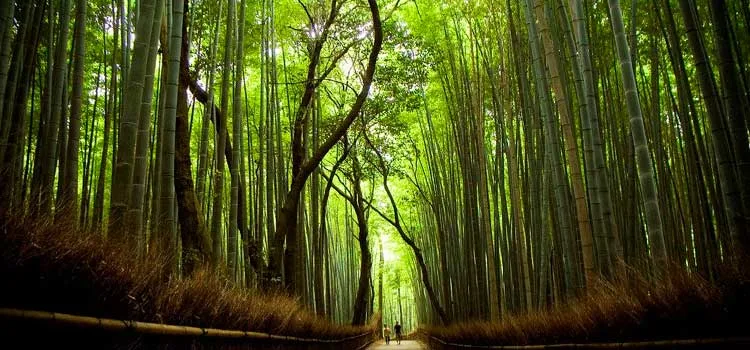
Arashiyama is a tourist district in the western outskirts of Kyoto. The area has been a popular destination since the Heian Period (794-1185), when nobles would enjoy its natural scenery. Arashiyama is particularly popular during cherry blossom and autumn color seasons.
The Togetsukyo Bridge is the famous central landmark of Arashiyama. Many small shops, restaurants and other attractions are nearby, including the Tenryuji Temple and the famous bamboo groves of Arashiyama.
The area north of the Togetsukyo Bridge is known as Sagano, because the name "Arashiyama" technically only refers to the mountains on the south bank of the river, but is commonly used to name the entire district. There is a full walk through Arashiyama, the bamboo grove and Monkey Mountain.
Other Tourist Attractions in Kyoto
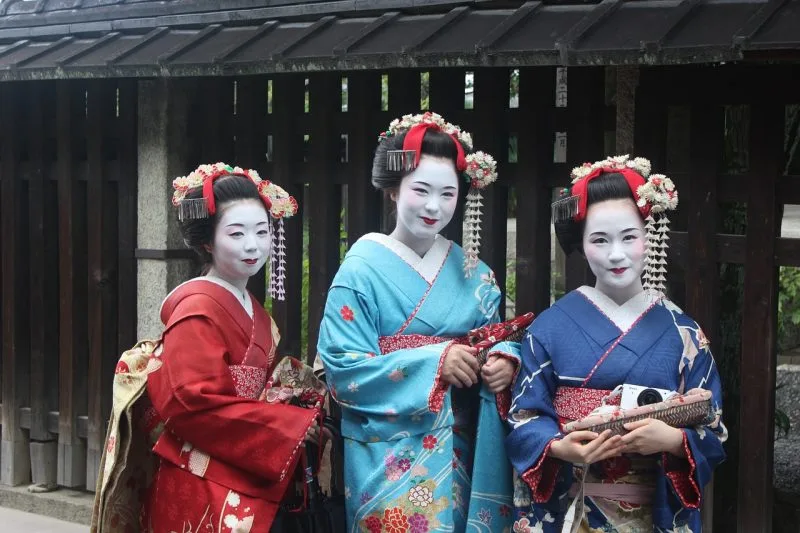
Gion is a district in Kyoto famous for being a center of geiko and maiko. In this district and around the center of Kyoto you will find many nightlife options besides the very expensive geishas: bars, restaurants, karaoke rooms, show houses and nightclubs.
Nijō Castle was ordered by Tokugawa Ieyasu in 1603.
Ginkaku-ji is located in the eastern region of Kyoto at the foot of Mount Tsukimachi. Its construction began in the late 15th century.
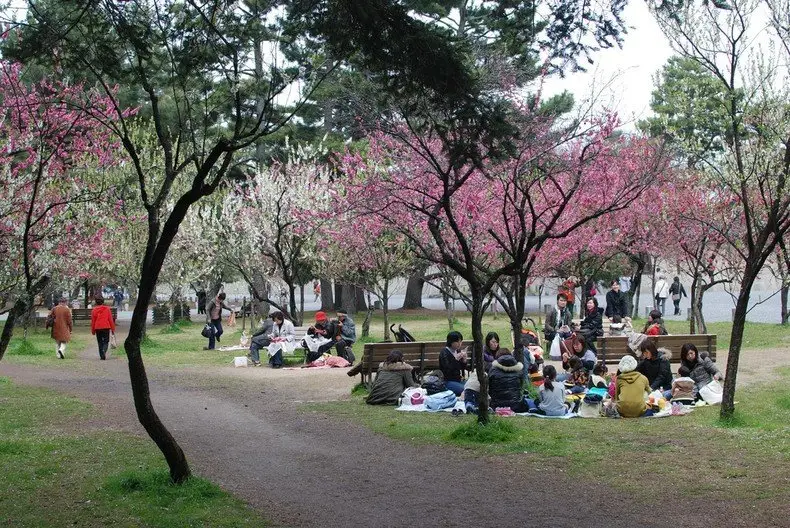
Kyōto Gosho, the Kyoto Imperial Palace, was an imperial residence during the Edo Period. Today its grounds in the Kyoto Gyoen park are open to the public.
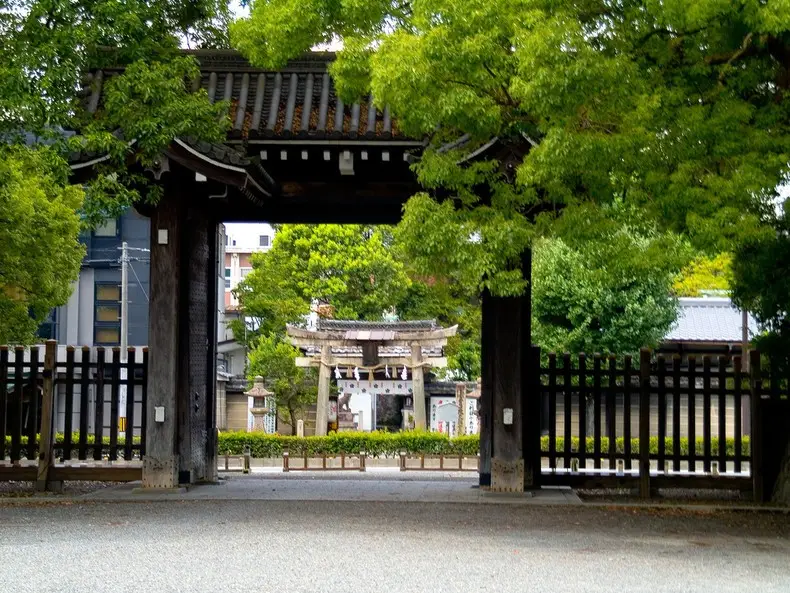
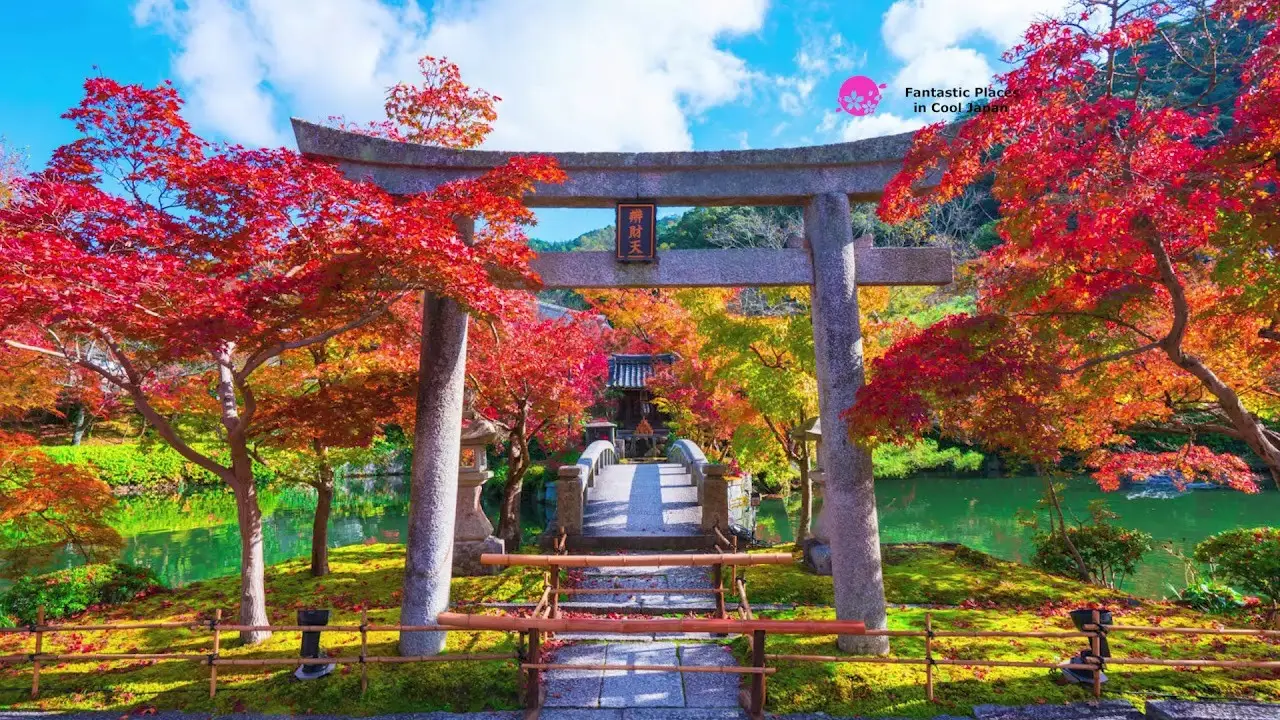
Heian Jingū is a Shinto shrine. The torii that precedes the main gate is one of the largest in Japan.
Katsura Imperial Villa is a villa with gardens and annexes located in the western suburbs of Kyoto.
Kyoto Tower is an observation tower that measures 131 meters. The observation deck is 100 meters above the ground. At the base there is a hotel and several shops.
Temples and Shrines of Kyoto
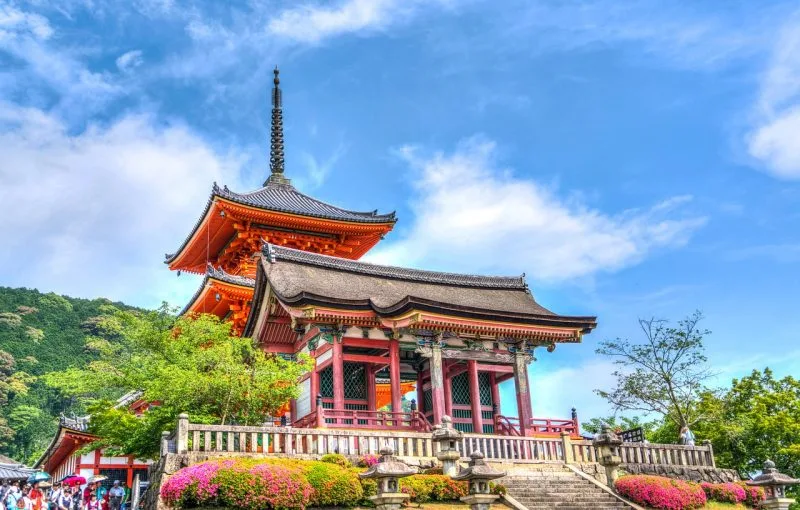
Kiyomizu-dera is an independent Buddhist temple in eastern Kyoto. The temple is part of the Historic Monuments of Ancient Kyoto and a UNESCO World Heritage site.
Ryōan-ji is a Zen temple located in northwestern Kyoto. It belongs to the Myōshin-ji school of the Rinzai branch of Zen Buddhism and is known for its rock garden.
Byōdō-in is a Buddhist temple in the city of Uji, in Kyoto Prefecture. More on the Byōdō-in and its Phoenix Hall.
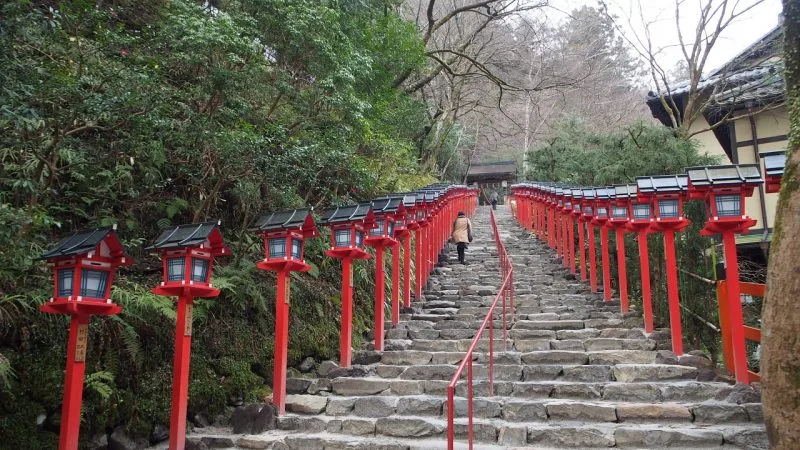
Shimogamo Shrine (Kamomioya-jinja) is a Shinto shrine and part of the Kamo Shrines, together with Kamigamo.
Tō-ji (Kyō-ō-gokoku-ji) is a Buddhist temple near the station. The name means "East Temple". Its five-story pagoda is a landmark of the southern city.
Sanjūsangen-dō in the Higashiyama district is officially known as Rengeō-in, Hall of the Lotus King, and is famous for its long row of Kannon figures.
Other temples that often fit into the same days:
- Eikan-do
- Shoren-in Monzeki
- Sanzen-in
- Kennin-ji
- Tofuku-ji
- Kodai-ji
- Nanzen-ji
- Tenryuji
- Daikaku-ji
- Gio-ji
- Jojakkoji.
Conclusion and Author's Notes
For those who love history, culture and tradition just like I do, Kyoto is the cake and the cherry on top. Full of temples, this place offers everything a culture enthusiast could want. It also has universities and technology centers. In that last aspect it leaves a bit to be desired when compared with Tokyo, and you notice it as soon as you walk from a shrine back into a business street.
If I were to recommend this place, I would suggest it to people looking for relaxation and culture. For those who like hustle and technology, I would recommend Tokyo. Plan the days by neighborhood, not by a list you want to tick off in one afternoon. Thank you, my dear reader, for following this article up to here. And until next time.

Community
Comments
0 comments
There are no published comments in this language yet.
Send comment