
Fundoshi (褌) is a traditional Japanese loincloth made from a length of fabric wrapped and tied around the body. It was once a familiar everyday undergarment for many men in Japan. Today, it is most often seen in festivals, cultural events, and sumo settings, where a simple piece of cloth carries a surprising amount of history.
The word is sometimes translated as “Japanese thong,” but loincloth is more accurate. A fundoshi is not one fixed garment: the cloth, cut, and tying method change from one style to another. That variety explains why it has appeared in workwear, ceremonial dress, and modern reinterpretations.
Contents 10
What is a fundoshi?
At its most basic, a fundoshi uses fabric passed around the waist and between the legs, then secured by wrapping or ties. The result leaves the legs free and can be adjusted to the wearer. Before Western-style briefs and boxers became widespread, this practical construction made sense for daily life and physical work.
Fundoshi should not be treated as a costume from a single era. Its forms changed with materials, occupations, and local habits. Cotton became especially common, while finer fabrics could be chosen for different occasions. The garment is simple in principle, yet its appearance depends heavily on how it is folded and tied.
From everyday underwear to a cultural symbol
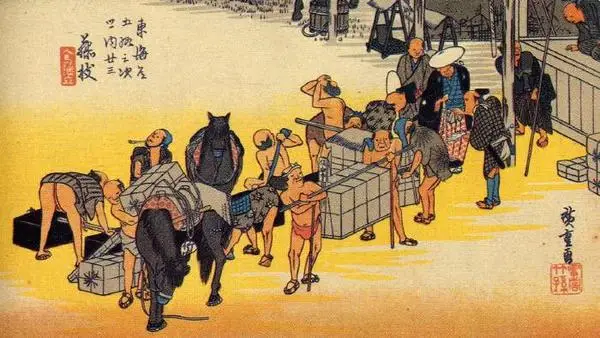
Fundoshi had a long place in Japanese clothing before modern underwear became the norm. During the Edo period, workers such as craftsmen, merchants, and fishmongers could wear it as part of everyday dress. Its use declined sharply after World War II as Western-style undergarments became standard.
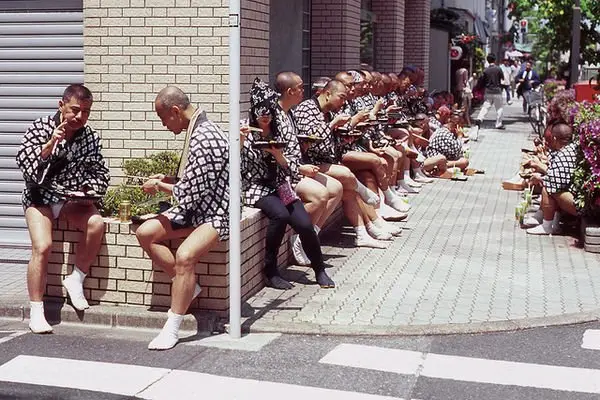
That does not mean it disappeared. Fundoshi remains visible where traditional clothing still has a practical or ceremonial role. Festival participants may wear one with a happi coat, and the garment is also part of the visual language of sumo, historical drama, and Japanese popular culture.
For a related look at the sport, read Sumo: the life of wrestlers and curiosities.
Main types of fundoshi
Names and classifications vary, but three styles are commonly used to introduce the subject. They differ mainly in the amount of cloth, the way it is held at the waist, and the shape created at the front and back.
Rokushaku fundoshi (六尺褌)
The rokushaku is made from a long, narrow strip of cloth. It is wrapped directly around the body rather than relying on sewn side ties. This is the style many people picture when they think of a traditional fundoshi, especially in festival imagery. The name refers to six shaku, an older Japanese unit of length.
Etchū fundoshi (越中褌)
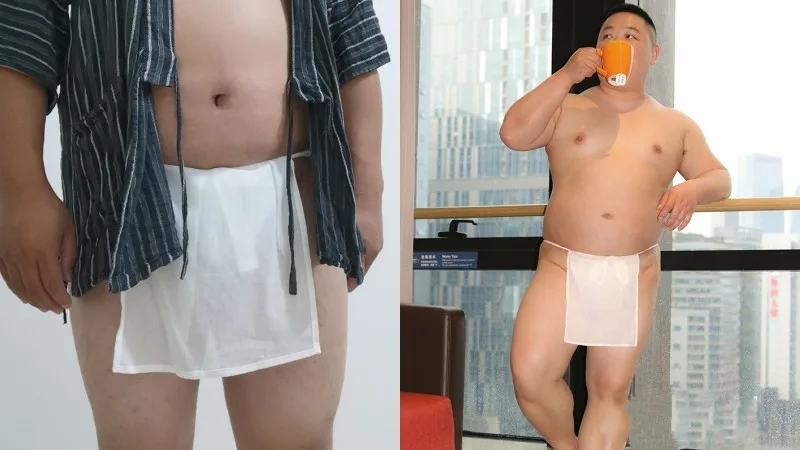
The Etchū style has a rectangular central panel and ties that fasten around the waist. Its construction makes the form easier to recognize at a glance: the cloth covers the front, passes between the legs, and is held in place by the waist ties. It became a familiar everyday style in the Edo period.
Mokko fundoshi (畚褌)
The mokko style forms a pouch-like front and uses cords or soft ties. It is often discussed as a more compact design than a long wrapped strip. Modern versions may adapt the materials and construction, but the basic idea remains a close-fitting loincloth rather than sewn underwear with an elastic waistband.
Other names appear in clothing guides and local traditions, including kuroneko and wari fundoshi. Their details are not always interchangeable, so it is better to identify the specific style than to assume every fundoshi is tied in the same way.
Fundoshi, mawashi, and sumo
A mawashi is the heavy belt worn by sumo wrestlers. It belongs to the same broad family of wrapped Japanese loincloths, but it has a specific role and construction for the sport. The mawashi used in professional bouts is far more substantial than everyday fundoshi and must withstand grappling.
This connection is why fundoshi is often mentioned in discussions of sumo. It also helps explain a common mistake: seeing a wrapped cloth in a sporting or ritual context does not automatically mean it is the same garment used as ordinary underwear.
Learn more about the wider history of underwear in Pantsu, panchira, and shimapan in Japan.
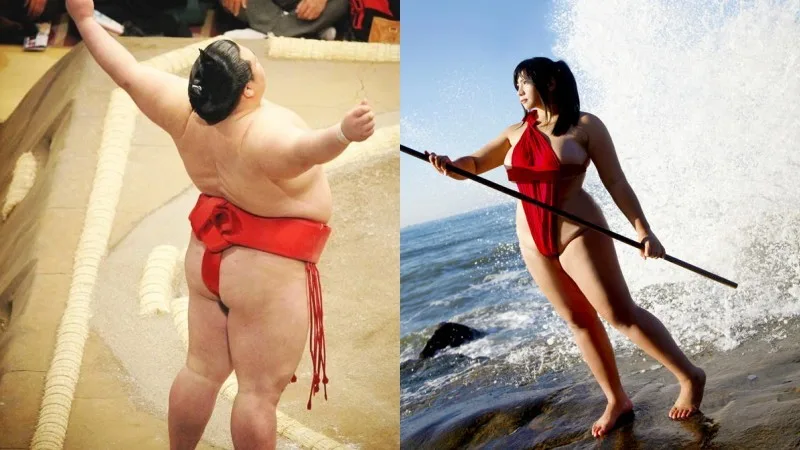
Why fundoshi appears at festivals
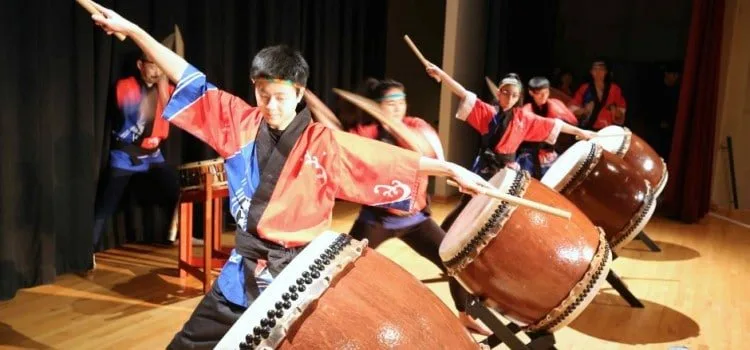
At many Japanese festivals, clothing is part of the event rather than a spectacle detached from it. Participants may choose a fundoshi because it suits the tradition, the physical activity, or the local dress code. A happi coat, headband, and festival footwear can complete the outfit.
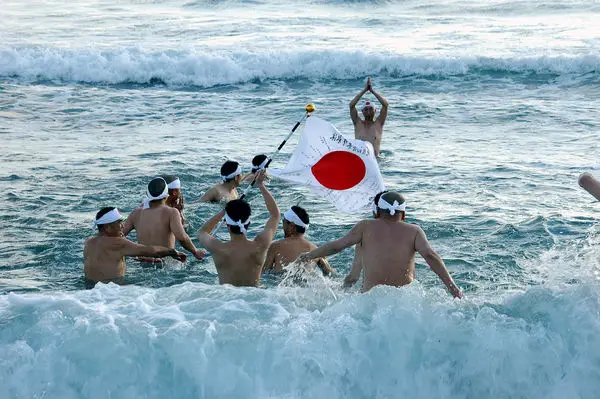
Hadaka matsuri, often called “naked festivals” in English, are the best-known examples for overseas visitors. The name can be misleading: participants are usually not naked, but wear minimal traditional clothing such as fundoshi. Customs, schedules, and rules differ from one event to another, so a single festival should not stand in for all of them.
Fundoshi also appears in theatrical, historical, and comic imagery. In anime and manga, it can quickly signal an old-fashioned setting, a festival scene, a sumo reference, or a deliberately exaggerated joke. That visual shorthand is part of its continuing cultural presence.
Are there fundoshi for women?
Modern makers offer fundoshi-inspired underwear for women as well as men, often using softer fabric, different cuts, and decorative prints. Those designs should not be used to flatten the history of the garment: past use depended on period, place, occupation, and social context.
The useful distinction is between historical dress and contemporary products. A modern piece may borrow the name or a wrapping principle without reproducing an older style exactly. When identifying an image or garment, look for the construction and context first.
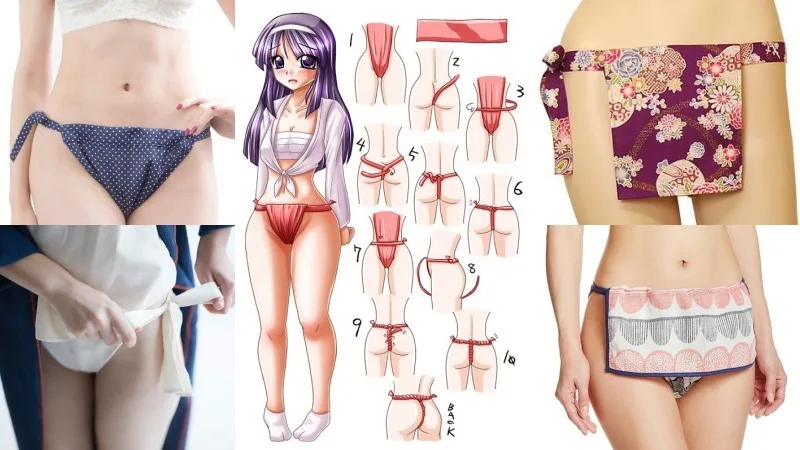
Fundoshi in context
Fundoshi is worth knowing because it connects several parts of Japanese culture that are often discussed separately: traditional clothing, work, festivals, and sumo. It is neither ordinary streetwear in modern Japan nor a relic that exists only in museums. Its role has changed, but it remains recognizable wherever a festival, performance, or cultural tradition calls for it.
For more traditional clothing, see Kimono: all about traditional Japanese clothing. For a stage tradition where costume matters as much as performance, explore Kabuki, Japanese theater and its striking style.



Community
Comments
0 comments
There are no published comments in this language yet.
Send comment