
Japan still has an emperor, and that throws a lot of readers who expect a president at the top of the chart. The throne does not run the ministries, pass the budget, or choose the cabinet. What looks like a monarchy from the outside is a parliamentary democracy on the inside.
The real fight for power happens in Nagatachō (永田町), a few blocks of central Tokyo where the Diet building stands. Once you see who names the prime minister — and who only stamps the appointment — the rest of Japanese politics starts to make sense.
Contents 5
How the government of Japan is built
Japan is a multi-party democratic constitutional parliamentary monarchy. The emperor is the head of state. The prime minister is the head of government and of the Cabinet of Japan (内閣, Naikaku).
Legislative power rests with the National Diet, or Kokkai (国会) — closer to a parliamentary system than to a presidential republic. The Diet is composed of the House of Representatives and the House of Councillors. Judicial power rests with the Supreme Court and the lower courts. Sovereignty rests with the Japanese people under the Constitution of 1947, which replaced the imperial order that collapsed after Imperial Japan and the Second World War.
The 1947 Constitution has never been amended. It names the Diet as the highest organ of state power and the sole law-making organ of the state. The emperor performs acts in matters of state only with the advice and approval of the Cabinet. He does not govern.
The National Diet: two houses, one machine
Both houses are directly elected. The lower house can be dissolved; the upper house cannot. That single difference explains why lower-house elections decide the government and upper-house races feel more like a mid-term grade.
| House of Representatives (衆議院, Shūgiin) | House of Councillors (参議院, Sangiin) | |
|---|---|---|
| Members | 465 | 248 |
| Term | 4 years, or until the house is dissolved | 6 years, with half the seats up every 3 years |
| Voting age | 18 | 18 |
| Minimum age to run | 25 | 30 |
| How seats are filled | 289 single-seat districts + 176 proportional seats | 148 prefectural seats + 100 proportional seats |
| Can it be dissolved? | Yes | No |
On the budget, treaties, and the designation of the prime minister, the House of Representatives has the last word if the two chambers disagree. Ordinary bills can still be forced through by a two-thirds vote in the lower house. That is why a party that controls the Shūgiin can govern even when the Sangiin is noisy.

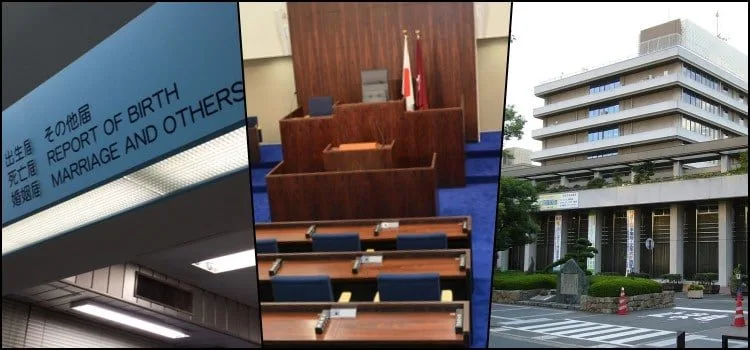
National politics is not the whole map. Prefectures, cities, and towns run the documents and services that actually reach a resident. If you ever need a jūminhyō or a city-hall window, that local layer is explained in how Japanese city halls work day to day.
Who names the prime minister
In Japan's elections, voters do not pick the prime minister on the ballot. They elect Diet members. The Diet then designates a prime minister from among its own members, and the emperor formally appoints that person. Ministers of state are chosen by the prime minister; a majority of them must be Diet members, and all of them must be civilians.
If the House of Representatives passes a no-confidence motion, the cabinet has ten days to dissolve the lower house or resign. That is the parliamentary leash. The current prime minister is Sanae Takaichi (高市早苗), in office since 21 October 2025 — the first woman to hold the post. She is an illustration of the rule, not a rewrite of it: the Diet still names the government, and the emperor still only appoints the name the Diet already chose.
Parties and the Liberal Democratic long game
Dozens of parties exist in Japan. Only a handful hold seats in the National Diet; the rest live in local assemblies and city halls. Since 1955, one party has dominated the chambers: 自由民主党, the Liberal Democratic Party (LDP).
That dominance is real, and it is not a straight line. The LDP lost power in 1993–1994 and again from 2009 to 2012, when the Democratic Party of Japan led the government. The 民進党 (Democratic Party, or Minshintō) that later appeared was a 2016 merger, not a permanent twin of the LDP — treating it as the eternal number two is a snapshot that aged badly.
What did last is the LDP habit of absorbing rivals, forming coalitions, and treating the lower house as the prize. In February 2026, voters returned a large Liberal Democratic majority in the House of Representatives after a snap election. Cabinets change faces; the party's gravitational pull is the feature foreigners keep underestimating.
Who actually shows up to vote
Japan is a nation with good education and a serious pipeline of young people into the job market. When the subject turns to politics, though, younger people often have little interest in voting. Women have historically found few seats waiting for them. The segment that actually votes is middle-aged to elderly men, the majority being elderly.
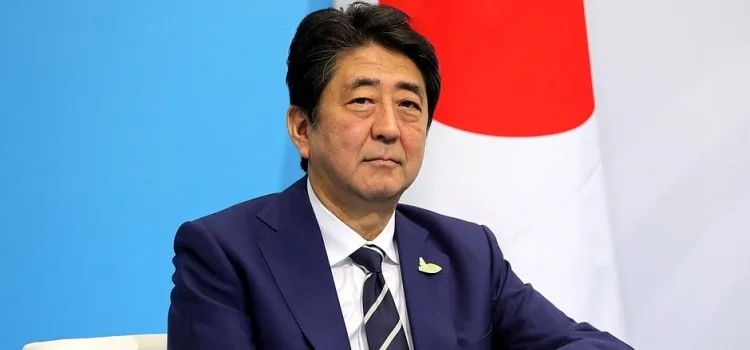
That skew worries politicians in a slow way. The elderly base will not last forever, and the younger cohort will become the electorate. Even so, a lot of legislation still leans toward pensions and the retired, because that is who turns out. Long working hours and the expectation that women carry the household still make a Diet career a rough double load — marriage and the housewife role remain the default script in conservative corners, even after a woman reached the Prime Minister's Office.
Young people and many women do not see much of themselves in the parties on offer. Policies that read as written for men and retirees push them further away, and abstention follows. A first woman prime minister changes the photograph at the top. It does not automatically change who stands in line at the polling station.



Community
Comments
0 comments
There are no published comments in this language yet.
Send comment