
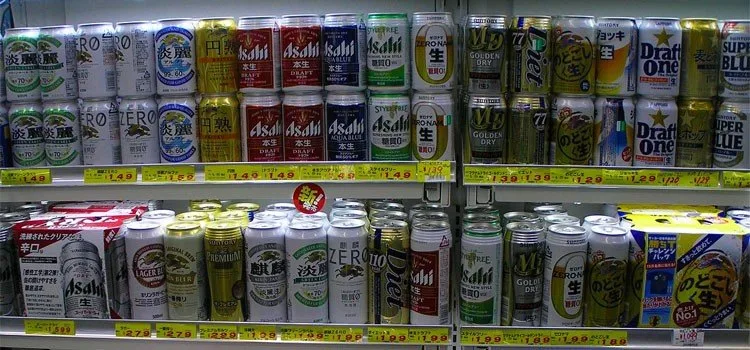
Order a cold lager at a Tokyo izakaya and you are drinking biiru [ビール] — Japan’s everyday word for beer. The glass usually arrives with a thick white head, the first toast is kanpai, and the bottle or can almost always comes from one of a handful of national names.
What confuses visitors is not the toast. It is the shelf: cans that look like beer but are labeled happoshu, “new genre” drinks with almost no malt, and a growing wave of regional craft bottles called ji-bīru. This guide maps the big brands, the tax categories behind the labels, and where you actually buy and drink beer in Japan.
Contents 8
The History of Beer in Japan
Beer reached Japan in the 17th century when Dutch merchants in Nagasaki brewed for their own crews on the trade routes between Japan and the Netherlands. That early brewing was small and mostly for foreigners, not a national habit.
As Japan reopened foreign trade in the Meiji period, imported bottles such as Bass Pale Ale appeared in limited quantities in foreign settlements. The first brewery aimed at the Japanese market opened in Yokohama in 1869; after ownership changes it later produced Kirin-branded beer (from 1888). In Sapporo, a government brewery established the Sapporo Beer brand in 1876 as part of Hokkaido’s development. Yokohama and Sapporo still compete for the title of Japanese beer’s birthplace, while European techniques and other foreign brewers helped the local industry take root.
Happoshu and New Genre: Not Always “Beer” on the Label
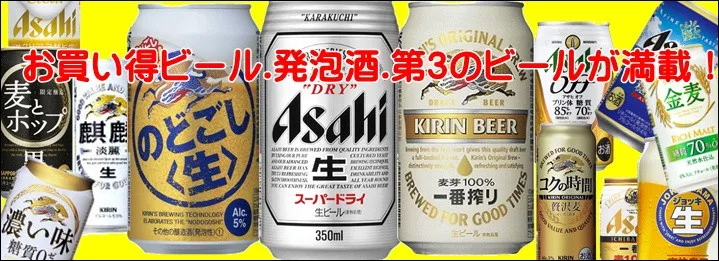
While many countries market “pure malt” as a premium badge, Japan’s shelf also went the other way. Happoshu [発泡酒] — literally something like “sparkling liquor” — is a legal tax category for beer-like drinks with lower malt content than full beer. For a long time, Japanese tax rules split malt drinks by malt share (for example 67% or more, 50–67%, 25–50%, and under 25%). A malt-based drink counted as beer only when malt made up enough of the fermentable ingredients — classically more than 67% under older framing that still shapes how people talk about the labels.
Because full beer carried a higher tax, brewers pushed happoshu with less malt — often under 25% — to sell at a lower price. Marketing frequently stressed lighter calories or “healthier” angles. Japanese rules also restrict calling products biiru [ビール] when malt is too low, so up to a third of adjuncts (rice, corn, sorghum, potato, starch, sugar and similar) can sit outside the classic beer label even when the can still looks familiar. Rice is a common adjunct story on mass-market lagers as well.
New genre (also called third beer / dai-san no bīru [第三のビール] or shin janru) went a step further: little or no malt, pea or soy protein bases, or blends of happoshu with another alcohol. These were priced even lower when the tax gap was wide. Tax rates on beer-like categories have been converging over time — including steps that raised third-beer tax toward happoshu levels — and further unification is scheduled in the mid-2020s, so price gaps on the convenience-store shelf keep changing. Treat the can’s legal line, not the photo of foam, as the real category.
Craft Beer and Ji-bīru
Japan’s big four national players still dominate supermarket fridges, but craft is no longer a niche footnote. After licensing rules loosened in the mid-1990s (minimum production for a brewing license dropped sharply), small breweries could operate legally. The scene is usually called ji-bīru [地ビール] (“local beer”) or simply craft beer.
In cities such as Tokyo and Osaka you will find taprooms and brewpubs pouring IPAs, stouts, weizens and fruit beers alongside guest taps from the U.S. and Europe. Onsen towns and regional producers use local water and seasonal ingredients; some bottles travel nationally, others stay local. Craft remains a small slice of total volume compared with industrial lager, yet it is the part of the market where styles and limited runs change fastest.
Curiosities About Japanese Beer
Beer and beer-like drinks long outpaced sake as everyday alcohol for many drinkers. Historical market snapshots still circulate online: one widely repeated figure put beer and happoshu near two-thirds of alcohol volume around 2006, with beer among the most consumed liquids after water and tea. Those numbers are period snapshots — not a live dashboard of today’s share.
Older trade notes from the early 2010s also described domestic craft shipments growing while some large-brewery volumes softened, and early-2014 share figures often placed Asahi near the high thirties and Kirin close behind among major producers. Brands reshuffle; use those figures as historical orientation, not as “current ranking.”
Popular Beers and Major Brewers in Japan
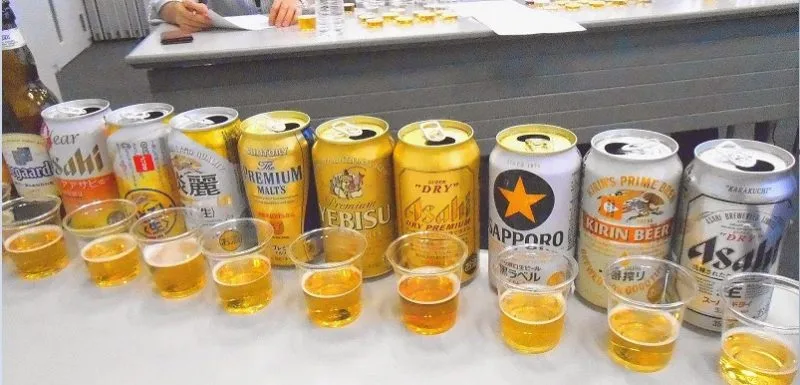
Four companies dominate national distribution — Asahi, Kirin, Sapporo and Suntory — with Orion as the flagship of Okinawa and a strong fifth name on many shelves and stadiums. Standard izakaya lager is usually a light, crisp style around five percent alcohol.
Among widely poured flags, Asahi Super Dry is the modern classic: dry, sharp, low-fermentation “karakuchi” that reshaped Japanese lager taste when it launched. Kirin Ichiban (Ichiban Shibori) is a pure-malt line built around the first press of the wort — more malt aroma, golden color, a touch of sweetness balanced with hop bitterness that sits well with many Japanese dishes. Orion, brewed in the Okinawa islands, is soft and food-friendly with a velvety head. Yebisu (Sapporo group) is often treated as a more traditional, aromatic premium option with a deeper malt profile.
Japan also plays with limited flavors aimed at pairing with local food — unusual seasonal or novelty cans exist for curiosity more than for daily drinking. Below is an orientation list of well-known lines from the big groups (catalogs change; treat it as a map, not a permanent ranking):
Asahi Breweries
- Asahi Super Dry
- Asahi BlanK
- Asahi Premium Beer Jukusen
- Asahi Hon-nama (happoshu)
Kirin Brewery Company
- Kirin Ichiban Shibori
- Kirin Lager Beer
- Kirin Fukkoku Lager
- Kirin Akiaji
- Kirin Heartland Beer
- Grand Kirin
- Kirin Tanrei (happoshu)
Sapporo Brewery
- Sapporo Lager Beer
- Sapporo Black Label
- Yebisu - The Hop
- Yebisu Black
- Sapporo Classic
- Hokkaido Nama-shibori (happoshu)
Suntory
- Suntory Malts
- Suntory - The Premium Malts
- Super Magnum Dry (happoshu)
Orion
- Orion Original
- Orion Southern Star
- Orion Draft Beer
- Orion Special
- Orion Cider
- Orion Dry
Seasonal Beers in Japan
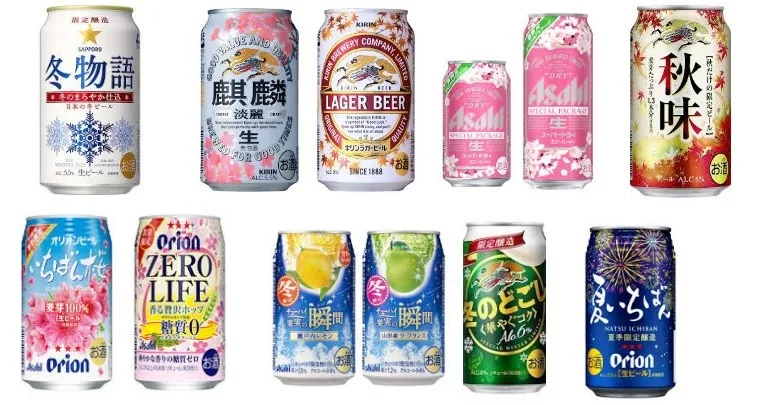
Many breweries release seasonal beers. Autumn cans often run stronger or richer and may wear maple-leaf art; spring and summer bring lighter, fruit-tinged, or festival limited editions. Craft producers lean hardest into short runs — if you like a can, buy it while it is still on the shelf.
Where to Drink and Buy Beer (Age 20)
The legal drinking age in Japan is 20. Beyond bars and izakaya, beer is sold in supermarkets, convenience stores, liquor shops, and station kiosks. Draft (nama-bīru) and bottles are normal in restaurants; cans of 350 ml and 500 ml dominate takeaway. Public drinking is not broadly criminalized the way it is in some countries, but manners still matter — and Japan has very strict rules for drivers and cyclists who ride after drinking. Penalties can include heavy fines and imprisonment; there is no casual “one beer is fine” culture behind the wheel.
Vending machines that sell beer still exist, especially outside liquor stores, in business hotels, or in quieter areas, but they became less common in large cities after the early 2010s as age-control pressure rose. Some machines use cameras or age-verification cards; none of that replaces the basic rule that adults should not buy alcohol for minors.
Craft Names Worth Knowing (Not a Permanent Ranking)
Japanese beer is exported across Asia and beyond, and enthusiast lists online often mix big-brand exports with limited craft bottles. The names below are a historical orientation set of craft and specialty producers that frequently appear in older international roundups — not a live “best of Japan” chart. Many are seasonal, barrel-aged, or hard to find outside specialty shops; some recipes may already be gone.
- Hidatakayama Karumina
- Baird Dark Sky Imperial Stout
- Hitachino Nest Ancient Nipponia (Bottom Fermented)
- Hitachino Nest XH
- Tamamura Honten (Shiga Kogen) House IPA
- Shonan Belgian Stout
- Minoh Imperial Stout
- Fujizakura Heights Rauch
- Baird Kurofune Porter
- Sankt Gallen Imperial Chocolate Stout
- Shiga Kogen Takashi Imperial Stout
- Hitachino Nest Japanese Classic Ale
- Oze No Yukidoke Heavy Heavy
- Baird Suruga Bay Imperial IPA
- Hitachino Nest New Year Celebration Ale
- Shiga Kogen W-IBA Masaji the Great
- Tamamura-Honten Batch #500 Yamabushi Saison One
- Hitachino Nest Espresso Stout
- Fujizakura Heights Weizen
- Baird Temple Garden Yuzu Ale
- Baird Ganko Oyaji (Stubborn Old Man) Barley Wine
- Tamamura-Honten the Far East Barrel Aged Imperial House IPA
- Swan Lake Imperial Stout
- Sankt Gallen El Diablo
- Swan Lake Amber Swan Ale
- Shonan Imperial Stout
- Baird Morning Coffee Stout
- Shiga Kogen IPA
If you want a living map of craft today, start with local tap lists and bottle shops rather than any frozen top-28 from a past survey. The big dry lager on draft will still be there tomorrow; the limited stout might not.

Community
Comments
0 comments
There are no published comments in this language yet.
Send comment