
Anyone serious about Japanese eventually hits the same question: which dictionary is actually worth using—online, as an app, or on paper? The honest answer is less about a single “best” product and more about how you look words up and where you are in the journey.
Japanese forces several entry points at once: kanji, kana, romaji, and readings that shift with context. That is why the first dictionary purchase often feels overwhelming—and why it pays to understand the tools before you spend money.

Contents 6
Online dictionaries: the fastest start
For desk work, a strong online dictionary is often the most honest default. You do not need an expensive gadget to check kanji, example sentences, and readings in seconds.
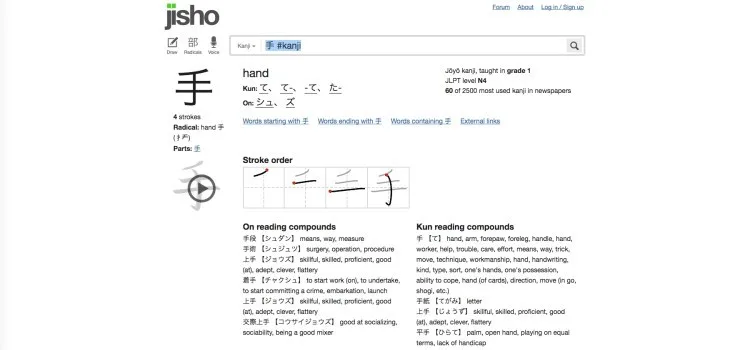
For English-speaking learners, jisho.org remains the everyday classic: English–Japanese and Japanese–English search, radical and handwriting lookup, example sentences, and a database that powers countless apps. You can filter by JLPT level, dig into individual kanji, and paste whole phrases when you are reading. How to use Jisho as a learning tool—not just a translator—is covered here:
As you grow, larger Japanese-facing resources such as Weblio become useful for denser example sentences—though their interfaces lean Japanese and reward intermediate reading comfort.
Apps instead of heavy electronics
Electronic denshi jisho (電子辞書) are still a genre of their own in Japan: rugged, offline, packed with specialist lexicons. For most learners outside Japan they are expensive and oversized once a phone app carries the same core databases offline.
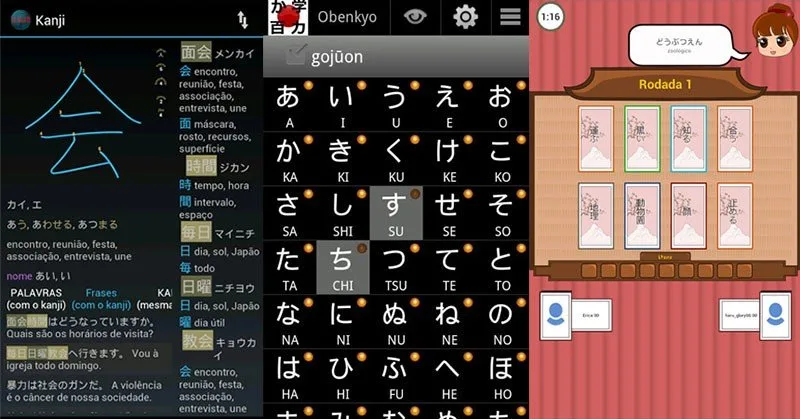
On Android, Takoboto is a long-standing offline option built on JMDict-style data. On iOS, many learners name apps such as Nihongo or imiwa?, which combine stroke order, example sentences, and study lists. Cross-platform, “Japanese” by Renzo is another frequently cited offline dictionary with large entry counts. What matters more than the brand is offline search, handwriting or radical lookup, and whether you actually read the example sentence—not only copy the first gloss.
One honest caveat carries over from the original advice here: apps do not replace reading. Looking up every word and stacking flashcards without processing the sentence context slows you down. A dictionary is a research tool, not a textbook for memorizing lists.
Printed Japanese–English dictionaries
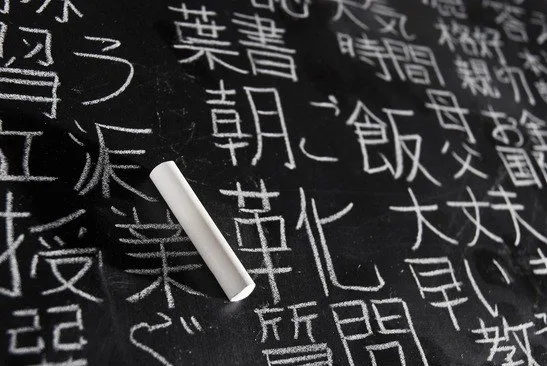
Paper still offers something apps rarely do: you flip, linger on related entries, and stay offline without battery drama. For English speakers, learner-friendly references that show up again and again include Kodansha’s Furigana Japanese Dictionary (furigana on headwords, approachable for beginners) and denser two-way works such as Kodansha’s Communicative English–Japanese Dictionary or compact Oxford beginner volumes when you want a desk companion.
Serious reference shelves often add a Kenkyusha Japanese–English dictionary for coverage that pocket books cannot match. Before you order: sample pages, edition year, and whether you need English→Japanese as much as Japanese→English. No paperback is “complete,” and a heavy volume helps little if you are still drilling hiragana.
When monolingual Japanese starts to pay off
Bilingual glosses get you far, then stall on nuance. Intermediate and advanced learners eventually add a kokugo (Japanese–Japanese) dictionary—sometimes a learner-oriented one with simpler definitions and furigana, later a fuller native dictionary. That step is optional for beginners; forced early, it becomes a second research project inside every lookup.
Free online monolingual hubs help once you can parse definitions in Japanese. Until then, treat English glosses as provisional and compare multiple example sentences when a word feels only “almost right.”
Kanji: a word dictionary is not enough
Building kanji systematically needs more than a word dictionary: stroke count, radicals, on/kun readings, and compounds. Online, Jisho and dedicated kanji tools cover much of that. On the learning path, the RTK method (Remembering the Kanji) remains a common framework for meanings and writing structure—not a substitute for real reading, but a clear entry into character logic.
- RTK Method - The best way to learn Kanji
- The First 80 Kanji Taught in Japanese Elementary School
- The best books to learn Japanese
How to choose without a bad buy
Instead of a fixed ranking, use a simple filter:
- Beginner, English base: Jisho as the main tool plus one offline app.
- Lots of commuting or weak connectivity: prioritize an offline app over an expensive denshi jisho.
- Desk reading and annotation: a learner print dictionary with furigana can slow you down in a good way.
- Translation and advanced nuance: denser Japanese–English sources, later monolingual Japanese, and real example sentences.
And again the rule that saves study time: dictionaries answer “what does this mean here?” They replace neither input (reading, listening) nor output (speaking, writing). Collecting cards without context is how learners stall.
If you already have a favorite tool—online, app, or paper—it is often more useful to ask whether you read the example sentences than to buy the next product. That is where fluent lookup separates itself from pure vocabulary list building.


Community
Comments
0 comments
There are no published comments in this language yet.
Send comment