
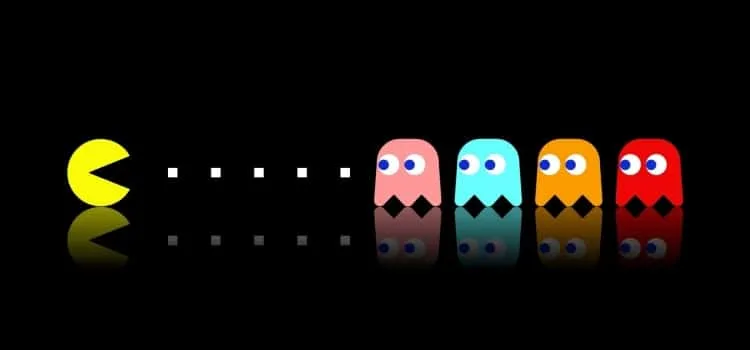
Pac-Man stands as one of the most recognizable icons in electronic entertainment and global popular culture. First appearing in arcades in May 1980, the game introduced an entirely fresh visual language to interactive entertainment. While the prevailing arcade market was crowded with combat-heavy space shooters, Namco's cheerful maze title proved that an intuitive concept paired with charming character design could captivate players across every demographic.
The core gameplay presents an elegant simplicity that conceals remarkable technical depth. Guiding a round yellow character through a geometric labyrinth, players consume rows of glowing pac-dots while evading four relentless ghosts. Four flashing Power Pellets positioned near the corners temporarily turn the tables, allowing Pac-Man to chase down the frightened ghosts for escalating bonus scores. This dynamic loop of risk, evasion, and momentary triumph established a template that reshaped the industry.
Contents 8
What Is Pac-Man?
Pac-Man is an action maze video game conceived to broaden the appeal of gaming arcades. In the late 1970s, video arcades were often dim, noisy spaces dominated by intense shooting titles. The creators at Namco envisioned a title that felt playful, humorous, and welcoming to couples, families, and casual enthusiasts. By transforming combat into an energetic game of chase and consumption, the studio delivered an experience that felt instantly approachable yet endlessly replayable.
The visual presentation discarded dark galactic backdrops in favor of bright neon blue walls and vivid primary colors. Coupled with catchy electronic melodies and expressive sound effects, the title stood out from every competing cabinet on the arcade floor. Rather than relying on realistic violence, the gameplay rewarded spatial awareness, quick reflexes, and an understanding of enemy movement patterns.
The Concept: Toru Iwatani and Namco
The genesis of the game began in 1979 under the guidance of young Namco designer Toru Iwatani. Wanting to design an arcade game centered on the concept of eating, Iwatani reflected on universal human experiences that crossed cultural boundaries. The Japanese verb taberu, meaning to eat, served as the foundational creative compass for the entire project.
Toru Iwatani famously recounted that the visual form of the character came to him during lunch while looking at an entire pizza with a single slice removed. That simple silhouette formed a wide-open mouth eager to devour everything in its path. Iwatani also drew inspiration from the Japanese kanji character for mouth, kuchi (口), softening its squared edges into a friendly circle. Namco supported this vision by assembling a dedicated team of nine developers, who spent over a year refining the mechanics and hardware architecture.
From Puck Man to Pac-Man
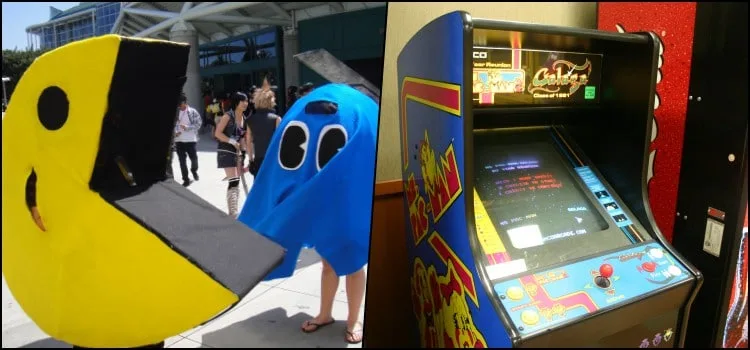
On May 22, 1980, Namco debuted the game in Japan under the title Puck Man (パックマン). The name originated from the popular Japanese onomatopoeia paku paku taberu, which phonetically describes the rapid opening and closing of a mouth while eating. The title immediately struck a chord with Japanese arcade patrons, who appreciated its lively tempo and cheerful aesthetic.
When Namco licensed the game to Midway Manufacturing for North American distribution in October 1980, American executives recognized a potential vulnerability on public arcade cabinets. Concerned that vandals might scratch away the curve of the initial letter 'P' on the cabinet marquee to create an offensive slur, Midway proactively altered the official international title to Pac-Man. This strategic modification helped safeguard the brand as it expanded into thousands of family restaurants, bowling alleys, and shopping centers across the continent.
The Four Ghosts and Their Unique Personalities
One of the most consequential programming achievements in early game design was the artificial intelligence driving the four spectral adversaries. Rather than roaming the maze by random chance, each of the four colored ghosts relies on a distinct algorithmic targeting behavior. Managed by routine timers, the ghosts cycle dynamically between two fundamental states: Scatter mode, where each retreats toward a specific corner of the labyrinth, and Chase mode, where each pursues a unique mathematical relationship with Pac-Man.
This deterministic behavioral logic gave each enemy a vivid on-screen personality that experienced arcade players quickly learned to identify:
- Blinky (Red / Shadow / Akabei): The relentless pursuer. Blinky targets Pac-Man's exact coordinates. As the count of remaining dots decreases, Blinky accelerates into an aggressive state affectionately known among competitive players as Cruise Elroy.
- Pinky (Pink / Speedy / Pinky): The cunning ambusher. Pinky calculates a target four tiles ahead of whichever direction Pac-Man is currently facing, attempting to trap the player at intersections.
- Inky (Cyan / Bashful / Aosuke): The unpredictable tactician. Inky determines his target by projecting a vector from Blinky's current position through a point two tiles ahead of Pac-Man, creating pincer movements that catch players off guard.
- Clyde (Orange / Pokey / Guzuta): The indifferent wanderer. Clyde tracks Pac-Man directly when distant, but as soon as he draws within eight tiles of the player, he loses nerve and retreats back toward his home corner in the bottom left.
The sophisticated interplay among these four routines ensured that no two playthroughs felt identical. To explore the broader evolution of Japanese arcade innovation during this golden era, our overview of the history of video games in Japan highlights how foundational engineering from Namco, Taito, and Nintendo permanently elevated electronic entertainment.

The North American Phenomenon and Pac-Man Fever
Upon its North American release through Midway, Pac-Man sparked a cultural mania that astonished industry observers. Arcade operators found their coin boxes overflowing on a daily basis. Within eighteen months of release, manufacturers produced and placed more than 350,000 arcade units across the globe, surpassing established hits like Asteroids and generating over one billion dollars in quarters.
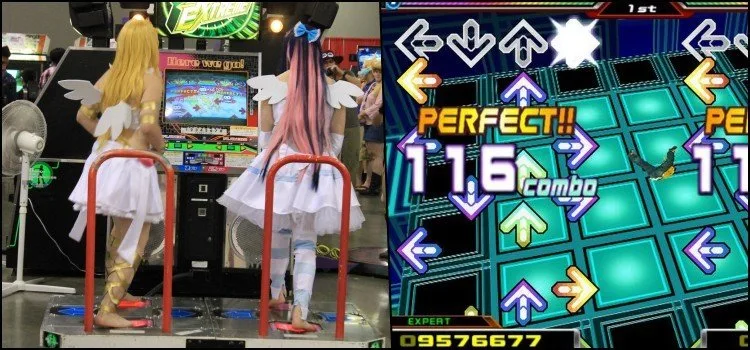
The title pioneered mass-market video game merchandising. Retailers carried thousands of licensed consumer products, ranging from lunchboxes, bedspreads, and coffee mugs to board games, breakfast cereals, and apparel. In late 1981, musical duo Buckner and Garcia capitalized on the craze by releasing the novelty pop single Pac-Man Fever. The record sold more than 2.5 million copies, climbed into the top ten on the Billboard Hot 100, and certified gold. Just as later generations witnessed music and motion fuse through Dance Dance Revolution arcade phenomena, Pac-Man established that video game culture could dominate mainstream music and lifestyle trends.
Sequels, Adaptations, and Console Ports
The staggering success of the original game catalyzed an extensive lineage of sequels and home adaptations. In 1981, General Computer Corporation developed an enhancement kit called Crazy Otto, which Midway quickly acquired and released with Namco's blessing as Ms. Pac-Man. Featuring four distinct maze configurations, moving bonus fruit, and refined ghost behavior, Ms. Pac-Man earned critical acclaim and rivaled the original in commercial longevity.
Further franchise entries followed, including Jr. Pac-Man, Pac-Mania with isometric 3D perspectives, and the side-scrolling platformer Pac-Land. The character also transitioned successfully to television. In 1982, animation studio Hanna-Barbera produced a Saturday morning animated cartoon series that introduced Pac-Land lore to millions of young households worldwide.
On home consoles, the 1982 port for the Atari 2600 became a commercial blockbuster, selling over seven million cartridges to become the platform's top-selling game. Although the Atari conversion suffered from severe graphical flickering and hardware limitations, consumer demand demonstrated that home audiences were eager for arcade-level experiences, foreshadowing how modern Japanese gaming experiences would eventually make rich narrative and technical depth accessible directly in the living room.
Technical Secrets and the Level 256 Kill Screen
Operating under the stringent constraints of early microcomputer hardware, Namco's engineering team compressed the complete original arcade experience into a modest 24 kilobytes of ROM. The title was also among the earliest games to incorporate animated cutscenes. Humorous short interludes between stage clusters showed Pac-Man and Blinky in slapstick chases, giving players a rewarding breather while pioneering character-driven storytelling in arcade hardware.
Due to limitations in 8-bit integer memory architecture, the game contained a legendary technical boundary known as the kill screen. When a skilled player completed Level 255, the internal subroutine responsible for drawing bonus fruit icons attempted to render 256 items on screen. This arithmetic overflow corrupted the right half of the display into an indecipherable cascade of colorful letters, numbers, and broken tiles, rendering the level impossible to finish through standard play.
On July 3, 1999, competitive player Billy Mitchell achieved widespread historical acclaim by recording the first recognized theoretical perfect game. Over a grueling six-hour session, Mitchell completed all 255 stages, consumed every pac-dot, power pellet, fruit bonus, and fleeing ghost, and maximized his score on the corrupted split screen without losing a single life, attaining the definitive maximum score of 3,333,360 points.
The Enduring Legacy in Gaming and Culture
Decades after its debut in Tokyo game centers, Pac-Man remains a cornerstone of digital culture. Modern adaptations such as Pac-Man Championship Edition re-energized the classic mechanics with high-speed neon aesthetics and dynamic camera shifts, proving that Toru Iwatani's foundational loop remains as compelling today as it was in 1980.
The character's influence extends well into contemporary virtual environments and interactive spaces. Whether observing shared community hubs in virtual spaces and social gaming or watching classic arcade icons cameo in modern motion pictures, Pac-Man symbolizes the joyful birth of digital play. By proving that games could be non-violent, welcoming, and deeply expressive, Toru Iwatani and Namco created a timeless work of art that continues to introduce new generations to the magic of the maze.




Community
Comments
0 comments
There are no published comments in this language yet.
Send comment