
Colorful flags over the schoolyard, loud cheers from the sidelines, and parents unfolding picnic sheets before the first race: once you have seen an Undokai (運動会), you notice it is more than a day of sprints. Japan’s school sports festival mixes competition, teamwork, and a full-family gathering into one long outdoor program.
From elementary school through high school, students often train for weeks in red and white teams, then pour everything into races, quirky group games, and dances. If you want a clear window into Japanese school life—much like the cultural festival Bunkasai—Undokai is hard to skip.
Contents 6
What Is Undokai?
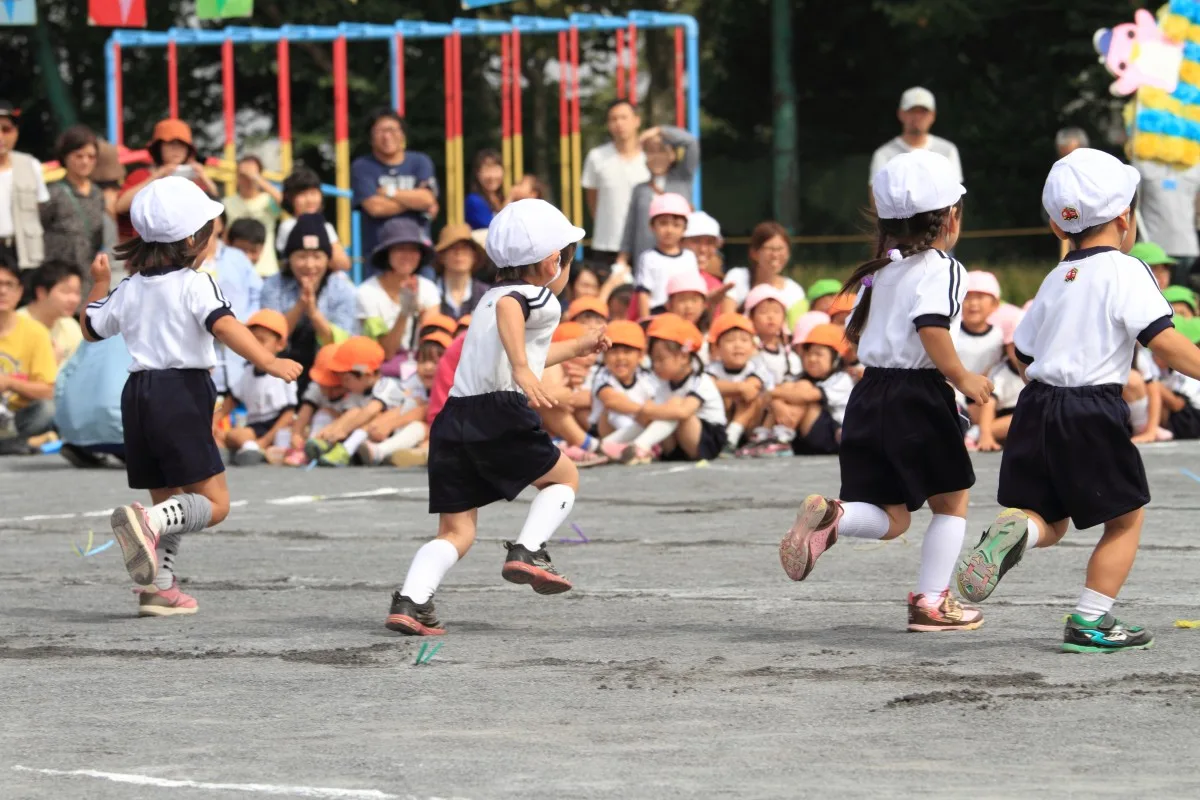
The Undokai is the annual sports day at Japanese schools. Programs usually start in the morning on the school ground or sports field, pause for lunch, and run into the afternoon. You will see sprints and relays, but also team games, mass exercises, and class performances—less “pro Olympics,” more the whole school on the field together.
In kindergarten and elementary school the day is usually called Undokai; in junior high and high school you more often hear Taiikusai (体育祭). The mood shifts from teacher-led and playful toward more student-organized committees, louder cheering sections, and heavier preparation.
Many dates still fall in autumn (September–November), often near national Sports Day in October. More schools have also moved events to May or early summer to avoid late heat and to free autumn study time—so the “always autumn harvest party” story is only half true today. Some schools shorten the day for safety and workload.
Students are commonly split into red (紅組) and white (白組) teams that collect points across events. There is a winner at the end, yet the deeper point is cooperation: practicing together, cheering peers, and representing your class or team.
History and Origins
Undokai took shape in the Meiji period as Japan built modern school physical education. Early sports meets were held at naval and higher schools in the 1870s—accounts often point to the Naval Academy in Tokyo around 1873–1874 under foreign instructors—before the format spread into elementary schools.
Over time the day became a regular school ritual: health, group discipline, and community pride all on the same field. The mood has softened from strict mass formations toward family celebration, though ceremonies, team colors, and a full program of events still define the day.
Companies and local groups sometimes host similar sports festivals for adults. The school Undokai remains the version most people picture first.
What Does Undokai Mean?
In Japanese, Undokai is written 運動会. Break it down like this:
- 運 (un) + 動 (dō) form undō: movement, exercise, sport.
- 会 (kai): a gathering or meeting.
Together, 運動会 is a gathering for sports and physical activity—usually translated as sports day, sports festival, or athletic meet. “Family sports festival” captures the feel when parents fill the sidelines with mats, cameras, and packed lunches.
Typical Games and Events
You will not always see football, volleyball, or baseball as the main show. Club sports often have separate matches; Undokai favors races, relays, and playful team contests the whole grade can join. The exact list changes by school—and some contact games are being dropped for safety—but these classics still appear widely:
Races (tokyōsō) — Individual sprints, often 50–100 meters depending on age. Simple, loud, and always on the program.
Relay — Often the emotional climax. Classes pick runners; the final baton pass can decide the team score for the day.
Tama-ire (玉入れ) — Teams throw small balls or beanbags into a high basket within a time limit. Sometimes a teacher wears a basket on their back and students chase them to score.
Ōdama (大玉) / giant ball — Classes push, roll, or pass a huge ball across the field. Chaos and coordination in equal parts.
Kibasen (騎馬戦) — Often nicknamed the “cavalry battle” or “samurai fight”: three students form a “horse,” a fourth rides and tries to snatch the opponent’s hat or headband. Contact risk is real, so many schools limit or remove it.
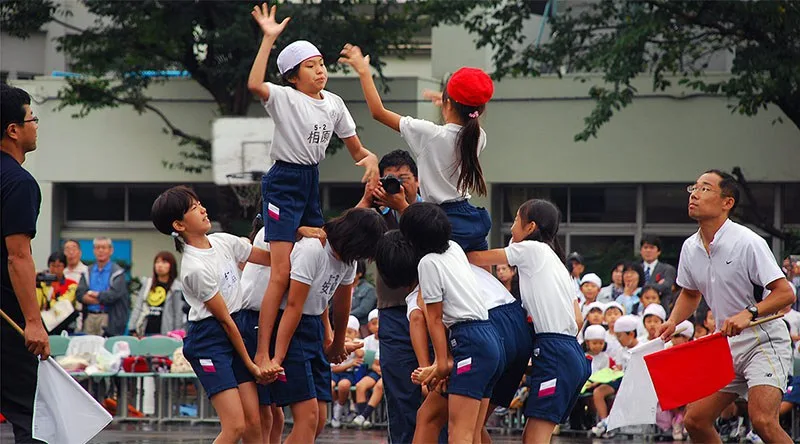
Kumitaisō (組体操) — Group gymnastics and human formations, including pyramids. Also under safety review at many schools.
Tsunahiki (綱引き) — Tug-of-war, sometimes with a parent heat as well.
Bōtaoshi (棒倒し) — Large teams try to topple the other side’s pole while defending their own. High intensity; more common at higher grades or special events.
Obstacle race / scavenger race — Nets, tires, three-legged runs, or card prompts (“find someone wearing glasses”) that pull parents into the joke.
Dance and radio taisō — Class choreography, local folk dances, or mass rajio taisō warm-ups with the classic piano track. Bands and marches still appear at some schools.
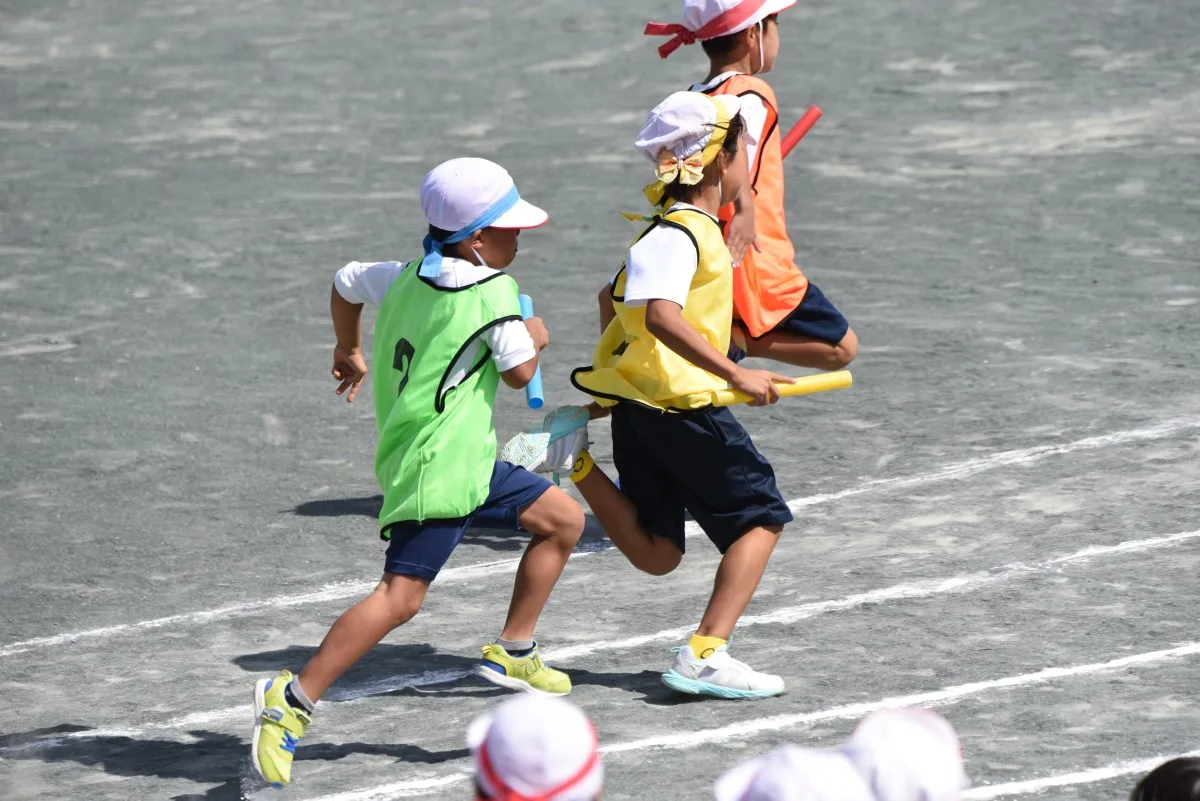
Other frequent options include long-rope jump rope (nawatobi), sack races, and parent–child games. Variety is the rule: what your friend’s school ran last year may not match this year’s program.
Family, Bento, and the Full Day
An Undokai often fills a Saturday or Sunday so working parents can attend. Fields get chalked lines, tents, and flags; families arrive early to claim a good view. Many still bring a leisure sheet, hat, drinks, and a homemade bento—onigiri, fried foods, fruit—shared like a picnic on the sidelines.
Practices can stretch for weeks: dances, formations, and the opening ceremony are drilled hard. The day itself usually opens with speeches and the national anthem or school song, then events run in a published order until the closing ceremony announces team totals. Cleanup is part of the culture—students, parents, and teachers often help clear equipment before everyone goes home.
Schedules are carefully staggered so parents with children in different grades can still show up for more than one program across the season.
My Experience at an Undokai
During my 2023 trip to Japan, I attended the Undokai of a friend’s grandchildren, held around the third week of October at an elementary school.
I expected a full menu of classic Japanese group games, but that day was mostly races. My friend explained that after COVID many schools shortened the program, so the quirky team contests were cut back.
What remained was still warm: music, dance performances, and families packed along the field ready to watch every heat. The interaction between kids, parents, and teachers carried more weight than a medal table.
If you ever get invited to one, go early, bring water and sun protection, and cheer like you mean it—even when the only event left on the sheet is another 50-meter dash.


Community
Comments
0 comments
There are no published comments in this language yet.
Send comment