Blog

  • How do students clean the schools in Japan?

    How do students clean the schools in Japan?

    I think that most people are aware that in Japan students are responsible for cleaning the schools. In Japan, everyone is responsible for keeping the school clean! In this article, we will delve into this subject.

    There usually aren’t staff members, and sometimes even the school principal helps with the care and maintenance of the school. This happens from elementary school and extends to college, regardless of whether the school is public or private.

    Osouji Jikan – Cleaning Time in Japanese Schools

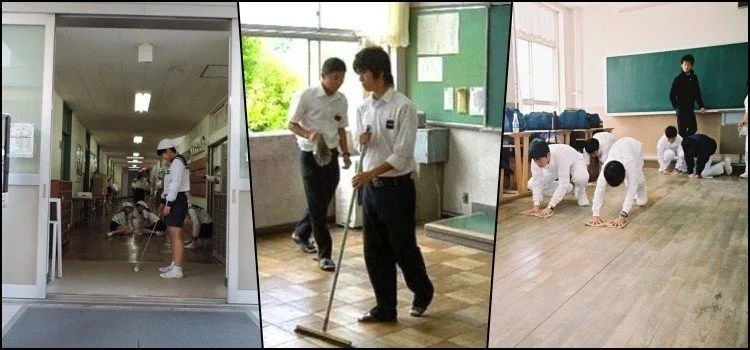
    In Japan, this practice where students clean the schools is called OSOUJI JIKAN [お掃除時間], which literally means cleaning time. During the first years of school, students eat their meals in the classroom and then clean it together.

    This tradition of teaching students to clean the schools is so common that Japanese people find it strange to discover that in Western schools students do not clean.

    Even on the school supply list, there is an item called zokin (cloth) that frightens foreigners who are unaware of the custom of cleaning schools. Some foreigners even think that this is work and that students shouldn’t do it.

    At school, students do not only study subjects, but also learn to take care of what is public and to be more conscious citizens! No one complains because it has always been this way. — Toshinori Saito
    cleaning, schools, students, Japan

    Curiosities about Cleaning in Japanese Schools

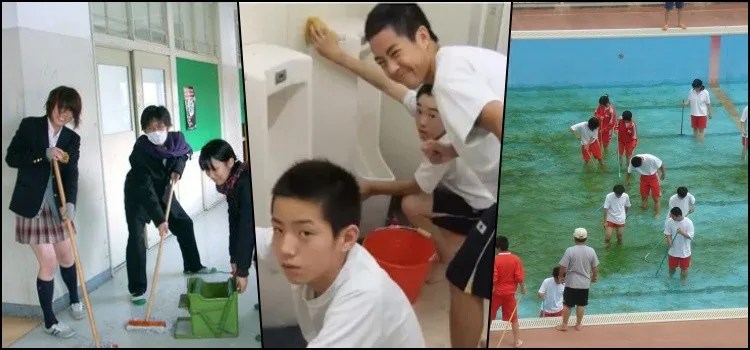
    Students are usually organized into groups and rotations so that everyone can do different tasks and no one is stuck with the same task. In high school, students are often assigned to take care of a specific part of the school.

    They clean practically everything in the school, taking care of the classroom, bathrooms, swimming pool, sports court, etc. In addition, they take care of the garden, plants, and pets that exist in schools. Students sustain the schools!

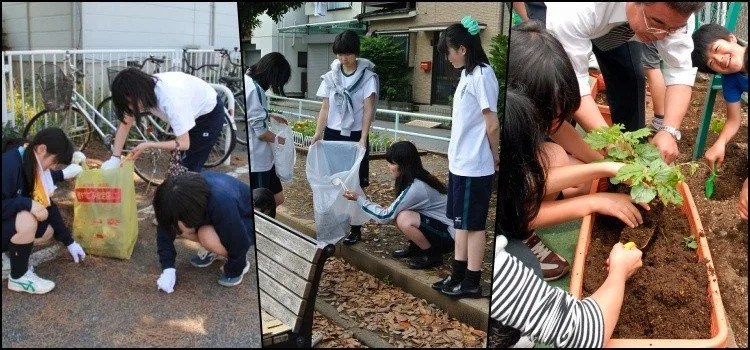
    Three times a year, students organize to do a neighborhood cleaning called chiiki seiso. In this cleaning, students go out to sweep and pick up trash in the neighborhood and around the school. The class is divided into han (small groups), where each is responsible for cleaning a specific area.

    Every semester there is a general cleaning called osoji (big cleaning). The whole school gathers to carry out a general cleaning accompanied by music. Sometimes older students are asked to help younger children clean the classroom.

    How do students clean schools in Japan?

    Truths about Cleaning in Japanese Schools

    Not everything is as the news and Western newspapers say. I notice various altered information regarding the school cleaning system in Japan. First of all, not all schools are the same, so it is common to have differences.

    There are certain generalizations regarding this, but generally, students clean the entire school, sometimes even cleaning the neighborhood and the surroundings of the school with their parents. Now we will see some lies and truths.

    Are there no janitors in Japanese schools?

    It’s a lie; schools do have non-teaching staff called yomushuji or shuji. Primary school children cannot leave the school 100% clean, so there are people responsible for specific cleanings and maintenance.

    Sometimes these staff members also perform other activities at the school, or they are teachers and principals. Some schools even hire professional services to handle certain situations like painting and gardening.

    Still, students are responsible for a large part of the functioning and organization of the schools. Some even take care of the infirmary, self-medicate, and skip classes in those places pretending to be sick.
    How do students clean schools in Japan?

    Do students clean the bathrooms in Japanese schools?

    In a way, yes, but some tasks are the responsibility of the shuji. Things are quite different in elementary and middle school; not all students clean together daily.

    Sometimes only one group of students from the school is responsible for cleaning the entire bathroom. No student questions something that is so common, even though it is quite obvious that it is not pleasant to clean bathrooms, especially clogged ones.

    Are there no cafeterias in Japanese schools?

    In many primary and elementary schools, there are no cafeterias; however, in some schools and in high schools, there are indeed cafeterias.

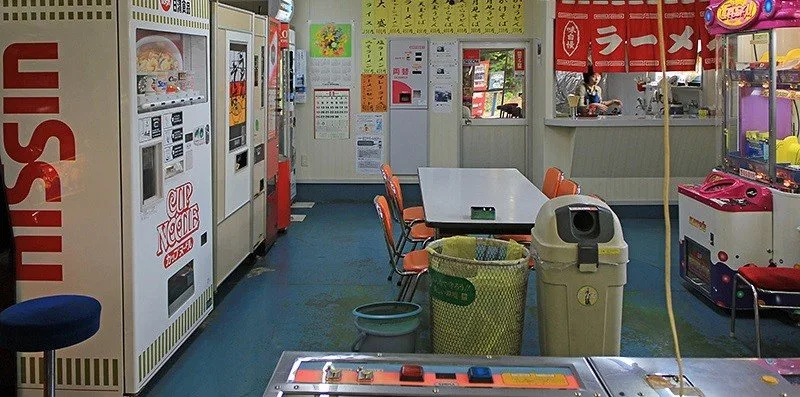
    Some schools have vending machines and sell meals, but the culture of bringing lunch from home and cleaning does not change. Some schools even have rules about the type of food that can be consumed.
    cleaning, schools, students, Japan

    Parents help clean the surroundings of the school

    Japan has become famous worldwide for students cleaning the school and taking care of their own meals. At school, students do not only study subjects, but also learn to take care of what is public and to be more conscious citizens! No one complains because it has always been this way.

    We also mentioned that three times a year, students organize to do a neighborhood cleaning called chiiki seiso. In this cleaning, students go out to sweep and pick up trash in the neighborhood and around the school. What we did not highlight is that even parents participate in events of this type.

    Parents are invited to participate with their children in events like cleaning the surroundings of the school, especially before high school. I don’t believe this happens in all schools, or that all parents are required to participate in this cleaning. Teachers have always provided support in most of these occasions.

    The video below shows the event where parents and children clean the surroundings of the school:

    The Caipira in Japan even mentioned that this attitude is a recipe to pull Brazil out of the mud. Making young people and adults respect public property is fundamental for the country to advance and progress. Something that unfortunately does not happen in Brazil. Japan is a true example in this regard!

    This is not the only time parents participate in something at school; a very famous event that usually brings together parents and children is the Undokai, a kind of gincana and sports competition between classes. Parents can also be present at the Bunkasai and at the school’s entrance and graduation ceremonies.

    Teachers also strive to create a good relationship between parents and children through home visits and routine meetings with parents. Unfortunately, not all parents make an effort to have a good relationship with their children, and not all schools care about this.

    Don’t think that just because parents are present in children’s childhood at school, things work 100%. There are many social and relationship problems, especially during school life.

    How do students clean schools in Japan?

    Cleaning Position – Zoukingake

    Children in Japan usually clean in a position called zoukingake (雑巾掛け). They kneel and place both hands on the wet cloth, raising their back ends so that their torsos make an angle of 35 to 45 degrees with the ground.

    From an early age, children are taught to clean. This is something so normal and beneficial that nowadays even wealthy families usually do not hire maids. These were some curiosities regarding the cleaning of schools in Japan. I hope you enjoyed it; we appreciate the comments and shares. xD

    We also recommend reading:
  • Social Pressure in Japan – The biggest cause of problems

    Social Pressure in Japan – The biggest cause of problems

    Have you ever wondered why Japan has a high suicide rate? Or why they work too much? Or why there is bullying? Why are there social classes and sometimes prejudice between them? A large part of the cause of these events is due to social pressure in Japan. Do you know what social pressure is? It is movements, events, and situations promoted by a group of people where you feel forced, intimidated, or pressured to do things even without a specific law.

    One of the biggest social pressures in Japan is to be successful in life. The Japanese want to have high grades, like to be dedicated, be a good person, have a good job, higher education, a family, etc. Sometimes the pressure to have these things is so great that it results in suicides, evaporations, and people who do not leave their rooms for fear of society (hikikomori).

    Another very common social pressure is to dedicate oneself to work. Sometimes many feel obligated to stay at work and do overtime even when it is not necessary. The pressure is one of the biggest culprits for the reputation of the Japanese being workaholics. Social pressure is especially strong at work and in schools.

    Social Pressure in Japan - The biggest cause of problems

    Why do the Japanese succumb to social pressure?

    Social pressure can be expressed in direct and indirect ways. Those who refuse to follow society end up being excluded and suffering bullying. Another major culprit of social pressure is the famous shyness of the Japanese. Many wish to express their opinion or follow their own desires, but their shyness ends up making them ashamed to go against the wishes of society or to be excluded for it.

    Others cannot withstand social pressure and end up committing suicide. The shame (resulting from shyness) of failing at something in life, such as entrance exams, jobs, and family, ends up making the person give up on life. Some, by going against the wishes of society, cannot bear the pressure and take their own lives simply for that.

    On the other hand, the Japanese are a bit reserved and take care of their own lives. So you usually do not feel pressure on topics like fashion, religion, music, and things related to personal tastes and life. Sometimes the pressure doesn’t even exist or is mostly indirect, but the Japanese feel like failures if they do not achieve what is well-regarded in society.

    While many think that the Japanese are honest, kind, and hospitable out of their own will, the reality is that some suffer social pressure to be this way. Education in Japan is taught from an early age, and those who do not follow it end up being excluded from society. Social pressure even affects the decrease in crime; most steal secretly unlike armed robbery in Brazil. The pressure also makes people dedicate themselves to studies, cleanliness, and treating those around them well.

    Social Pressure in Japan - The biggest cause of problems

    Say no to social pressure in Japan

    It doesn’t matter if you are a foreigner or Japanese, or if you live in Japan or Brazil, you will always suffer some kind of social pressure! Nowadays, people are pressured to do wrong things, are pressured to give up their dreams or to follow a career that they may not even want. I see that many Brazilians living in Japan suffer social pressure and cannot break out of the societal bubble.

    They let themselves be influenced by comments, ideas, and suggestions from others and find it impossible to follow a path different from the standard defined by society. These people need to stop caring about the opinions, suggestions, or pressures from others. I know it is not easy to resist pressure; I faced a lot of pressure to go to college, buy a car, and find a formal job. While I always wanted to work online and suffered a lot of pressure because of that, if I had given in to the pressure, I probably would not have realized my dreams.

    Fighting against social pressure is not easy; giving in can also be quite harmful. This is a constant struggle that people face in Japan and around the world; some seek psychologists (something rare in Japan), others believe that the best way to avoid pressure from certain people is to surround themselves with those who make them comfortable and do not exert pressure. Overcoming shyness, being positive, and learning to say no can be significant steps to not being part of this capitalist and oppressive society. Have you ever suffered any kind of pressure in Japan? I would be happy if you could share with others in the comments below.

  • Magic: The Gathering – Vocabulary in Japanese and English
    Magic: The Gathering – Vocabulary in Japanese and English

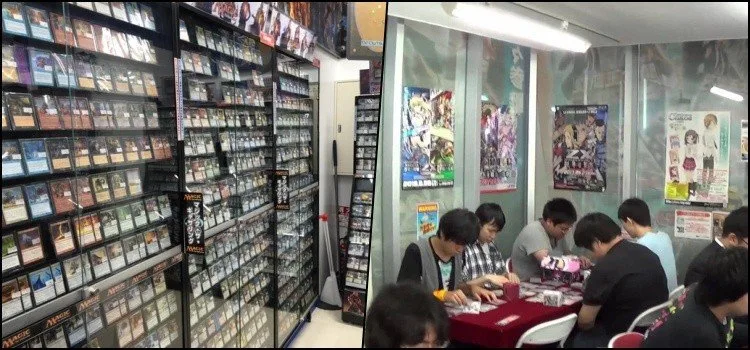
    In this article, we will see the Japanese vocabulary of the card game Magic: The Gathering (マジック:ザ・ギャザリング ). We will translate the cards from Japanese to English and Portuguese. For those who don’t know, this is one of the best and most famous TCG games in the world. It is estimated that there are over 12 million players around the world.

    Even if you don’t play Magic, but end up playing other TCGs, this vocabulary list can be useful for you, because most TCGs use similar words.

    Why would I buy a card in Japanese? According to the official rules of Magic, all languages are accepted in battle, there are no rules discriminating languages. Thus, you can get a rare card or a cheaper deck.

    We recommend having at least some knowledge of hiragana and katakana to be able to play Magic in Japanese. It is worth remembering that you also need to have good skills in speaking numbers in Japanese.

    Magic: The Gathering in Japanese

    Let’s get straight to the point, below you will find a list of terms and words related to the Game. This way you can play Magic in Japan or buy the cards in Japanese. (Unfortunately, some important terms may be missing…)

    Responsive Table: Scroll the table sideways with your finger >>
    JapaneseRomanizationEnglishPortuguese
    こうげきkougeki Attack Ataque
    こうげきをしますkougeki wo shimasu I am attacking Eu ataco
    ライブラリraiburari Library Grimório (deck)
    カードkado Card Carta
    手札tefuda Hand Mão (baralho)
    ターンtann Turn Turno
    ゲームgaymu Game Jogo
    戦場senjyou Battlefield Campo de batalha
    カウンタkaownta Counter Counter
    ゆうはつyuuhatsu Trigger Desencadear
    せんこうsenkou Play First Primeiro
    こうこうkoukou Play Second Segundo
    shima Island Ilha
    yama Mountain Montanha
    mori Forest Floresta
    平地 heichi Plains Planícies
    numa Swamp Pântano
    荒地 arechi Wastes Exílio
    無色 mushoku Colorless Incolor
    高名 koumei Renown Renome
    威迫 ihaku Menace Ameaça
    魔巧 makou Mastery Maestria
    生け贄 iikayniae Sacrifice Sacrifício
    墓地 bochi Graveyard Cemitério
    ライフをえる raifu wo aeru Gain (life) Obter vida
    追放 sueiiho Exile Exílio
    はんこん hankon Lifelink Vínculo com a Vida
    ひこう hikou Flying Voar
    さいせい saisei Regenerate Regenerar
    防衛 bouei Defender Defender
    はかい hakai Destroy Destruir
    速攻 sokou Haste Ímpeto
    接死 sesshi Deathtouch Toque Mortífero
    先制攻撃 senseikougeki First Strike Iniciativa
    警戒 kaykai Vigilance Vigilância
    呪禁 jyugon Hexproof Resistência à magia
    瞬速 shunsoku Flash Lampejo
    すてる suteru Discard Descartar
    破壊されない hakaisarenai Indestructible Indestrutível
    いかく iikaku Intimidate Intimidar
    二段攻撃 nidan cougeki Double Strike Golpe Duplo
    装備 soubi Equip Equipar
    はずれる hazureiru Unequip Desequipar
    うちけされない oochikay saraynai Can’t be countered Não pode ser anulado
    打ち消す oochikay su counter Anular
    到達 toutatsu Reach Alcance
    召集 shoushuu Convoke Convocar
    占術 senjutsu Scry Vidência
    果敢 Kakan Prowess Destreza
    覚醒 kakusei awaken Despertar
    結集 kesshu Cally Reunir
    収斂 shuuren Convergec Convergir
    上陸 jyouriku Landfall Aterragem
    嚥下 engai Ingest Ingerir
    欠色 kesshoku Devoid Desprovido
    支援 shien Support Suporte
    昂揚 kouyou Delirium Delírio
    変身 henshin Transform Transformar
    調査を行う chousa wo okonau Investigate Investigate
    マッドネス maddonesu Madness Loucura
    潜伏 senpuku Skulk Esquivo
    増呪 zouju Escalate Escalar
    現出 gen shutsu Emerge Emergir
    合体 gattai Meld Fusão
    製造 sei zou fabricate Fabricar
    エネルギーカウンター energi kounter energy counter Contador de energia
    構築物 kou chiku butsu construct Construir
    紛争 funsou Revolt Revolta
    即席 sokuseki Improvise Improvisar
    サイクリング saikuringu Cycling Reciclar ou Revezar
  • Hot Chocolate – Yumeiro Patissiere – Recipe

    Hot Chocolate – Yumeiro Patissiere – Recipe

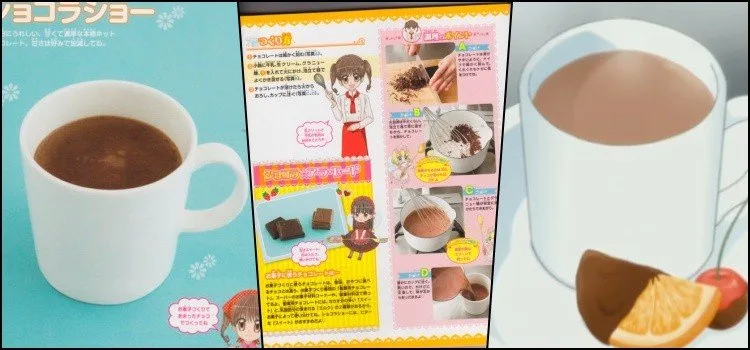
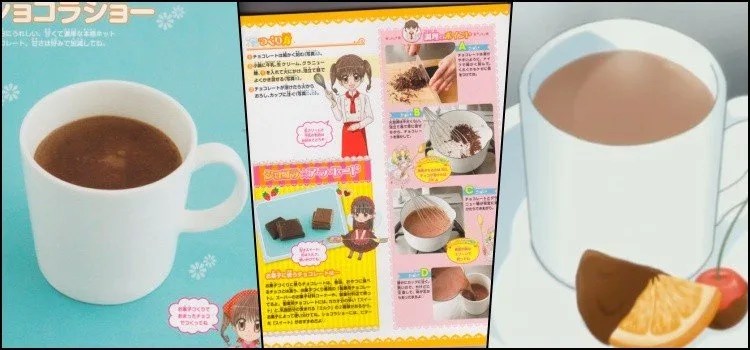
    Here in Brazil, the weather is starting to cool down. Nothing better than a great hot chocolate to warm up! This chocolate is creamy and velvety. Great to make when you have leftover chocolate from other recipes. This recipe was taken from a brochure made in 2010, narrated by the highly respected pastry chef Sadaharu Aoki, owner of a pastry shop in Paris. Let’s see the recipe!

    Hot Chocolate - Yumeiro Patissiere - Recipe

    Ingredients

    • 94 g of chocolate bar
    • 200 ml of whole milk
    • 200 g of cream
    • 10 g of sugar (refined, crystal, or granulated)

    Instructions

    1. Chop the chocolate finely.
    2. In a small saucepan, place all the ingredients and heat until the chocolate melts.
    3. Turn off the heat.
    4. Pour into cups and serve.

    Some tips

    Chopping the chocolate makes it melt faster. If a film forms in the cup when serving the chocolate, you can remove it with a spoon.
    Use any chocolate you want. If you want it less creamy, you can replace the amount of cream with more whole milk.

    Did you like this recipe? Would you like to see any recipe on the site? Share it with your friends!

  • I got sick in Japan! And now? – Cold and Flu

    I got sick in Japan! And now? – Cold and Flu

    The 2 main illnesses in Japan are the cold and the flu. The flu means you can take a day off work. But if you catch a cold, you are expected to do everything a normal person does wearing a mask. In this article, we will understand a little about colds, flu, and allergies in Japan. If you are sick, we will see how to face them.

    Anything that is not a severe flu that puts you in bed is called kaze (風邪) which can be translated as a cold. When the flu is quite severe, they use the word in katakana Infuruenza (インフルエンザ) which can be literally translated as influenza and flu. There are other illnesses that can be confused with colds and flus, such as the famous pollen allergy called kafunsho.

    Catching a cold in Japan is easy, due to the different temperatures that change radically. The Japanese also venture into this temperature change when entering an onsen and using air conditioning inside the house and going out into the heat of the street. Even when entering and exiting a train or station, you are subject to this temperature change that can leave you with a cold.

    sick cold flu in Japan

    I’m sick – Doctor and buying medicine

    Most jobs and schools require a person to present a certificate to prove their flu or illness. Be prepared to schedule an appointment and pay a fee of 5000 yen. This is to get a maximum of 3 days off. Sometimes you need to take days from your vacation to rest if you couldn’t get the medical note.

    Upon arriving at the medical appointment, the doctor will perform some tests, such as inserting a swab into your nose. After rubbing the swab in your nose and placing it in a solution for 5 minutes, he will determine the type of flu you have caught and thus recommend the medications.

    Doctors love to give strange names to seasonal flus that make you think you have a serious illness; they even mention which country this flu originated from. The medications used to combat flu and cold in Japan usually come in powder form in small packets that you must swallow and drink water.

    If you haven’t gone to the doctor and need medicine for flu or cold, you can find these powdered medicines at the majority of pharmacies. Just arrive at the place and ask for kaze no kusuri (風邪の薬). And if your throat is inflamed, you can ask for nodo no kusuri (喉の薬).

    They may also sell tablet medicines, it is worth remembering that many tablets in Japan are weak, and the recommendation is to take more than 1 at the same time. They are made this way to avoid cutting tablets in half or taking too many with the intention of suicide. When I was sick in Japan, a friend gave me a medicine called paburon (パブロン).

    sick cold flu in Japan

    I’m with flu and cold in Japan, and now?

    When you are sure you are sick, the steps are to take the medicine until you feel better. People will consider you to have the flu if you have a very high fever and are vomiting. For some reason, vomiting = flu.

    If you are not almost dying from fever in bed, then you have a cold. This means you can continue your life normally while wearing a mask.

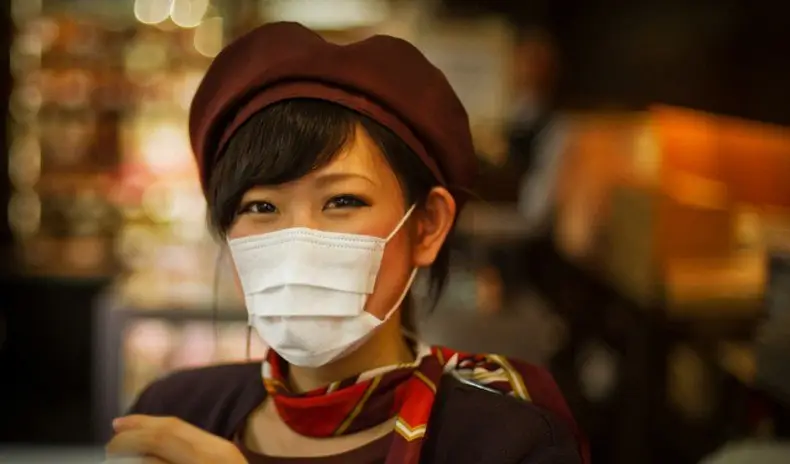
    The Japanese wear masks to avoid catching or spreading illnesses and also due to allergies. If you have a cold, you should wear masks that can be found in any convenience store.

    Others use the mask even to gain sympathy at work and receive lighter services. Remember not to reuse disposable masks, and always change them when they become damp. Avoid touching the mask and remember to wash your hands with soap and alcohol when changing it.

    sick cold flu in Japan

    Another thing you can do to treat this cold is to immerse yourself in a ofuro or even an onsen. The hot water keeps the body warm and also relaxes it. It is recommended to stay at home if you are not feeling well, always follow the doctor’s advice.

    To finish, let’s leave a list of words that may help you:

    Responsive Table: Scroll the table sideways with your finger >>
    portuguêsjaponêsromaji
    symptoms症状shoujou
    flu風邪kaze
    medicinekusuri
    fevernetsu
    headache頭痛atamaga itai
    sore throat喉が痛いnodoga itai
    muscle pain筋肉痛kinnikutsuu
    stomach painおなかがいたいonakagaitai
    joint pain関節痛kansetsutsuu
    chills寒気samuke
    fatigue疲れtsukare
    coughseki
    mucus or phlegmたんtan
    nasal congestion鼻ずまりhana zumari
    runny nose鼻水hanamizu
    eye pain目の痛みme no itami
    vomiting嘔吐outo
    itchingかゆみkayumi
    allergyアレルギarerugi
    diarrhea下痢gueri
  • Mistakes that many make when trying for a life in Japan

    Mistakes that many make when trying for a life in Japan

    The idea of leaving everything behind and trying a new life in Japan crosses the minds of many Brazilians, especially descendants. But before doing this, people need to calmly analyze this big step that will change their lives. Ask yourself: Will I work too much? Will I be able to make enough money? Will I be able to adapt to the culture? In this article, we will examine some mistakes that people make when trying life in Japan.

    Thinking that life in Japan will be beautiful and wonderful

    Living in Japan is good and has its advantages. But people forget that all countries have their problems and flaws. Some are better, others are worse. Some people go through problems, others do not.

    Don’t think that when you get there everything will be perfect! Our minds tend to create illusions and desires, thinking that the neighbor’s grass is always greener. What we should do is analyze whether we will be prepared to endure the problems of living abroad such as:

    • Being away from family;
    • Working hard and repetitively;
    • Different culture;
    • Enduring social pressures and prejudice;
    • The barrier of learning a new language;
    Mistakes that many make when trying a life in Japan

    Of course, despite the problems, we should think about the benefits of living in Japan, such as: Safety, honesty, hospitality, purchasing power, and others. Personally, just for the safety and culture, I am willing to face all the problems, and you?

    Thinking that you will get rich in Japan and return to Brazil

    Many go to Japan with the idea of getting rich, saving money, and returning to Brazil. In the past, this was possible, but currently, it is not that easy. This is because both the cost of living in Japan and in Brazil are more expensive than before, even though the Japanese salary exceeds 5,000 reais, that money will be completely spent on your life in Japan.

    A person should move to Japan thinking about having a good life there! Unfortunately, most go with the intention of making money, end up working too much, not enjoying or having fun, and then start to complain and blame Japan. Don’t try to work too much or save like a madman, and don’t spend all your income on frivolous things that hinder your social life.

    Mistakes that many make when trying a life in Japan

    Not leaving the comfort zone

    Many maintain the same routine, becoming increasingly unhappy. A person should always seek different paths, do different things, look for different sources of income. Some just want to arrive in Japan, work, sleep, and spend. These people end up not learning the language, not looking for alternative jobs, extra income sources, and end up in the same routine as always.

    Think about how your life could be better if you tried different things that you like! Many Brazilians have tried their own businesses in Japan and succeeded because they pursued their goals and stepped out of their comfort zone. You should not depend 100% on others, on contractors, or jobs! You must be prepared for any situation. Lack of preparation can end up forcing you to leave your comfort zone.

    Mistakes that many make when trying a life in Japan

    Not controlling the fear of things

    Many, before moving to Japan, already have fears in their heads. However, these fears are only in their heads; some tend to be afraid of things like: working 12 hours a day, facing prejudice in factories or schools, being afraid of moving around, going hungry, communicating, and so on.

    A person needs to understand that fear is something normal and that it ends up protecting us. I myself am afraid of many things, but that doesn’t stop me from doing them. Fear makes us more alert and helps when making decisions. Fear is linked to negative thoughts, and having these types of thoughts can bring unhappiness and turn us into people who complain about everything.

    We have already written an article discussing thoughts and attitudes that can hinder our life in Japan; we recommend reading that article by clicking here.

  • Soldiers who fought in World War II until 1974

    Soldiers who fought in World War II until 1974

    In 1974, a cabin was discovered in Indonesia, occupied by a Japanese soldier who was still fighting in World War II. He was called Nakamura Teruo (中村輝夫), but in fact, he was Attun Palalin. He was born in 1919 and was from the Amis tribe, a Japanese colony in eastern Taiwan. As his name suggests, he was a brilliant husband who enlisted in the army because the Japanese promised to provide his family with food and money.

    At 24 years old, he was sent to Morotai, an island in Indonesia. It was invaded by the Allies in 1944 during the Battle of Morotai, and he was declared dead in March 1945. Nakamura’s cabin was accidentally discovered by a pilot in mid-1974. He did not speak Japanese and wanted to return to his homeland in Taiwan, but he was saddened to find out that his wife had already remarried.

    The fact that he did not have pure Japanese nationality meant he received less money and was little acclaimed by the media. Until he pursued and managed to be better compensated. Five years after returning to his home in Taiwan, he died of lung cancer.

    Soldiers who fought in World War II until 1974

    Japanese Found in the Philippines in 1974

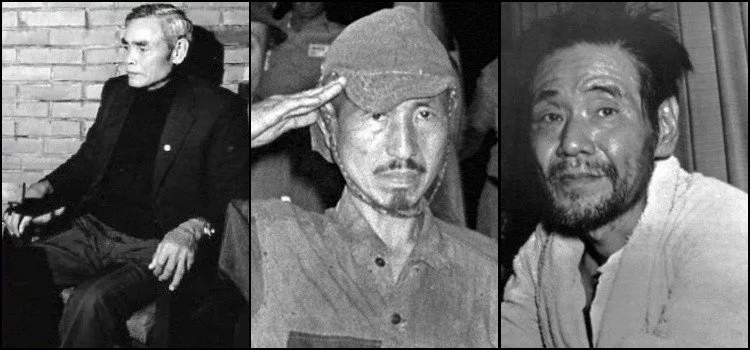
    Nakamura Teruo was not the only one to fight in World War II after it had ended. The case that received the most attention was that of Hiroo Onoda, who during World War II was sent to Lubang Island in the Philippines. He and his companions were on the island when it was invaded and captured by American forces in 1945; many died while Onoda and a few companions hid in the jungle.

    He and 3 companions lived in the mountains until his 2 companions died in battle against Philippine forces. Onoda lived alone in the mountains for 29 years, even with attempts to convince him that the war had ended with the Emperor’s surrender. In 1960, Onoda was declared legally dead in Japan. To survive, Onoda stole rice and bananas from local residents and slaughtered cows for meat.

    Even after Onoda met a Japanese student, Norio Suzuki, he refused to accept that the war was over unless he received official orders from his superior to lay down his arms. The Japanese student returned to Japan with photographs to prove his encounter with Onoda and managed to find his Superior to order Onoda to lay down his arms.

    Soldiers who fought in World War II until 1974

    Thus, Lieutenant Onoda was duly relieved of his duty without ever surrendering. He accepted the official order from his commander wearing his uniform and sword with an operational Arisaka 99 rifle with 500 rounds of ammunition, several hand grenades, and a dagger that his mother had given him in 1944 for protection. During this time in the mountains, 30 Filipino inhabitants were killed by Onoda, but he received forgiveness from Philippine President Ferdinand Marcos.

    He went to Brazil!

    After his surrender, Onoda moved to Brazil, where he became a cattle farmer in the agricultural colony of Jamic in Terenos, Mato Grosso do Sul. Onoda received on December 6, 2006, the Santos-Dumont merit medal from the Brazilian Air Force. In February 2010, the Legislative Assembly of Mato Grosso do Sul conferred upon him the title of “Citizen of Mato Grosso do Sul.” Unfortunately, Hiroo Onoda passed away on January 17, 2014.

    Shoichi Yokoi Fought Until 1972

    Shoichi Yokoi was born in 1915 and became world-renowned when he was found hiding on the island of Guam located at the southern tip of the Mariana Islands in the Pacific Ocean. When the Americans recaptured the island in 1944, Yokoi hid in the jungle to avoid surrendering to enemy troops.

    During those 27 years, he remained hidden in a shelter/cave and hunted at night. He used native plants to make clothes, bedding, food, etc. He was afraid of being killed by the inhabitants of Guam and did not want to surrender even upon seeing leaflets announcing the end of World War II.

    Soldiers who fought in World War II until 1974

    On January 24, 1972, he was rescued by Jesus and by the Grace of God. That’s right, he was found by 2 local hunters named Jesus Duenas and Manuel DeGracia. In reality, Yokoi was captured by the hunters through his traps; DeGracia wanted to kill the Japanese man because of the death of his niece after the end of the Battle of Guam, but Jesus convinced him that this was not right.

    “It was very embarrassing for me to have returned alive,” Yokoi said upon returning to his country, with his combat rifle slung over his shoulder, in a phrase that would become a popular saying in Japan. He became a celebrity in Japan, got married, and moved to rural Aichi. In 1991, he received the greatest honor of his life when he was received in an audience by the Emperor of Japan, Akihito. During an interview, he said he had strong and deep reasons for having remained isolated from civilization for so long. According to him, his childhood was very hard, and his relatives were very rude, which made him venture into the forest to stay away from them. Shoichi Yokoi died in 1997 at the age of 82 from a heart attack.

  • Tools for illustration and manga editing

    Tools for illustration and manga editing

    Many people dream of publishing mangas or simply creating illustrations and fan art. With the advancement of technology, most of these illustrations and even mangas are made on a graphics tablet and using applications and programs. Keeping this in mind, in this article we will present some tools and applications that can help you when editing your art and creating your comics.

    Programs for editing illustrations and mangas

    MediBang Paint – MediBang Paint Pro is a free and lightweight software used for creating illustrations and mangas. It is compatible with Windows and Mac and has versions for mobile devices. Although it is free software, it contains numerous tools. You will find everything you need to create your illustrations and mangas. The program has over 50 brushes, different layers, layouts to create comics, page control to manage your mangas, and backgrounds to use in your mangas.

    MangaName – MangaName is a simplified application that contains a pen, eraser, and some shape tools necessary for creating sketches. Name is a Japanese term used to describe manga sketches. A mangaka uses “name” to layout pages, decide character positions, angles, etc.

    Jump Paint – It is an application for creating mangas, available in versions for PC, smartphone, tablet, etc. It is completely free and comes with tutorials on creating mangas, which are produced by the editorial team of the renowned Japanese manga magazine, Weekly Shonen Jump. Jump Paint contains all the necessary tools to create manga, such as layers, G pen, countless tones, among others. In addition, you can save your mangas in the cloud, which has unlimited available space.

    You can access all these applications mentioned here by clicking on the image below:

    Tools for illustration and editing mangas

    Where to publish my illustrations and mangas?

    The MediBang is also a site for publishing and reading mangas and illustrations created by ordinary people. Publishing your works on this site can help you become known and who knows, become a successful illustrator or mangaka. In addition to MediBang, we will leave a list of other sites where you can also share your works:

    • Pixiv – The main online artist community where members submit illustrations, mangas, and novels or search for works created by others;
    • MangaDojo – A community that allows professional and independent mangakas to showcase their work and collaborate with others;
    • DeviantArt – A famous social network focused on sharing illustrations, drawings, and artistic works;

    We have already written several articles talking about creating mangas:

  • Do the Japanese kill and eat dolphins?

    Do the Japanese kill and eat dolphins?

    The media today is full of misinformation, and people nowadays do not tend to reason and believe in anything they hear and take it as an idea. A simple report showing Chinese people eating dog at a festival in a certain city in China was able to root the idea that Chinese people eat dog even though 99% of Chinese people have never eaten a dog in their lives.

    Because of these reports, people tend to create generalized ideas about countries and nationalities, and they don’t even notice that in Brazil similar practices occur, such as the slaughter of rabbits, frogs, armadillos, bull testicles, mocotó, chouriço, sarapatel, and other foods that may be considered strange and disgusting to some. It is no longer enough for the idea that Japanese people eat some live seafood, now people claim that Japanese people eat dolphins. Let’s try to really understand what is happening and what practice this is to silence the generalizers.

    Yes, they kill dolphins

    Just like with the whale hunting, the capture of dolphins has other purposes. Unlike whales, dolphins are far from extinction; to be honest, even the whales that the Japanese hunt are far from extinction. The concerning generator of the controversies surrounding dolphin eating is not the meat itself, since criticizing the consumption of an animal just because it is cute is nothing but hypocrisy. What is truly concerning is the way dolphins are captured and killed; dolphins are lured and surrounded by a sound barrier and killed with spears, while other dolphins watch this sea of blood.

    Do the Japanese kill and eat dolphins?

    All this slaughter happens only in ONE small place (village) in Japan called Taiji. They claim that eating this meat is a local tradition. And it is not 20,000 dolphins as some sites claim; decades ago the numbers were only around 1500 and now in recent years it has drastically dropped to 200. This is because it is not at all advantageous to kill dolphins; let’s understand the reason.

    Firstly, selling a live dolphin to abroad or to a water park generates a profit of 300,000 dollars. While with the sale of the meat, the profit is less than 1,000 dollars. Not to mention that the meat is not sold throughout Japan; while some news lies that it is a common meat, it is only consumed with low frequency in the Taiji region where this hunting takes place. Not even 1% of the population has had the chance to try this meat; some have only tried it once in their lives. Many Japanese people do not even know about the dolphin slaughter and the sale of its meat, which is mostly sent abroad. Many who know still condemn the practice and campaign against it!

    Do the Japanese kill and eat dolphins?

    Curiosities about Dolphin Slaughter

    Let’s see some information, data, statistics, and curiosities so you can examine them calmly.

    • Dolphins are hunted in other countries such as the Solomon Islands, Faroe Islands, and Peru;
    • Dolphin meat poses health risks due to pollution;
    • Taiji in Wakayama is the only place in Japan where this hunting occurs;
    • Currently, the method used to kill dolphins is with a spear to the neck so that they die quickly without suffering;
    • Countries like Taiwan, Hawaii, and even Washington have hunted dolphins. Various countries where hunting is prohibited still occur and in large numbers; in Peru, for example, nearly 2000 dolphins die each year;
    • In 2007, about 1000 animals were killed;
    • The Japanese Association of Zoos and Aquariums does not support hunting;
    • Several veterinarians and scientists concluded that the method used for hunting must be prohibited;
    • Taiji started the first commercial hunting operations in 1606;
    • The hunting season opens on September 1st and goes until February; a maximum of 1800 is allowed per year;

    Where do we want to get?

    The simple fact that the news spreads in a generalized manner or with wrong numbers and information makes people draw conclusions or have absurd ideas about what really happens. We are not defending this practice; any act of violence and cruelty against animals is condemnable. But what happens is not so severe to the point of making idiotic people create hatred against an entire nation that does not even know what is going on. Especially when our nation and all other nations are responsible for similar and repugnant acts.

    The truth is that this tradition in Taiji is nothing more than a lucrative business to sell live dolphins and merchants to sell a little meat at exorbitant prices to an insignificant number of people. Of course, I do not blame anyone who eats the meat of this animal; there are many other animals that die cruelly and that people eat daily. I will not criticize the practice just because they are cute and intelligent little creatures. But I believe that the method used could be a little different and less cruel. But don’t we fish fish with hooks and let them die from lack of water?

    xenophobia, prejudice

    And what is the Government’s position on this? When it comes to money, every government is flawed, and practitioners end up circumventing or using loopholes in the laws to carry out their lucrative businesses. Prostitution is prohibited in Japan, and yet it is not difficult to find; understand that the law is always flawed and there is no perfect governmental system. If you research deeply into things that happen in the dark in any country, you will be shocked. So do not let generalized information make your mind to the point of generating hatred for people who have no relation to the subject. We can hate the practice and the people who practice it, but not an entire nation that has nothing to do with it.

  • Language schools – Where to take Japanese courses in Japan?

    Language schools – Where to take Japanese courses in Japan?

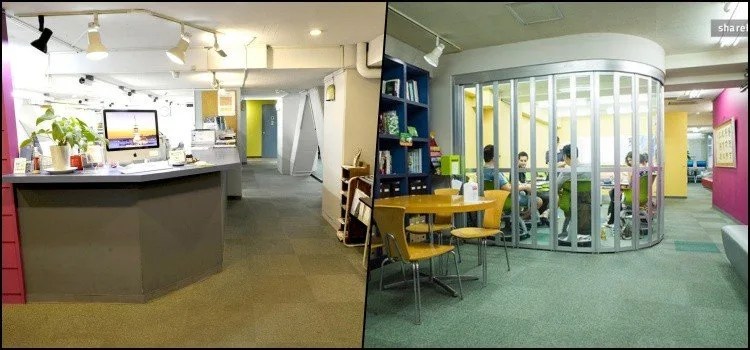
    Have you ever thought about taking an intensive course in Japan? Staying from 2 months to 2 years with a student visa attending a school daily solely for the purpose of learning Japanese? In addition to universities, Japan is made up of thousands of different language schools that cater to foreigners. There are so many different schools that it becomes difficult to know which one to choose. Thinking of helping those who wish to study Japanese in Japan, we wrote this article.

    Before choosing the school you want to attend, you need to take into account that classes are usually taught entirely in Japanese and sometimes in English. It is not necessary to know English or Japanese; they use a method to teach anyone from any language, however, some schools provide support in Portuguese. Some schools offer accommodation and help with obtaining a student visa. Prices can vary and easily exceed 20,000 reais per year.

    Some schools, in addition to the intensive Japanese course, offer cultural classes or other subjects like manga and illustration. Classes are usually daily and last from 3 to 4 hours. You should consider the location; Tokyo has several schools that are expensive, but it is easy to find part-time jobs. The most important thing is to know what your needs are!

    Language schools - Where to take a Japanese course in Japan?

    Choosing a Language School in Japan

    Japanese schools can be divided into 3 groups:

    • Large and expensive school;
    • Small and expensive school;
    • Cheap school;

    Most large schools and universities are expensive due to their expenses and location. Some small schools are also expensive because they pay private teachers for more intensive classes. Cheap schools tend to be small and hire private teachers and do not divide the class by levels. The cheaper the classes, the less effective they will be. There are Japanese courses that can get you to N1 in a year, while others won’t even get you to N3. Schools that allow enrollment at any time of the year tend to be chaotic in July and August.

    In addition to traditional language schools, some universities have departments that teach Japanese, but they are more expensive. You can also obtain scholarships for learning Japanese and not just for studying at universities. Another option is to pay private tutors who charge around 2000 yen per hour, but this usually does not help with the visa.

    Choosing a Japanese school in Japan is not easy, especially the payment and visa process if you have no knowledge of English. Research all the details and information calmly before choosing the school you want.

    Language schools - Where to take a Japanese course in Japan?

    The Best Japanese Schools in Japan

    Are you wondering which is the best Japanese school in Japan to study? When you search on Google about this, you come across booking-style sites that display various Japanese schools with exorbitant prices. It is easy to find schools that cost only 20,000 a year, while searching on Google through these sites I found schools that charged more than 100,000 reais for 6 months. I will leave a list of sites below so you can do your research and decide among the best and most well-known language schools in Japan:

    KAI Japanese Language School – Students from 40 countries attend this school located in Shinjuku – Tokyo. The courses last about 3 months to 2 years and also have shorter courses. A great option for those looking for support in Portuguese, and classes usually cost 25,000 reais per year.

    Shinjuku Nihongo Gakkou – SNG School was founded in 1975 and is now an institution recognized by the Tokyo government as a vocational school. It serves students from over 40 nationalities including Portuguese. Prices vary around 22,000 reais per year, and this school is good enough to get you to JLPT N1.

    Genki Japanese and Culture School Tokyo – Considered one of the best Japanese schools in Japan located in Shinjuku. Classes are held with few students, a maximum of 8 students. Its annual price is usually around 30,000 reais. They also have a school in Fukuoka.

    This Japanese Language School – Located in Kichijoji, Tokyo, JLS offers lessons based on everyday activities so you can apply what you learn directly to your daily life.

    TCJ – Tokyo Central Japanese Language School – Located in Shinjuku, founded in 1988 and serves students from over 40 countries. This school offers annual courses for 22,000 reais.

    Hokkaido Japanese Language School – for those looking for a different option, this school is located in Hokkaido.

    ECC – Kokusai College – Language school located in Osaka.

    Go-Nihongo – On this site you can find other language schools in Japan.

    Unfortunately, not everyone can take an in-person Japanese course. If it is not possible for you, we recommend an online Japanese course.

  • The underground temple of the city of Tokyo

    The underground temple of the city of Tokyo

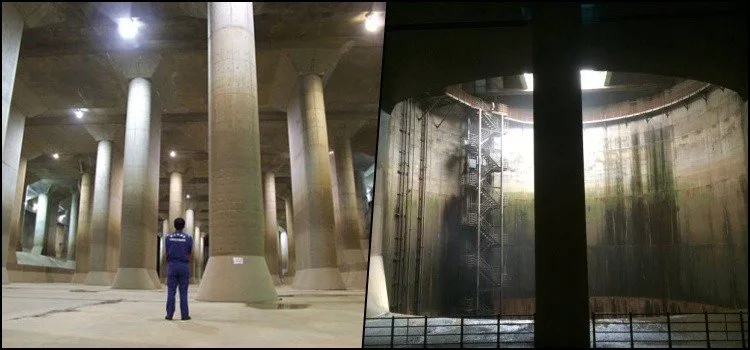
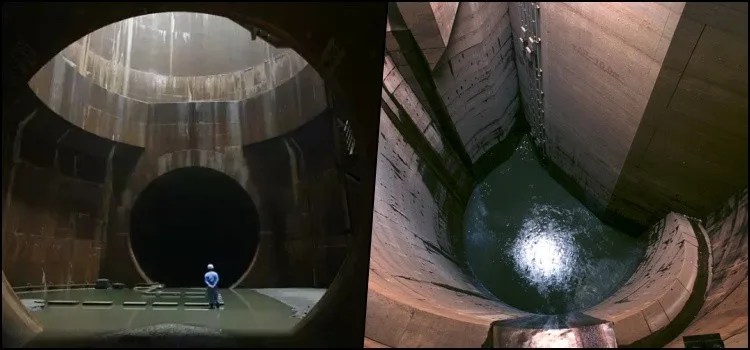
    In 1991 a typhoon flooded 100 km² destroying more than 30,000 homes and killing 52 people. To prevent this, Japan began creating underground channels to avoid these floods. Thus, Tokyo and some metropolises in Japan are completely protected against floods from rain, typhoons, and tsunamis. Although the city is filled with buildings and tunnels underground, they are almost invisible to those on the surface.

    One of these tunnels is the Kanda River Underground Retention Basin, 4.5 km in a tunnel that is 40 meters below the ground. This basin can hold up to 540,000 tons of water when Tokyo is hit by floods. In Osaka, we have the Hiranogawa reservoir, with 1.9 km to prevent flooding. There are several other small underground facilities, but today we will talk about the largest in the world.

    The underground temple of the city of Tokyo

    G-Cans – The underground temple

    There are underground constructions in Tokyo that started in the 90s and have pillars that weigh 500 tons. In this case, we are talking about the G-Cans Project, an underground facility to divert water from Tokyo to the Edogawa River. This facility has turbines and 78 pumps capable of draining more than 200 tons of water per second. There are 6.4 km of tunnels, 50 meters below the surface, and it cost more than 3 billion to build.

    The underground temple of the city of Tokyo

    The site is used only a few times a year; you can visit this underground temple for free from Tuesday to Friday for an hour and a half. To do this, you must register in advance on the website below. We will also leave the address of the location.

  • Hello Kitty and Pokemon are from the devil? Lies about Japan

    Hello Kitty and Pokemon are from the devil? Lies about Japan

    The lie has been part of the lives of most people, over the years thousands of people spread lies and other thousands believe and end up spreading them too. Do you remember that there were rumors that if you put a 2-liter bottle full of water in the clock, the electricity bill would be cheaper? How could thousands of people believe in such things?

    Unfortunately, over the years rumors and lies about famous things have been spread, mainly by religious people without any knowledge. We have already heard reports that Hello Kitty, Xuxa, Pokemon, Katy Perry, Globo, and various famous things were accused of having a pact with the devil. Nowadays, 90% of famous things have had a pact with the devil… It seems that some love to burn famous things.

    This all happens because some idiot spreads a rumor on the internet, and people believe it and help the rumor spread. How is a lie spread? The more scandalous, famous, and sensationalist the subject, the easier it is for it to go viral and end up being defined as truth for many people. And even with the existence of sites like Google and e-farsas, where we can easily research the subject, it seems that lies only increase. WhatsApp and social networks are one of the biggest sources of lies spread throughout Brazil.

    Lies about Hello Kitty

    In 2005, a rumor circulated on the internet that Hello Kitty was created by a woman through a pact with the devil to cure a 14-year-old child who had cancer. This rumor spread in such a way that many people around me stopped buying products from this brand and criticized those who had such products. And this was not the only rumor; there were versions that said the little girl was born without a mouth or with cancer in her mouth.

    Hello Kitty and Pokemon are from the devil? Lies about Japan
    Obento

    Others said that the word Kitty meant devil in Chinese, even though Hello Kitty was created by Japanese people. China and Japan are completely different from each other, especially in language. Any English student obviously knows that Kitty means kitten. And the character’s name has always been Kitty White or white kitten. The fact that the character has no mouth is a marketing move so that people can imagine the kitten’s expressions; her eyes are black and without eyebrows exactly to not present facial expressions. Some claim that the kitten was created without a mouth to criticize the submission of Japanese women, something we cannot dismiss.

    The big truth is that Hello Kitty was created by 3 men in 1974 who worked at Sanrio. The designer of the kitten was made by Ikuko Shimizu. Japan is famous for creating mascots and fictional characters; the company Sanrio had exactly this focus, to create characters and sell their licenses or products.

    Lies about Pokemon

    Pokemon was another franchise that was successful worldwide, created by the great Japanese gaming company Nintendo. The franchise where you capture little creatures on handheld video games became so famous that it gained toys, card games, and television adaptations. At the time the anime was released in Brazil, many religious people already had in their heads that all Japanese cartoons were from the devil. The mere fact that there were non-real creatures was already a reason for parents to prohibit their children from watching this cartoon.

    The problem is that Pokemon was created using non-real creatures precisely to avoid any issues with organizations that defend animals. Nintendo managed to solve this problem with animals and didn’t even worry about Christians, since they do not predominate in Japan. It is up to the person’s conscience to decide whether or not to watch Pokemon. The problem is that many criticize with all their might but play Mario Bros, the biggest franchise of Nintendo that clearly has magic and supernatural characters.

    Hello Kitty and Pokemon are from the devil? Lies about Japan

    Pokemon does not take place in our universe; many characters may be native to there, and much of it was created in a laboratory. There are no scientific arguments to defend the pokemons that have hypnosis powers or ghost types that may hurt the conscience of some Christians. The fact is that Pokemon is a franchise with thousands of games, each with its story and characters; I personally don’t know why to condemn a franchise just because 1 out of thousands of pokemons has something questionable. If that’s the case, we can’t watch absolutely anything on TV.

    People don’t know how to translate

    Now let’s talk about the biggest stupidity and lie spread on the internet related to Pokemon. Many religious people suggest that the name means pocket demons, while the literal translation of Pokemon (Pocket Monster) means pocket monsters. Of course, if we research the meaning of the word monster, we can understand that it is something questionable; however, monster is a word that means any being or thing contrary to nature, anomaly, or deformity. Since the pokemons are not real animals, they are not normal. Now to turn the word monster into demon is a big exaggeration. Thousands of video games and cartoons use the word monster to refer to collectible characters that do not exist in our world, whether science fiction or not.

    Other lies that have been spread on the internet are related to the names of the pokemons, which are nothing more than adaptations, abbreviations, and mixtures of the animals they were inspired by, or their elements and abilities. Some even said that Pikachu means Destroyer Monster. Any Japanese student knows that pika is synonymous with light and chuu is rat. Pika is also simply a small mammal that looks like a rat; in Brazil, it is called Ochotona.

    Some also claim that the cartoon caused hallucinations, suicides, and sent several children to the hospital. An argument without any foundation; the only concerning thing that happened was that people who suffer from epilepsy ended up having problems in an episode where a strong light was used in the animation.

    What can we conclude from this?

    We cannot deny that many cartoons, games, and other things that originated in Japan have something considered wrong by Christians. The fact that most of the population is Buddhist and Shintoist ends up making the authors of these works simply put biblical references because they find it interesting and do not think that Westerners will criticize or find it strange. Japanese culture is completely different from Western culture, and they do not see the devil in everything, nor do they think about conspiracies, hidden messages, or anything like that when creating their works.

    If you want to know if a Japanese game or anime is appropriate for your child, simply research reliable sources, watch, and check the story. Do not believe in rumors just because something is famous and various lies have started to circulate about it. The internet is full of lies; stop depending on the opinions of others or believing everything you read! Consider your own conscience!

  • Meet the Kawaii Monster Cafe in Harajuku

    Meet the Kawaii Monster Cafe in Harajuku

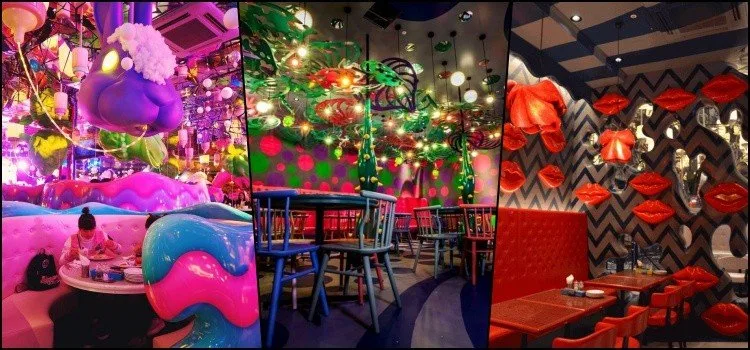
    We have already seen maid cafés, neko cafés, and cosplay cafés, but did you know that there is also the Monster Café? That’s right, in the Harajuku district of Tokyo, there is the Kawaii Monster Café, which is a kind of themed restaurant or café that is quite different. For those who know the Harajuku neighborhood, it is famous for its unique, colorful, and crazy fashion. But those who enter the Kawaii Monster Café are capable of being even more surprised.

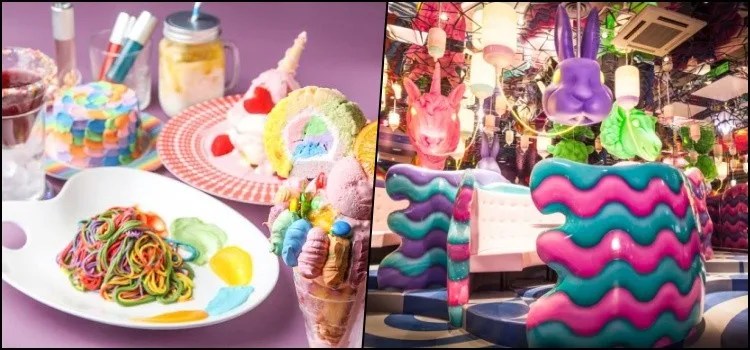
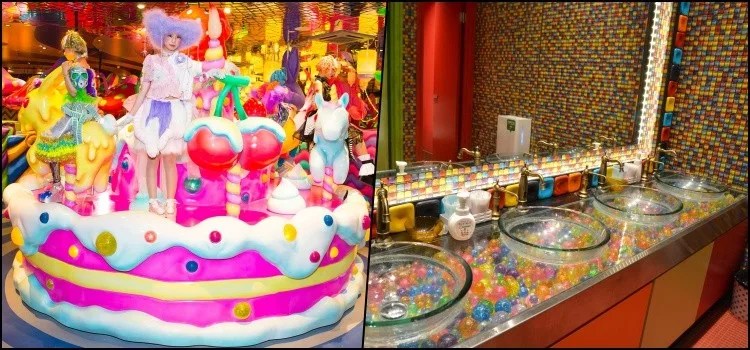
    Upon entering the Kawaii Monster Café through the mouth of a giant monster, you are faced with a colorful, eye-catching, bright, and unique space. Like most café restaurants, you are served by a kawaii girl, who this time is dressed as a monster but is still kawaii. The food and drinks served are completely colorful and crazy, resembling a work of art. The best part is that here you can take photos of the Monster Girls without worrying about paying absurd amounts as you do in Maid Cafés. Here, absolutely everything is different and colorful: the ceiling, the bathroom, the tables, and even the menu.

    Meet the Kawaii Monster Cafe in Harajuku

    How did the Kawaii Monster Café come about?

    The Kawaii Monster Café is a restaurant conceived by Sebastian Masuda, the person responsible for the crazy clips of Kyary Pamyu Pamyu. He is also the owner of a famous kawaii store in Harajuku called 6%DOKIDOKI. This restaurant, which is also a kind of nightclub, was inaugurated in the summer of 2015.

    During the day, shows and music are performed by the Monster Girls, while hotter shows usually happen at night. However, you should prepare your wallet because, just like the Maid Cafés, this Monster Café is expensive; the food is expensive, everything is expensive. But the experience of witnessing this totally new world that resembles Alice, in addition to eating colorful and crazy foods, is definitely worth it. Here are some of the areas of the Kawaii Monster Café:

    Meet the Kawaii Monster Cafe in Harajuku
    • Mushroom disco – A forest with a ceiling covered in poisonous mushrooms and colorful space plants;
    • Sweets go round – A giant cake that is the center of the Monster Café, a popular spot for taking photos;
    • Milk Stand – The ceiling with massive heads of rabbits, sheep, and unicorns with a bunch of baby bottles;
    • Bar Experiment – A counter surrounded by glowing and mysterious jellyfish along with other sea monsters;

    The Monster Girls are named Baby, Dolly, Candy, Nasty, and Crazy:

    Meet the Kawaii Monster Cafe in Harajuku

    To reach this psychedelic restaurant, you should take the subway to Meijijingu-mae station or the train to Harajuku station:

    Location: 4-31-10 Jingumae | 4F, YM Square Bldg, Shibuya 150-0001, Tokyo
  • Recipe for Shiroi Koibito – Cookie

    Recipe for Shiroi Koibito – Cookie

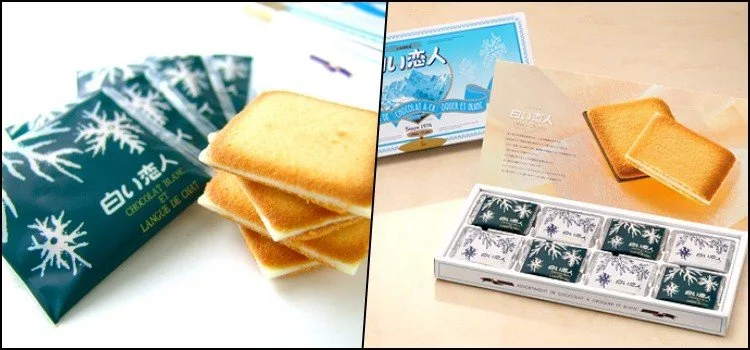
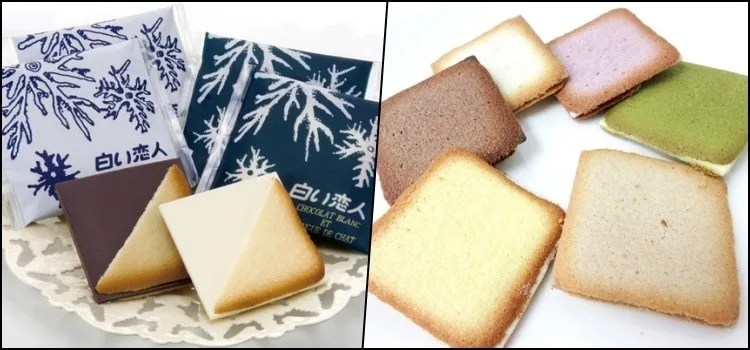
    Learn how to make the cookie from the famous cookie factory in Hokkaido The Shiroi Koibito (白い恋人 – literally White Lover) is a cookie made by Ishiya Patissiere, which has its factory open to the public for visits and tasting of products.

    This sweet is nothing more than a French cookie made from egg whites called Pâte à Cigarette, widely used in global pastry for decorations and enjoyed at afternoon tea. In the middle, there is chocolate. The cookie originally contains white chocolate, but there is a version with dark chocolate called Shiroi Koibito Black. Let’s get to the recipe!

    Making the cookies

    Before you start, on a sheet of paper, draw squares of 4 cm x 4 cm leaving a space of 2 cm between them.

    For the cookies you will need:

    • Small piping bag
    • Rectangular baking tray
    • Parchment paper
    • Bowls for mixing the ingredients
    • A whisk (fouet)

    Ingredients

    • 100 g of unsalted butter at room temperature
    • 100 g of sifted powdered sugar (the most known in the market is Glaçúcar)
    • 100 g of egg whites (approximately the whites of 3 eggs)
    • 100 g of wheat flour
    • ½ teaspoon of vanilla extract
    Shiroi Koibito Recipe – Cookie

    How to Make

    Preheat the oven to 180°C

    1. Beat the butter in a bowl until it becomes creamy and slightly white;
    2. Add the sugar and continue mixing. Then add the egg whites;
    3. Sift the flour over the mixture and mix well;
    4. Place the mixture in the piping bag;
    5. In the baking tray, place the sheet of paper and on top the parchment paper;
    6. Carefully place the dough filling the drawn squares;
    7. Bake for 10 to 12 minutes, until the edges of the cookies are golden.

    Making the chocolate filling

    Ingredients

    For white chocolate:

    • 100g of white chocolate
    • 20 ml of milk

    For dark chocolate

    • 100g of semi-sweet chocolate
    • 40 ml of milk

    How to make

    1. Melt the white chocolate and add the milk and mix well;
    2. Place on a surface with plastic wrap and refrigerate until the chocolate is soft and firm;
    3. Cut the chocolate to the same size as the cookies.

    Assembly

    • Place one cookie, the chocolate, and another cookie on top;
    • Refrigerate for 10 minutes;

    Now enjoy ^^

  • How to survive the insects and mosquitoes of Japan?

    How to survive the insects and mosquitoes of Japan?

    During the hot and humid summer, many people face mosquitoes and insects in Japan. Those most affected live in small cities near nature, and that simple net that windows have cannot protect you 100% from mosquitoes and bugs. In this article, we will share some tips and recommendations so that you can survive the insects and mosquitoes during the summer in Japan.

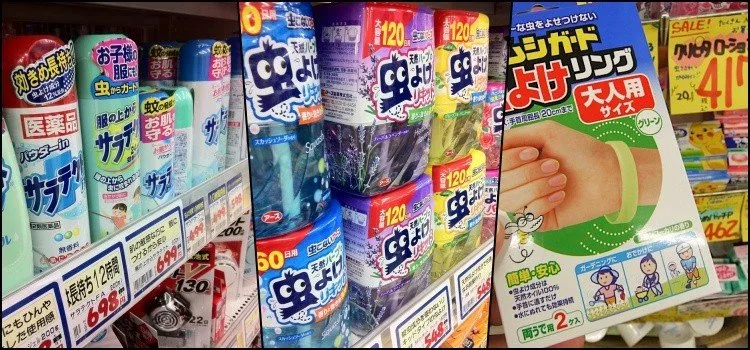
    First Tip – When buying oils, lotions, essences, and other products for home or body, try to look for products that contain Pyrethrum in their ingredients, a flower that is widely used in repellents and insecticides. This is because the plant has pyrethrins that attack insects; you can look for the words: 除虫菊 or ピレスロイド系 in the composition of Japanese products. Other natural products you can find are citronella (シトロネラ), lavender (ラベンダー油), and lemon eucalyptus (レモンユーカリ精油). Keep in mind that sometimes these products can cause allergies in some people.

    How to survive the insects and mosquitoes in Japan?

    Products against mosquitoes

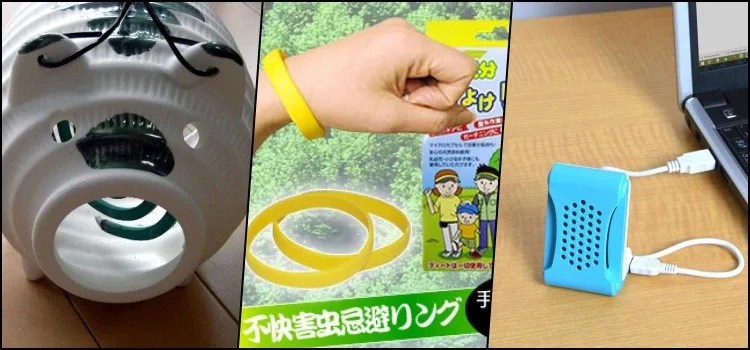
    Death Spiral – Katorisenko (蚊取り線香) – The famous spiral we use to scare away mosquitoes can be found in Japan by the name Katorisenko. This spiral is basically an incense that contains an insecticide. There are even containers to place this death spiral; one of them is a ceramic pig called kayaributa (蚊遣豚), proving that pigs are on our side.

    Electric exterminator – Denshikatoriki (電子蚊取り器) – You know those devices we plug in to kill mosquitoes? This is the famous mosquito exterminator that leaves no odor in the house and eliminates insects for good. There are several different models in Japan, portable, USB, and liquid. Those that have something like gum are called Katorimatto (蚊取りマット) and usually last one night, while the liquids in containers last for months.

    How to survive the insects and mosquitoes in Japan?

    Electric Shock Racket – Dengeki satchū raketto (電撃殺虫ラケット) – You know those famous rackets that give shocks? They can be found in Japan by this mentioned name. If you want other electronic options like lamps, just look for (Dengeki satchu) 電撃殺虫.

    Insect Repellent Bracelet – Mushiyoke ringu 虫よけリング – These are rubber bracelets that scare away mosquitoes. They usually contain lemon oil, eucalyptus, lavender, and citronella. There are also portable repellents in the form of keychains.

    Buying insect repellent products

    There are thousands of repellents and insect products. First, you need to decide if the product will be used to kill or prevent the presence of insects. There are also products that you can apply after an insect bite, products that should be used indoors or outdoors; there are many choices. You also need to decide if the repellent will be a spray or cream, or if it will be natural or chemical (DEET).

    Below is a list of repellents you can take a look at:

    • 虫よけムシガード プッシュ (Mushiyoke mushigādo pusshu)
    • サラテクトマイルド  (Saratekuto mairudo)
    • スキンガード エクストラ (Skin Guard Extra)
    • オーガニックマドンナ アロマガードミスト (Organic Aromic)
    • お肌の虫よけミスト (Mushiyoke Mist)
    • Coleman(コールマン) 虫よけナチュラルエッセンス (Natural Essence)
    • 塗るタイプ (Lotion Gel)

    Click here and see how to survive the heat in Japan. 

    Below we will leave a vocabulary list that can help you choose your products:

    JapaneseRomajiPortuguese 
    kamosquito
    mushiinsect
    虫よけ/虫除けmushi yokeinsect repellent
    虫さされmushi sasareinsect bite
    防虫bouchuuinsect protection
    かゆみkayumiitching
    忌避kihiavoid
    殺虫剤sacchuuzaiinsecticide
    蚊取りkatoriremove mosquitoes
    天然成分tennen seibunnatural ingredients
    室内用shitsunaiyouindoor use
    屋外用okugaiyououtdoor use
    ジェルjerugel
    ローションrooshonlotion
    クリームkuriimucream
  • Why do Japanese women cover their mouths when they laugh?

    Why do Japanese women cover their mouths when they laugh?

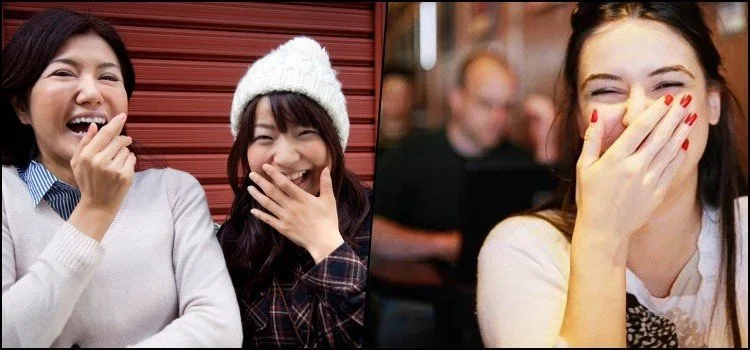
    If you live with Japanese people, you may notice that most women tend to cover their mouths when they laugh or even when taking photos. It seems that they are embarrassed by their smiles. There is a historical reason behind this, and in this article, we will try to understand it.

    Nowadays, Japanese women believe that this practice is a polite way, good etiquette. Of course, some do this just to hide their teeth, because in Japan, people do not care much about dental hygiene and having a beautiful smile; many teeth are misaligned or crooked. This is so common that some girls even pay to make their teeth crooked. Some Japanese girls claim that they hide their smiles because Japanese society disapproves of scandalous women.

    Why do Japanese women cover their mouths when they laugh?

    Another thing that influences this practice is the fact that laughter in Japan is usually quiet. Japanese people do not tend to shout or laugh loudly; this can be viewed negatively among women, which is why they cover their mouths. Japan is a collectivist country; some Japanese women had this practice, and other Japanese women ended up imitating it, and it became a standard. Nowadays, putting a hand over the mouth when smiling is seen as something graceful and cute.

    Historical reasons for covering the mouth

    Some claim that the custom of covering the mouth when laughing dates back to the Kofun period (250-538). We do not know exactly when it started, but a common practice at that time in various Asian countries was to dye teeth black to strengthen them and protect against cavities and periodontitis. Because of this, many women were embarrassed to show their black smiles. Another ancient custom was that showing the inside of the mouth was not polite; it was normal to only show a smile.

    This custom of dyeing teeth black was called Ohaguro (お歯黒). This was not a source of shame; many did this to hide their yellow teeth, as white makeup on the face highlighted the yellow of the teeth. Having black teeth was fashionable during the Nara Period (710-794), but it would not be unusual for some girls to dislike it and end up creating this custom of covering the mouth, which spread to most Japanese women.

    Why do Japanese women cover their mouths when they laugh?

    Other reasons and facts about covering the mouth

    Covering the mouth when smiling can also be something natural for women. A universal custom is to put a hand over the face or mouth when a person is surprised or embarrassed. There are many similarities regardless of cultural backgrounds. Nowadays, it is common for Western women to feel embarrassed to open their mouths or laugh loudly, or they simply find it cute and graceful when girls cover their mouths while smiling.

    Embarrassment and shyness also have a significant effect on this custom. We can see that many Japanese women like to post photos on Instagram covering their faces. Some even have the habit of wearing masks even when they are not sick. Other people simply feel embarrassed to laugh and cover their faces. You can notice that even with a hand over the mouth, you can still see the person’s beautiful smile.

    covering the mouth face

    Do men also cover their mouths when laughing? Yes, the problem is that women are more sensitive, polite, and have more fear of offending than men. It is worth noting that this is not a Japanese custom; it is just more common in Japan! People who cover their mouths when laughing can be found all over the world. Many times it will depend on the situation and the subject. Some find it rude to laugh openly in public, while some Japanese women do not adhere to this custom.

    And you? What do you think about this subject? Do you find it polite? Strange? Do you usually cover your mouth? Do you find it attractive and graceful? We would love to hear your opinions in the comments. Thank you in advance for reading, sharing, and commenting.

  • The popularity of classical music in Japan

    The popularity of classical music in Japan

    While the West, especially Brazil, is dominated by songs with standardized lyrics and rhythms, Japan continues to be strong with traditional classical music. Do you know what classical music is?

    It does not necessarily indicate symphonies, operas, and instruments like violin and piano. The main characteristic of classical music is its complexity of instrumentation, where we have various musical instruments that create an artistic manifestation.

    Just to remind you, we are talking about Western classical music and not traditional Japanese music. Both traditional classical music remains strong in Japan, as well as Japanese popular music like J-POP, J-Rock, and others that utilize techniques and musical complexities that no other country employs.

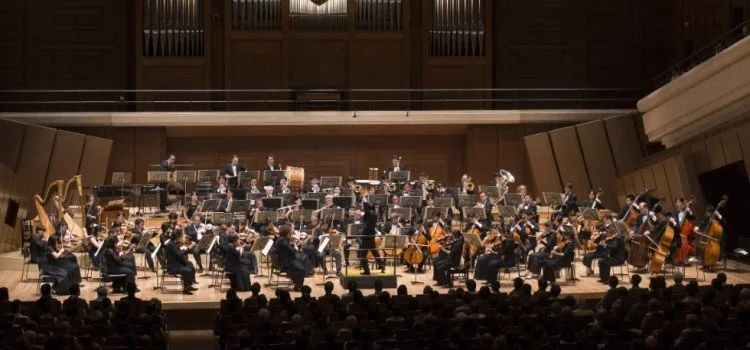
    About 20% of the global classical music market is located in Japan. Throughout Japan, it is possible to find centers for musical arts and concert halls.

    Across Japan, students are encouraged to appreciate classical music through clubs and projects involving opera, piano, violin, singing, figure skating, theater, and various extracurricular subjects involving music.

    Classical music was introduced to Japan during the Meiji Era (1868-1912). Great names like Bach, Mozart, Beethoven, and Wagner influenced all of Japan. The first symphonic performance in Japan took place on February 19, 1887, in Tokyo.

    The influence of classical music in Japan

    Classical music present in Japan

    In Japan, music education begins at the age of 6, where students play instruments and sing. In high school, students choose between clubs and can decide to learn to play various traditional or classical instruments.

    This means that all students in Japan have been exposed in some way to classical music and play some instrument. While some consider that appreciating classical music is a thing for the rich and elite, it is becoming more common for Japanese people to appreciate this type of music and attend orchestras.

    In Tokyo alone, there are more than 4,000 classical music professionals; it is in this city that the largest number of professional orchestras in the world occurs. Nowadays, classical music can be found in Japan not only in orchestras but also in movies, games, animes, and doramas.

    The greatest game composers in the world are found in Japan. Great names like Toru Takemitsu (composer), Seiji Ozawa (conductor), and Fujiko Hemming (pianist) have been of great importance in the music world. We can mention great game composers like Koji Kondo (Zelda, Mario), Akira Yamaoka, and Nobuo Uematsu who have influenced the whole world.

    The influence of classical music in Japan

    In addition to all the animes and games having classical-style music as soundtracks and background music, animes and mangas have also paid attention to classical music through their stories.

    Great works like shigatsu wa kimi no uso, nodame cantabile, and several other school animes that involve instruments and singing. These are must-watch animes for those who wish to delve deeper or get to know classical music better.

    Read the article about my favorite sad soundtracks

    Modern music influenced by classical music

    From an early age, Japanese people are encouraged to learn classical instruments such as piano and violin. Nowadays, most popular songs in Japan are complex and use various instruments.

    You can notice, take any Western song, especially Brazilian ones, and compare them with Japanese songs, even those from animes. In Japanese songs, you can find significant and complex changes in the middle of the songs, as well as the use of unconventional instruments in modern music.

    Most Japanese songs are considered romantic. There is a large number of songs that use piano and violin, in addition to the countless traditional Japanese instruments and synthesized sounds that give a gigantic complexity to the music.

    Even though classical music has died in many places, Japan remembers it both in the traditional way and shows it in its modern music, where complexity, diversity, and organization create a true art. Not to mention the complexity of traditional music and the organization and performances at festivals.

    The popularity of classical music in Japan

    I can affirm this from my own experience. After being influenced by music and soundtracks from movies, games, and animes, I discovered Japanese music that can differentiate and stand out just with the instruments without the need for a voice or lyrics, which are the main things that most people notice. And you? What do you think about classical music? I would like to hear your opinion on the subject and I already thank you for the comments and shares.

  • Is it true that the Japanese and Chinese hate each other?

    Is it true that the Japanese and Chinese hate each other?

    Many believe that the Chinese and Japanese hate each other, mainly due to the terrible events during World War II and even other historical events that caused hatred. It is not difficult to find Chinese who hate Japanese, just as it is not difficult to find Westerners who hate Easterners and vice versa. Unfortunately, hatred or racism is trapped in our world. Many end up generating hatred without any valid reason or due to social and media pressure.

    I think most people know that there were various wars and invasions by Japan in countries like China and Korea, and during these events there were rapes, deaths, tortures, and other atrocities. During these wars, the Japanese ignored all international laws, sometimes even being worse than the Germans. What generates this rivalry with China even more is the fact that Japan somewhat hides these atrocities from its history books, as if it had not regretted its actions. The Chinese and Korean governments also end up increasing this hatred and tension through political events and shows that remind people of such events in the wars.

    Are there reasons to hate the Japanese?

    Among the nations of Asia, China is the one that views Japan the least favorably, followed by South Korea. The opposite is true; Japan is the country in Asia that views China the least favorably. This does not hinder relations between the countries, as over 5 million Chinese travel to Japan every year.

    xenophobia, prejudice

    The Japanese have done many bad things, so it is understandable that some relatives or people harmed by the war harbor hatred towards the Japanese. Human ignorance begins when one wants to blame an entire nation of innocent people for something that happened many decades ago by a few monsters. And unfortunately, I see this happening not only among Asians but even Westerners wanting to join this wave of racism and hatred just because they end up reading a generalized news article about the killing of whales or dolphins.

    People who allow hatred to grow often do not have their own opinions and are controlled by the media. Fortunately, most of the young nation today does not care about these past events and has overcome the hatred among themselves. Of course, there will always be rivalry between races, no matter the events. China encourages and uses propaganda that leads its people to hate Japan. This should not happen because China encourages hatred towards Japan’s far-right military system and not the country itself. China does not prohibit Japanese products nor cut international relations because of a feud in the past.

    Is it true that the Japanese and Chinese hate each other?

    Do the Japanese hate Chinese and Koreans?

    The hatred that some Japanese have for other people is not usually linked to nationality. Only old grumpy people tend to be nationalists and traditionalists who end up excluding themselves or grumbling against foreigners, whether they are Westerners, Chinese, or Koreans. Sometimes I even see Westerners complaining about Chinese in Japan, so it is indeed common for Japanese to complain about Chinese in their country. All of this is because the cultures of the Chinese and Japanese are quite different; the Chinese tend to have some bad habits and customs that differ from Japan. Another factor is that some Japanese still feel threatened by China.

    Despite many studies stating that both China and Japan think they are bad influences, this does not prevent the large community of Chinese present in the country. Hatred does not need to transcend generations. There are ignorant and resentful people in any country. Hatred is seen because the more ignorant a person is, the more they seek to announce it! Most people just want to be friendly and live in peace. Unfortunately, it is because of politics, patriotism, and greed that our world ends up becoming a great disaster.

  • Short skirt in the Japanese School Uniform

    Short skirt in the Japanese School Uniform

    In 90% of school animes, it doesn’t matter if it’s ecchi or a shoujo, you always find girls with very short skirts above the knee. Have you ever wondered why? Do girls in Japan really wear skirts that short in schools?

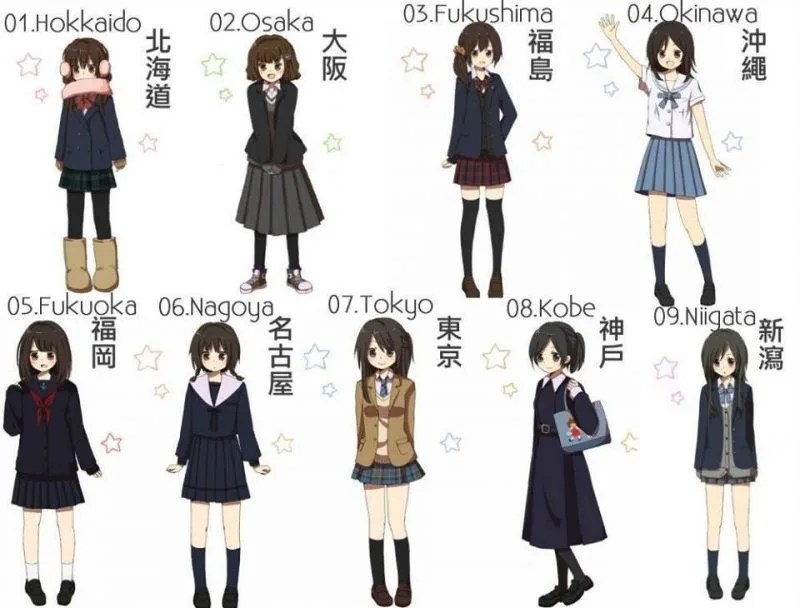
    Do Japanese uniforms vary a lot from one region to another? What are the rules regarding school uniforms? In this article, we will see curiosities related to Japanese uniforms and the skirts of schoolgirls in Japan.

    What is the Japanese School Uniform Like?

    The Japanese uniform is called seifuku [制服], it is mandatory starting from junior high school (chuugakou -中学校) and attracts a lot of attention in high school (koukou -高校). Many Japanese uniforms are based on sailor uniforms.

    For boys, it is usually a simple formal outfit with a suit or vest, while for girls it is something similar, but with the famous skirt that catches everyone’s attention.

    Japanese School Uniform - Are the skirts really short?

    Uniforms have existed in Japan for over 100 years, starting with something formal like kimono, then evolving into military-style uniforms. Until around 1920, a women’s school in Fukuoka began using a different model based on the British navy.

    The famous pleated skirts, triangular collars, and neckties became a trend and a trademark of many uniforms in Japan. Japanese schools are full of rules regarding uniforms.

    Schools define the size, color, and style of the clothing; deviating from the standard goes against the school rules. Some schools even prohibit wearing blouses and accessories.

    Are the skirts of Japanese uniforms short?

    In most animes, girls have skirts that are short above the knee, showing their thighs. The skirts are so short that it often becomes easy to see their underwear.

    This is not just in animes; during my stay in Japan, I noticed that most schoolgirls were walking around in very short skirts on trains and in the streets, you could even see…

    Japanese School Uniform - Are the skirts really short?

    Contrary to what people might imagine, most schools have skirts that are below the knee. What happens is that the girls themselves roll up their skirts to shorten them, for the same reasons that Western girls wear short clothes: for comfort, fashion, and presentation.

    Some schools are strict about this issue and do not usually allow certain alterations to the uniform and even to appearance. That’s why you often find students with short skirts outside of school.

    Some schools end up having or allowing skirts above the knee. Of course, many girls wear tights and shorts underneath the skirt to avoid perverts. Unfortunately, some girls do not care about perverts. It is common for a schoolgirl to sit in front of you on a train and spread her legs, showing everything.

    Japanese School Uniform - Are the skirts really short?

    Differences in the clothing and skirts of Japanese schools

    The skirts and uniforms of Japan were largely responsible for the street fashion that emerged in Japan in the 80s. Because of this, many schoolgirls end up being misunderstood, especially by Westerners.

    This is because some girls wear skirts so short that they arouse and stimulate male imagination. Some girls do this to generate some income through services (non-sexual) called Enjo Kosai.

    Among the Japanese provinces, those known for having shorter uniforms are Niigata, which can reach up to 18 centimeters. Sendai, Mito, and Tokyo also have very short skirts. Sapporo, Fukuoka, and Okinawa have medium skirt lengths. And the longest skirts are in Osaka and Kobe.

    Skirts are so widespread in Japanese schools that even in winter, girls wear short skirts to school. Some are not foolish and wear thermal pants until they enter the school and then take them off.

    Even with tights, some prefer to wear short summer socks to show off their legs. Despite the desire of Japanese girls to wear short skirts, various campaigns and rules against modifying uniforms take place in Japan.

    Japanese School Uniform - Are the skirts really short?

    So, the fact that animes have various girls in short skirts is based on the reality of Japan. Of course, animes exaggerate the uniforms and make them super short to attract the male audience.

    The uniform is just another click like the gigantic breasts of Japanese women in animes. What do you think about Japanese uniforms? Do you believe the skirts are too short? Do you think there’s a problem? We would love to hear your opinion in the comments and your sharing.

  • Why are there so few trash cans on the streets of Japan?

    Why are there so few trash cans on the streets of Japan?

    Japan is famous for its cleanliness and recycling, some expect that for the city to stay clean, every corner should have a trash can. One of the things tourists notice when visiting Japan is exactly the lack of trash cans found on the streets; the most we can find are bins for placing cans and bottles from vending machines. In this article, we will understand why there are so few trash cans on the streets of Japan.

    Perhaps some think it is to save money, or because the Japanese are already conscious of their waste, or maybe because trash cans are unpleasant. The reality is that there are factors you might not be aware of. One of them is the fact that the fewer trash cans there are, the less trash there is. You might be confused by this theory, but indeed, when Japan had many trash cans on the streets, there was much more waste.

    Why are there so few trash cans on the streets of Japan?

    Think with me, people are prone to throw trash where there is trash. In Brazil, it is common to find an empty lot full of trash next to a clean empty lot. At the time when Japan had many trash cans scattered throughout the city, people did not take their trash home, and public trash cans filled up, making it harder to empty them due to the quantity. Not to mention that on windy days, trash cans could tip over or trash could fly out, thus dirtying the street. Currently, there are almost no public trash cans; most of the trash cans found in Japan belong to a convenience store, market, or other business.

    How did public trash cans disappear?

    One of the reasons we already mentioned was that it was very labor-intensive to take care of public trash cans, and the city did not stay as clean. It is believed that it was a terrorist attack in 1995 that caused public trash cans to disappear. Exactly, on March 20, 1995, five members of the cult Aum Shinrikyo released deadly gas in subway trains in the city of Tokyo. They used plastic bags wrapped in newspapers. 13 people died and 5000 were injured. Japan was paralyzed with fear of further attacks.

    Why are there so few trash cans on the streets of Japan?

    One of the security measures taken was the removal of trash cans, as they could be possible hiding places for other terrorist weapons. Other countries also adopted this security measure, such as London. After that, trash cans never returned to the streets of Tokyo, and other cities followed this path. There are other factors that determined the permanent removal of trash cans from the streets of Japan; today, each establishment takes care of its own. From personal experience, I can say that although it is difficult to find a public trash can in Japan, it is also relatively difficult to find trash on the streets.

    Where to dispose of trash in Japan?

    Every city and neighborhood has a way to dispose of accumulated trash at home; this is somewhat obvious. And what if you are on the street? There are convenience stores, restaurants, and shops that have recyclable trash cans inside or outside the location. It is not difficult to find a convenience store or another similar place. At every corner, you find a vending machine for drinks, and there is always a bin for bottles next to it.

    Why are there so few trash cans on the streets of Japan?

    If you have difficulty disposing of your trash, the best thing to do is to take it home. Even smokers carry a portable ashtray with them to keep the city clean. This dedication to cleanliness makes trash cans unnecessary. Now that you know, there is no point in using the excuse that Brazil is dirty because of the lack of trash cans on the streets. Thank you for reading; we would appreciate and thank you for your possible sharing and comments.

  • Suugaku – What is Japanese mathematics like?

    Suugaku – What is Japanese mathematics like?

    The Japanese have a writing system different from the Western one and also various cultural issues. Many end up wondering how mathematics works in Japan, thinking about this we are writing this article. Mathematics in Japanese is called Suugaku (数学) and there are two types of it in Japanese, the Western one is called yousan (洋算) and the Japanese way is wasan (和算).

    Japanese also has its own numbers using ideograms, but they also use Western numbers. The big truth is that Japanese numbers and counting are much more logical and systematic than Western ones. We recommend that you already have knowledge about Japanese numbers so you don’t get lost in Japanese mathematics.

    Wasan – The mathematical origin in Japan

    Wasan was developed in Japan during the Edo period (1603-1867), the term wasan literally means Japanese (和) calculation (算). It was coined in the 1870s but unfortunately is in decline due to the influence of Western mathematics. There are not many differences between Japanese and Western mathematics, it is just something historical, but in practice mathematics is always the same.

    Suugaku - How is Japanese mathematics?

    Among the history of mathematics in Japan, one of the greatest pride inventions is the soroban or Japanese abacus. There is also Sangaku, which are mathematical puzzles that were placed in temples and shrines to challenge people. Seki Kowa was the most influential Japanese mathematician before contact with the West. He discovered solutions to solve systems of linear equations, eliminating dependent variables.

    The difference between Japanese mathematics and Western mathematics is that they did not apply much of their research and discoveries to other areas besides geometry. Thus, they ended up adopting Western mathematics.

    Multiplication trick

    The Japanese have a method to perform multiplications more easily. It consists of drawing sets of parallel lines that represent each digit of the first number to be multiplied. Then draw sets of parallels, perpendicular to the first sets of parallels, corresponding to each digit of the second number (the multiplier). Look at the figure and count the number of intersections of the parallel lines:

    Suugaku - How is Japanese mathematics?

    I can’t explain well in words, but each alignment of the parallel lines represents a digit of the final result. And just like in traditional multiplication, it is better to obtain the result by counting the numbers starting from the back. See one of the examples in the figure written in calculations to see how this method is simpler than the traditional one: 23 x 12 = (2×10 + 3)(1×10 + 2) = 2x1x102 + [2x2x10 + 3x1x10] + 3×2 = 276

    How do the Japanese do calculations?

    Mathematics in Japan is done the same way as in the West. Even Japanese children are introduced to the Arabic numbers we use, but they also use ideograms. One of the few things that changes is the pronunciation in Japanese; if you know English, it is easy that they use many variations of English.

    We use the same mathematical signs from Western mathematics in Japanese. However, Japanese also uses the verbs to add, multiply… along with Japanese ideograms. We use tasu (足す) as the verb for addition, to sum or more. Example: 7 + 3 = 10 / nana tasu san wa juu desu (七足す三は十です). In Japanese, we use desu (です) to say equal (=) such as: (X + Y = 50) in Japanese we would say X + Y は 50 です。 And we use the word ten to refer to the (. and,) of decimal numbers. Example: 3,5 (san ten go).

    Suugaku - How is Japanese mathematics?

    In Japanese, we can also use the English variation of the 4 mathematical operations (kangenjojo – 加減乗除). They are the same as in Portuguese. Below we will see a list of their pronunciation:

    Japanese Derived from English
    Addition / plus tasu (足す) purasu (プラス)
    Subtraction / minus hiku (引く) mainasu (マイナス)
    Multiplication / times kakeru (掛ける)
    Division / divided waru (割る)
    Fractions bun (文)

    The verbs for adding, subtracting, multiplying, and dividing followed by zan (算) are used to say addition, subtraction, division, etc. 引き算 (hikizan), 掛け算 (kakezan), 割り算 (warizan),

    Mathematical vocabulary in Japanese

    Of course, this is just the basics about mathematics in Japanese. For you to delve deeper, we will leave a vocabulary table for you to conduct your research:

    Portuguese Japanese Romaji
    Mathematics 数学 suugaku
    Number 数字 / 数 suuji / kazu
    Digit keta
    Decimal 小数 shousuu
    Fraction 分数 bunsuu
    Divisor 約数 yakusuu
    Exponent 指数 shisuu
    Even number 偶数 guusuu
    Odd number 奇数 kisuu
    Irrational number 無理数 murisuu
    Rational number 有理数 yuurisuu
    Ratio oi
    Quantity ryou
    Volume 体積 taiseki
    Area 面積 menseki
    Angle 角度 kakudo
    Length 長さ nagasa
    Weight 重さ omosa
    Speed 速さ hayasa
    Prime number 素数 sosuu
    Negative number 負の数 fu no suu
    Positive number 正の数 sei no suu
    Calculus 微積分学 bisekibungaku
    Differential calculus 微分学 bibungaku
    Integral calculus 積分学 sekibungaku
    Multivariable calculus 多変数微分積分学 tahensuubibunsekibungaku
    Fractions 分数 bunsuu
    Trigonometry 三角法 sankakuhou
    Probability 確率 kakuritsu
    Statistics 統計 toukei
    Geometry 幾何学 kikagaku
    Algebra 代数学 daisugaku
    Linear Algebra 線型代数学 senkeidaisuugaku
    Differential Geometry 微分幾何学 binbukikagaku
    Square 正方形 seihoukei
    Triangle 三角形 sankakukei
    Rectangle 長方形 chouhoukei
    Trapezium 台形 daikei
    Parallelogram 平行四辺形 heikoushihenkei
    Rhombus 菱形 hishigata
    Kite 凧形 takogata
    Cube 立方体 rippoutai
    Pyramid 角錐 kakusei
    Square Pyramid 四角錐 shikakusei
    Prism 角柱 kakuchuu
    Triangular Prism 三角柱 sankakuchuu
  • Sachertorte from Oremonogatari – Recipe

    Sachertorte from Oremonogatari – Recipe

    Learn how to make one of the sweets that Yamato made for her beloved! The Sachertorte (in Japanese, ザッハトルテ), which is also known in Brazil as Torta Sacher, is a dessert that came from Austria and is appreciated all over the world.

    In particular, the Japanese have placed this cake (although it is called a tart, it is nothing more than a cake) on the menu of their confectioneries and it is also used as a gift option for Valentines Day.

    This dessert is so popular that it even helped McDonald’s in Japan to recover from a crisis created by a meat scandal in 2015, when the popularity of the chain fell significantly. Mc Café invested in foreign sweets and Sachertorte was included and became one of the most requested.

    Sachertorte de Oremonogatari - Receita

    Considerations before starting the recipe

    In Oremonogatari, Yamato made this dessert in small portions and wrapped them in molds. You can make it in a single larger pan.
    The following recipe is an adapted version of the recipe found in the Japanese manga.

    The original Sachertorte uses apricot jam as filling, but if you don’t like it, you can choose another jam, or even use chocolate glaze if you prefer.

    The glaze is the liquid chocolate coating that is added last. Just make the glaze when the cake is completely ready, as it should be used while still warm.
    Without further ado, let’s get to the recipe!

    Sachertorte

    Yield: 1 cake of 18 cm or 6 small cakes of 5 cm

    • Preheat the oven to 180°C;
    • Grease the molds with butter and place parchment paper at the bottom of the pans;

    For the cake batter

    Ingredients

    • 70g of bittersweet chocolate chopped
    • 70g of unsalted butter
    • 70g of sugar
    • 3 eggs (whites and yolks separated)
    • 40g of all-purpose flour sifted

    Instructions

    1. Separate the sugar into 2 parts.
    2. With one part of the sugar, mix it with the egg whites and place in a double boiler. Stir constantly to avoid cooking the egg whites. When the sugar is dissolved, transfer the egg white mixture to a mixer.
    3. Beat the egg whites until soft peaks form. Be careful not to overbeat, as the cake may dry out. Set aside.
    4. Melt the chocolate and butter together in a double boiler in the same bowl. Set aside.
    5. In another bowl, beat the egg yolks and the remaining sugar until it becomes a lighter and slightly fluffy cream.
    6. Add the all-purpose flour to the egg yolk mixture.
    7. Add the melted chocolate to the egg yolk mixture. Mix well until everything is well combined.
    8. Finally, gently fold the beaten egg whites into the chocolate egg yolk cream.
    9. Pour into molds until ⅔ full (or in a larger pan).
    10. Bake for 20 minutes, or until the cake is firm. (Just do the famous toothpick test: if it comes out dry, it’s ready).
    11. Let it cool completely and unmold.

    Sachertorte de Oremonogatari - Receita

    For the topping

    Ingredients

    • 100g of apricot jam, or the jam of your choice
    • 40 ml of boiling water
    • Instructions

    1. Dissolve the jam in the boiling water. Use while still warm.
    2. Cut the small cakes in half and fill them.
    3. With the help of a brush, spread the jam on the outside of the small cake. Let it cool.
    4. Place the small cakes in the freezer for 10 minutes.

    For the glaze

    With the small cakes ready in the freezer, make the glaze. It is separated into 2 parts, then everything is combined for use.

    Part 1 – Syrup

    Ingredients
    • 25g of cocoa powder
    • 50 ml of water
    • 15g of sugar
    • 25g of cream
    Instructions

    1. Place all the ingredients in a saucepan.
    2. Heat until all the chocolate melts and it has a velvety appearance. Turn off the heat and set aside.

    Part 2 – Ganache

    Ingredients
    • 100g of bittersweet chocolate chopped
    • 80g of cream
    • 20g of unsalted butter
    Instructions

    1. In a small saucepan, bring the cream to a boil. Turn off the heat and add the chocolate. Let it cool a bit.
    2. Add the butter.

    Now just combine part 1 with part 2 and use. Remove the small cakes from the freezer and pour the glaze over the small cakes. Refrigerate for 20 minutes and serve.

    Did you like this recipe? Would you like to see any recipe here on the site? Share with your friends:)

  • 6 animes that show the shounen spirit in the kitchen

    6 animes that show the shounen spirit in the kitchen

    Gastronomy is present in human life. We eat to live, to celebrate, when we are sad… it doesn’t matter the moment. In anime, this necessity is portrayed with passion. The spirit of competition and overcoming is seen in these shounen just like in any shounen. To be the best chef, to seek the best ingredient. The best, always! To strive, always! This is the shounen spirit in the kitchen!

    Shokugeki no Souma (2016)

    Yukihira dreams of becoming a chef as good as his father, but his plans are thwarted when his family’s restaurant closes. Encouraged by his father, he enrolls in Tootsuki Culinary Academy, an elite school where only 10% of students graduate. It has 13 episodes.

    6 animes that show the shounen spirit in the kitchen

    Toriko (2011)

    Toriko is a Gourmet Hunter who lives in a world where eating well is vital. His goal is to create the perfect menu. To do this, he must seek hard-to-find ingredients, traveling and fighting (literally) for the best products. It has 147 episodes.

    Cooking Master Boy (1997)

    Mao is a 13-year-old boy who grew up in his mother’s restaurant in China. After his mother’s death, he embarks on a journey to become the best chef in China. It has 52 episodes.

    Ramen Fighter Miki (2006)

    Miki works at her mother’s restaurant as a delivery girl. She is energetic and explosive. Always during her deliveries, she gets involved in some trouble, whether because of her personality or because she is saving people from criminals. It has 12 episodes.

    6 animes that show the shounen spirit in the kitchen

    Mister Ajikko (1987)

    Youichi is a prodigy who works at his mother’s restaurant. One day, a great critic eats the young cook’s food and is amazed. Since then, Youichi enters a culinary competition at the Aji-oh Building, recommended by the critic. It has 99 episodes.

    Yakitate!! Japan

    Azuma Kazuma has a great talent for baking. Since childhood, he has been on a journey to create the perfect bread and represent Japan internationally. He now intends to enter the famous Pantasia Bakery to fulfill his dreams.

    Another anime we recommend is Ben-to, which, although not about cooking, shows a great struggle for bento boxes…

    Also, check out our other article talking about bakery and pastry anime.

  • Taiyaki – The famous fish-shaped cake

    Taiyaki – The famous fish-shaped cake

    Taiyaki (鯛焼き) literally means grilled sea bream, but it only has the appearance of fish. Taiyaki is a sweet (or savory) cake made with a batter of flour, water, and yeast… It is usually filled with sweet red bean paste (azuki) and grilled in a mold shaped like a sea bream. Many buy Taiyaki because of its symbolism, as the red sea bream symbolizes good luck and fortune.

    Taiyaki is basically a normal pancake or waffle in the shape of a fish. It is placed on a grill with a mold on both sides. It is quite similar to those Swiss crepes. It is usually grilled until golden brown. It is also similar to imagawayaki, which is a thick, round cake also filled with azuki bean paste or cream. This is the famous cake that the character Yami from To Love Ru often eats.

    Taiyaki - The famous fish-shaped cake

    Curiosities about Taiyaki

    Its first appearance was in 1908, in a candy store called Naniwaya in Azabu, Tokyo. Today it can be found anywhere in Japan, but it has gradually lost the shine it once had. It became even more popular after a single (song) was released in Japan in 1975. The single named Oyoge! Taiyaki-kun tells the story of a taiyaki that got tired of staying in the mold and escaped to the sea.

    You can find taiyaki not only with sweet bean paste but also with chocolate, cream, cheese, green tea, and others. The reality is that it offers endless possibilities just like pancakes. They have even invented ice cream, and there are also savory flavors filled with meat and chicken. It is considered a street food and for festivals, but it can also be found in markets and food courts. They usually cost around 100 to 300 yen each. The size depends on where you buy it, but it is generally about 15 cm.

    Taiyaki - The famous fish-shaped cake

    Taiyaki Recipe

    Ingredients:

    • 2 cups of wheat flour;
    • 2 eggs; (there are recipes without eggs);
    • 5 tablespoons of sugar;
    • 1/2 teaspoon of baking powder;
    • 1/2 cup of water;
    • 1/2 teaspoon of salt

    How to make:

    1. Beat the eggs with the sugar until frothy, and gradually add flour and water;
    2. Finally, add the salt and baking powder;
    3. Heat the taiyaki mold, grease it, and pour enough batter to cover the bottom;
    4. Fill it the way you want and cover with a little more batter, close the mold, turn it over, and bake until both sides are golden;

    Some had the idea of buying a taiyaki mold and selling it at fairs in Brazil instead of the traditional Swiss crepe; perhaps this is an option for you. So it is easy to find them at events about Japan and anime. Have you had the chance to try it? Share your experience in the comments and share this article with friends.