

One of the most discussed topics about Japan is its suicide rate. That raises questions such as: Why do Japanese people commit suicide? Is the suicide rate in Japan really that high? How many people commit suicide in Japan each year? What is the global ranking? Is Japan to blame? We will answer these and other questions in this article.
I am personally tired of hearing people use Japan's suicide rate to belittle the country in some way. In many people's minds, Japan is the country where people commit suicide the most, even though it is in 18th place in the global ranking. And fortunately, the suicide rate in Japan has been decreasing year after year.
I will break this article down into questions and topics to make it easier to follow. Here is the outline below:
Contents 6
Japan is not the country with the highest number of suicides
I have made it clear that Japan has been dropping in the suicide rankings over the years, and at the time I wrote this article it was in 18th place. Countries like South Korea and North Korea are among the top 5. Our neighbor Guyana has a huge rate and takes first place in the suicide ranking by proportion.
Well-known European countries that are often seen as peaceful, such as Poland, Hungary, and Belgium, have a higher suicide rate than Japan. Other countries with a higher suicide rate than Japan include Russia, Ukraine, South Korea, Angola, and Mongolia, while the first place goes to Sri Lanka.
According to different studies and rankings, Japan's suicide rate in 2017 was about 17-19 per 100,000 inhabitants, or roughly 60 per day. That is a relatively low number compared to Sri Lanka's 35 per 100,000 inhabitants. Still, Japan is always used as an example. Why?

Why did Japan become famous for suicides?
There are 17 countries with a higher suicide rate than Japan, but Japanese people are still used as an example because Japan is a first-world country and one of the world's biggest powers. Japan is also very popular in Brazil, unlike the other countries that appear in the suicide ranking.
Another main reason is that the total number of suicides in Japan is indeed very large and reached as many as 21,000 people per year in 2017. In rankings that use the total number of suicides without adjusting for population, Japan usually ranks among the top 10, since its population is over 127 million people.
Ten years earlier, in 2009, the suicide rate in Japan was also much higher and exceeded 30,000 cases per year, or 32 people per 100,000 inhabitants. At that time, Japan was consistently among the top 5 in the total suicide ranking and even appeared in the rankings of suicides per 100,000 inhabitants.
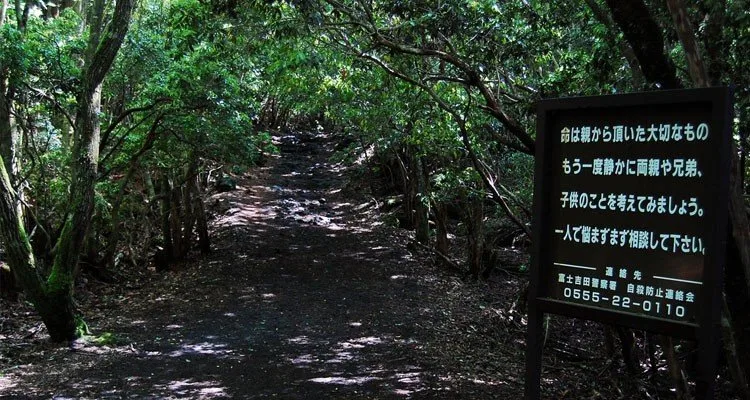
There are also many cultural aspects that helped create this stereotype of Japanese suicide in the West. It is remarkable how Japan has managed to reduce its suicide rate in the last 10 years, even with the growing global wave of depression and emotional problems, not to mention the general trend toward worsening conditions around the world.
Japan is very safe, so suicide has become one of the major causes of death among Japanese people after illness. It is statistically more common than many accidents or homicides.
The Japanese culture of suicide
For many people in the West, taking one's own life is a sin; atheists believe that death is the end of everything, and even the Bible says that the dead are not aware of anything. And the Japanese? What do they think about death? Many Japanese believe in reincarnation, and death is seen as a passage to another existence because of Buddhist influence.
I do not think reincarnation is a good reason not to fear suicide, especially because those who turn to this act usually want to escape life completely and put an end to it. Not to mention that many Japanese, despite following Buddhist and Shinto traditions, appear to follow no religion at all or to be atheists.

For the family, relatives, and everyone involved, the death of a loved one is a huge loss. The Japanese person who thinks about this selfish act probably believes they will no longer be a burden to others and that they can solve all their problems that way. It is really very hard to understand the Japanese mindset.
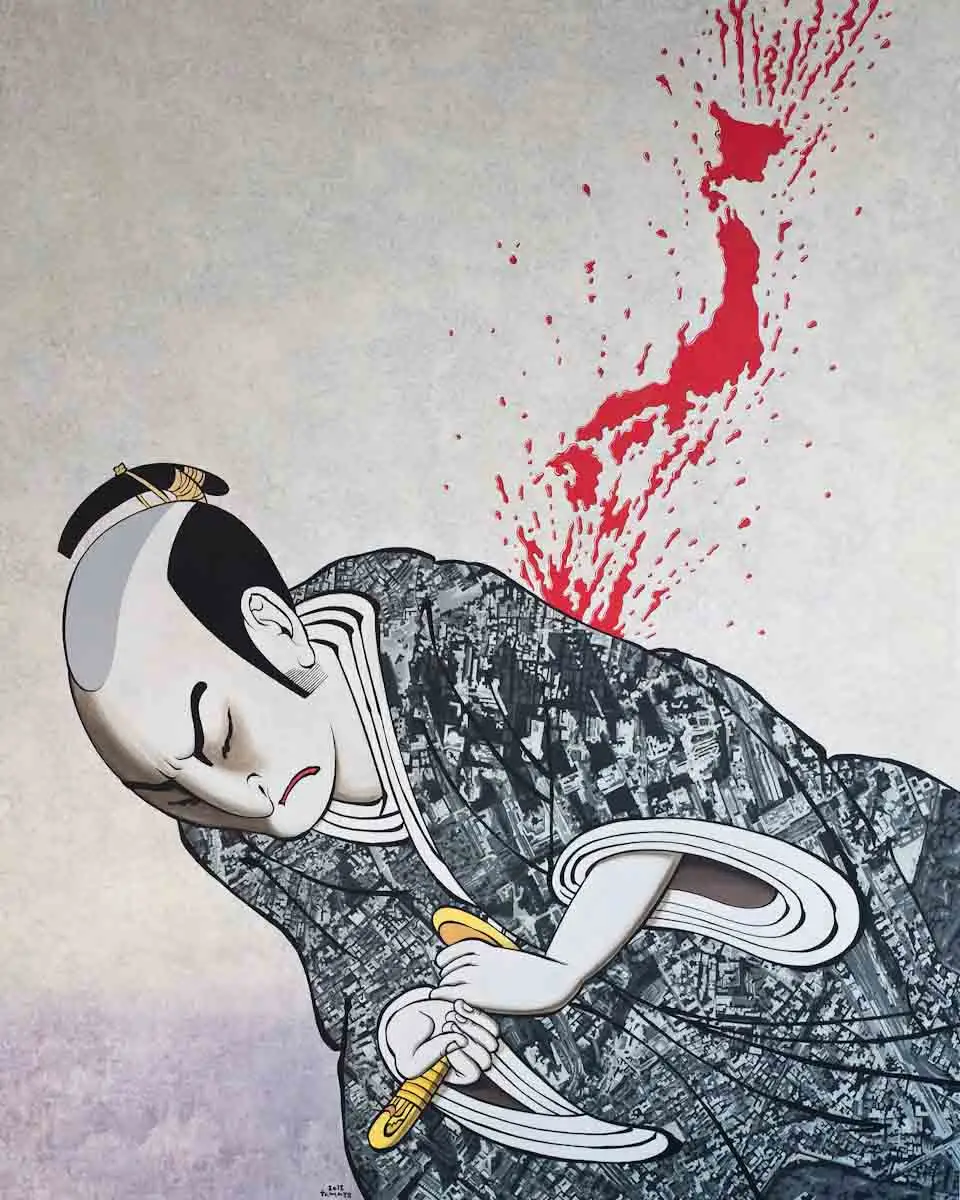
The culture of suicide in Japan is very old and was considered by samurai to be an honorable act, even receiving the name seppuku or harakiri, where the belly is cut open. Even in more recent times, during World War II, kamikaze [神風] would kill themselves in battle with pride, honor, and no remorse.
We can see that over the years, cultural influence and historical events have contributed to Japan becoming a country that struggles with suicide. Japan does not have a strong Christian influence, so suicide is not seen there as a sin. In fact, some people consider suicide a way of taking responsibility for something.
Main causes of suicide in Japan
World War II and the conditions the country faced in the 2000s probably helped keep the suicide rate very high. Even today in the United States, many people take their own lives because of the aftermath of World War II, especially former soldiers. Perhaps that helps explain the decrease in suicides over the last 10 years.
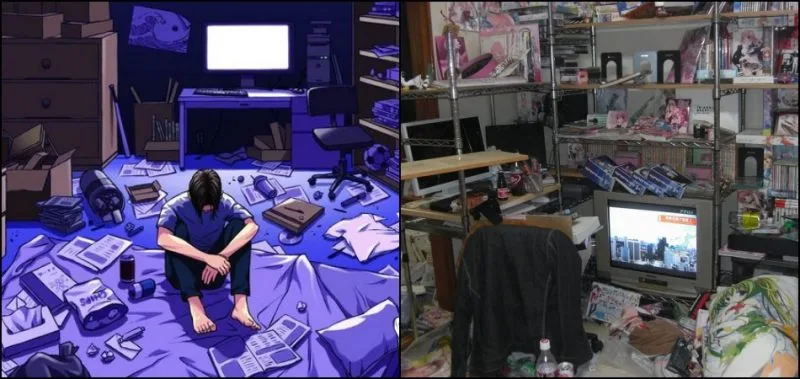
Another very worrying issue in Japan is the suicide rate among young people. Even children take their own lives there, often because of bullying, social pressure, and a lack of attention from parents and teachers. Among the main causes that can lead a Japanese person to suicide, we can list:
- Bullying and cyberbullying;
- Social isolation - Hikikomori;
- Financial pressure and unemployment;
- Entrance exams for high school;
- Relationship problems;
- Overwork;
- The loss of a loved one;
- Depression;
Japanese people can be a bit perfectionist and do not easily accept failure. Even when they do not feel pressure from other people, they end up putting pressure on themselves.
Of course, many of these things are stereotypes. Emotional problems and depression affect each person differently, but unfortunately, Japanese ways of thinking have made even the government confused and concerned about the situation.
Young people are the biggest victims of suicide
Suicide is responsible for most deaths among young people between 20 and 40 years old, and possibly also among some older people who die alone at home. Understanding the main reasons for suicide in Japan is complicated, because we do not have the same mentality as Japanese people.
Unfortunately, young people are the ones most pressured to take their own lives in Japan. Much of this happens because of bullying and cyberbullying, which many students in Japanese schools face.

Those who do not commit suicide may end up in an even worse situation that can also lead to suicide, called Hikikomori. About one million young people in Japan remain isolated in their rooms, without wanting to go to school or work.
Entrance exams are some of the most difficult events Japanese people face in their lives. They need to take one exam to get into high school and another for university. Some have to study a lot and even take extra classes at a preparatory school.
In Japan, the start of the second school term is marked by tragedies. More than 18,000 children under 18 took their own lives in Japan between 1972 and 2013, often because they did not want to go back to school.
How should we talk about suicide in Japan?
Even though the numbers are alarming, we should not generalize Japan's suicide figures. As is well known, Brazil also has a high suicide rate that is very close to Japan's, with a difference of just 3 people per 100,000.
I think that before speaking about suicides in Japan with a critical tone toward the country, it is worth looking at our own side first. Suicides in Japan are still a problem, but we can see them decreasing year after year. That is a surprising scenario in a world that seems to keep getting worse.
It is certainly possible to keep reducing this suicide rate in Japan with some changes in society. Japanese people need to stop demanding so much from themselves or pushing themselves too hard over things that do not really matter. What do you think about this topic? We will end here and leave some related articles below:



Community
Comments
0 comments
There are no published comments in this language yet.
Send comment