
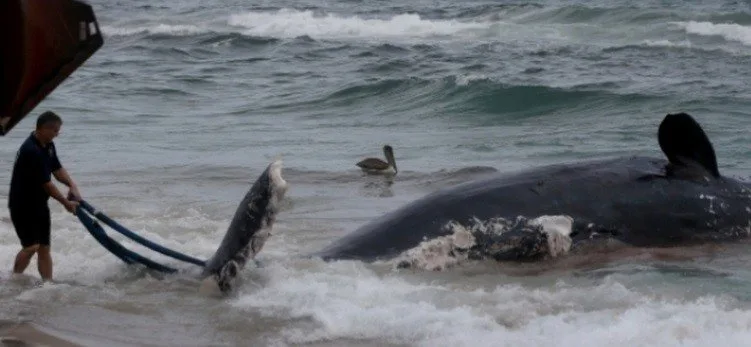
It is very common for news to come out on the internet about whaling in Japan. And among the comments, many people spew words of hate without even knowing what really happens. Why do the Japanese hunt whales?
Before you treat an entire country as a single harpoon, it helps to separate three things: a centuries-old coastal practice, a post-war protein story, and a modern industry that is far smaller than the headlines suggest. The fight is real; the generalization usually is not.
Before we talk about why some Japanese organizations still hunt whales, what is involved, and what controversies this generates inside and outside the country, we need the history, the vocabulary, and the culture surrounding this contested practice.
Contents 10
Hogei — The Capture of Whales
Hogei [捕鯨] is the Japanese word for the capture of whales (and, in everyday debate, it often sits next to the separate issue of dolphin drive hunts). In modern policy language, hogei usually points to three different situations: commercial catch, research catch under special permits, and aboriginal or community subsistence hunts recognized in international regimes.
In Japan, whaling has roots that reach prehistoric coastal life, and later periods developed techniques different from North Atlantic industrial fleets. During the Edo period, systematic coastal whaling was organized by large groups called hogeishūdan [捕鯨集団].
There is a long history of whaling in Japan and in the West. This article is not a defense of the practice; it is a map of what is claimed, what is measured, and what often gets left out of outrage threads. If you want the Japanese-language institutional trail, start from the page on 日本の捕鯨 or search for hogei [捕鯨] and nihon no hogei [日本の捕鯨].
The History of Whaling
Archaeological layers show whale bones in Jōmon remains; early use often came from stranded animals as much as from active pursuit. In Europe, Basque whaling became prominent from the Middle Ages, mainly for oil and meat. Over time, new weapons and ships turned local hunts into global industries.
In Japan, organized open-boat shore whaling expanded from the late 16th and 17th centuries, with famous coastal centers such as Taiji. Literature records terms connected to whale hunting; net-and-boat techniques made large animals harder to escape, but still demanded large crews from spotting to flensing.
Whaling communities developed rituals of gratitude and mourning — prayers for a safe catch, memorials for whales killed, and a culture of using more than meat alone. Oil, baleen crafts, fertilizer, and food all belonged to the same coastal economy. That history matters for understanding why some regions still treat the animal as more than a symbol on a protest banner.
How Has Whaling Been in Recent Decades?
In 1974 the International Whaling Commission (IWC) advanced the New Management Procedure. In 1982 the IWC adopted a commercial moratorium that took effect for most members in the mid-1980s. Japan accepted the commercial pause under pressure and negotiation, then continued catch under scientific special permits, especially Antarctic minke whales from the late 1980s onward.
In 1994 the IWC refined assessment tools with the Revised Management Procedure (RMP). Norway continued commercial minke hunting under a formal objection to the moratorium. Iceland later resumed commercial catch under its own legal path. In 2010 Norway raised commercial minke quotas into the four-digit range — a reminder that the polar debate is not a Japan-only story.
On 26 December 2018 Japan announced it would leave the IWC framework; the withdrawal took effect on 30 June 2019, and commercial hunting resumed on 1 July 2019 inside Japanese waters and the exclusive economic zone, ending the Antarctic research fleets that had defined the previous era of conflict.
Hogeimondai — Japan’s Whaling Controversy at Home
It is not only the West that names the conflict. Japanese has the compound hogeimondai [捕鯨問題] — literally “the whaling problem.” Inside Japan the fight includes coastal towns that still see tradition and jobs, city consumers who barely touch whale meat, bureaucrats who defend stock assessments, and activists who reject any lethal take.
That domestic split is easy to miss when foreign coverage treats “the Japanese” as one opinion. Protest, indifference, nostalgia, and industry lobbying coexist in the same country of more than 120 million people.
Why Do the Japanese Capture Whales?
In the past, as in many other places, whales were food and material. Oil was lamp fuel and agricultural input; baleen became craft material; salted meat traveled inland. After World War II, whale meat became a nationwide protein source during shortage years — a peak era that later faded as pork, chicken, and beef took over school lunches and supermarket shelves.
Today the official story mixes cultural continuity, fisheries sovereignty, and stock management. Critics answer with animal welfare, diplomacy cost, and the claim that “research” programs after the moratorium were commercial hunts in scientific clothing — a charge that the International Court of Justice accepted for the Antarctic JARPA II program in 2014. Both frames can be true at once: a small industry, a large symbolic war.
Is Japan the Only Country That Hunts Whales Today?
No. Commercial large-whale hunting in recent years has been associated mainly with Japan, Norway, and Iceland, under different legal umbrellas. Norway and Iceland have long operated outside or against the full force of the IWC commercial ban. Japan left the Commission and set national catch limits for species such as minke, Bryde’s, and sei whales, later also discussing fin whales under its own RMP-style calculations published by the Fisheries Agency.
Separately, aboriginal subsistence quotas still authorize limited takes by Arctic and other Indigenous communities in countries such as the United States, Russia, and Denmark (Greenland). Some coastal regions also report bycatch of large whales in nets — a grey zone that is not the same as planned commercial fleets, but still ends animals.
Small cetaceans (many dolphins and porpoises) sit largely outside classic IWC large-whale control and fall under national law. That is why a debate about “whales” often mixes very different animals, methods, and legal boxes — and why a single viral video rarely tells the full legal story.
Between the global ban years and the late 2000s, tens of thousands of whales were still killed worldwide under commercial, scientific, and subsistence categories. Media focus on Japan is intense; it is not the only lethal harvest on the board.
Do the Japanese Eat Whale Meat?
Commercial trade in whale meat was constrained by the IWC moratorium for decades, while Japan’s special-permit programs still produced meat that entered domestic markets — one reason critics called the science a cover. Since 2019 the hunt is openly commercial again, but scale and appetite are not the 1960s.
Domestic consumption collapsed from mid-century peaks of roughly 200,000+ tons a year to a few thousand tons in recent decades. Surveys repeatedly show that most people rarely or never eat whale. Tourists sometimes buy the novelty; older generations remember school lunch; younger shoppers usually do not.
So when a headline implies that “Japan eats whales,” the accurate picture is narrower: a minority industry, limited product, government support in some years, and a population that mostly lives without kujira on the plate. Even with commercial sale restored, whale meat is not an everyday supermarket staple for the average household.
Are Whales Extinct?
Whales are not a single species. Some populations recovered after industrial overkill; others remain endangered. Antarctic and common minke whales are often discussed as relatively abundant compared with right whales or blue whales — “relatively” is the word that matter, not a free pass.
Slow reproduction (long gestation and low calf rates) means recovery takes decades. Good management needs species-level data, not a slogan that “whales are fine” or “all whales are dying.” The serious argument is about which stock, which ocean basin, and which kill method — not a cartoon of a single animal representing every ocean.
Have the Japanese Returned to Whaling?
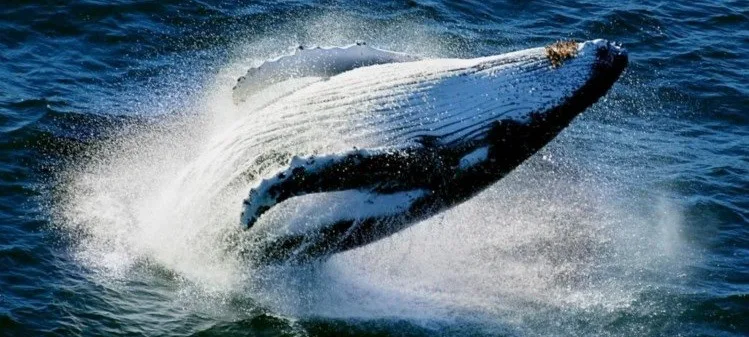
Yes. After leaving the IWC, Japan resumed commercial whaling on 1 July 2019, limited to its territorial waters and exclusive economic zone, and stopped the Antarctic research hunts that had defined the previous conflict cycle.
Catch is not “unlimited.” The Fisheries Agency publishes annual allocations and RMP-style calculations for species such as common minke, Bryde’s, and sei whales; numbers move year to year and are far below the mid-20th-century industrial slaughter. That does not settle the ethical debate — quotas manage extinction risk more than pain.
Of course a managed quota does not make a harpoon painless. It does make the practice look more like other regulated animal industries people rarely protest with the same global heat. If you eat meat, the moral symmetry is uncomfortable; if you are vegan, the consistency is clearer. Either way, treating 120+ million people as if they all swing the harpoon is still bad analysis.
Don’t Be a Hypocritical Idiot
I, like many readers, feel uneasy when whales are killed for science labels, commercial brands, or political pride. Is that unease a reason for hate comments aimed at every Japanese person online?
People often assume that if some fleets catch whales, the meat must be daily food for the general population. It is far more uncommon than people think — closer to a niche product than a national diet. Japan has more than 120 million inhabitants; many ignore the industry, and some actively dislike it. Like any country, laws and lobbies can keep a practice alive after mass taste has moved on.
Are you really going to judge an entire nation because of a small industry and a few political defenders? What do tens of millions of people who never touch whale meat have to do with a factory ship? Why aim the entire outrage machine at Japan while Norway, Iceland, and aboriginal quotas sit in smaller type?
Thin, sensational news built for clicks amplifies that hatred. The same pattern shows up in coverage of suicide in Japan and prejudice in Japan: a real issue, flattened into a national stereotype.
Remember the saying: first remove the plank from your own eye. Before you destroy a country’s reputation because of a few operators, ask what your own country kills, exports, clear-cuts, or ignores. Generalized hate is not conservation strategy; it is just another form of ignorance.
We can oppose commercial whaling and still refuse cheap Japan-bashing. The controversy is messy enough without turning 120 million people into one cartoon villain.




Community
Comments
0 comments
There are no published comments in this language yet.
Send comment