
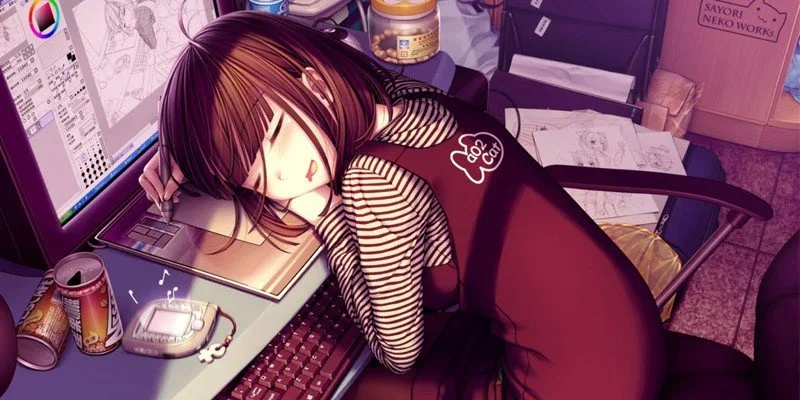
Do you dream of becoming a mangaka (漫画家)? Then check out the main materials and tips for getting started.
Have you ever read manga or do you simply enjoy it? Then this article is for you, whether you want to draw manga yourself, admire a mangaka, or just satisfy your curiosity.
A mangaka is someone who draws manga. Creating stories does not automatically make you one, but there is nothing better than putting your own ideas on paper without depending on anyone else, right?
Many people give up along the way, maybe because they lose motivation or simply because they do not know where to begin. So why not start with the right materials and the right approach?
Contents 4
Essential Basics: Pencils
A pencil is obviously essential, but not just any pencil. When drawing, people often use models with different hardness levels.
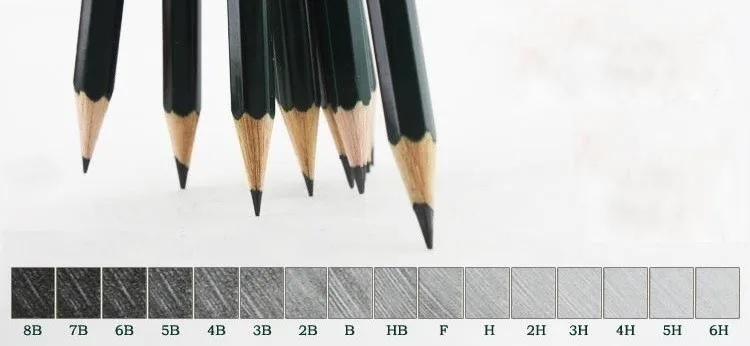
There are four main classes: H, F, HB, and B.
These labels show how hard or soft the graphite is. Softer leads create darker lines, while harder leads leave lighter and finer marks.
Many pencils carry the HB label, which you often see on writing pencils. That does not mean they are only meant for writing.
The hardness grades follow roughly this order:
9H > 8H > 7H > 6H > 5H > 4H > 3H > 2H > H > F > HB > B > 2B > 3B > 4B > 5B > 6B > 7B > 8B > 9B
It is usually best to use pencils in the middle range, such as 2H, H, F, HB, 2B, and 6B. Always keep the pencil well sharpened so it is easier to handle.
Paper
If you do not want to spend much money, you can start with 75-gram sulfite paper, which is sold in packs. Just be careful, because it wrinkles more easily.
The best paper for drawing manga is Westerprint paper with a weight of 180 grams, sold in blocks in A3 (29.7 cm x 42 cm) or A4 (21 cm x 29.7 cm) sizes.
And of course, if you invest a little more, you can find preprinted sheets with blue borders that show the correct space for a manga page.
Fineliners and Ink
There are disposable technical pens with felt tips. They do not last forever, but they rarely clog.
There are also pens that need ink refills. They offer more precision, but they also require careful maintenance.
They come in several sizes, such as 005, 01, 02, 03, 04, 05, and 08. For many mangaka, they are essential, because details and the final line art are often done with them.
Erasers
It is frustrating when a drawing is almost perfect and then one line goes wrong. That is when the eraser becomes essential.
Common erasers do not have the same effect as ones made specifically for drawing. With a regular eraser, your work is more likely to smear or get dirty in some areas.
Use a white plastic eraser whenever possible, since it helps avoid staining the paper and usually leaves fewer marks behind.
There are also kneaded erasers. This type of eraser can be shaped and adjusted however you want.
It is very easy to use, and once you learn how to handle it, your future drawings can improve a lot. You can do some of these things with a regular eraser, but not in quite the same way as with a kneaded eraser.
- It helps lighten dark areas, create graphite highlights, remove extra marks, and of course erase lines.
- It erases easily and rarely leaves traces that an eraser was used on the drawing.
- It is also useful for shaping practical forms for your drawing, such as a point, small balls, or other simple shapes.
Prefer brands like Staedtler, Koh-I-Noor, Faber Castell, and Trident.
To keep the article from getting too long, we will divide this post into several parts. To read the rest, use the link below:





Community
Comments
0 comments
There are no published comments in this language yet.
Send comment