
Some people still picture Japan as a country where everyone smokes everywhere. Tobacco is part of a lot of Japanese lives — and in Japanese the cigarette is simply called tabako [たばこ] — but lighting up is less a free-for-all than a tight set of manners, booths, and places with a sign.
The Shogun even toyed with the idea of a formal tobacco ritual, the same way tea got its tea ceremony. That impulse never quite died: smoking in Japan still comes with vocabulary, old posters, and rules that catch visitors off guard.
Contents 5
The History of Smoking in Japan
Why talk about tobacco at all? Japan was once called a smoker's paradise. More than a quarter of the population used to smoke; the share has since fallen to around 15% of adults, with a much higher rate among men than among women, after years of public-health pressure and tighter indoor rules.
Smoking has been around in Japan for centuries. The Shogun even had ideas about creating a formal ceremony for tobacco, just as chanoyu organized tea. Lighting a cigarette still carries a surprising number of customs and rules.
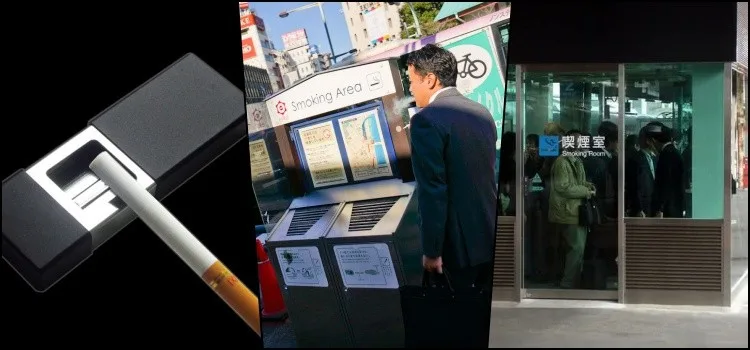
In the past, the Shogun suggested that when smoking tobacco offered by a host, you should not start until the host has entered the room. When the host offers the cigarette, you can say “after you,” just as in the tea ceremony. In Japan the host may offer a pipe; remember to show humility and gratitude.
Until 1985, tobacco in Japan was a government monopoly. Japan Tobacco (JT) was then privatized, and the Ministry of Finance still holds a large stake in the company. JT remains one of the world's biggest tobacco firms, with well-known domestic brands such as Mevius.
Curiosities about Tobacco or Cigarettes in Japan
For decades the government and Japan Tobacco put up posters about how a smoker should behave. Japan has also piled on laws and suggestions such as:
- Carry a portable ashtray (携帯灰皿, keitai haizara) instead of dropping the butt;
- The obvious one: smoking harms health;
- Follow social manners for where and how you smoke;
- It is prohibited to smoke on the central streets of many large cities, except in marked spots;
- Anyone under 20 cannot buy or smoke tobacco — there is no “with parental permission” exception;
- There are specific indoor rooms and outdoor booths even on busy streets;
- Smoking in a prohibited place can mean a municipal fine;
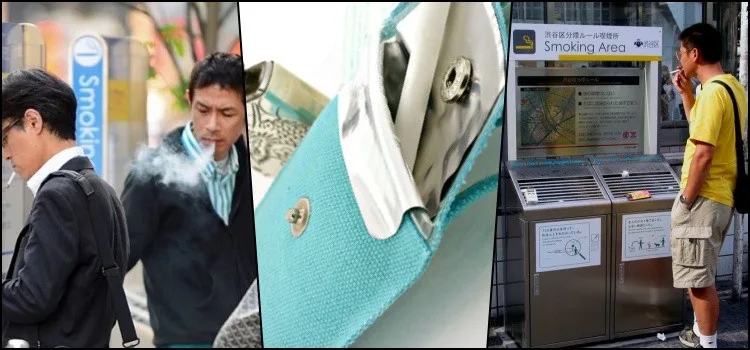
A pack can be bought at any convenience store, supermarket, or tobacco shop. Vending machines still exist, but since 2008 they ask for a Taspo card — an age-check IC card issued to residents in Japan. Tourists normally buy at the register, tap the “20 or older” button, and may be asked for a passport.
Major brands now sit around 580 to 650 yen for a pack of 20, not the old 420-yen sticker people remember. A portable ashtray is cheap at convenience stores and 100-yen shops. Some night restaurants, bars, and izakaya still allow smoking, especially smaller places that opened before the 2020 indoor rules and post a sign at the door.
The legal age to buy and smoke tobacco in Japan is 20. Under 20 you also cannot enter a designated smoking room.
Rules and Etiquette for Smokers in Japan
In April 2020 the revised Health Promotion Act fully took effect and, as a rule, banned smoking in enclosed public spaces. Exceptions include private homes, hotel rooms booked as smoking rooms, cigar bars, and some small restaurants and bars that were already open before the law and display a warning at the entrance.
You cannot smoke on trains, buses, or airplanes. Smoking rooms on the Tokaido, Sanyo, and Kyushu Shinkansen were removed in 2024. At large stations and airports you still find ventilated rooms; most platforms are otherwise off-limits.
Many cities ban smoking on the street in busy districts except in designated smoking areas (喫煙所, kitsuenjo). Walking while smoking is treated as bad manners almost everywhere and is illegal in a growing list of wards. The same street rules usually apply to heated tobacco, not only to regular cigarettes.
Heated tobacco — IQOS, Ploom, glo — is the product that really took off in Japan. Some cafés and restaurants have rooms or seats only for these devices, and the signage is different from a regular cigarette room. Nicotine e-liquids of the kind common in other countries are not sold the same way on the domestic market; do not expect a konbini to hand you a Western-style vape kit next to the onigiri.
Does smoking really harm less in Japan?
Older studies used to note a curious gap: Japanese smokers showed a lower relative risk of lung cancer than smokers in some American and European surveys. That observation should not be read as “cigarettes are safer here.” Tobacco still damages lungs, heart, and wallet.
Researchers have pointed to later starting ages, a smaller share of each cigarette actually smoked, and diet — including the daily habit of drinking tea — as possible pieces of that puzzle. There is a small irony in the picture: Japanese table manners frown on leaving food, yet many smokers do not finish the cigarette down to the filter.
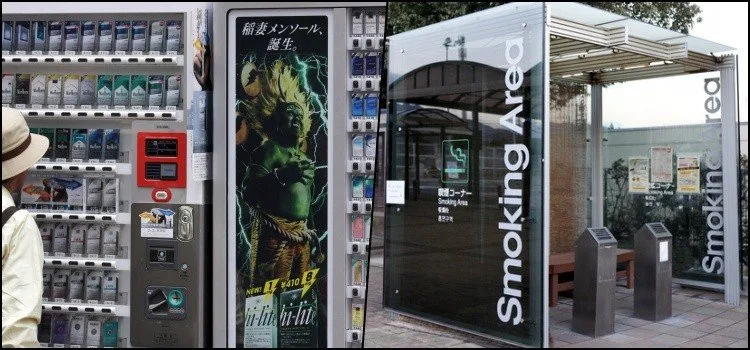
Another factor is the product mix. Heated tobacco grew fast after IQOS arrived in the mid-2010s, and cigarette sales dropped sharply. That shift changes exposure; it does not turn smoke into a health plan. Dependency and the monthly cost of the habit remain, whether the pack says Mevius or Ploom.
Words Related to Smoking in Japanese
To close, a short list of words for smoking, tobacco, and cigarettes in Japanese. If you are going to talk about tabako, it helps to know the difference between kitsuen (the act) and kemuri (the smoke).
| English | Japanese | Romaji |
| light a cigarette | タバコに火を付ける | tabako ni hi wo tsukeru |
| butt | 煙草の吸い残り | tabako no sui nokori |
| filter tip | シガレットホルダー | shigaretto horudā |
| pipe | パイプ | paipu |
| matchbox | マッチ箱 | macchi bako |
| cigar | 葉巻 | hamaki |
| cigarette case | シガレットケース | shigaretto kēsu |
| cigarette | タバコ | tabako |
| ash | 灰 | hai |
| ashtray | 灰皿 | haizara |
| filter | フィルター | firutā |
| smoker | 喫煙者 | kitsuensha |
| to smoke | 喫煙する | kitsuen suru |
| smoke | 煙 | kemuri |
| matches | マッチ | macchi |
| lighter | ライター | raitā |
| pack | 箱 | hako |
| tobacco | タバコ[煙草] | tabako |
| smoking | 喫煙 | kitsuen |
| portable ashtray | 携帯灰皿 | keitai haizara |
| smoking area | 喫煙所 | kitsuenjo |




Community
Comments
0 comments
There are no published comments in this language yet.
Send comment