
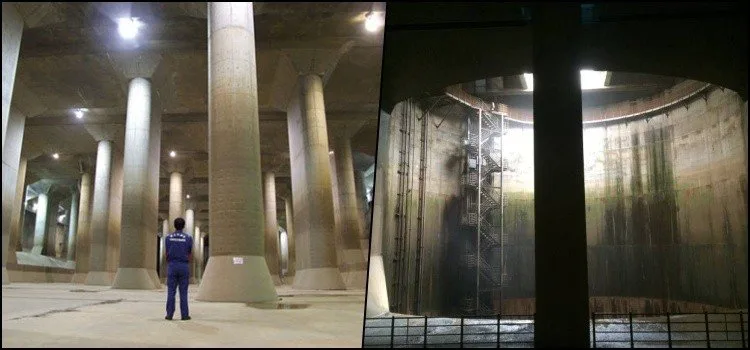
In 1991 a typhoon flooded 100 km² destroying more than 30,000 homes and killing 52 people. To prevent this, Japan began creating underground channels to avoid these floods. Thus, Tokyo and some metropolises in Japan now rely on these tunnels against heavy rain and typhoons. Although the city is filled with buildings and tunnels underground, from flood channels to a farm inside a former bank vault, they are almost invisible to those on the surface.
One of these tunnels is the Kanda River Underground Retention Basin, 4.5 km in a tunnel that is 40 meters below the ground. This basin can hold up to 540,000 cubic meters of water when Tokyo is hit by floods. In Osaka, we have the Hiranogawa reservoir, about 1.7 km long, to prevent flooding. There are several other small underground facilities, but today we will talk about the largest in the world.
G-Cans - The underground temple
There are underground constructions north of Tokyo that started in the 1990s and have pillars that weigh 500 tons. In this case, we are talking about the G-Cans Project, officially the Metropolitan Area Outer Underground Discharge Channel in Kasukabe, Saitama, built to divert floodwater from nearby rivers into the Edogawa River. The tank nicknamed the underground temple is 177 meters long, 78 meters wide and 18 meters high, with 59 of those pillars. Four pumps can drain about 200 cubic meters of water per second. There are 6.3 km of tunnels, 50 meters below the surface, and it cost about 230 billion yen to finish in 2006.
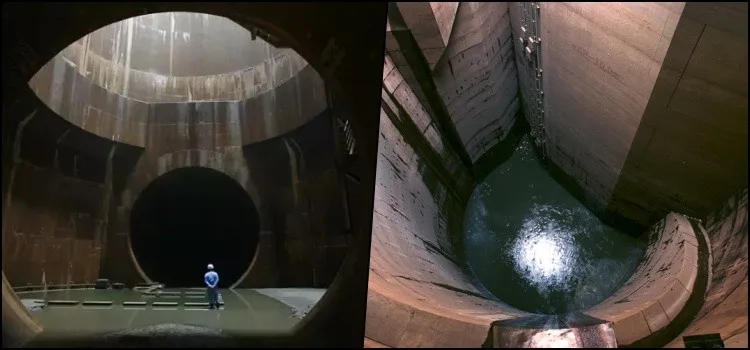
The channel takes in water several times a year on average, and visits stop when it is operating or under inspection. You can visit this underground temple by reservation. The standard Underground Temple course lasts about 55 minutes and costs 1,200 yen per person, with tours daily from 10:00 to 16:00. To do this, you must register in advance on the website below. We will also leave the address of the location.
- Website: https://gaikaku.jp/
- Address: Ryukyukan (RyuQkan), 720 Kamikanasaki, Kasukabe city, Saitama 344-0111
- Phone: +81 48-747-0281



Community
Comments
0 comments
There are no published comments in this language yet.
Send comment