The secret to learning a language is to think directly in it, but what would it mean to think in Japanese? It involves being able to speak and understand words in Japanese from your own mind without doing a mental translation. In other words, you simply think and know the meaning of a word in Japanese without needing the translation and meaning of it in Portuguese to come to mind.
Thinking directly in Japanese will help you understand various expressions and phrases that cannot be understood and translated literally. Thinking in Japanese will help you see the world in a different way. For this reason, we have separated 6 tips to help you start thinking in Japanese and greatly enhance your learning of the language.
1 – Read materials in Japanese every day
The big secret to learning to think in Japanese is to do research, read books, news from websites, conversations, and dialogues in Japanese on the internet. How to do this the right way? Start by choosing familiar topics, ones you have already read in Portuguese or have knowledge about.
Read the entire article without translating, even if you don’t understand some words. After reading everything, choose some unknown words and look up their meaning in a dictionary. A person should fully expose themselves to the Japanese language through content absorption.
2 – Watch and re-watch episodes of your favorite Animes and Doramas
Put Japanese subtitles on the video, watch episodes that you already know or that are easy to understand. The goal is to understand the words and phrases in Japanese without thinking in Portuguese. Then try to remember some words and expressions and examine them carefully in the dictionary.
3 – Converse in Japanese
Another thing that will help you think in Japanese is simply conversing. Whether with friends, through messages, or even alone. Try to converse in Japanese with someone for at least 15 minutes a week. Try to pronounce words and names you encounter around you every day to help you think in Japanese.
4 – Use mobile apps to study
You can use the thousands of apps that teach Japanese to enhance your vocabulary. Remember not to push yourself too hard or use exaggerated methods of memorizing grammar and vocabulary. You should use these apps in a relaxed way so you don’t get bored and fail to memorize or think about anything.
5 – Seek out content
The internet is full of content to learn Japanese, our website itself has an extensive range of articles that teach Japanese in detail. In addition, we have been working on generating exclusive content in our VIP area. Another thing you can do is follow online events like Japanese Week, watch Lives and channels that talk about the language or even Japan; getting involved in the environment will help you think in Japanese.
If you want to receive more tips, including a book that teaches the basics of the Japanese language, sign up on our website using the form below. Don’t forget to share these tips with your friends and also leave your opinions and tips that you use to think in Japanese.
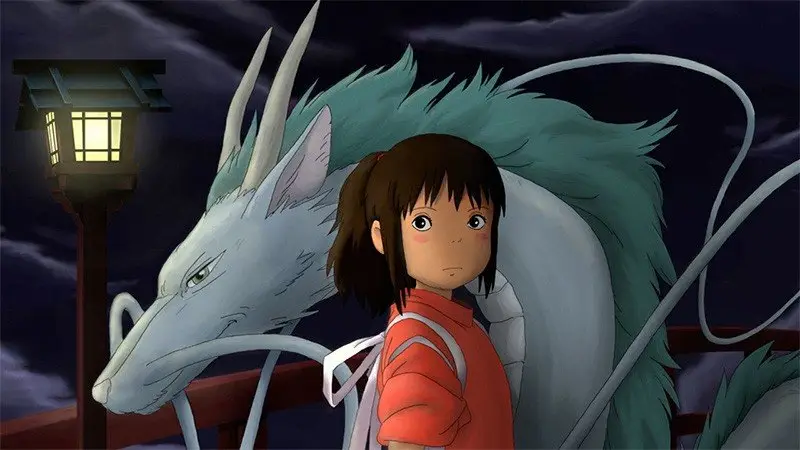
The Japanese studio Studio Ghibli (スタジオジブリ, sutajio jiburi) is currently one of the largest animation studios in the world, and almost every year an animation from the studio is nominated for an Oscar. Most of the studio’s films are among the highest-grossing films in Japan. The animations from Studio Ghibli address very important themes such as ecological issues, wars, depression, among others. Most of the films from Ghibli studio use themes related to Japan’s culture and myths.
The idea of creating an animation studio came from Hayao Miyazaki and Isao Takahata in 1974 when the two were working on the production of the anime Heidi Arupusu no Shojo Haiji (アルプスの少女ハイジ), which was titled ”Heidi” in Brazil. In this production, the two friends noticed that to create a good animation, time is essential, and that was what they needed, a medium where deadlines were long and not short like the deadlines for delivering episodes of anime released weekly. Thus, Studio Ghibli was born, founded by Hayao Miyazaki, Isao Takahata, Toshio Suzuki, and Yasuyoshi Tokuma on June 15, 1985, and in 1992 the construction of a new headquarters located in Koganei, Tokyo was completed.
The first film from Studio Ghibli was Tenkû no Shiro Rapyuta (天空の城ラピュタ), which was named ”Castle in the Sky” in Brazil, released in 1986. Two years later, in 1988, two more films were released simultaneously: Hotaru no Haka (火垂るの墓), titled ”Grave of the Fireflies” in Brazil, and Tonari no Totoro (となりのトトロ), ”My Neighbor Totoro”. Other studios were astonished by the quality of the two animations, as it is difficult to release two films from the same studio at the same time with good quality, but Studio Ghibli did it. Totoro became so popular and charismatic that it became part of the studio’s logo.
List of Studio Ghibli Films
1986 – Castle in the Sky – Fantasy/Action;
1988 – Grave of the Fireflies – Drama/Drama;
1988 – My Neighbor Totoro – Drama/Fantasy;
1989 – Kiki’s Delivery Service – Fantasy/Drama;
1991 – Only Yesterday – Drama/Romance;
1992 – Porco Rosso: The Last Romantic Hero – Fantasy/Drama;
1993 – I Can Hear the Ocean – Drama/Romance;
1994 – Pom Poko – The Great Raccoon War – Fantasy/Drama;
1995 – Whisper of the Heart – Drama/Romance;
1997 – Princess Mononoke – Fantasy/Drama;
1999 – My Neighbors the Yamadas – Comedy/Animation;
2001 – Spirited Away – Fantasy/Mystery;
2002 – The Cat Returns – Fantasy/Drama;
2004 – Howl’s Moving Castle – Fantasy/Drama;
2006 – Tales from Earthsea – Fantasy/Drama;
2008 – Ponyo – A Friendship from the Sea – Fantasy/Drama;
2010 – The Secret World of Arrietty – Fantasy/Fantasy;
2011 – From Up on Poppy Hill – Drama/Romance;
2013 – The Wind Rises – Drama/Romance;
2013 – The Tale of the Princess Kaguya – Fantasy/Drama;
2014 – When Marnie Was There – Mystery/Drama;
Currently, Studio Ghibli has a great influence on Japanese culture and commerce. The animation studio has gained so many fans that commerce and animations continue to grow, evidenced by the Ghibli Museum, which receives more than 650,000 visitors a year, and the trend is that these numbers will only increase.
In today’s article, I will talk about what I do to deepen my study of Japanese. I personally have a great difficulty in studies, I am a big procrastinator. I can’t find the time to read and study the way I want, so the best way for me to do this without feeling bored is by writing for the site. This ends up generating some questions:
What are the benefits of studying Japanese by writing articles?
What content to study and write?
What is the correct way to generate content and study at the same time?
How to be sure that what I am writing is correct?
The main objective of this article is to provide encouragement to you Japanese learners to collaborate with the site while also increasing progress in studying Japanese. Therefore, I invite you to be part of this family and help you study Japanese through research and writing articles that can also help other people learn Japanese.
By the time you finish reading this article, you will know in detail how to create your own study material, and thus we encourage you to send the content generated by you to our site through the Submit Article page. This way, we can increasingly generate and share content with the public.
What content to study and write?
Suki Desu encourages people to study in a free way, just absorbing content and texts. Below is a list of things we encourage you to study and that we are also developing for our members area.
Study songs;
Study manga;
Study anime;
Study texts;
Study poems;
Study Kanji;
Study games;
Practically any material or media can be used to learn Japanese, even signs, messages, and labels. To carry out this study, we encourage people to examine each sentence and word of the content they wish to study. You can simply take a notebook or Word document, write the sentences, and below them put the word in Japanese, the reading, and the detailed meaning; while doing this, you are generating sentences for Anki.
How to generate content and be sure it is correct?
We have already mentioned that to generate content and study at the same time, we encourage studying sentences from texts or manga. A great example of how to create content is the Japanese songs we break down on our site. See an example of a sentence studied in the article Translating songs – Oto No Naru Hou – Goose House.
でももう平気 ひとりでは背負わないでいいんだよ Demo mou henki hitori de wa seouwanaide iinda yo But it’s okay, you don’t have to bear it alone
でも – but, however
もう – interjection used to strengthen the expression of an emotion
平気 – okay, calm, relaxed, unconcerned
ひとり – alone, one person
背負う – to overload, to take on, responsibility, to carry, to be in front
背負わない – negative
This should be the structure of the sentences from the studied material. Now, how do you discover the meaning of each word and fully understand the meaning of the sentence? First of all, you should not use just one dictionary or translation tool. When translating and discovering the meaning of each word, I check in several places that I will list below:
I search for the word on Jisho. (English site);
I search for the word on Google;
I translate using Google Translate;
I study its use in other sentences to understand the meaning;
I translate the English translation of the Japanese word into Portuguese;
Most words you can only find the meaning on English sites. This is not a problem, since you can use Google Translate to translate the page, just be careful not to fall into the traps of these automatic translators; that’s why we check the meaning from various different sites and even research the meaning of the translation from English to ensure the real meaning of the word. (In the VIP area of our site, we teach step by step how to research and do this).
If you simply throw the word into Google to get a translation, you will certainly have some error, but if you research in various sources, see discussions about the meaning in forums, usage examples, it is very unlikely that you will end up making a mistake. At the same time that you do this, you are studying and memorizing that word in your mind without forcing it.
Benefits of studying by creating content
There are countless benefits to studying by translating texts and generating content. I will list some below:
By translating and generating study content, you can share and help others learn and study Japanese;
By translating and thoroughly researching the meaning of words on Google, you enhance your research skills, aid in memorization, and even end up learning a bit of English;
Studying by translating texts and songs is a perfect way to overcome procrastination, studying in a fun way without feeling bored;
Studying sentences is the best way to learn and memorize any language. It tends to be 10x more effective than trying to memorize vocabulary tables or fill in gaps on a sheet;
Over time spent studying each sentence and word, you also learn the grammar of the Japanese language;
By studying sentences without worrying about writing, you end up memorizing various Kanji without even realizing it;
By studying and sending your study content to our site, you are strongly contributing to the creation of content for the site. Don’t waste your time, study, write, translate, research, and send it to our team; we will review, publish, and even improve it. Remember that you don’t have to limit yourself to this way of studying; you can write anything related to the Japanese language or about Japan and send it to our site. xD
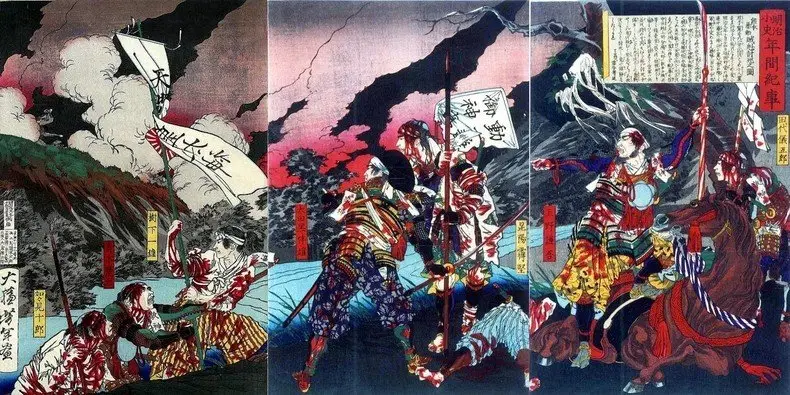
Bushido (武士道) – or bushi – is a practice, in order to be a code of honor for the samurai. Bushido literally means “way of the warrior.” It was an unwritten manual, which, for the samurai, meant emphasizing loyalty, fidelity, self-sacrifice, justice, refined manners, humility, martial spirit, and, most importantly, honor above all, for a dignified death and life.
Bushido was developed between the 9th and 12th centuries. Its great influence on Japan was demonstrated through writings translated from the 12th to the 16th centuries. The basic development comes from the diffusion of influences and concepts from Buddhism, Shintoism, and Confucianism. It arose from the combination of these doctrines and religions and from feudalism itself.
Another peculiarity of Bushido is the existence of a code of honor. This code has 7 precepts to follow in order to become a samurai of honor and dignity in their life, and before their feudal lord or daimyo.
Through this article, and others in the future, we will learn more about the elite class of warriors in Japan, the Samurais. The source of this article is Bushido Online, inspiration and even some phrases were taken from there. Don’t forget to check their website. So let’s go!
Influences of doctrines and religions
Buddhism is linked to bushido through the fearlessness of danger and death. The samurai are brave warriors who did not fear their death, as they believed in Buddhist teachings, which preached life after death. Thus, they lived continuously in the longing and “faith” of continuing in their role as warriors in their continuous reincarnations. Learning and encouraging detachment was the foundation of a samurai, as, with the practice of it, they became the greatest warrior caste that ever existed.
Shintoism also enters the precepts of Bushido. Shintoism brings with it the precepts of loyalty, patriotism, and reverence to one’s ancestors. Shintoism presents great importance to its country, Japan. This patriotism leads them to loyalty to the memory of their ancestors, and the samurai devoted the same loyalty to the emperor and their feudal lord or daimyo. They also believe that the Earth does not exist merely to meet the needs of people. “It is the sacred residence of the gods, the spirits of their ancestors… The Earth must be cared for, protected, and nourished by intense patriotism.”
Confucianism is more related to the belief concerning human beings and their families. Bushido preaches justice, benevolence, love, sincerity, honesty, and self-control. And these preachings are “intimate” relationships offered by Confucianism by emphasizing filial duties among servant and master, father and son, husband and wife, and various other distinctions. With the definition that Justice is one of the main factors in the samurai code, as well as love and benevolence as virtues of the samurai.
The Way
Bushido means “Way of the Warrior,” “Bushi” equals Warrior and “do” equals Way. Following the same sense, the ideogram for way, in Japanese, is equal to the Chinese form “Tao,” expressing a philosophical concept for an absolute. This concept gives the idea of origin, principle, and essence of all things.
“Bushido means the total life of the warrior, his devotion to the sword, his respect for the norms dictated by Confucianism. It is not just an ethical system to be followed by social classes. It is the road of the cosmos, the sacred traces of the Heavens, pointing the Way.” – The Book of Five Rings.
In general, a warrior is one who seeks their own path. We are all warriors, many of us are seeking the way without knowing it. Being a warrior is to have a goal and that, through it, it is possible to discover one’s gifts and limitations. Through this awareness, the warrior achieves their goal, combined with the will to overcome weaknesses, fears, and limitations. Each person walks their own path. And we all do this aware of our inclination, thus, a warrior is one who follows their specific path.
Meaning of the term
The term bushi cannot be directed at just anyone. It is different, as the bushi in their studies and practices is based on overcoming men. The samurai are different due to their fidelity and honor; not being honored in their life is the greatest sorrow of a samurai warrior. “The word of the warrior is worth more than everything.”
“When the warrior takes on a responsibility, he keeps his word. Those who promise and do not fulfill lose self-respect, are ashamed of their actions, and their life consists of fleeing, spending more energy making excuses to dishonor their word than the warrior uses to keep his commitment. Sometimes, the warrior takes on a responsibility that will result in loss. He does not repeat this attitude, but honors what he said and pays the price of his impulsiveness.” – Manual of the Warrior of Light.
Practices of Bushido
The bushi is not only the way of the “warrior” and war, the bushi is also the way of the pen and the sword, a concept coming from ancient feudal Japan. Maintaining an always open mind was the duty of the nobility (bushi), so that they mastered both the art of war and reading, appreciating both arts. Thus, one must learn the way of all professions, inform oneself about all subjects, appreciate the arts, and when not occupied with military obligations, should always practice something, reading or writing, so that they can store in their minds the ancient history and general knowledge.
The samurai needed to possess self-control, detachment, and austerity to maintain their honor, and because of this, we can say that they, the samurai, are complete warriors. And bushido – its code of honor – still adds strong influences to the lifestyle of the Japanese people today, offering an explanation of character, as well as their indomitable inner strength, the Japanese.
The correct behavior was followed at all times to truly present a posture worthy of a samurai, without deviating from their – true – path, bushido. Etiquette must be followed every day of daily life, just as in war for the samurai. Sincerity and honesty are the virtues that evaluate their lives. Transcending a pact of complete fidelity and trust is linked to dignity.
Honor and dignity
“A samurai must, above all, always keep in mind, day and night, from the morning of New Year’s Day, when he picks up the chopsticks to have breakfast, until the night of the last day of the year, when he pays his bills, the fact that one day he will die. This is his main task.” – Bushido The Code of the Samurai – Daidoji Yuzan.
Being a warrior is to have an awareness of death. If he possesses such awareness, he will avoid conflicts, be free from diseases, in addition to having a quality personality that is different from other human beings. The warrior does not worry about tomorrow, and this means the addition of character and total sincerity and consideration for other people, being deeply sincere.
Dying for unnecessary arguments could result in his dishonor and, perhaps, afflict the reputation and name of his family. If the idea of death is maintained, he will be careful and likely to be discreet and will not say things that offend others. Furthermore, they will not commit unhealthy excesses with food, drink, and sex, using moderation, common sense, and deprivation in everything, for good physical and mental health.
Miyamoto Musashi once said: – Men must shape their path. From the moment you see the path in everything you do, you will become the path.
Code of honor
The warrior class of feudal Japan known as samurai, or bushi, gained fame for their bravery, martial techniques, honor, and their unwavering spirit in the face of death. This reputation is due to a code of ethics and conduct, followed and lived by the warriors, known as bushido.
Precepts of Bushido:
GI– Justice and Morality
Direct attitude, correct reasoning, deciding without hesitation;
YU– Courage
Heroic bravery;
JIN– Compassion
Benevolence, sympathy, unconditional love for humanity;
REI– Politeness and Courtesy
Kindness;
MAKOTO– Sincerity
Total truthfulness, never lying;
MEIYO– Honor
Glory;
CHUGO– Duty and Loyalty
Devotion, Loyalty.
For a samurai, honoring the name of their family and ancestors is expressed through death in battle or duel, but not necessarily. And failing, before their lord, was the greatest dishonor for the warrior, who ultimately had no other choice but suicide, or seppuku as it is known. This is only possible by the standards that govern the samurai warrior through bushido.
There are enormous books explaining all the details about bushido. It is impossible to cover the entire theme in just one article. We will conclude the article here and thank you for reading and possible sharing.
Do you know the two famous Japanese dog breeds called Akita Inu and Shiba Inu? In this article, we will delve into the origin of these breeds, curiosities, and their differences.
The similarities in personality and appearance between an Akita and a Shiba are significant. Both the Shiba and the Akita can be called Nihonken [日本県], which indicates their origin and Japanese nationality.
Shibas tend to be smaller than Akitas. The Shiba is considered the oldest breed, with more wolf-like characteristics; the Shiba is also the most independent of the group.
The Akita Inu, on the other hand, is a large breed; both are considered a natural treasure of Japan. Both the Akita and the Shiba are beautiful, calm, dignified, clean, and quiet (they rarely bark), which is why they are one of the most desired dog breeds in Japan.
Many people like their bear and wolf-like appearance and their complex and dominant personality. They are discreet, silent, determined, and courageous. The height of the Akita varies from 58 to 71 cm and its weight from 29 to 58 kg. The Shiba, on the other hand, tends to be much smaller.
A perfect choice for those who want a robust, powerful, imposing, stubborn, and independent dog. Despite its beauty, the Akita is not recommended for people who want a cute and gentle dog.
Although both the Shiba and Akita can be somewhat fierce, they are affectionate with their family and devoted and will protect the members of the household.
Differences between Akita and SHIBA
There is a breed called American Akita, both having the same temperament. Akitas were brought to the USA and crossed with German Shepherds. The difference lies in the colors; the Japanese Akita is usually only white, red, and brindle. The American Akita, on the other hand, tends to have various color combinations.
Both the Shiba and other Japanese breeds share similarities with the Akita due to their common origins. They typically have upright triangular ears, a tail curled vertically, and a somewhat aggressive temperament. The Shiba tends to be more docile and affectionate than the Akita.
Origin of Akita Inu and SHIBA INU
It is believed that the Akita emerged around 3000 years ago or that it first appeared in Europe. The modern Akita that we know emerged around the 17th century in Akita Prefecture (hence the name).
Initially, these dogs were used for fighting and were called Odate. They excelled in the low temperatures of the region and were used as powerful hunting dogs. Akitas hunted bears, boars, deer, and various other animals.
The Shiba breed is one of the oldest, with remains dating back to the Jomon period. It nearly became extinct during World War II.
Curiosities about SHIBA and AKITA
The most famous Akita was Hachiko, who became known for waiting many years for the return of his deceased owner;
The price of an Akita can vary from 2,000 reais to 10,000 reais;
Akita dogs love snow;
Akitas and Shibas enjoy daily physical and mental exercises. They need a long space to run and also to take long walks;
Training a Shiba and Akita requires skills and a bit of patience, but it is not as difficult as some may think;
Research reveals that onions cause changes in the blood cells of Akitas;
Shiba Inu are prone to skin diseases;
Akitas and Shibas are territorial;
There is a trained and famous Shiba Inu in a tobacco shop called Shibamada in Tokyo;
What do you think of Akita or Shiba dogs? Do you know any? Do you own one? Share your experience in the comments and share with friends.
In this article, we will talk about the famous song Tsubasa wo Kudasai (翼をください) which literally means “please give me wings”. This song was written by the group Akaitori and released at the Nemu Popular Festival that took place in 1970 in the city of Shima in Mie. The song became so famous that it ended up being included in choirs and taught in schools throughout Japan, becoming a song known by the entire Japanese population.
For a long time, this song has been re-released in various albums by different singers. The song was even the official theme of the football team in the 1998 World Cup. “Tsubasa wo kudasai” has also appeared in various anime such as Evangelion, Danganronpa, Nichijou, K-ON, and many others. See the song below sung by Yui:
Song Lyrics
いま私の願いごとが かなうならば翼がほしい この背中に鳥のように 白い翼つけてください
この大空に翼をひろげ 飛んで行きたいよ 悲しみのない自由な空へ 翼はためかせ 行きたい
子供の時 夢みたこと 今も同じ夢に見ている
この大空に翼をひろげ 飛んで行きたいよ 悲しみのない自由な空へ 翼はためかせ
この大空に翼をひろげ 飛んで行きたいよ 悲しみのない自由な空へ 翼はためかせ 行きたい
Romanization of the song
Ima watashi no negaigoto ga kanau naraba tsubasa ga hoshii Kono senaka ni tori no you ni shiroi tsubasa tsukete kudasai
Kono oozora ni tsubasa wo hiroge tonde yukitai yo Kanashimi no nai jiyuu na sora he tsubasa hatamekase yukitai
Kodomo no doki yume mita koto Ima mo onaji yume ni miteiru
Kono oozora ni tsubasa wo hiroge tonde yukitai yo Kanashimi no nai jiyuu na sora he tsubasa hatamekase yukitai
Kono oozora ni tsubasa wo hiroge Tonde yukitai yo Kanashimi no nai jiyuu na sora he tsubasa hatamekase yukitai
Translation of the song
If now my wish were to come true, I would wish for wings Just like a bird, please put white wings on my back
I want to spread my wings and fly in these skies I want my wings to flutter in a free and sorrowless sky
What I dreamed of as a child, even now, I see the same dream
I want to spread my wings and fly in these skies I want my wings to flutter in a free and sorrowless sky
I want to spread my wings and fly in these skies I want my wings to flutter in a free and sorrowless sky
Breaking down the song
いま私の願いごとが かなうならば 翼がほしい
Ima watashi no negaigoto ga kanau naraba tsubasa ga hoshii
If now my wish were to come true, I want wings!
いま – 今 – now;
私 – I;
願い事 – wish, dream, request;
かなう – to come true (wish), to correspond, to be;
ならば – if;
翼 – wings;
ほしい – I want, desire;
この背中に鳥のように 白い翼つけてください
Kono senaka ni tori no you ni shiroi tsubasa tsukete kudasai
Just like a bird, please put white wings on my back
この – this;
背中 – back;
鳥 – bird;
のように – like a;
白い – white;
翼 – wings;
つけて – attach, join, add, stick;
ください – please;
この大空に翼をひろげ 飛んで行きたいよ
Kono oozora ni tsubasa o hiroge tonde ikitai yo
I want to spread my wings and fly in these skies
この – this;
大空 – sky, firmament;
翼 – wings;
ひろげ – spread, extend, increase, unfold;
飛んで – fly, jump;
行きたいよ – want (verb to go);
悲しみのない自由な空へ 翼はためかせ 行きたい
Kanashimi no nai jiyūna sora e tsubasa hatameka se ikitai
I want my wings to flutter in a free and sorrowless sky
悲しみ – sorrow;
ない – not, without, negative;
自由 – freedom, free;
空 – sky;
ため – advantage, benefit, purpose, objective;
子供の時 夢みたこと 今も同じ夢に見ている
Kodomo no toki yumemita koto ima mo onaji yume ni mite iru
What I dreamed of as a child, now I see the same dream
Do you know about the Hostess Club? In Japan, they are called kyabakura (キャバクラ), which can be translated as Cabaret. In these bars, men usually interact with a hostess, who is a beautiful and sexy girl. In these bars, you spend your time drinking while talking to this beautiful girl about everyday things or your interests. They are paid to laugh at your jokes, listen to your problems, look at you, and show interest in you.
Unlike other Western bars, a Japanese Hostess usually has many rules. It is not common to have contact with the girl or know her real name. They are like Geishas, present only to entertain without any type of prostitution, sensual dancing, nudity, massage, or touching. There are also Hostess for women with male hosts.
The men who usually frequent these places, besides paying a fee to talk to the girl, often pay for drinks for her. These girls also earn commissions on the drinks they manage to sell; most of the time, they order non-alcoholic drinks to be able to work normally.
There are other versions of Hostess where men can touch the girls (from the waist up) and have steamy conversations. These places are called seku-kyabakura or ichya-kyabakura. They are not common, as the government prohibits these types of establishments. However, there are many establishments and bars with sensual dancing, stripping, and even a bar in this style where you can grope the hosts. There are also “Snack Bars” where the girls are encouraged to flirt and serve male customers, thus attracting more and more lonely men.
There are various services of this type to alleviate Japanese loneliness. It was not just the geishas of the past or the current hostesses; the Maid-Cafés, Cosplay-Cafés, and even dating services with girls without sexual relations, just to go to karaoke or the movies, happen in Japan.
Some men end up spending up to 30,000 dollars a night just on expensive drinks or gifts for the hostesses. The salary of a hostess is great; they usually make more than 3,000 yen per hour.
The Different Types of Hostess in Japan
Now let’s see the types of hostess clubs you can find in Japan. Each of these types of hostess clubs in Japan offers a different experience, reflecting the variety and richness of the country’s adult entertainment culture.
Kyabakura (キャバクラ)
The Kyabakura, short for “cabaret club,” is the most common type of hostess club in Japan. In these places, hostesses are hired to entertain customers with pleasant conversations, drinks, and occasionally karaoke. The interaction is quite controlled, with strict rules about physical contact and the duration of visits.
Girl’s Bar (ガールズバー)
The Girl’s Bars are a more casual and accessible version of hostess clubs. In these bars, the employees also serve drinks and talk to customers, but the atmosphere is less formal and more like a conventional bar. Customers can sit at the counter and interact with the waitresses, who are dressed more casually.
Lounge Bar (ラウンジバー)
The Lounge Bars are similar to Kyabakura but tend to be more sophisticated and expensive. These places usually attract a more mature clientele, offering a quieter and more exclusive environment. The hostesses in these clubs are known for their elegance and skills in maintaining deep and engaging conversations.
Sunakku (スナック)
The term “Sunakku,” which is a transliteration of “snack,” refers to the most traditional type of Snack Bar. These establishments are generally small, managed by a “mama-san” (the bar owner who often also acts as the main hostess). They offer a cozy environment, almost like an extension of someone’s living room, where regular customers come to drink, chat, and often sing karaoke.
Aiseki-ya (相席屋)
Aiseki-ya is a variation of Snack Bar that focuses on providing customers the chance to meet and talk with new people. The term “aiseki” means “sharing a table.” In these establishments, customers are generally grouped at tables with strangers, facilitating new friendships and social interactions. Aiseki-ya often charges a fixed fee that includes unlimited drinks.
Members Club (メンバーズクラブ)
The Members Clubs are exclusive and often require a membership for entry. They offer a higher level of privacy and exclusivity, with highly trained hostesses providing personalized attention. These clubs are frequently frequented by high-level businessmen and celebrities.
Royal Salon (ロイヤルサロン)
The Royal Salon is a luxury variant within the world of hostess clubs, offering high-class services in an extremely sophisticated environment. These establishments focus on maximum discretion and exclusivity, with hostesses chosen for their appearance, education, and conversation skills.
Seku-Kyabakura (セクキャバ)
The name “Seku-Kyabakura” is an abbreviation of “Seifuku Kyabakura,” where “seifuku” means school uniform. This type of club is a more adult variation of the traditional kyabakura, where hostesses wear uniforms reminiscent of school outfits. The interaction in these clubs is generally more physical and provocative, although still within legal limits and with clear rules to ensure the safety and comfort of all.
Icha-Kyabakura (イチャキャバ)
“Icha-Kyabakura,” also known as “Icha-kyaba,” is a variant where hostesses engage in more affectionate and intimate interactions with customers, such as caresses and hugs, always in a controlled manner. This type of club focuses on creating a more intimate and personal atmosphere, offering an experience that simulates a romantic date.
Dohan-Kyabakura (同伴キャバクラ)
In a “Dohan-Kyabakura,” hostesses can accompany customers outside the establishment for dinners or events before visiting the club together. This is known as “dohan” (accompaniment) and usually incurs additional costs. This practice is popular among regular customers who want a more prolonged and personal experience.
Hade-Kyabakura (派手キャバクラ)
“Hade-Kyabakura” refers to clubs that are more extravagant or flashy in their design and approach. These clubs often stand out for their opulent decorations and exuberant performances, aiming to create a more vivid and memorable entertainment experience.
The Lie Behind Hostesses
The girls are just doing their job, but it is undeniable that men end up having fantasies or feeling happy with the girls’ work. Many Japanese are lonely and need people to listen to their problems and compliment them, and that’s where the hostesses of Hostess Clubs come in. They often say things like:
You are so nice;
You are smart;
You are handsome;
You are so mature;
But in reality, they don’t care about you; they are just doing their job. Sometimes it may happen that a girl is being sincere; some even managed to win over girls who worked in Hostess. Others manage to hire her for extra services ( ͡° ͜ʖ ͡°) after hours. The fact is that many men end up falling in love with hostess girls, and since many are rich, they end up receiving various expensive gifts.
Working in a Hostess Club is not considered a bad thing. Most of the girls who work there say it is the same as being a waitress in a restaurant. The only thing a hostess does is talk, sit, and serve drinks. This job requires more psychology than maintaining morality.
And you? What do you think of this service? Would you have the courage to frequent one? Do you really think that the people who frequent this place are lonely or just looking for a place to drink and talk? We appreciate your comments and shares.
It’s not just the Japanese commercials. Lately, some Japanese Game Shows have been conducting absurdly bizarre, perverted, and dangerous games, competitions, and pranks. In this article, we selected some of these Game Shows to share with you.
Often, these games take place in incredibly embarrassing and brutal scenarios that blow up the concept of the scavenger hunts and challenges that appear on Brazilian TV. If you had doubts that the Japanese are strange and bizarre, they will be resolved in this article.
Perverted Japanese TV Games
Strip the Girl – In this game, male contestants must complete a series of challenging and embarrassing tasks to get to see a naked model.
Butt Game – A man and a woman place their backsides against a wall that has only 2 holes. The objective of the players is to figure out which backside belongs to a girl. They need to lick and do everything to find out.
Pants Up – The challenge consists of a girl who has her pants down needing to pull them up again without using her hands, as they are busy holding her breasts.
Masturbation Karaoke – The name says it all; the player must sing a song in Karaoke while being masturbated by a girl.
Glass Horse – Two men are trapped inside a glass container while a girl climbs on top and rides.
Wake the Girls – In this challenge, you need to wake a girl in the most graceful or hot way possible. If the judges are not pleased, they throw a pie in the face.
Face into Breasts – It doesn’t just happen in animes; in this challenge, the player needs to slide and fall face-first into a girl’s breasts (in a bikini).
Dangerous Games and Challenges
Bear Attack – In a TV show full of challenges, a person is placed inside a metal box and is attacked by ferocious animals like a giant bear.
DERO! DERO! – In this game, contestants must solve puzzles and answer questions under extreme pressure. Some need to solve the challenge before they are drowned or fall into a bottomless pit.
Legs Open – Girls are placed in one of those machines that open legs; if luck is not on their side, their leg is opened to the limit. A great stretch…
Bizarre Games and Challenges
Mummification(Tore!) – In this game, the person must answer 7 questions while being mummified and placed in a coffin.
Insect in the Tube – In this game, 2 people place their mouths on a long tube with an insect inside and try to blow the insect into the other person’s mouth.
Human Bowling – In this game, contestants need to slide down a slide on a float and knock down giant bowling pins.
Is it sweet or not – Players need to eat objects that look common; some are sweets and chocolates while others are actually normal objects. In the show, some need to try to figure out which objects are edible, from shoes to tables and doorknobs.
Human Tetris – Players need to make positions to pass through the holes in the wall that are approaching on the treadmill. The positions become increasingly impossible.
Other Games and Challenges
There are always new and short challenges that can be mentioned in a few words. Some like:
Trying to climb soapy stairs;
Sticking your hand in a box full of snakes, spiders, and other things;
Running from a giant lizard in the middle of the desert;
Spinning a top in a field with a hole that leads to the player’s butt;
There are many other bizarre challenges, pranks, and game shows in Japan. I hope you enjoyed it; share with your friends and leave your comments. It is worth mentioning that some of these game shows do not air on open TV. I will finish by leaving videos with various other bizarre challenges and games:
Have you heard of gashapon? The capsule machines, very popular in Japan, have conquered the world with the simple game of inserting a coin, turning the crank, and receiving a surprise toy. The combination of expectation and luck is so effective that gashapon are loved by both children and adults, especially collectors.
In this article, we will explore the spectacular culture of gashapon, discussing its history and the specialized types that exist. Additionally, we will learn some curiosities and understand why these machines enchant people all over the world, predominating in stores and galleries.
What are Gashapon?
The gashapon (ガシャポン) or gachapon (ガチャポン) are capsule machines originating from Japan. The name is an onomatopoeia that combines two sounds: “gasha” or “gacha” (the sound of the crank turning) and “pon” (the sound of the capsule dropping). The proposal is simple: insert a coin, turn the crank, and receive a toy or collectible figure.
These machines are popular not only in Japan but also in various other parts of the world. Unlike common toy machines found in the West, Japanese gashapon offer products of much higher quality, especially when made by renowned companies like Bandai, Tomy and Kaiyodo.
But what makes gashapon machines so fun? The answer lies in the combination of quality, surprise and limited editions. The capsules usually contain small, highly detailed figures, often inspired by animes, mangas and even video games. This mix of expectation and chance is what keeps the fascination around gashapon.
History of Gashapon
Although the first capsule machines were launched in Japan in 1965, the trend only became popular in the 1980s and 1990s. Due to the increasing quality of the items released and the improvement of the machines, gashapon became part of Japanese popular culture.
Today, it is common to find these machines in places like shopping malls, train stations, game centers and even tourist spots. In cities like Tokyo and Osaka, they are even more common, with specialized stores on the theme, such as the famous Bandai store in Ikebukuro, which features various machines of popular characters.
Although the renowned gashapon market is the standard, there are collectors who seek rare and specific items. Have you ever imagined finding a capsule of Hatsune Miku or a rare character from One Piece?
Types of Gashapon
Of course, not all gashapon are simple miniatures inside a capsule. There are different models that make the experience even more fun. Let’s get to know some?
Blind-Boxes
The concept of blind-boxes has gained popularity in recent years. These toys come in sealed packaging, instead of capsules, maintaining the surprise factor. They are sold both in specialized stores and in vending machines, offering a variety of themes.
Bottle Cap Figures
The bottle cap figures are another interesting example. These figures have a base shaped like a bottle cap and are especially collected by fans of themed drinks and popular franchises.
Specific Themes
There are also gashapon specific to famous characters like Gundam, Pokémon and elements of Western pop culture. Some complete sets, like the Kula series, are extremely rare and highly sought after by collectors around the world.
Conclusion: The Fascination of Collectors
Gashapon are known for their incredible quality, especially those made of PVC. Some have intricate details in the paintings and moldings, making them extremely valuable. Collectors can pay dearly for specific pieces, especially if they are from limited or rare editions.
Although it is normal to end up with duplicate pieces, many fans still enjoy the experience of turning the crank and trusting in luck. For those who do not like the randomness, there are stores that sell complete collections, but for most, the randomness remains part of the fun.
Meanwhile, in Japan, each gashapon costs between ¥100 and ¥600, providing you with the experience of original figures to modern models. The popularity of gashapon is not limited to Japan; the phenomenon is popular worldwide. Have you ever been lucky enough to play with one?
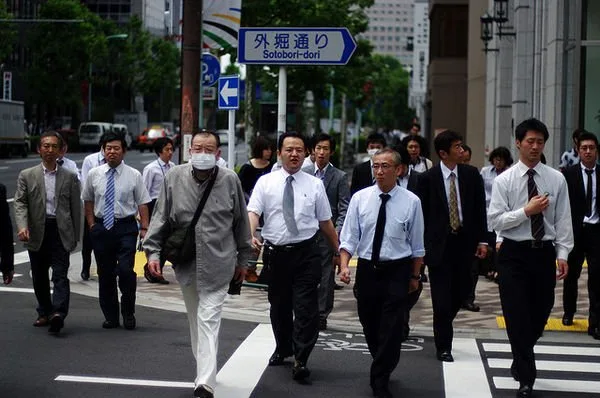
Japan is known for being a country where people work too much, some even work 12 to 15 hours a day. Of course, this is not such a large number but it is quite visible to the point of attracting people’s attention. However, Japan’s working hours are like those of any other country, varying between 8 and 9 hours a day. So why does 1 in 5 Japanese full-time employees tend to work overtime? What leads 22% of Japanese people to work more than 50 hours a week?
If we look at it this way, 22% of the population is not an alarming number for people to say “Japanese work too much,” but it is a very large number. There are 27 million Japanese who do more than 10 hours of overtime per week. Japan allows only 45 hours of overtime per month, but about 1 million people have signed a term that allows them to work more than that. Why does this happen?
25% Additional Pay
The Japanese are paid by the hour, after 8 hours of work the additional hours worked receive a 25% increase. This is the main reason most people do overtime. Some exaggerate and even forgo their vacations to work and earn more. If a person works on days they are not contracted to work, such as days off or holidays, they receive about 35% more than on other days. If a person works at night (22+), they receive about 25% more.
In jobs that do not allow overtime, some people end up finding another part-time job to increase their earnings. Greed proves to be a key factor for the Japanese to work too much, as in some cases a person’s salary is not satisfactory for them, requiring them to work more. Some even work 24 hours non-stop in places like hospitals, sometimes for the percentage or to help those in need.
Cultural Issues
After World War II, Japan went through various economic problems. The government’s encouragement led people to work in an unparalleled way that helped Japan rise again and become an economic power. These events ended up leaving a tradition and cultural incentive for people to dedicate themselves to work as the most important thing.
Another thing is the fact that the Japanese are responsible for most of the things they do. Responsibility and discipline are something that has accompanied the Japanese for millennia since the times of the samurai. Another example we can take from the samurai is their dedication to things like bushido and their master.
Working Overtime Without Pay
Some still end up working after hours even when not necessary. Most jobs that require overtime are located in factories, so in many offices some people end up wanting to work more than they should even without receiving the additional 25% or even the hourly rate. Why do they do this? Some simply enjoy it, others do it to finish a job quickly or with the intention of pleasing the boss. Some even end up working at home after hours.
I don’t see a problem in working 2 extra hours a day to earn about 3000 yen (80R$). However, there are those who go beyond the limit, working about 12 to 15 hours every day, and then after work go out to drink and live in this endless circle without joy. This is one of the main reasons Japan is facing a birth crisis and has a high suicide rate.
Curiosities and Facts
About 27 million Japanese work 10 or more hours of overtime per week;
The law allows only 15 hours of overtime per week, which averages to 3 per day;
Minors under 18 are not allowed to work overtime;
There are about 16 holidays for workers per year;
Most foreigners work overtime out of necessity or obligation;
Research shows that almost half of people in Brazil work 10 hours a day. In other words, before imagining that the Japanese work too much, analyze the facts. At least the Japanese receive for the overtime they do. To conclude, I will leave some similar articles that may clarify the subject further. We appreciate your reading, sharing, and comments.
The history of Japan (日本の歴史 nihon no rekishi or nihonshi) is marked by major political, social, and cultural events. When you think of Japan, what is the first thing that comes to your mind? Automatically, it is common to think of its great technological advancement or samurais, animes, or even sushi. But what events led to the Japan we know today? For lovers of this country and its history, I must say you are in the right place.
We will tell the history of Japan in Eras or Periods, which is the most common way to do so. It is impossible to cover all periods in detail, and we will also not mention the Paleolithic period and some other periods that had a short lifespan. Our goal is to tell the history of Japan in a short and quick manner. So let us begin this quick and straightforward summary of the history of Japan.
The beginning of the history of Japan
The main events begin in the Jomon Period (8,000 B.C.), favoring the fact that the Japanese like to tell their history almost always starting from this period. Still living from hunting and fishing, they developed stone tools that facilitated this practice, such as polished stone. They also developed the bow, arrow, and spear. They lived in houses made of tree branches and covered with straw that were placed in holes dug in the ground. Still in the Jomon period, they began to use pottery.
In the period known as Yayoi (300 – 500 B.C.), the use of metals began alongside polished stone and agricultural tools. But with the arrival of immigrants, rice cultivation began, which caused profound changes in the social, political, and economic life of the villagers, as this work required collective effort. As a consequence, there were divisions of social classes.
Curiosity: In ancient Japan, its territory was divided into clans. In historical documents, such as the Chinese document from the Han dynasty, Japan is referred to as the “country of a hundred kingdoms.”
Kofun Period (250 A.D.)
It is from here that religions and political regimes to be adopted in Japan begin to be defined. In the 4th century, the consolidation of Yamato occurred. Yamato began to exert dominance over various nations such as northern Kyushu, the Yamato valley, and also Izumo. It is possible to say, due to evidence, that the origin of the emperors began there, in Yamato.
During this period, immigrants from China and Korea began to arrive to teach the Japanese the art of craftsmanship. From this, these immigrants brought not only their art but also Buddhism. It was during the Yamato dynasty that the political unification of Japan occurred.
Curiosity: Currently, tombs where emperors were buried are still preserved. One of the most popular is that of Emperor Nintoku, located in Sakai, Osaka.
Asuka Period (500 A.D.)
During this period, the introduction of Buddhism occurs along with a series of conflicts throughout the country. Prince Shotoku builds a Buddhist temple called Hōryū-ji, thus representing the beginning of the Buddhist presence in the country. This temple is located in the city of Nara.
In 656, Emperor Kotoku initiates the Taika Reform. Historians use these events to mark the end of the Asuka period. The Taika Reform introduced the Ritsuryō system. During this period, there was also the sending of Japanese to China and the establishment of the divine figure of the Emperor. In the 6th century, Japan invades Korea, which was under strong Chinese influence, assimilating much of its Korean culture. Before the Nara Period, the Hakuhō period (673 A.D.) occurs.
Nara Period (710 A.D.)
In the year 710 A.D., the city of Nara becomes the capital of Japan. Kyoto developed and transformed into the main political and cultural center.
There were small events after this period that had significant importance in the history of Japan:
The beginning of the Heian period (784 A.D.);
The consolidation of the Aristocracy (800 A.D.);
The rise of the samurai class;
Kamakura period (1185);
Genpei Wars;
Mongol invasions of Japan;
The Emergence of the Samurais
In the 10th century, the Samurais emerge as a social class (Bushi). They established themselves in the government starting with the Taira clan (1167). The samurais followed a code of honor called Bushido. In this code, it was preferable to die with honor than to live without it. The Samurais ceased to be a social class starting in 1878, due to Meiji Restoration.
The Samurais indeed have a lot of history to talk about, but we need to continue with the vast Japanese history. The loyalty of the samurais to their code of honor and their skill with the katana is remarkable. Several wars and important events in the history of Japan occurred in the following periods, below I will list some important points:
Kemmu Restoration;
Muromachi Period;
Sengoku Period;
Oda Nobunaga;
Battle of Sekigahara;
Edo Period;
1603: Tokyo becomes the capital;
1871: Feudalism is abolished;
Modern Period (1868 – 1926)
In 1854, Japan signs the Kanagawa treaty with the U.S., seeking the modernization of the Japanese industry. This event causes Japanese ports, which were previously closed and Japan isolated, to be opened. It was a time when, with the advancement of capitalism, new industries were necessary.
In 1890, Japan establishes a constitutional government, based on the German constitution. Starting in 1900, Japan began to face problems related to urban concentration, resolving this through the emigration of Japanese to other countries (1909). In 1912, Emperor Meiji dies, having ruled Japan for 45 years, strengthening Japan internally and modernizing its industrial, social, and political sectors in a short time during his reign.
With the death of Emperor Meiji, his place is taken by Emperor Taishō. It was during his reign that Japan participated in World War I alongside the Allies.
During his reign, Taishō managed to monopolize the Asian market. His government is marked by ups and downs, such as democracy; economic growth and the rise of nationalist ideals.
From 1921 to the present day
In 1921, Emperor Taishō cedes power to his son Michinomiya Hirohito due to health problems, marking the ascension of Hirohito as Emperor. Japan participates in World War II, but its entry into this war was already doomed to failure. In 1941, Japanese air forces attack the U.S. base at Pearl Harbor, declaring war on the United States and England. By 1942, Japan showed signs of weakening due to the ravages of war.
Japan quickly recovered from the war, becoming one of the world’s largest economic powers. We then arrive at the Japan we know today, with territorial and natural resource limitations, but with a strong and stable economy and industry. It was impossible to mention most of the important events in Japan in this article; perhaps some isolated articles on the site can help you learn more about the history of Japan.
After Netflix released the series 13 Reasons Why or Por13 Razões, the world began to talk about the issues of suicide and bullying. The series really exploded and captured different audiences, but it also generated some criticism regarding the revenge addressed and the way it was approached. For those who don’t know, 13 Reasons Why is based on a book by Jay Asher that deals with the suicide of a 17-year-old girl named Hanna Baker who left a box with 13 recordings on tapes talking about the people who were blamed for her suicide.
The series addresses various themes beyond suicide and bullying, such as sexism, homophobia, sexual abuse, and several other themes involving teenagers in high school. To take advantage of the wave that the series is bringing by addressing this subject, today we have selected some Japanese works such as animes, doramas, and movies that have the same theme involving suicides, bullying, depression, and other social problems that you need to watch.
Life – Dorama about Bullying
The work Life (ライフ)is available in manga and television series. Besides bullying, the work also presents themes such as suicide and rape. Life tells the story of a girl named Ayumi who strives to get into a school along with a friend; unfortunately, this friend fails to pass and blames Ayumi, ending their friendship. To make matters worse, this friend attempts suicide, and at the new school, Ayumi ends up getting caught up in false rumors that make her become a hated girl and turn her life into a hell.
“A human being who is cornered has no choice but to be strong. I will not be defeated.” – Ayumu Shiiba
Kara no Kyoukai
Kara no Kyoukai is based on a Light Novel and has several animated films. The story involves a series of suicides without reason and a protagonist with supernatural powers responsible for solving these problems. Although it may seem somewhat fantastical, the work dives deeply into depression, suicide, loneliness, and the stages of denial.
1
Although the anime/manga focuses on the life of a hikikomori. The work addresses many themes involving suicide, bullying, and social pressure. The story shows a boy who lives isolated in his room, possibly because he felt excluded from society due to bullying and social problems in the past. Things change a bit when he receives help from a girl and some friends from school. This work is fantastic and mature, being considered an indispensable seinen.
1
This work based on the manga by Ichigo Takano received an anime adaptation and a movie. It tells the story of a girl who receives letters from the future helping to prevent a tragedy with a friend. This work is great and addresses themes of overcoming the suicide of a loved one, resisting the urge to commit suicide, and also problems related to friendships and school.
1
Based on a famous comedy manga, this work received an anime and 2 doramas that handle the subject well. GTO tells the story of a delinquent named Onizuka who ends up becoming a teacher in a class full of problematic students. Without a doubt, one of the best works I have ever seen that addresses various themes such as bullying, suicide, rape, family, and various issues involving life and school.
Other Japanese Works
There are several movies, doramas, and animes that also address themes such as suicide and bullying, but do not have them as the main focus. We will leave a small list below as a recommendation for you to watch:
Koe no Katachi – Work involving bullying with a deaf girl;
Accel World – Action anime that addresses bullying a bit;
Gakkou no Kaidan – Dorama shows how to overcome bullying;
Hana yori Dango – Very famous, addresses bullying at the beginning;
Aku no Hana – More problems at school;
Nagi no Asakura – Bullying and Racism;
Slam Dunk;
There are many other interesting works that address similar themes. If you know any that were not mentioned, leave it in the comments.
Have you ever wondered what the best moment is to kiss a Japanese girl? Or if you are a girl interested in a Japanese guy, do you know the likely places where you will get a kiss? In this article, we will look at the most common places where Japanese people usually kiss, so you can prepare for the right moment.
It may seem strange to have an article addressing this subject. However, many are interested in knowing how Japanese dating works. This is because in Japan, a kiss is seen as something for a passionate couple, while in the West, it may seem simple and common even among strangers. This article will be helpful if you want to know the most appropriate moment for a Japanese girl to want to be kissed. Or if you are the girl, you need to know the most likely moments when the kiss will happen and thus help the shy Japanese guy to take the initiative.
The best situations to kiss
In Japan, relationships often start in a somewhat peculiar way. A simple flirtation begins to turn into friendship, and you may be uncertain if there is romantic interest from the person. Sometimes even after a confession (kokuhaku), kisses do not happen, and you are left wondering how to make it happen. Below we will see the best situations for these kisses to occur:
When being pushed against the wall – Kabe-don – The term kabedon (壁ドン) has become common in Japan. The word indicates the act of a boy pushing a girl against the wall while placing his hand over her. The image below is quite explanatory; the girl may love this attitude, but make sure she will accept you. This is the right moment to whisper romantic words, kiss her, and look deeply into her eyes and smile.
On the Ferris wheel – If you are on a date at an amusement park, this is undoubtedly the best and most likely place for a kiss to happen. Sometimes even confessions and marriage proposals are made inside the Ferris wheel, especially when at the top; this is the right moment.
At the end of a date – When saying goodbye after a romantic date, the girl eagerly awaits the kiss, and you need to take the initiative. If you are the girl, don’t be shy and make it clear that you want to be kissed, because if you wait for a shy Japanese guy, you might end up without one.
If you are already married or in a long-term relationship, we suggest that you kiss your girl every day when leaving and arriving. Another interesting moment to kiss your girl is when she is cooking; sneak up on her from behind.
Planning a place for the kiss
If you are already dating and don’t know the appropriate moment to kiss her, you can try to create the situations mentioned above. There are other obvious situations that girls create to show they want to be kissed. If you are the man, you can create common situations for these kisses to happen in a romantic way.
You should keep in mind that Japanese people are shy and need an isolated environment to kiss. Try to create a romantic atmosphere as well; start by holding hands, something that girls expect more on a date. Considering these factors, let’s look at the most common and expected places to kiss:
On the school terrace;
Inside an elevator;
Inside a car;
In the cinema;
In the bedroom;
You should also pay attention to the girl! There are many signs that she gives to let you know that this is the exact moment for the kiss:
If she puts on lipstick in front of you;
If she is close to you;
If she frequently compliments you;
If she lightly bites her lips;
If she looks you in the eye and at your mouth;
If she makes indirect hints;
If you are on a date, there is nothing to fear. Just don’t be shy and take the initiative! Kissing in Japan is becoming less of a taboo; it is becoming common to see people kissing in public, I even see Japanese girls kissing strangers.
Despite their shy nature, there is no need to be so afraid of kissing someone from Japan anymore. What is your experience or opinion about kissing and relationships in Japan? If you want to comment and share with friends, I would be very grateful. We also recommend reading:
The Kappa is one of the most emblematic creatures of Japanese folklore, emerging from ancient legends that mix fear and admiration. Nowadays, it appears in both horror stories and more friendly representations in anime and games. But what makes the Kappa so fascinating? This article explores the origins, characteristics, and influence of this iconic creature in Japanese culture.
What is a Kappa? The Origin of the Mythical Aquatic Youkai
The Kappa (河童) is one of the most well-known youkai in Japan, and its fame is fueled by a mix of fear and respect. The term “youkai” refers to supernatural creatures that can be both mischievous and dangerous. The word “Kappa” means “river child,” reflecting the creature’s preferred habitat: rivers, lakes, and swamps.
Appearance and Physical Structure
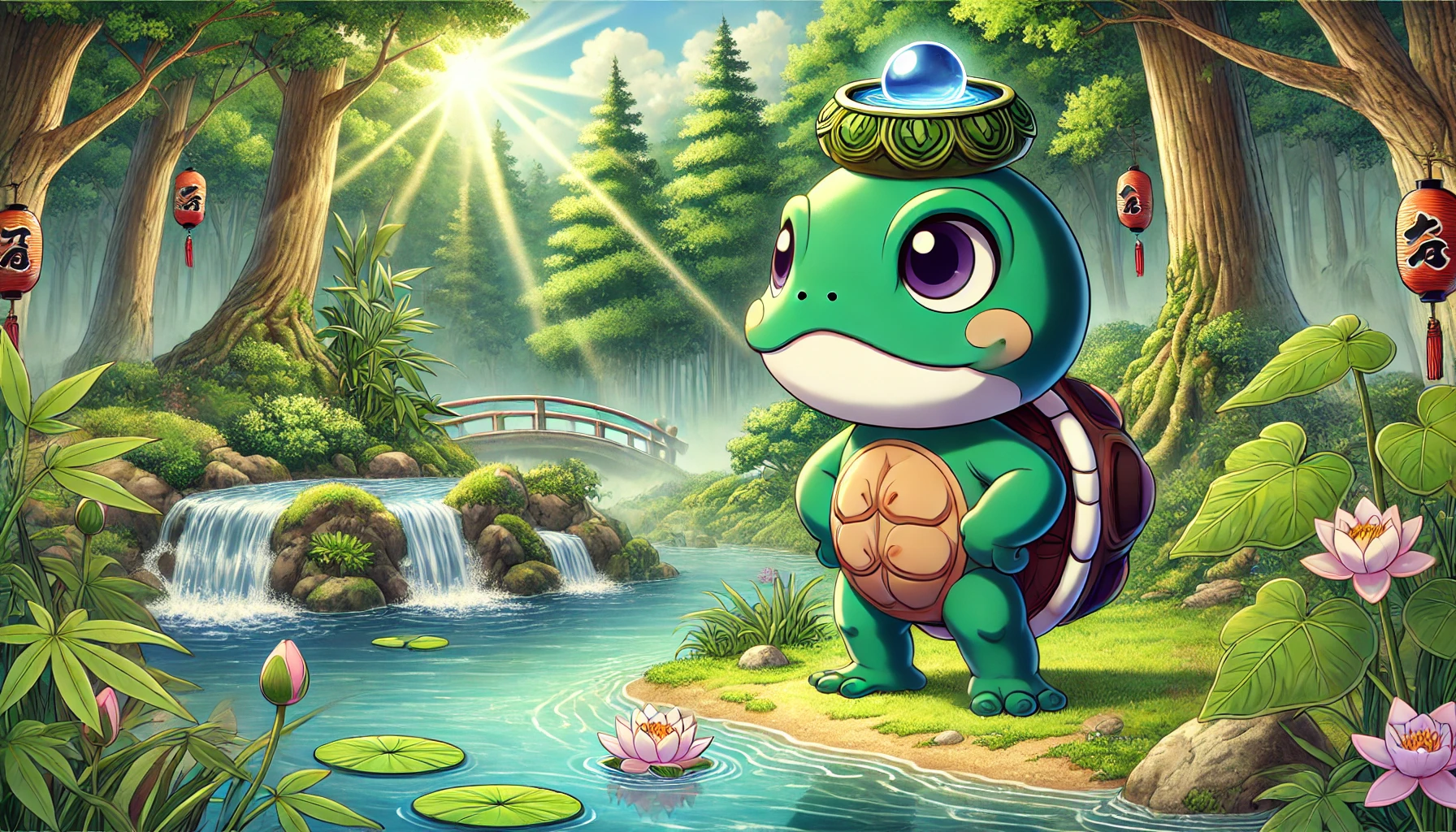
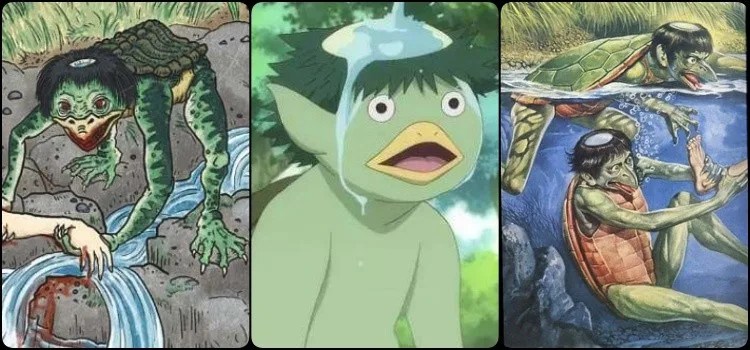
Kappa have a curious and unmistakable appearance, resulting from a mix of traits from different aquatic animals. In various descriptions, they are often depicted with slimy, greenish skin, reminiscent of fish scales or the texture of an amphibian. Additionally, the Kappa has facial features similar to those of a frog or monkey, and a turtle shell on its back. One of the most fascinating characteristics is the hole on top of its head, always filled with water. This water is the source of its strength and power, and keeping it intact is crucial for its survival.
Popular culture still describes the Kappa as an extremely strong creature, capable of dragging even horses to the bottom of rivers. The reason? In the more macabre stories, Kappa attack to suck the organs of their victims, especially through the anus, a terrifying image that still permeates popular imagination.
The Dual Nature of Kappa: From Dangerous to Playful
Despite its frightening history, Kappa are also known for their playful and respectful side. Many stories recount that these youkai can be cheerful and even honest in certain situations. They have a peculiar taste for physical challenges, especially in sumo wrestling, a sport highly appreciated in Japan.
Defeating a Kappa with Respect
There is a curious way to defeat a Kappa: courtesy. If a human bows before a Kappa, the creature, being extremely respectful, will return the greeting. By doing this, the water in its cranial dish spills out, weakening the Kappa and leaving it vulnerable. This peculiarity is used as a metaphor in many stories about the importance of respecting traditions and rules.
The Relationship with Vegetables, Especially Cucumbers
Kappa have a strange affinity for cucumbers, to the point that this vegetable becomes an essential part of the offerings made to appease them. In some regions, it is common to write a child’s name on a cucumber and throw it into the river as a form of protection, believing that this will ward off the Kappa. Legends also warn children not to swim in rivers after eating cucumbers, to avoid attracting the creature. Cucumbers are so associated with Kappa that cucumber sushi is known as “Kappa Maki” in Japan.
In addition to cucumbers, Kappa are known for their connection to medicine. Some legends tell that they shared valuable medical secrets with humans, benefiting many families of famous doctors.
Kappa in Pop Culture: From Villains to Cute Mascots
The Kappa has transcended Japanese folklore and become a prominent figure in modern culture. Today, it appears in a variety of media, often depicted in a friendly or even comical manner. Many companies use the image of the Kappa to promote environmental preservation messages, leveraging its connection to rivers and nature.
References in Animes, Mangas, and Games
The Kappa has left its mark on animes, mangas, and even video games. Some examples include:
Naruto: The three-tailed bijuu, Isobu, is based on a Kappa, with its shell and aquatic behavior.
Pokémon: Psyduck, Lombre, and Golduck are some of the creatures inspired by the Kappa, highlighting its aquatic aspect and peculiarities.
Digimon: Sagomon and Shawjamon are Digimon clearly influenced by the figure of the Kappa.
Super Mario: The Koopas, the iconic enemies of Mario, derive from the image of the Kappa, with their characteristic turtle shell.
The Kappa also makes appearances in games like Harvest Moon, where a friendly version of the creature is found in a lake, offering help to the player. It is remarkable how this creature has transformed over the centuries, from a fearsome being to an almost harmless and fun mascot.
Conclusion: The Kappa Between Myth and Modernity
The Kappa is a living representation of how folklore can evolve over time, reflecting the fears and fascinations of each generation. From its days as a fearsome inhabitant of the waters, dragging victims to the depths, to its modern version, which loves cucumbers and participates in sumo wrestling, the Kappa continues to be an important figure in Japanese imagination. Whether as a symbol of respect for nature or a reminder of ancient legends, it has certainly captured the imagination of people of all ages.
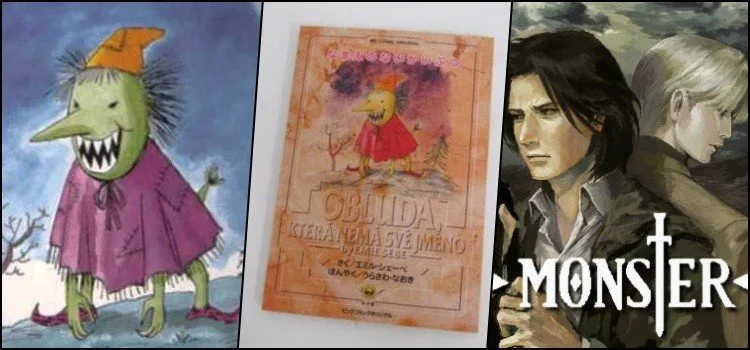
Monster is a famous manga published in 1994 that received its anime adaptation in 2004 with 74 episodes. Because it is old, few have had the chance to appreciate this wonderful work; I myself hesitated a lot because of the art style and the square screen. Finally, I had the opportunity to watch this masterpiece that involves suspense, psychological thriller, and questions the existence of a monster within people. If you haven’t watched it yet, hurry and watch!
The anime has nothing supernatural; the story takes place in Germany and shows a doctor named Tenma who decides to save a boy who was shot in the head, but this boy ends up becoming a Psychopathic Serial Killer who manipulates people. The anime shows how simple words and actions can turn people into emotionless monsters.
A nameless monster
In the background story of the anime, an illustrated book appears with the name Namae no nai kaibutsu (なまえのないかいぶつ) which literally means a nameless monster. The original name in Czech is Obluda, Kierá Nemá Své Jméno. This book has an interesting story that was important in the anime, especially the phrase:
Look at me, Look at me! The monster growing inside me is so big! (Boku wo mite! Boku wo mite! Boku no naka no kaibutsu ga konnani ookikunattayo)
This story is quite complex; only by watching the anime can you understand the meaning behind it. In this article, I decided to use it to study some expressions in Japanese. You can see the story by watching the video below:
(I couldn’t find the original video with the original audio, but I found the audio);
You can use this story to learn Japanese. I liked it because it is told in the style of a children’s story, with simple words, onomatopoeias, etc. In this article, I want to let you examine the story yourself, sentence by sentence, word by word, ideogram by ideogram. I recommend using the site jisho to look up the meanings of the words if you want to understand them. This way, you can create your own sentences for Anki and study at the same time.
Studying the story in Japanese
昔々ある所に名前の無い怪物がいました。
mukashi mukashi, aru tokoro ni namae no nai kaibutsu ga imashita.
A long time ago, there was a nameless monster.
怪物は名前が欲しくて欲しくて、仕方ありませんでした。
kaibutsu ha namae ga hoshikute hoshikute, shikata arimasen deshita.
The monster wanted so much to have a name that it couldn’t take it anymore.
そこで怪物は旅に出て名前を探すことにしました。
soko de kaibutsu ha tabi ni dete namae wo sagasukoto ni narimashita.
So it decided to set out on a journey to find a name.
でも世界は広いので怪物は二つに別れて旅に出ました。
demo sekai ha hiroi node kaibutsu ha futatsu ni wakarete tabi ni demashita.
But the world was a big place, so the monster split into two to fulfill the journey.
一匹は東へも一匹は西へ。
ippiki ha higashi he, ippiki ha nishi he.
One went east and the other went west.
東へ行った怪物は村を見付けました。
higashi he itta kaibutsu ha mura wo mitsukemashita.
The monster that went east found a village.
村の入口にはかじやがいました。
mura no iriguchi ni ha kajiya ga imashita.
There was a blacksmith at the entrance of the village.
「かじやのおじさん、僕にあなたの名前ください。」
"kajiya no ojisan, boku ni anata no namae kudasai."
– “Mr. Blacksmith, please give me your name.”
「名前なんてあげられるものか。」
"namae nante agerarerumono ka."
– “I can’t give you my name.”
「名前をくれたら、お礼におじさんの中に入って力を強くしてあげるよ。」
"namae wo kuretara, orei ni ojisan no naka ni haitte, chikarawo tsuyoku shite ageru yo."
– “If you give me your name, I will enter your stomach and make you the strongest man in the world in return.”
「本当か?力が強くなるなら、名前を上げよう。」
"hontou? chikara ga tsuyoku naru nara, namae wo ageyou."
– “Really? I will give you my name if you make me stronger in return.”
怪物はかじやの中に入っていきました。
kaibutsu ha kajiya no naka ni haitteikimashita.
And the monster entered the blacksmith’s stomach.
怪物はかじやのオットになりました。
kaibutsu ha kajiya no Otto ni narimashita.
The monster became Otto, the Blacksmith.
かじやのオットは村一番の力持ち
kajiya no Otto ha mura ichiban chikaramochi
Otto was the strongest in the village.
でも、ある日
demo aru hi
But one day:
「僕を見て、僕を見て、僕の中の怪物がこんなに大きくなったよ。」
"boku wo mite, boku wo mite, boku no naka no kaibutsu ga konnani ookiku natta yo."
Look at me, look at me. The monster in me has grown so much!
Have you noticed the similarities between the Pokémon Drowzee, Munna, and Musharna? For Brazilians, this may not be obvious, but there is a reason these three Pokémon resemble the tapir (an animal related to the anteater that lives in Asia) and have psychic powers related to sleep and dreams!
Where did the inspiration to create these three Pokémon come from? From a youkai called “Baku” (獏), a monster with the body of a tapir capable of devouring people’s dreams! But how did the tapir gain this fantastic power? The tapir lives in Southeast Asia (in countries like Indonesia, Thailand, Vietnam, Malaysia, and others). The Japanese only learned about the tapir in 834. Information arrived through a poetic anthology by Bai Juyi (772-846), a poet of the Chinese Tang dynasty (618-907).
How did the Youkai Baku come about?
In ancient times, in an era without the internet, photographs, and airplane travel, knowledge about animals and distant places took time to reach other countries and, when it did, it was normal for this knowledge to be wrapped in legends and mysteries. Europeans believed in unicorns for a long time and were astonished when they saw elephants or rhinoceroses, for example, animals very different from those they knew.
This also happened in Japan. Geographically isolated in the Japanese archipelago, the inhabitants of the country received stories about animals and plants from distant places, but as “who tells a tale adds a point,” the Japanese ended up with fantastic legends from overseas countries. The “Kirin” (a Japanese monster that is between a giraffe and a unicorn) and the Baku are examples of this process.
From a simple tapir, the Baku became a fantastic animal that would devour dreams. Today, the Japanese word “Baku” refers to both the legendary animal and the real animal. But what does the Baku of legend do?
According to Lafcadio Hearn, an English-speaking writer who lived in Japan during the Meiji period, the Baku can be called by someone who wakes up in the middle of the night due to a nightmare, as it devours the bad dream. However, invoking the Baku should be done with great caution because the animal is hungry and may devour the dreams and hopes of the one who called it. Due to its power to devour nightmares, talismans and objects, such as pillows, with figures of the Baku were common.
Knowing all this makes it easier to see that the appearance and powers of Drowzee, Munna, and Musharna, all Pokémon that resemble the tapir and have powers over sleep, are inspired by the Youkai Baku!
References in Japanese works
In addition to the Pokémon Drowzee, Munna, and Musharna, the Baku also makes other appearances:
The Pokémon Hypno;
The Digimon Tapirmon, from Digimon Frontier;
In Naruto Shippuden, the character Danzou summons one;
In Kamen Rider Black, the Gorgom use a monster;
Doremy Sweet from Touhou is a Baku that can eat and create dreams;
For more Pokémon based on Youkai, we recommend our friend’s video below:
Those who watched Lucky Star saw that Kana-chan is a true sweet bread eater, and one of those is the chokoreeto korune (チョコレートコルネ) or, as it is more commonly called, korone (コロネ). These chocolate cones are perfect for those who are learning to cook, as they are easy to make. It is highly recommended to use bread flour, as it contains a higher amount of gluten, making the bread more elastic and uniform.
Before seeing the recipe, you will need to make some aluminum cones. If you want to buy them, these cones are sold in kitchen supply stores and disposable packaging stores. If you don’t want to buy them, there is a cheaper solution here.
For this, you will need:
6 squares of 12×12 cm cardboard
Aluminum (as much as needed)
How to make:
Cut the aluminum to a size larger than the cardboard square;
Roll the square into a cone shape and wrap the aluminum around it to hold;
Wrap the cardboard inside and out, as they will go into the oven;
Note: Do not use adhesive tape to stick, as it will melt and ruin everything;
Now yes! Everything is ready.
Korone Recipe
Below we will see the step-by-step and the recipe for you to make the delicious korone.
Cone dough
150 grams of bread flour;
1 tablespoon of sugar;
½ teaspoon of salt;
½ tablespoon of powdered milk;
1 teaspoon of dry baking powder;
1 tablespoon of warm water;
70ml of room temperature water;
1 tablespoon of beaten egg;
15 grams of unsalted butter at room temperature;
Remembering that you can fill the korone with other things as well.
Chocolate cream
2 egg yolks
2 ½ tablespoons of sugar;
1 tablespoon of all-purpose flour;
1 tablespoon of cornstarch;
1 tablespoon of 100% cocoa;
200ml of milk;
10g of unsalted butter at room temperature;
30 grams of chocolate bar;
Start with the bread dough
1. Mix 1 tablespoon of warm water with the yeast. Let it rest for 5 minutes. 2. In a bowl, mix the flour, salt, sugar, and powdered milk. 3. Mix 70ml of water and the egg in another bowl. 4. Add the egg mixture and the rested yeast to the flour and stir until you can no longer stir with a spoon. Now it’s time to use your hands to knead the dough. 5. Knead until the dough is smooth. Add the butter and knead more. (It will be sticky at first, but as you knead it will come together) 6. Place plastic wrap over the bowl and let it rest for at least 60 minutes, or until it doubles in size. Let it rest in a warm, dark place (put a dish towel over it to keep it dark)
Note: If the weather is humid or cold, you can heat your oven to high temperature for 2 minutes, turn it off, and place your covered bowl inside.
While the bread rises, make the filling
1. Heat the milk until small bubbles start to appear at the edge of the pan. 2. Sift the flour, cornstarch, and cocoa together. Set aside. 3. Using a whisk or wooden spoon, mix the yolk and sugar to lightly dissolve the sugar. 4. Add a little of the hot milk to the yolks, stirring well to avoid cooking the yolks. 5. Add the sifted flour with chocolate to the yolks, stirring constantly. 6. Add the rest of the milk. 7. Sift this mixture and place it in a saucepan. 8. Place over heat, stirring constantly until it thickens. 9. Remove from heat and add the butter and chocolate while the mixture is still warm. 10. Place plastic wrap directly on the chocolate cream and let it cool.
Back to the bread
With it already risen:
1. On a floured countertop, divide the dough into 6 equal parts. 2. Make balls and let them rest for 15 minutes. 3. Lightly grease the aluminum cones with butter. 4. Press the balls to release the gas and start making “snakes” with the dough. 5. Wrap them around the cones slowly. Start from the thinner end. 6. Cover with plastic and let rest for another 15 minutes. 7. Brush beaten egg on the cones and bake in a preheated oven at 200°C for 10 to 12 minutes. 8. Wait for the bread to cool and fill with chocolate.
Now just enjoy! Did you like the recipe? What are your favorite anime dishes? What recipes would you like to see here on the site?
Mother’s Day in Japan, “Haha no Hi” (母の日), was once celebrated on March 6, the birthday of Emperor Akihito’s mother. But since 1949, the holiday follows the Western calendar, also being celebrated in Japan on the second Sunday of May.
The celebration of a day for mothers is ancient. Its origin dates back to ancient Greece, where the beginning of spring was celebrated in honor of Rhea, the mother of the gods. The Mother’s Day as we know it today was only established in the United States in 1914. Anna Jarvis is recognized as the creator of the holiday. After her mother’s death, she made a memorial to her mother. Then she started the campaign that led to the establishment of Mother’s Day as a holiday. The current Mother’s Day was first celebrated on the second Sunday of May 1914 (May 8).
In Japan, the holiday was originally established by the Imperial Women’s Union on March 6, 1931. During World War II, Western holidays were completely prohibited in Japan. Only after the war, around 1949, did Mother’s Day return to be celebrated throughout the country. This time following the Western calendar, as mentioned at the beginning of the article.
How Mother’s Day is celebrated in Japan
On this day, some families stay home to enjoy everyday meals. But with an important difference – the children are the cooks on Mother’s Day. Other families prefer to eat out and stroll in the beautiful parks and squares throughout Japan. It all depends on each person’s culinary talent. Large events are also held across the country to celebrate Mother’s Day in the Japanese style. Since elementary school, children are encouraged to celebrate the holiday by making drawings and portraits of their mothers.
Some Japanese Delicacies for Mother’s Day – Mother’s cooking is always the best. We never forget the taste and often inherit our mother’s culinary talent. The famous sushi is a good option to savor on Mother’s Day. The Japanese also enjoy:
Nimono (boiled dishes);
Tamagoyaki (rolled omelet);
Miso soup;
Chawanmushi (egg custard with ginkgo seeds);
Tofu;
Sashimi and others;
Common gifts on Mother’s Day
The most common gift on Japanese Mother’s Day is the red carnation. The red carnation in Japan is a symbol of purity, sweetness, and resilience. Thus, it is no wonder that this beautiful flower is so associated with mothers in Japan. And it is also not without reason that prices increase. But giving flowers is not a rule. There is a huge variety of gifts and reminders for the occasion.
Mother’s Day in Japan is not so different from what is celebrated in the rest of the world. But traditions and cultures make Haha No Hi a unique day in Japan. Here’s a tip: Our mothers work every day of the year. So, let’s give them the best gift every day of the year: Respect, love, and affection.
Yoshida Akiko (吉田亜紀子) is a Japanese singer and songwriter, who is best known by her stage name Kokia (stylized as KOKIA). She is most known for the songs “Arigatō…” (which reached number one on the music charts in Hong Kong, when Sammi Cheng did a cover of it) and “The Power of Smile”. She is also known for soundtracks for anime and video games, such as:
Ai no Melody/Chōwa Oto from the movie Gin-iro no kami no Agito;
Follow the Nightingale from the game Tales of Innocence;
Tatta Hitotsu no Omoi from the anime Gunslinger Girl: Il Teatrino;
We are talking about her today in this article at the request of a friend who is trying to bring her to do a tour in Brazil. For this, we ask that you follow her social media at the end of the article to show the interest of us Brazilians in her visit.
KOKIA’s Career
Childhood and early career – Kokia was born in 1976 and raised by her mother. She started playing the violin when she was two and a half years old, but preferred the family piano. Many times, instead of playing with toys, Kokia preferred to play the piano. She remembers putting illustrated books on the music stand and creating songs that represented the scenes. When she was ten, she went, along with her sister Kyoko, to the United States to study at the Summer Music School, which she did again four years later. During high school, she studied music and opera, which she later specialized in at Toho Gakuen Daigaku.
At university, a classmate delivered a demo tape that Kokia recorded to a music executive. Then, she was signed by Pony Canyon and began her career as a singer in 1998 by participating in the album Brothers, with the songs “Aishiteirukara” (愛しているから?) and “You”, while still in university. She created her stage name by reversing the syllables of her name. In the same year, she recorded “For Little Tail”, used as the opening theme in the game Tail Concerto and, later, as a secondary track on the single “Road to Glory” from 2010. After four singles, she released her debut album Songbird in 1999.
Although up to that point none of her singles had reached a very high position on the music charts in Japan —”Aishiteirukara” reached 99th on the Oricon—, “Arigatō…” (ありがとう…?) was a hit in Hong Kong. The song placed third in the award for the most popular international song in Hong Kong (香港国際流行音楽大賞) in 1999. In 2000, the artist Sammi Cheng released a cover version of the song in the country, included in her self-titled album (多謝) and it became a hit.
Victor Entertainment
After the release of her debut album, she left Pony Canyon. Her first work after leaving the label was a participation, with five songs, in the album Kanata Made (彼方まで?) by Ryuichi Kawamura, the vocalist of the band Luna Sea, released in 2000. The album was released by Victor Entertainment, which began her relationship with the label through which, in 2001, she released three singles: “Tomoni”, “Tenshi” (天使?) and “Say Hi!!”. The following year, she released her second album, Trip Trip, the first to be produced by herself.
In 2003, she released the single “Kawaranai Koto (Since 1976)”, which took her to the “top 50” of the Oricon charts, reaching 47th place. Her biggest success, however, was “The Power of Smile”, which gained notoriety for promoting the brand Kao, reached 15th place on the Oricon music chart, and was certified by RIAJ with a gold record. The album in which it was included, Remember Me, also entered the “top 20” of the Oricon. She released Uta ga Chikara, in 2004, which included the song “Yume ga Chikara” that was used as an encouragement song for Japan’s participation in the 2004 Summer Olympics. In 2006, she compiled her best songs in the album Pearl: The Best Collection. Aigakikoeru: Listen for the Love was released the same year in France; its release in Japan occurred in 2007. By 2008, the singer released the albums The Voice, Fairy Dance: Kokia Meets Ireland and Christmas Gift.
In 2009, Kokia released Kokia Infinity Akiko: Balance and Coquillage: The Best Collection II. Real World, released in 2010, reached 44th place on the Oricon music chart, being her eighth best-selling album. In the same year, she released an album solely with covers of songs, Musique a la Carte. In 2011, she released the album Moment and in 2013, the Where to Go My Love?.”
At breakfast, he will be there. At the school snack, he will be there. When you want to eat something different at home, he will also be there. How present is rice in the lives of the Japanese? In this article, we will talk exactly about Japanese rice gohan (ご飯), that rice that is fluffy and whole but sticky at the same time. That juicy rice grown straight from the rice fields in Japan.
History and curiosities of Japanese rice
Rice has been cultivated in Japan for over 3,000 years. To cultivate it, a cold climate and enriched soil are necessary.
As most of the Japanese territory consists of mountains and steep terrain, the Japanese cultivate rice in Tanadas (棚田), which are terraces made on the Japanese slopes in a handcrafted way. Just like the location, its cultivation is traditional and mostly done by elderly labor, as younger Japanese are focused on urban life.
Rice in the Kamakura Period (12th century) was already used as currency.
Rice is used on special occasions, as well as offerings to gods and deceased loved ones. Some Japanese believe that there are gods within each grain of rice. There is a rice god named Inari, who is also the god of foxes and fertilization.
Types of Japanese rice
In Japan, there are two main qualities of rice that are most commonly used. Uruchimai (粳米), known as Japanese Rice, is the most used. Its grain is translucent and short. After cooking, it becomes sticky, making it easy to pick up with chopsticks.
On the other hand, mochigome (もち米), known as Glutinous Rice, is short and opaque. After cooking, it becomes even stickier, more glutinous, and firmer. This is used to make mochi or recipes that require more binding, such as sekihan. The mochigome is so sticky that experts found it in the composition of the cement used to build the Great Wall of China! Of course, there are many other types of rice used in Japan that we will not mention in this article.
Japanese rice recipe
This is the recipe for Japanese rice used to eat plain in a bowl or to make Onigiri. It is a very flexible recipe; you determine how much you will use. Just remember to always use double the amount of water for the amount of rice.
Ingredients
Japanese Rice – 500g
Water – 1 Liter;
How to make:
1. Wash the rice, gently rubbing your hand between the grains to avoid breaking;
2. Wash 3 times, or until the water runs as clear as possible. Drain;
3. Place in a bowl and add the water to be used for cooking (in this preparation, 1 liter);
4. Let it rest for at least 30 minutes, or it can rest overnight;
5. Bring the water and rice together to a pot. Important tip: the water should be 2 fingers above the rice. If the amount you are using is small, add more water. But if the water you added exceeds 2 fingers, do not remove the water);
6. Start by placing the pot without a lid over high heat until it starts to boil;
7. Lower the heat, place a kitchen towel and the lid;
8. Cook for at least 5 minutes and keep an eye on your rice. The cooking time depends on the soaking time in water that you left. The longer the soaking time, the shorter the cooking time;
9. Turn off the heat. Wait 10 minutes and transfer to a container. Be gentle with the rice; it breaks easily;
Done! Now just enjoy! What did you think of the post? Do you like Gohan? Do you have suggestions for side dishes? What kind of recipes would you like to see here on the site?
In Japan, there is a culture of giving money inside envelopes. This custom is common at weddings, year-end, New Year, gratitude, and also among relatives, friends, and children. These special envelopes are called Kinpuu (金封) or noshibukuro (のし袋). These envelopes can usually be found in markets, stationery stores, konbini, and other shops. You can find envelopes ranging from cheap ones to some that cost more than 500 reais.
In this article, we will learn more about this traditional culture of giving envelopes that are decorated with a cord or bow called mizuhiki, a beautiful art and writing, as well as symbolic folds representing longevity and protection (awabi).
Occasions for Giving Money Envelopes
There are types of envelopes for each occasion; below we will see what each occasion is called, its meaning, and what type of envelope we should give for that occasion:
Gokekkon iwai (ご結婚祝い) or Goshuugi (ご祝儀) – Envelope given at weddings as a gift and blessings for the marriage. For couples who are about to become parents, they usually receive an envelope as a thank you; the occasion is called Shussan iwai.
Otoshidama (お年玉) – On New Year, parents and other relatives usually give money in an envelope to children. Nyuugaku iwai is the occasion when parents and relatives give envelopes to children on the first day of school. Sotsugyou iwai is when a school stage ends, such as in elementary and high school.
At the end of the year (Oseibo) in December, as a form of gratitude to a person, you gift them with a kinpuu. When a friend is ill (Omimai), or in the case of death (Gokoden), you can also give a money envelope, thus showing your compassion. On any occasion, in the case of a favor (Orei), you can gift that person.
Types and Parts of Kinpuu or Noshibukuro
The traditional money envelope usually has the name of the giver and the amount offered. In addition, they are tied in a way and color that indicate their purpose. Gold and silver threads are used for weddings, white and red for happy occasions, and white and black for sad occasions such as deaths.
In the first image (top left), we have a type of knot called Hana musubi. It is usually used in envelopes given to couples who have had a baby and children who have entered a new school.
The second image (top right) features an impossible-to-untie knot called musubi-kiri. This knot is found in envelopes that are gifted at weddings or funerals.
The third image shows a knot called Awaji musubi. This knot represents a long and good relationship between people and can be used on happy or sad occasions.
There are many other types of knots, shapes, and decorations involving flowers and other elements of Japanese culture. What do you think of the tradition of giving money in envelopes? Have you ever received or gifted someone?
For some strange reason, any erotic and pornographic material officially released in Japan is censored in the intimate parts. They simply leave pixels, bars, mosaics, and blurred squares to censor the intimate parts.
The breasts are one of the few things that escape Japanese censorship. In this article, we will see why this law exists and what the industry does to circumvent it. Let’s start by looking at how censorship began in Japan.
How did censorship in Japan begin?
To better understand why pornography is censored in Japan, we must go back to the Meiji Restoration that began in 1868. Before this time, Japan did not have a sense of morality. Even today, this sense is somewhat absent.
The Japanese view was very liberal regarding sexuality, and prostitution was a common business in Japan. There were even erotic religious stories and records involving samurais, geishas, and even homosexual acts.
In an attempt to modernize Japan, Emperor Meiji felt the need to adopt a sense of morality from Victorian England that condemned sexual thoughts and art.
In 1907, Article 175 of the penal code prohibited the sale and distribution of obscene materials, which were subject to fines and imprisonment. It was interpreted that human genitals and pubic hair were considered obscene, which led artists to reduce the creation of pornography for fear of imprisonment.
Before the world war, censorship was much greater and even prohibited nudity. After World War II, the United States abolished all forms of censorship and control of freedom of expression.
However, Article 175 was kept intact, continuing to prohibit any explicit display of intimate parts. By the end of the 20th century, several erotic works, including animations, began to appear and gain popularity.
Bypassing Japan’s censorship
Japanese people are not prohibited from drawing their erotic stories without censorship. They are prohibited from selling them uncensored within Japan. Therefore, in the 2000s, it was common to sell Japanese works, especially hentais, to the West. Nowadays, it is increasingly uncommon for these works to go to the West uncensored.
To bypass censorship, in the 80s they began to use tentacles. The government was unable to prohibit or enforce censorship on tentacles or non-human creatures. Therefore, most Hentais have such bizarre things as aliens and monsters.
Until the end of the 90s, it was prohibited to draw pubic hair; to circumvent the law, authors began to draw young girls who did not have hair in their intimate parts. This is how the terms lolicon and shotacon began to emerge.
The popularization of sex toys in Japan, such as masturbators and toys, also grew enormously due to the censorship in adult content. Both in hentais and in adult films, the use of toys to bypass this law is frequent.
Japanese people have gotten used to censorship and do not usually complain about it. Some experts consider the bars and mosaics a way for the Japanese reader to justify their habit and mitigate the act of reading pornography or the acts represented there.
In the West, we see something similar, where eroticism is accepted in films, as long as genitals are not seen. Still, the Japanese have several secrets to increase sensuality and eroticism in two works without breaking the rules.
Do you know what Ahegao is?
Japanese censorship gave rise to other fetishes
Japan is known for its numerous and diverse fetishes, largely due to the censorship of adult content. Since official films and animes do not show genitals, they need to focus and emphasize other things that have become fetishes.
The perversion of the Japanese has become so strange that they are willing to fixate on feet and also on the slight exposure between the thighs and legs of girls in miniskirts. There is even a name for this area, which is Zettai Ryouiki.
Who doesn’t remember the strange fetish of licking doorknobs? Or worse, why do we have so many squirts and bukkake in Japanese films? Because it is the only thing that can be seen and excite with the great censorship exposed in adult content in Japan.
Clothing and fantasy have also become something striking in adult content. Sometimes it takes hours for the action to happen in Japanese adult films because they spend a lot of time focusing on the clothing, curves, and positions without letting censorship affect them.
Even the facial expressions of Japanese women in real life and in animes become highlights, creating another fetish called Ahegao. The Japanese enjoy the simple glimpse of a panty and give a lot of emphasis to breasts that are not censored.
Despite the censorship law, Japan is the country with the largest pornographic industry in the world, generating 20 billion dollars a year (compared to 12 billion in the USA). Despite all this, it is confusing to understand the purpose of this law.
Throughout this article, the benefits of having censorship in adult content, especially in hentais, have been mentioned. This somewhat forces the author’s creativity to elaborate new and different things that capture the viewer’s attention.
Censored Hentais can be considered a Softporn or basically light porn. Exalting mainly the fantasy, mystery, and story of the work, unlike uncensored content, which only leads you to focus on the intimate parts.
What is your opinion on this subject? I hope to see your comment and share.
Papercraft or pepakura (ペパクラ) is a method of building three-dimensional objects using paper similar to origami. Most of the time, the art and colors are already printed on the paper, requiring only cutting and folding to create the desired art.
Papercraft or pepakura models can be easily found on the internet, printed, and assembled, making it much easier than doing origami. The internet has become a popular place for papercrafts of anime characters, games, cartoons, and various others.
Origin of Pepakura
The art of folding and creating objects with paper is as old as origami. However, the papercraft or paper models we know began to appear during World War II. In England, around 1941, various paper models became popular, mainly ships and airplanes.
Unfortunately, the arrival of plastic caused interest in paper models to fade into obscurity. It was with the advent of the Internet and printers that the art of creating models and characters in paper became even more popular. Nowadays, various companies use papercraft to market their characters and products, often providing official character models for printing and assembly.
Papercraft Techniques
To create a three-dimensional object, techniques of folding, cutting, gluing, molding, sewing, and even creating layers are used. With papercraft, it is possible to create not only square objects but in any shape. In reality, the word papercraft can refer to any art and craft made with paper, but we are highlighting the famous Pepakura that are used to create characters like in the images of this article.
It is common to use harder papers or cardstock to create three-dimensional objects. Some apply paint or resin to protect and harden the paper, making it last longer. Others often fill the hollow part of the paper with foam or something else to prevent it from crushing.
There is even an application called Pepakura Designer where you can transform polygons, objects, and three-dimensional characters into templates to print and create your own papercraft.
And you? Have you ever assembled a pepakura? Why not search the internet for the papercraft of your favorite character and assemble it? Don’t forget to take a picture and post it in the comments so we can see. And don’t forget to share the article so that more people can get to know this art. xD
We have already witnessed several lists of the best anime of all time. Researching these lists, I noticed a great cultural diversity and differences in tastes regarding the Western ranking and the Japanese ranking. With that in mind, I decided to make a comparison between these two rankings to get ideas about cultural differences.
Unlike the list that MAL, Crunchyroll, and other sites share, I decided to create this list in an organized manner, without repeating the season of a particular anime as they usually do. A work that wins an anime adaptation, regardless of whether one season was better than another, will appear in the ranking only once, correctly following the list. We will also not follow the descending order as usual; we want you to see this anime ranking from a different perspective.
The 50 Best Anime of All Time Japan x West
Japan
West
1
Tiger & Bunny
Fullmetal Alchemist Brotherhood
2
Mahou Shoujo Madoka Magica (2011)
Gintama
3
Love Live!
Steins;Gate
4
Code Geass
Hunter x Hunter
5
Cardcaptor Sakura
Clannad
6
Osomatsu-san
Haikyuu!!
7
Gintama
Code Geass
8
Joker Game
Shouwa Genroku Rakugo Shinjuu
9
Ginga Eiyuu Densetsu
Shigatsu wa Kimi no Uso
10
Neon Genesis Evangelion
Mushishi
11
Gochuumon wa Usagi Desu ka?
Cowboy Bepop
12
Mobile Suit Gundam
Hajime no Ippo
13
Digimon Adventure
Natsume Yuujinchou
14
Psycho-Pass
Suzumya Haruhi
15
Sword Art Online
Monogatari Series
16
Clannad
One Punch Man
17
Girls und Panzer
Great Teacher Onizuka
18
Haikyuu!!
Tengen Toppa Gurren Lagann
19
Detective Conan
Bakuman
20
Hyouka
Death Note
21
Fullmetal Alchemist: Brotherhood
Fate (zero, stay night)
22
Shingeki no Kyojin
Monster
23
Uchuu Senkan Yamato
Ansatsu Kyoushitsu
24
Shoujo Kakumei Utena
Jojo no Kimyou na Bouken
25
Bungou Stray Dogs
Ping Pong
26
Prince of Tennis
Shingeki no Kyoujin
27
Cowboy Bebop
Boku no Hero Academia
28
Steins;Gate
Rainbow: Nisha Rokubou no Shichinin
29
Natsume Yuujinchou
Boku dake ga Inai Machi
30
Fate (stay night, zero…)
Kuroku no Basket
31
Hoshi no Ko Poron
Anohana
32
K-On!
Shokugeki no Souma
33
Suzumiya Haruhi no Yuuutsu
Uchuu Kyoudai
34
Tengen Toppa Gurren Lagann
Ghost in the Shell
35
Lupin III
One Piece
36
Monogatari Series (Bakemonogatari)
Kiseijuu: Sei no Kakuritsu
37
Ghost in the Shell
Slam Dunk
38
Hibike! Euphonium
Re:Zero kara hajimeru isekai seikatsu
39
Free!
Saiki Kusou no Psi-man
40
Shigatsu wa Kimi no Uso
Usagi Drop
41
Shirobako
Mob Pyscho 100
42
Pokemon
Nana
43
Sailor Moon
Baccano
44
Re:Zero kara hajimeru isekai seikatsu
Chihayafuru
45
Katekyo Hitman Reborn!
Neo Genesis Evangelion
46
Yuu☆Yuu☆Hakusho
Mahou Shoujo Madoka Magica
47
The iDOLM@STER
Magi
48
Mob Psycho 100
Psycho-Pass
49
One Piece
Shirobako
50
Macross F
Yuu☆Yuu☆Hakusho
Honorable Mentions
I did not include movies that appeared among the 50, which were Kimi no na Wa, Koe no Katachi, and the films from Studio Ghibli.
After the 50, some notable anime in the Japanese list are: Angel Beats!, Mushishi, Rakugo Shinjuu, Kuroko no Basket, Anohana, Hunter x Hunter, Kill la Kill, and InuYasha.
In the Western anime list, some notable names that remained after the 50 were: No Game No Life, Nodame Cantabile, Toradora, Berserk, NHK ni Youkoso!, Higurashi no Naku Koro ni Kai, and Angel Beats.
My Opinion on the Ranking
I believe that during this voting, many are influenced by the moment or current trend. Some chose nostalgia, while others do not fully have the capacity to decide which anime to choose at the time of voting.
Another thing I noticed is that the ranking does not include the most popular anime or those that receive the most audience on Japanese TV. Possibly this voting was done among internet users of a certain age and did not fully encompass what it should.
In the Japanese ranking, I missed Uchuu Kyoudai, which has always been present among the top 5 anime with the highest audience of the week during its airing.