
In much of the West, a “good smile” still means straight, white, perfectly lined-up teeth — the kind people save for, wear braces for, and photograph carefully. In Japan, a different detail can steal the spotlight: upper canines that stick out a little higher, a little more fang-like, and somehow read as youthful rather than “unfinished.”
That look has a name. And for a stretch of the early 2010s, some people even paid a dentist to put it on purpose.
Contents 5
What does yaeba mean?
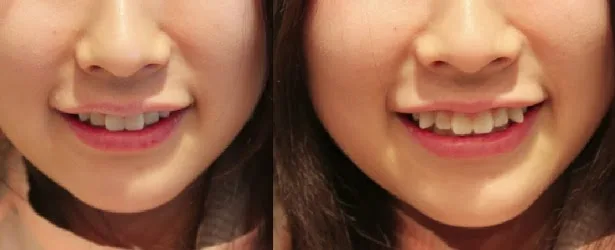
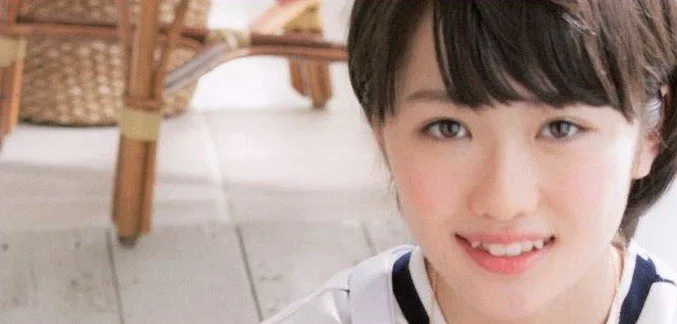
In Japanese, yaeba is written 八重歯 and literally means “double tooth.” In everyday talk it points less to “any messy bite” and more to a specific silhouette: upper canines that overlap or sit higher in the gum line, so the smile looks slightly snaggly — closer to a cat’s fang, a rabbit’s tooth, or a cartoon vampire than to a textbook orthodontic chart.
Two things get mixed up in Western headlines, and they are not the same:
- Natural yaeba — a canine that simply grew that way, common enough that many Japanese people grow up with it;
- Cosmetic yaeba — a deliberate cap, resin shape, or temporary piece made to look snaggly for cuteness, not to “fix” crowding for health reasons.
Natural misalignment has long been easier to leave alone in Japan than in places where orthodontics is almost a teenage rite of passage. Cost matters — full braces are not a casual purchase — and for years a perfectly flat smile was not the only standard of attractiveness. That does not mean oral health is ignored, or that every crooked tooth is praised. It means the cultural default is less “must straighten every canine” than many outsiders expect. If you are comparing prices for real care, see our guide on how much a dentist costs in Japan.
Yaeba tsukuri — making the snaggle on purpose
When the look became fashion, clinics offered yaeba tsukuri: procedures aimed at creating that raised-canine effect without waiting for genetics. Common approaches described in coverage of the trend include:
- Resin or ceramic caps shaped over the upper canines so they sit more prominently;
- Removable pieces that clip over natural teeth for photos, stages, or daily wear and come off for meals or sleep;
- Stronger orthodontic styling in rarer cases, when someone wants a longer-lasting rearrangement rather than a prop.
Reporting from the late 2010s put a removable yaeba cap around the low tens of thousands of yen — roughly the price of a modest cosmetic add-on rather than a full braces plan — with crystal decorations costing more. Fixed and removable options both existed; none of them turned “every crooked smile in Japan” into a paid procedure. The fashion version was always a niche, especially among young women chasing a specific kawaii image.
Where the trend came from
Natural yaeba is older than any TV boom. What changed in the early 2010s was the media story: snaggle canines as a deliberate charm point, not only a dental quirk.
A turning point often cited is 2011, when actress and AKB48 member Tomomi Itano made her false “double tooth” part of her public image. Demand for cosmetic caps rose with that visibility. There was even a short-lived promotional idol unit, TYB48 — a playful nod to AKB48 — launched around the same wave to spotlight a clinic’s yaeba work. Magazines, variety shows, and idol culture did the rest: the raised canine became a signature of natural-looking cuteness for some fans, not a mistake to hide.
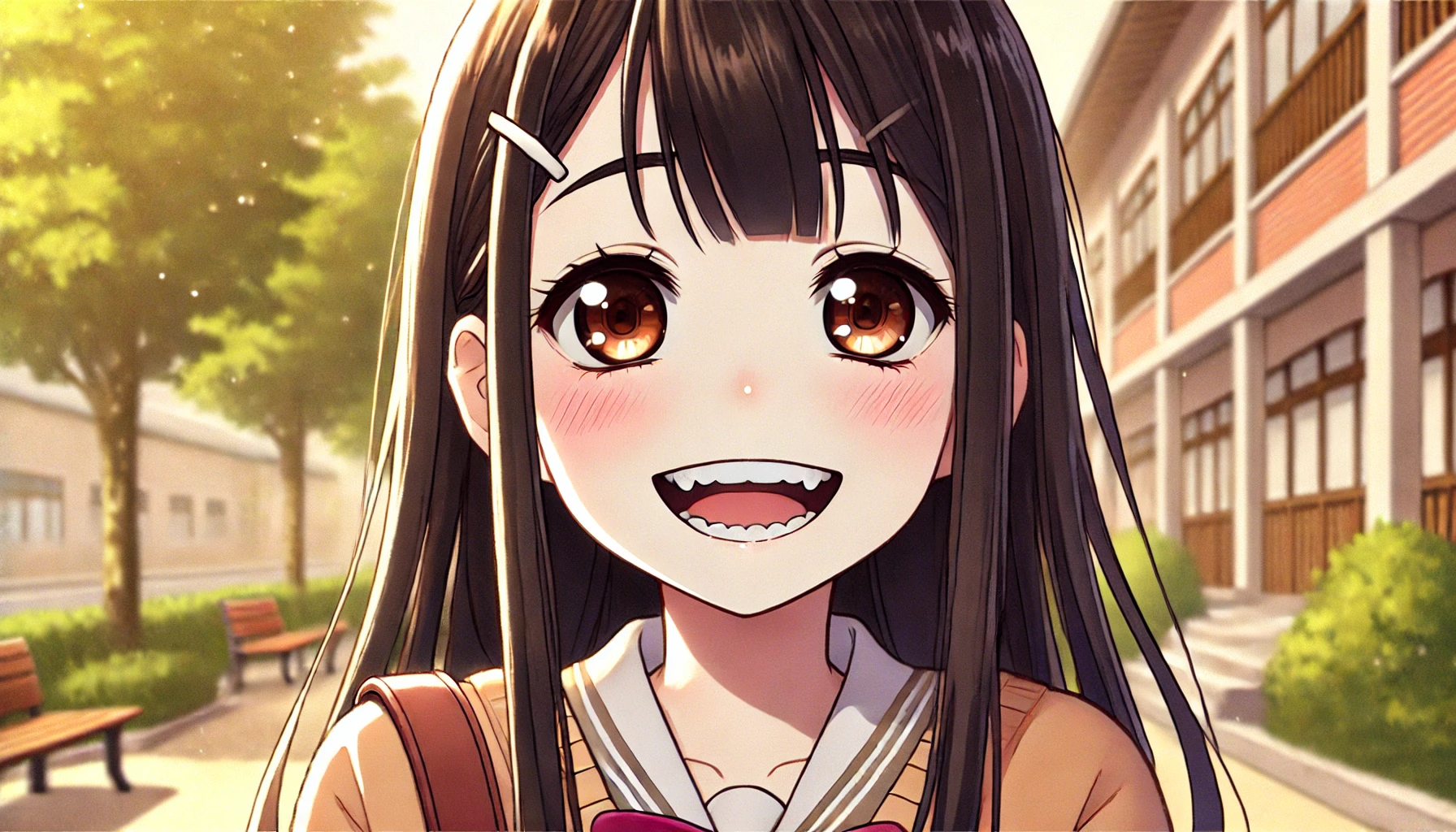
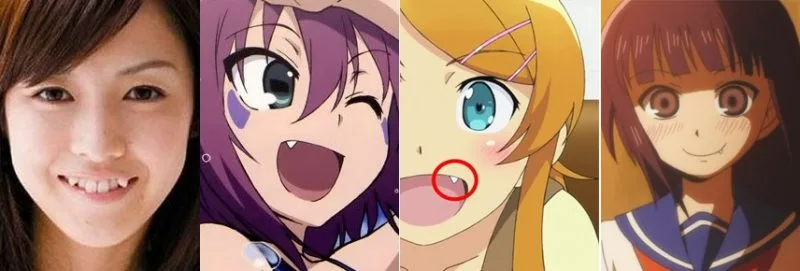
Explanations for why it reads as cute vary. Some writers connect it to a taste for imperfect shapes; others say the snaggle echoes baby teeth and makes the face look younger. Anime and manga characters with a single fang-like tooth only reinforced the silhouette. Speculating about one Hollywood vampire movie as the “origin” is weaker than the local idol and magazine trail — the stronger thread runs through Japanese pop culture itself.
Do Japanese people actually “like” crooked teeth?
Short answer: many people like this silhouette when it signals youth or charm — not yellow, chaotic, neglected teeth in general.
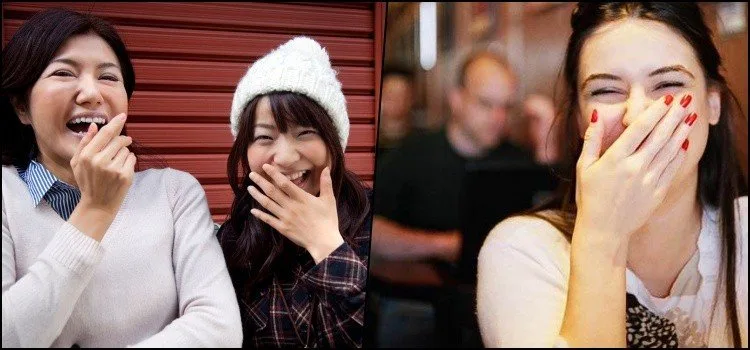
Viral clips sometimes flatten the country into one myth: “In Japan, crooked teeth are fashionable.” Walk through a real street and you will see plenty of natural crowding, because orthodontics was historically less universal than in parts of the West. That is priority and access, not a national costume party. At the same time, embarrassment about the mouth is real: many women still cover a laugh with the hand, and plenty of people with natural yaeba still wish their canines sat lower.
So the honest split looks like this:
- the yaeba look can be praised, styled, or even bought as a temporary fang;
- general dental irregularity is not automatically glamorous;
- the media boom of the early 2010s cooled; celebrities who once wore the look have sometimes had it removed, while a smaller stream of clients still asks clinics for caps.

Yaeba on screen and in idol culture
Once you know the word, you start spotting the tooth everywhere. Anime, manga, and game character designs often give a heroine one slightly raised canine as a shorthand for mischief or sweetness. Live-action dramas and variety shows put the same detail on actresses’ faces; outsiders watching subtitles sometimes ask why a successful performer “never fixed” her smile — without realizing the snaggle may be the point of the character, or simply left alone.
Idol groups made the look public-facing: bright stages, big grins, no attempt to hide a fang between choreography and fan service. That is different from medical neglect. It is also different from claiming every Japanese smile was redesigned in a chair. Yaeba fashion sat between those extremes — a brief, highly visible moment when imperfection was styled as identity.
If the whole idea feels upside down next to Western whitening ads, that tension is the story. One culture trains the eye toward a flat white arc; another, for a while, let a little snaggle mean young, soft, and memorable. Whether you find it charming or puzzling, the word yaeba gives you a sharper way to talk about smiles you already noticed in Japan — without collapsing them into a single stereotype.




Community
Comments
0 comments
There are no published comments in this language yet.
Send comment