
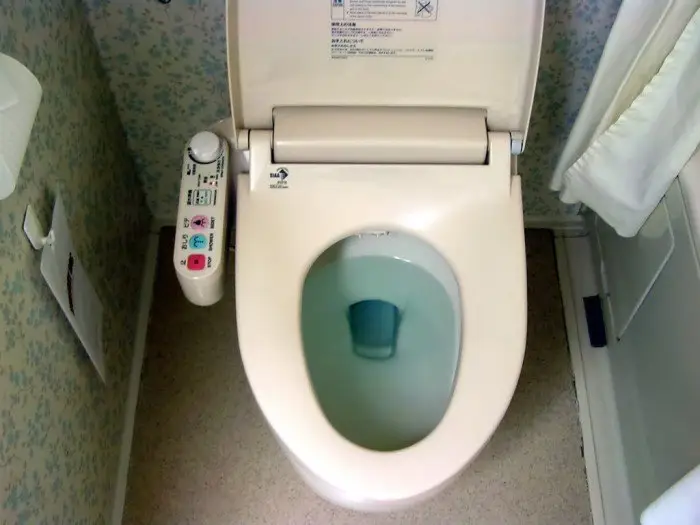
It is not just the Japanese language and culture that differ from other countries. There are many everyday things in Japan that feel completely different. Today we will look at the toilet and bathroom in Japan.
There are many curiosities and differences between a Western bathroom and a Japanese bathroom. To start, the toilet and the bathing area are usually in separate places; you will rarely find a toilet alongside a shower and an ofuro.
And who has never dreamed of having a bathtub at home? For many people, it feels like a luxury item, but in Japan an ofuro is so common that you will hardly find a house without one. And we have not even talked about the toilets yet.
We also recommend reading:
Contents 7
The Japanese Toilet
75% of homes in Japan have an electronic toilet. They are designed to enhance comfort, privacy, and cleanliness. They cost between $500 and $5,000, which is not expensive compared to those simple Brazilian toilets with nothing.
Japanese toilets also have two powerful jets: one is used to clean your backside, and the other, called Bidet, is used to clean the front area for women. It is possible to control the speed of the jet and the water pressure.
Almost all houses in Japan allow you to adjust the water temperature, even in the toilets, and of course, in the ofuro (bathtub). It’s not just the water; even the toilet seats are heated.
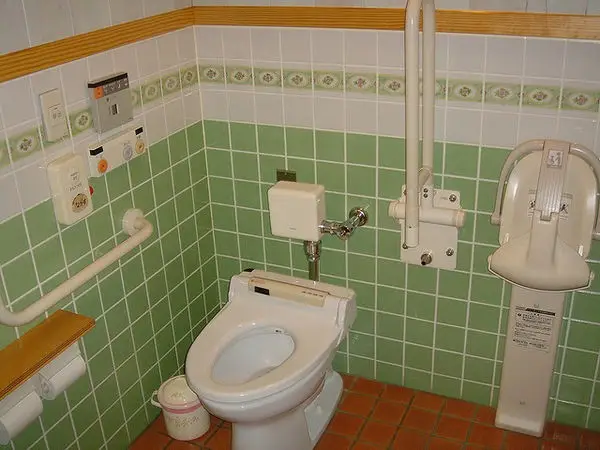
Toilets also usually have their own deodorizer to purify the air. Some bathrooms also have a "Noisemaker" that creates sounds or music so you can handle things in privacy. They also perform automatic cleaning.
Toilets often open and close the seat automatically; those that do not let the lid close slowly and quietly, without slamming or making noise.
Toilets often have a timer used to save energy. For example, you can set your seat to be nice and warm in the morning, and cold while you are at work. Some also have a button capable of automatically flushing your toilet.
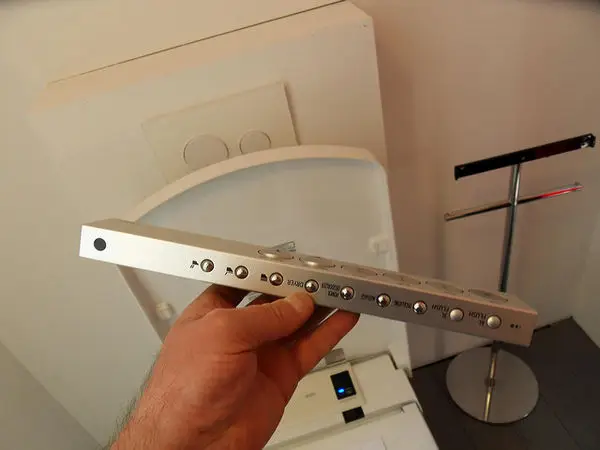
Some also install panels and remote controls to control the temperature of the bathtub and toilet from any room in the house.
There are some special toilets used by doctors that are even connected to the internet to collect information... It is worth mentioning that toilet paper is thrown inside the toilet; there are no trash cans in Japanese bathrooms.
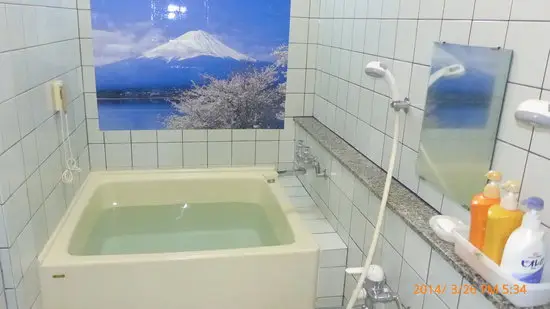
Bathing in the ofuro is part of an ancient culture. For that, there is a small removable showerhead that replaces the shower we are used to. It can be placed at different heights and used by hand.
How to Use the Electronic Toilet in Japan
Using the bathroom in Japan may seem like a difficult task; to help tourists and the curious, let's learn some tips so you can use the bathroom in Japan safely. It is worth remembering that not all bathrooms are the same, and they are not always electronic.
Some toilets have the controller next to the seat, and in some public bathrooms it is located on the wall nearby. Most toilets have the function of spraying water to wash the intimate parts; with the buttons, you can control the water temperature and its power.
Some toilets have options to play ambient sound effects or flushing sounds to disguise the noise...
The first thing you should do upon finding a bathroom is to use it, of course. Then you should decide whether you want to use traditional toilet paper or the water jet; although it may seem scary, it is quite comfortable.
Some bathrooms also have the option to dry after using the jet; otherwise, just use toilet paper, throw it in the toilet, and flush. There is no secret to using the Japanese bathroom; the only thing that changes is that it has buttons to control and heat the water jet.
Electronic Bathroom Vocabulary
Below we will see a list of words that you will find on the buttons of the panels of these electronic toilets.
| Japanese | Hiragana | Romaji | English |
| お尻 | おしり | oshiri | Clean your backside. |
| ビデ | -- | bide | Bidet. |
| やわらか | -- | yawaraka | Gentle wash. |
| 止 | とまる | tomaru | Stop. |
| 停止 | ていし | teishi | Stop. |
| 乾燥 | かんそう | kansou | Dry. |
| 水勢 | すいせい | suisei | Water pressure. |
| 弱 | よわい | yowai | Weak. |
| 強 | つよい | tsuyoi | Strong. |
| 音量 | おんりょう | onryou | Volume. |
| 音停止 | おとていし | ototeishi | Sound off. |
| 流す | ながす | nagasu | Flush. |
| パワー脱臭 | パワーだっしゅう | pawaa dasshuu | Deodorizing power. |
Now you will not have any problems using the Japanese bathroom. In any embarrassing situation, just press the button marked in red with (止) or (■) to stop the jet. Some toilets have 2 options for flushing: (大) for a strong and large flush and (小) for a small and light flush that saves water.
Washiki Toire - Japanese Style Toilet
For a tourist traveling to a country on the other side of the world, it is already a great adventure. You will certainly see new things and have new experiences, so imagine arriving in Japan and going to the bathroom to do your business and right away seeing a hole in the ground? There are toilets similar to this in some places in Brazil, which consist of just a hole, but the ones in Japan go further as you can see in the photo.
It may seem strange and funny because I think everyone expects to find those high-tech toilets that open by themselves and heat, in addition to the famous jet. However, these traditional toilets with a hole in the ground are easily found in public places, train stations, and others.
It is a toilet that is located on the ground, and to use it, you have to squat; if you think the position is bad and are afraid of falling, don't worry because most have walls or a pipe nearby for you to hold onto. If you still do not want to use this type of bathroom, in most public places, you will find the traditional toilet.
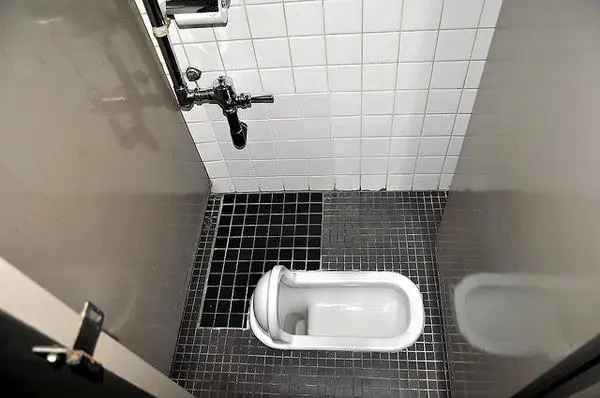
High Tech Toilet vs. Washiki
But why use the washiki toilet if there is a high tech toilet? Washiki is more hygienic since you do not need to touch the toilet, while the purpose of the high-tech toilet is to provide more comfort.
In homes, it is not common to find a washiki-style toilet, and even many public places are replacing this hole toilet with common toilets with technology where you can clean the seat before sitting or place a disposable hygienic cover on the seat. Other than that, both Japanese toilets can have automatic flushing or different levels of flushing.
Bathroom Phrases
Where is the bathroom?
トイレはどこですか?
Toire wa doko desu ka?
I am going to the bathroom.
トイレに行きます。
Toire ni ikimasu.
It is occupied.
忙しいです。
isogashii desu;
I want to go to the bathroom.
私はトイレに行きたいです。
Watashi wa toire ni ikitai desu.
Videos of Japanese Bathrooms
To conclude the article, we will leave some videos about the bathrooms in Japan. If you liked the article, share it and leave your comments. Thank you very much and see you next time!



Community
Comments
0 comments
There are no published comments in this language yet.
Send comment