
On a packed Tokyo train, a row of white and patterned face coverings looks ordinary long before any news cycle about a virus. Visitors still notice; locals rarely do. The surgical mask in Japan is not only a medical prop for crisis mode—it is a small daily tool that mixes health, manners, pollen season, and privacy.
That habit took root well before COVID-19, and it stayed for reasons that go far beyond germs. Once you separate those layers, the “why are they all wearing masks?” question stops feeling like a riddle and starts looking like a practical map of crowded public life.
Contents 10
How mask-wearing became normal in Japan
Although mask use drew global attention during the COVID-19 pandemic, the practice was already common in Japan for more than a century. After the Spanish flu of 1918, public campaigns encouraged people to cover the mouth and nose when influenza was spreading. Later waves of respiratory disease, including outbreaks in the 1930s, reinforced the idea that a mask was a sensible response in crowded cities—not a dramatic emergency costume.
Industrial history also matters. Cloth and black-faced filters for dust and mine work appeared much earlier; everyday white surgical-style masks for colds and flu became familiar later. Each epidemic season taught the same quiet lesson: when trains and offices pack people together, a simple barrier is easier than endless apologies for a wet cough.
Epidemics, pollution, and daily caution
In recent decades, scares such as SARS in 2003 and avian flu renewed demand for masks and made stockpiling feel rational rather than paranoid. Seasonal air problems layered on top of that memory. On high-pollution or yellow-dust days, news programs often report particulate levels, and many people reach for the same drawer of disposable masks they already use for colds and pollen.
In short, Japan did not invent mask culture overnight. It accumulated reasons—infection, air quality, allergies—until wearing one in public stopped looking unusual.
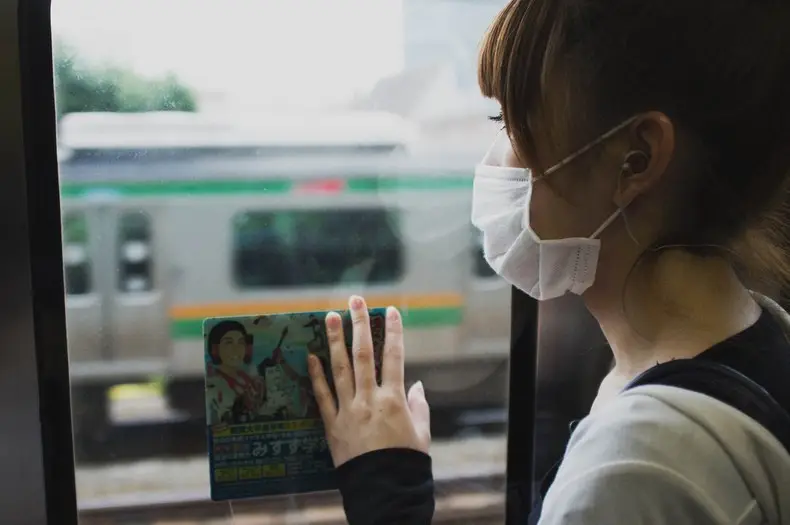
Main reasons Japanese people wear masks
Disease prevention is only one chapter. Cultural etiquette, seasonal allergies, personal comfort, and even fashion all share the same white rectangle.
1. Not spreading germs—and showing respect
When someone has a cold or flu, wearing a mask is widely treated as basic consideration for colleagues and fellow passengers. Japanese public manners put weight on not burdening others; covering a cough is a concrete, low-drama way to do that on a packed train or in an open office.
Masks are also used preventively during peak flu season. In dense spaces—commuter cars, classrooms, shopping arcades—many people prefer a small filter over hoping the person next to them is perfectly healthy.
Quick read: if someone is masked, they may be sick, protecting themselves, fighting pollen, cold, or simply wanting a quieter face for the day. Guessing only one reason is usually wrong.
2. Seasonal allergies (kafunshō)
Hay fever—kafunshō (花粉症)—is one of the strongest everyday drivers of mask use. Large shares of the population react to pollen from Japanese cedar (sugi) and cypress (hinoki), with symptoms that can run from late winter deep into spring and, for some people, far longer when other plants release pollen.
A mask will not solve itchy eyes alone, but it cuts how much pollen reaches the nose and mouth and also hides a red, runny face. Government and local forecasts track pollen levels during peak months; for sufferers, putting on a mask before leaving home can feel as normal as grabbing an umbrella when rain is certain.
3. Personal, psychological, and practical reasons
Masks also answer private needs. Some people use them to cover acne, a bare face without makeup, or a day they did not shave—especially when clean-shaven presentation is expected at work. Others describe a sense of anonymity: a partial face cover softens eye contact and makes crowded streets feel slightly less exposed.
Winter adds a simple physical bonus. Breath warms the fabric, so the nose and cheeks stay less dry in cold air. That “face heater” effect is low-tech and widely understood, even when nobody is ill.
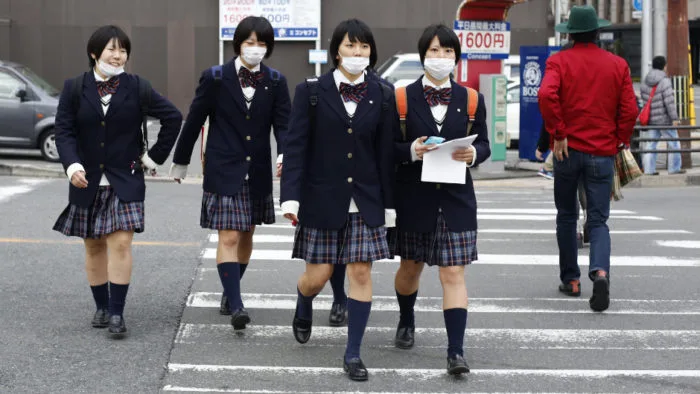
Masks as fashion, comfort, and identity
1. Style, marketing, and date masuku
Once masks became everyday objects, makers treated them like products, not only medical stock. Packs come in sizes, colors, scents, anti-fog designs, and prints—from plain white to anime motifs and black street styles. Young people often treat a mask as part of an outfit rather than a temporary bandage.
Japanese even has a casual label for wearing a mask when you are not sick or fighting pollen: date masuku (伊達マスク), a “for show” or non-medical everyday mask. Social media and convenience-store shelves both reinforce that a mask can be a style choice as much as a health tool.
For a wider look at ritual and performance face coverings—from Noh to festival gear—see our guide to famous Japanese masks and their meanings.
2. Comfort, privacy, and quiet space
In a culture that prizes self-control in public, a mask can feel like light armor: less need to perform a full facial reaction, a little more control over how much of yourself is on display. On days when social energy is low, covering the lower face is an accepted way to take up less “performative” space without explaining anything.
Privacy works the same way. Where personal distance is hard to keep, a mask draws a soft line. It does not replace manners, but it signals “I’m keeping to myself” without a speech.
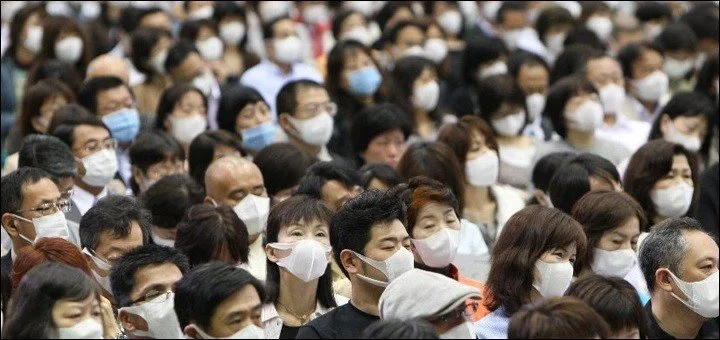
After the pandemic: why the habit still shows up
COVID-19 made mask-wearing visible worldwide, and Japan’s long experience meant the shift felt less alien than in places where masks had been rare. Official risk levels later eased, yet many people kept the habit for the same mix of reasons that existed before—flu season, pollen, courtesy—and for socio-psychological motives researchers have documented as well: relief (masks reduce anxiety for some wearers) and norm (people keep masking partly because others still do).
That does not mean everyone masks all day forever. It means the white rectangle never belonged only to emergency law. It belonged to trains, allergy forecasts, office etiquette, and private comfort long before international headlines arrived—and those layers did not vanish when the news cycle moved on.
So the next time you see surgical masks on a Japanese street, try reading them as small signals rather than a single story. Someone may be protecting others from a cold, blocking cedar pollen, warming their face, finishing a no-makeup morning, or simply matching the quiet majority around them. The custom looks simple from the outside; up close, it is a pocket-sized guide to how Japan shares public space.


Community
Comments
0 comments
There are no published comments in this language yet.
Send comment